Blockchain transactions are irreversible, but every decision should not become final the moment someone approves it.
Bron Security Delays create a review window before selected transactions are broadcast.
If the destination looks wrong, the device becomes compromised, or circumstances change, the pending transaction can still be cancelled.
Routine payments may need speed, while larger transfers deserve another look.
Good wallet design should recognize and enforce that difference automatically.
Self-custody solved the ownership problem, but not the operational burden.
Traditional wallets often leave one person responsible for signing, recovery, access, and every high-value decision.
Bron allows users to segregate those responsibilities. With MPC technology, signing authority can be distributed, recovery doesn't depend on a seed phrase, and signing approval policies can be set for when circumstances require it.
Removing the custodian should not mean removing every layer of support and control.
Self-custody should not require doing everything alone.
EY surveyed more than 350 institutional investors during January 2026.
Among respondents, 63% said their firms were very interested in tokenized assets, while more than 60% expected major blockchain integration across trading, clearing, and settlement within three to five years.
Demand is no longer the only important question for institutions. They also need signing rules, permissions, reporting, recovery, and clear ownership of every action.
Tokenized assets will not scale through access alone. Their operating model must arrive with them.
Moving between stablecoins and fiat should not be the hardest part of crypto.
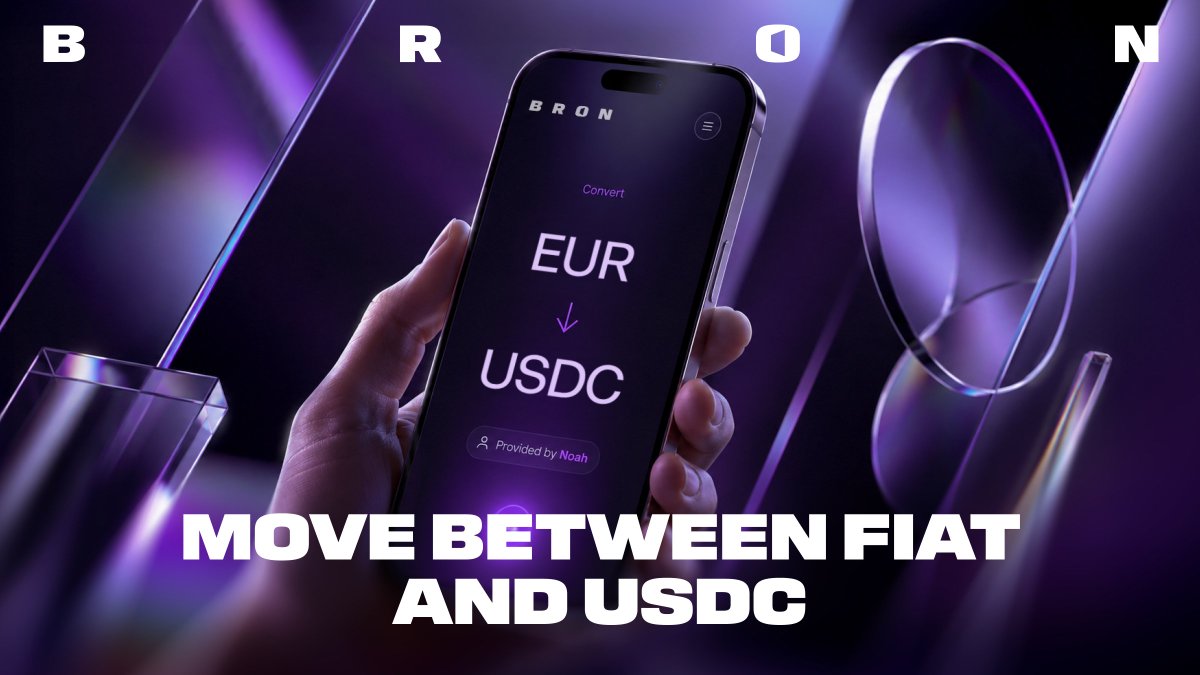
Noah's on/off-ramp is now live in the Bron app.
Move between USD or EUR and USDC, or approve invoices that Noah sends directly to a recipient’s bank account.
The entire flow is available inside the Bron mobile app.
Noah runs the ramp and its own verification — Bron never touches your funds. Availability depends on location.
One compromised advertising script was enough to tamper with cryptocurrency addresses across the web.
Adform delivers roughly 1.5 billion ad impressions every day. From late July 26 until the evening of July 27, attackers inserted malicious code into JavaScript distributed through its advertising platform.
While an affected page remained open, the code could replace Bitcoin, Ethereum, or Tron addresses displayed, entered, copied, or pasted.
The wallet itself did not need to be compromised for this attack to work. A user could approve a technically valid transaction that sent assets to the attacker’s address.
Adform has not disclosed how many websites or users were actually affected.
Protecting who signs matters, but controlling where assets can go matters just as much. Saved contacts, allowlists, complete-address checks, and small test transfers create independent checks around the destination.
A correct signature cannot protect you from signing the wrong address.
Most people plan what happens to their house, bank accounts, and investments.
Crypto often gets left to a seed phrase and a set of instructions.
Bron lets you set up Digital Inheritance in advance, using beneficiaries as part of the recovery process.
Your crypto deserves a succession plan before someone else needs one.
Bron’s desktop interface has received a major update, designed for faster navigation and clearer portfolio oversight.
Search now takes you directly to assets, transactions, addresses, contacts, hidden accounts, security policies, and almost every feature across the wallet.
Every supported token now has a dedicated page with interactive charts, TradingView data, market statistics, project information, and your position.
The dashboard separates market performance from assets you send or receive, showing how your holdings changed over time.
Managing digital assets should not require digging through endless screens.
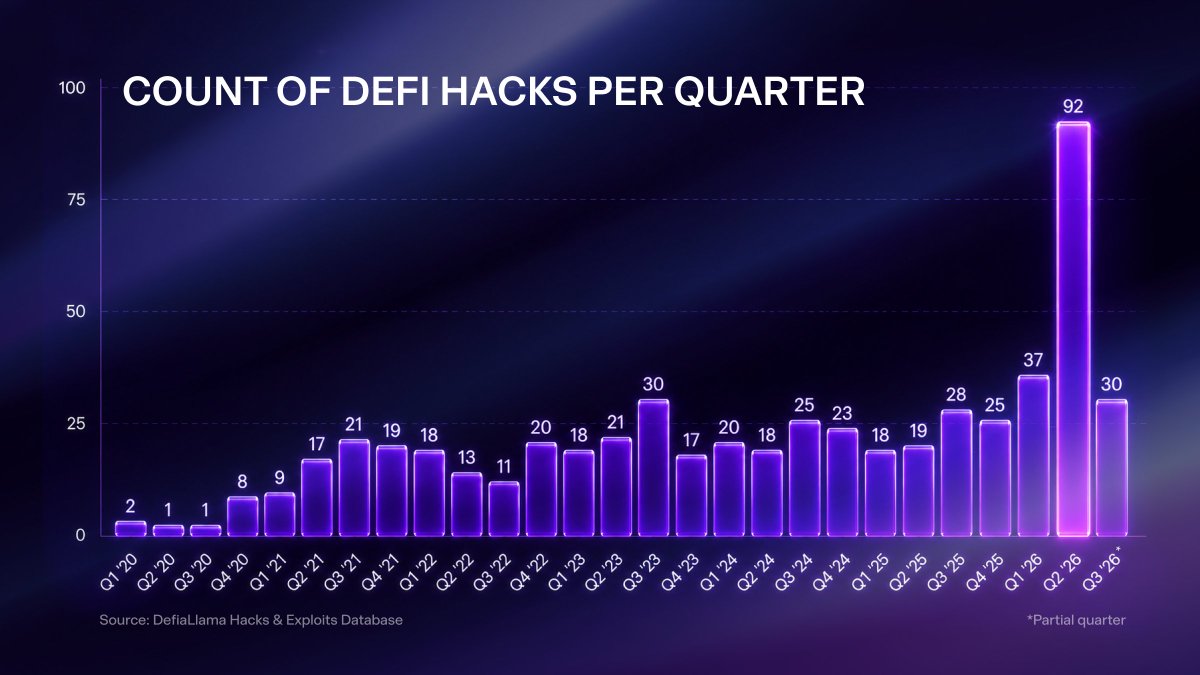
DeFi hacks are not disappearing as the industry becomes more mature.
Every protocol carries risk, so your wallet should help contain it.
One simple habit is reviewing which apps still have permission to access your assets, then revoking anything you no longer use.
See how to review and revoke permissions through Bron:
https://t.co/cbjUOaDEYT
Most crypto security debates still focus on smart contract code.
Yet 88.3% of Q2 losses came from compromised keys, signers, and infrastructure.
Bron strengthens the signing layer with MPC, transaction limits, delays, and additional approvals.
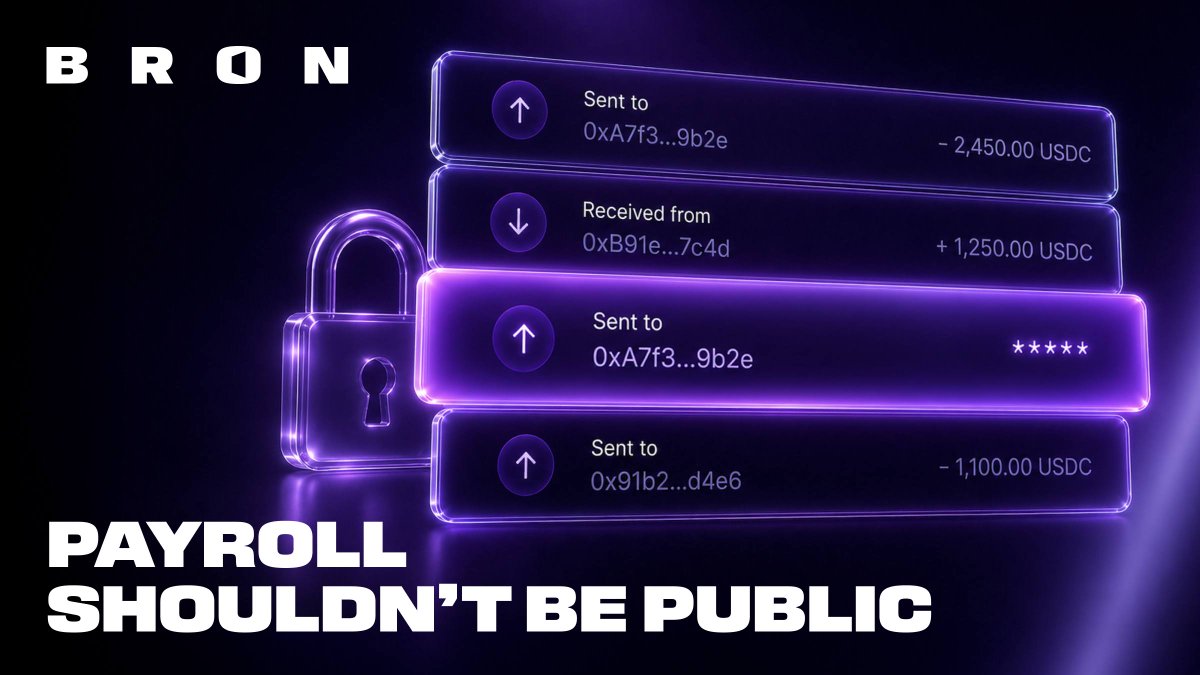
Stablecoin payments are fast, but they can expose what every contractor or employee earns.
Once a wallet gets linked to someone, anyone can follow their payment history.
Bron shielding, powered by Zama, keeps balances and transfer amounts away from public view.
Pay people in stablecoins without putting their compensation on display.
Your Pearl deserves institutional self-custody.
Set your payout address once and receive PRL directly into secure self-custody. No exchanges. No seed phrases. Just institutional-grade protection, full ownership, and account recovery designed for the real world.
Bron is also bringing native PRL swaps. Hold your mining rewards where you'll be able to act immediately when PRL liquidity launches. No migrations. No moving funds at the last minute.
Point your rig at Bron and keep every payout under your control.
https://t.co/XmBrQE3BAf
Grateful to @letsexchange_io for recognising Bron as one of the leading self-custody wallets for businesses!
Self-custody has traditionally been framed as a security problem, but for businesses it’s just as much a governance challenge. Protecting private keys is only part of the equation. Organisations also need to decide who can initiate transactions, who approves them, who has visibility over assets, and how responsibilities evolve as teams grow.
That’s the thinking behind Bron. We built the platform around governance as much as custody, with role-based permissions, configurable approval workflows and shared control that allows teams to operate securely without relying on a single individual or sacrificing the principles of self-custody.
As more businesses bring digital assets onto their balance sheets, we think those governance capabilities will become just as important as the underlying cryptography.
Thanks again to the LetsExchange team for the recognition.
🔐 Every business says security comes first.
Until someone asks:
"So... who has access to the wallet?" 😅
When you're managing a company treasury, it's not just about storing crypto.
It's about approvals, permissions, audit trails, governance, and making sure no single person holds all the keys.
That's why we reviewed six leading business wallets for 2026, including:
🛡️ Bron Wallet (@bronwallet)
🔑 Zengo Business (@ZenGo)
🏦 MPCVault (@mpcvault)
⚡ Utila (@utila_io)
🚀 Fordefi (@FordefiHQ)
🧩 Safe (@SafeLabs_)
We also break down one of crypto's biggest custody debates:
🤝 MPC or multisig... which one fits your business better?
👇 Read the full review:
https://t.co/Wj1CChTuj4
#LetsReview #LetsBlog
Robinhood Chain and Hedera are now officially live and supported on Bron.
Access @hedera's institutional-grade network and @RobinhoodCrypto's onchain financial ecosystem with Bron’s familiar security and control.
Two major ecosystems are accessible through one secure platform for digital assets.
Chainalysis estimates that $100 trillion could pass from Boomers to younger generations between 2028 and 2048, with some of that wealth already living on-chain.
Estate documents can name the heir, but they cannot recover a missing seed phrase.
Bron’s Digital Inheritance lets owners designate beneficiaries in advance without granting them access to or visibility of balances and transactions. If the owner dies or becomes incapacitated, beneficiaries can initiate a controlled process built into the wallet to obtain signing access.
Heirs should not need to search drawers, old devices, or safes for missing credentials.
The largest wealth transfer in history needs a secure digital inheritance layer.
ZachXBT’s hardware wallet POV highlights the larger problem: security shouldn’t depend on one device working perfectly.
A dedicated iPhone reduces friction, but it’s still one device backed by one seed phrase.
Bron removes that single point of failure. MPC keeps the cryptographic key distributed rather than stored in one place, so there’s no seed phrase to lose and no single device that holds the keys to everything.
Most security systems stop protecting you once an attacker gets you to sign.
Bron’s transaction delays create a window between approval and execution. If an attack has already happened, you can detect the pending transfer, cancel it, and respond before assets leave your wallet.
CertiK’s Wrench Attacks report highlights withdrawal delays because strong security should help stop attacks already in motion.
The on/off-ramp is now live in the Bron mobile app, with services provided by @Noah_HQ.
Move between USD or EUR and USDC in a few taps.
You can also approve USDC payments for real-world invoices, while Noah sends fiat directly to the recipient’s bank account.
Moving money should not mean finding a desktop.
Geo restrictions apply.
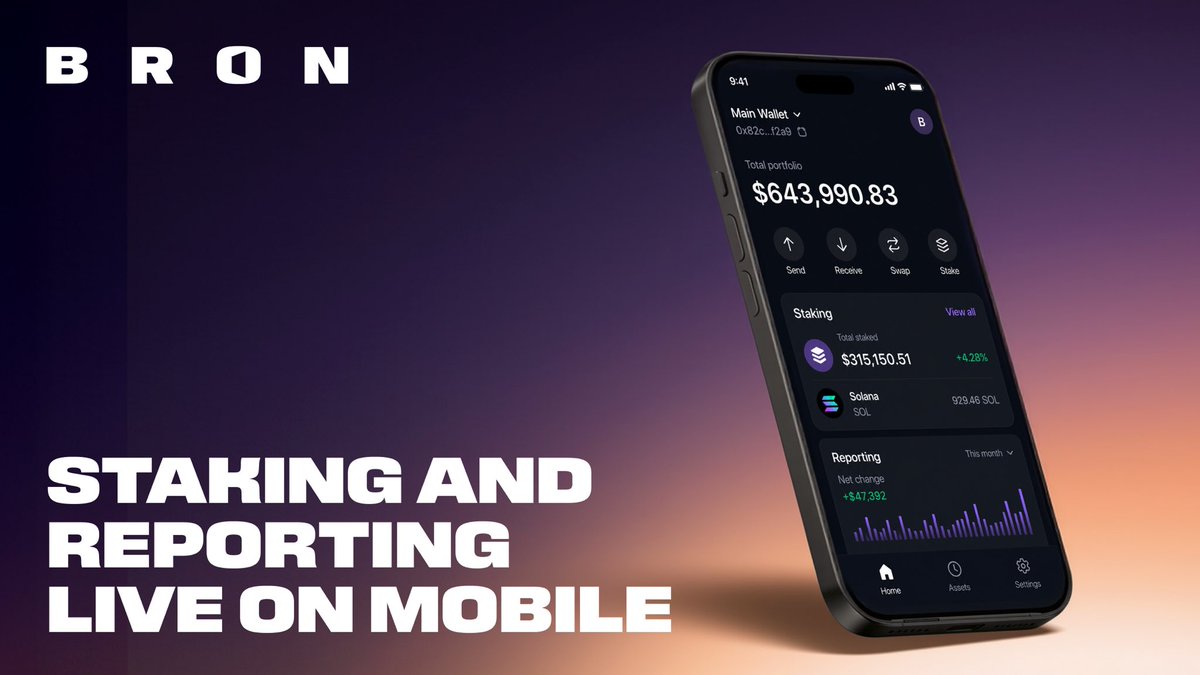
Staking and Reporting are now live in Bron’s mobile app.
Access supported staking protocols through independent provider @P2Pvalidator.
Review wallet activity, and export structured transaction data directly from your phone.
More of the full Bron experience is now available wherever you are.
https://t.co/K6Tvh8c0RH
https://t.co/2DaU5L2N2j