🚀 Gemeinsamer Erfolg in der KI-Forschung! 🇩🇪🇫🇷 Ein deutsch-französisches Team, darunter DZIF-Wissenschaftler, erhält einen ERC Synergy Grant über 11 Mio. Euro.
Ziel: Entwicklung eines KI-gestützten Ansatzes für die Suche nach neuen Antibiotika: https://t.co/ITb6H54SNv
#ERCSyG
The HZI is looking for game changers in infection research and hiring Junior Research / Technology / Clinician-Scientist Group Leaders (with W1-professorship & tenure options). Join our program #HUMAN and study the complex interplay of humans & microbes!
https://t.co/eslC4Twm7H
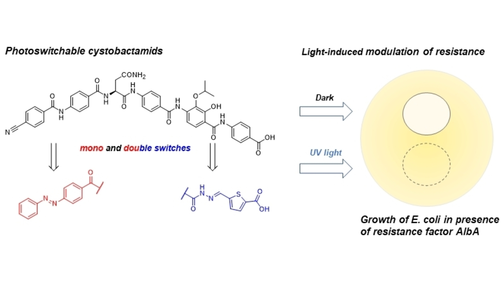
Our study on the last resort antibiotic colistin was just accepted by Angew Chem. (https://t.co/hm2E5SH0cE). We reduce its renal cell toxicity by a two-component strategy and bioorthogonal chemistry.
#chemicalbiology#antibiotics@helmholtz_hzi @_dzif @UniHannover
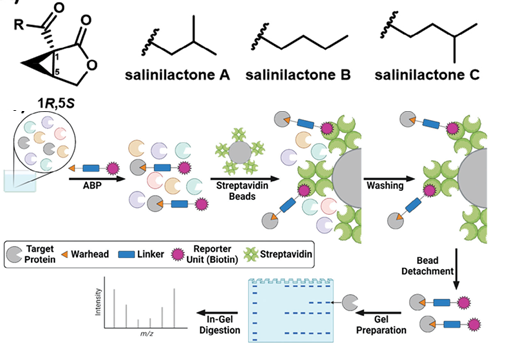
Volatile salinilactones, produced by the bacterium Salinispora, target disulfide-isomerases. See https://t.co/6SDUIMEkFw in Advanced Science, by K. Jerye et al. of the @BronstrupLab. This is one of the first studies describing how bacterial volatiles act.
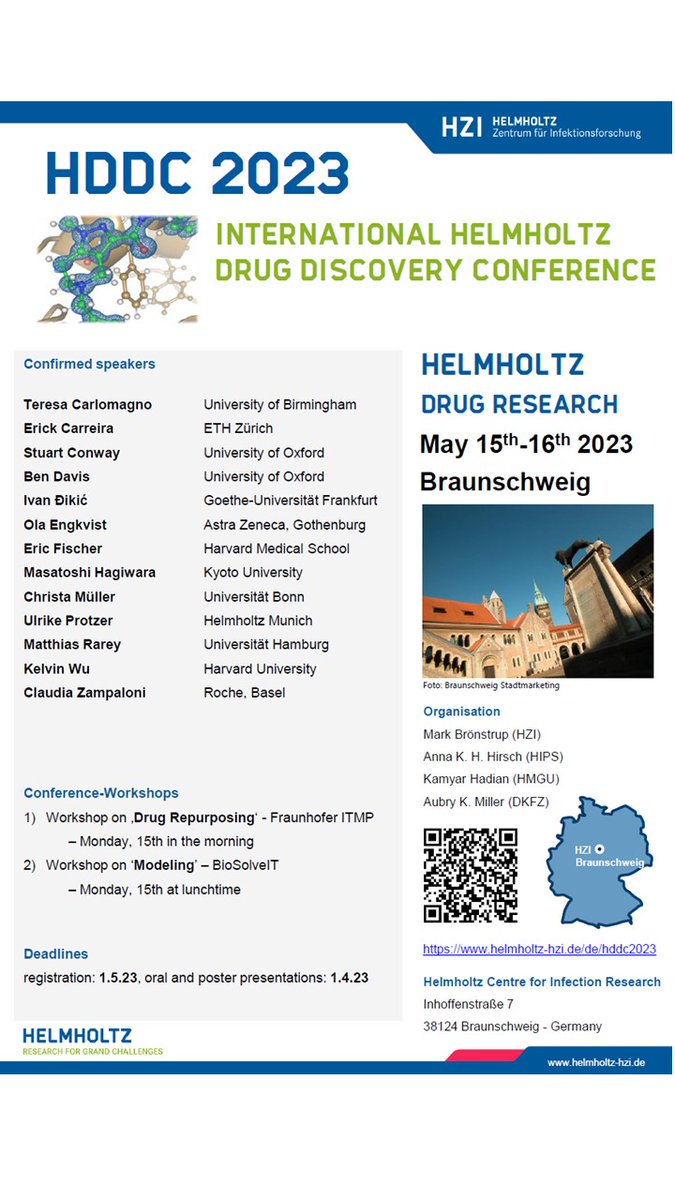
Full program available, few days and <40 seats left for registration: 3rd Helmholtz Drug Discovery conference HDDC 2023 on May 15/16 in Braunschweig, Germany. https://t.co/MAM4yQiA4B (1)
Our paper on siderophore conjugation with cleavable linkers to boost the potency of RNAP inhibitors has just appeared in Chemical Science (https://t.co/KSbmaIJQrw). Thanks a lot to Carsten, Hazel, Anna et al. for the great work! (1)
Abstract/talk submission closes this weekend: Please register for 3rdHelmholtz Drug Discovery conference HDDC 2023 on May 15/16 in Braunschweig, Germany. https://t.co/MAM4yQiA4B (1)
We announce the 3rd Helmholtz Drug Discovery conference HDDC 2023 on May 15/16 in Braunschweig, Germany. Major topics (novel antiinfectives, computational methods, novel concepts, success stories) introduced by international speaker panel. https://t.co/ulG0c7xaEp
We are happy to enter the second round of the SPRIND challenge for novel antivirals. Thanks also to our partners, the Hilgenfeld lab, @biotechne and the Kikkert lab @LUMC_Leiden.
In einer @SPRIND-Challenge verfolgen Forscher:innen seit dem letzten Jahr innovative Ansätze für breitwirksame antivirale #Wirkstoffe. Sechs Teams, darunter drei mit HZI-Beteiligung, werden nun für die zweite Phase mit je 1,5 Millionen Euro gefördert. 1/2
https://t.co/Ie8GRLLKnl
Our joint paper with Doron Shabat on enzyme-activated, chemiluminescent siderophore-dioxetane probes for highly sensitive bacterial pathogen detection has been published in Angew Chem: https://t.co/pPpmxp1Csk
#chemicalbiology#antibiotics@helmholtz_hzi @_dzif @UniHannover