You don’t think when you pick up a mug.
Your hand finds the handle. Your grip adjusts. You avoid knocking things over.
A robot can still fail at that.
Not because the model is dumb. Because real-world training data is hard to collect.
Labs capture clean demos. Real homes are messy.
Different lighting. Wet handles. Half-full mugs.
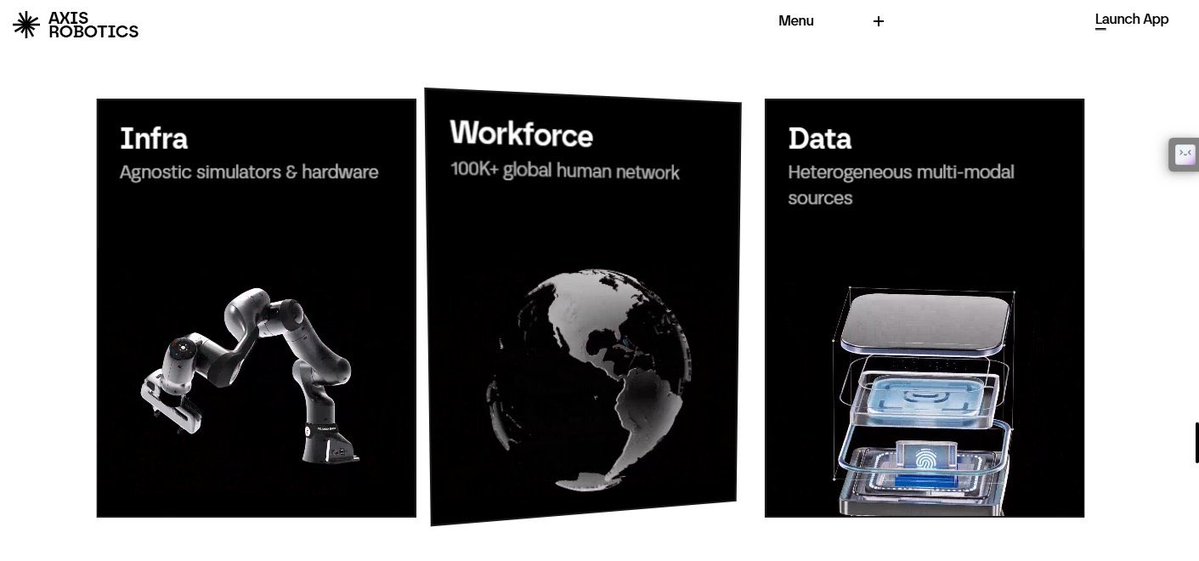
@axisrobotics is trying to close that gap.
Open Chrome. Control a robot arm. Turn one run into training data.
Even everyday actions can help teach robots how the real world works.
You don’t need to be a robotics engineer.
Just show the robot something you do without thinking.
You don’t think when you pick up a mug.
Your hand finds the handle. Your grip adjusts. You avoid knocking things over.
A robot can still fail at that.
Not because the model is dumb. Because real-world training data is hard to collect.
Labs capture clean demos. Real homes are messy.
Different lighting. Wet handles. Half-full mugs.
@axisrobotics is trying to close that gap.
Open Chrome. Control a robot arm. Turn one run into training data.
Even everyday actions can help teach robots how the real world works.
You don’t need to be a robotics engineer.
Just show the robot something you do without thinking.
The real bottleneck for Physical AI may not be models.
It may be data.
@axisrobotics is building a data engine for robotics by turning human demonstrations into training data at scale.
They’ve raised $12M, led by Hack VC alongside Nomad Capital, Pi Network Ventures and others.
The ecosystem already includes names like Booster Robotics, Dexmal AI, OpenRobotics and Geely.
Recent progress:
→ 6.9M+ trajectories
→ Axis Dataset V1
→ Human-gated DAgger
→ 222K+ users
→ $AXIS community sale on Base
The bigger thesis is simple:
better data → better models → better robots.
That feedback loop could become a key layer of Physical AI.
Join here: https://t.co/N1xSg04n8u
The real bottleneck for Physical AI may not be models.
It may be data.
@axisrobotics is building a data engine for robotics by turning human demonstrations into training data at scale.
They’ve raised $12M, led by Hack VC alongside Nomad Capital, Pi Network Ventures and others.
The ecosystem already includes names like Booster Robotics, Dexmal AI, OpenRobotics and Geely.
Recent progress:
→ 6.9M+ trajectories
→ Axis Dataset V1
→ Human-gated DAgger
→ 222K+ users
→ $AXIS community sale on Base
The bigger thesis is simple:
better data → better models → better robots.
That feedback loop could become a key layer of Physical AI.
Join here: https://t.co/N1xSg04n8u
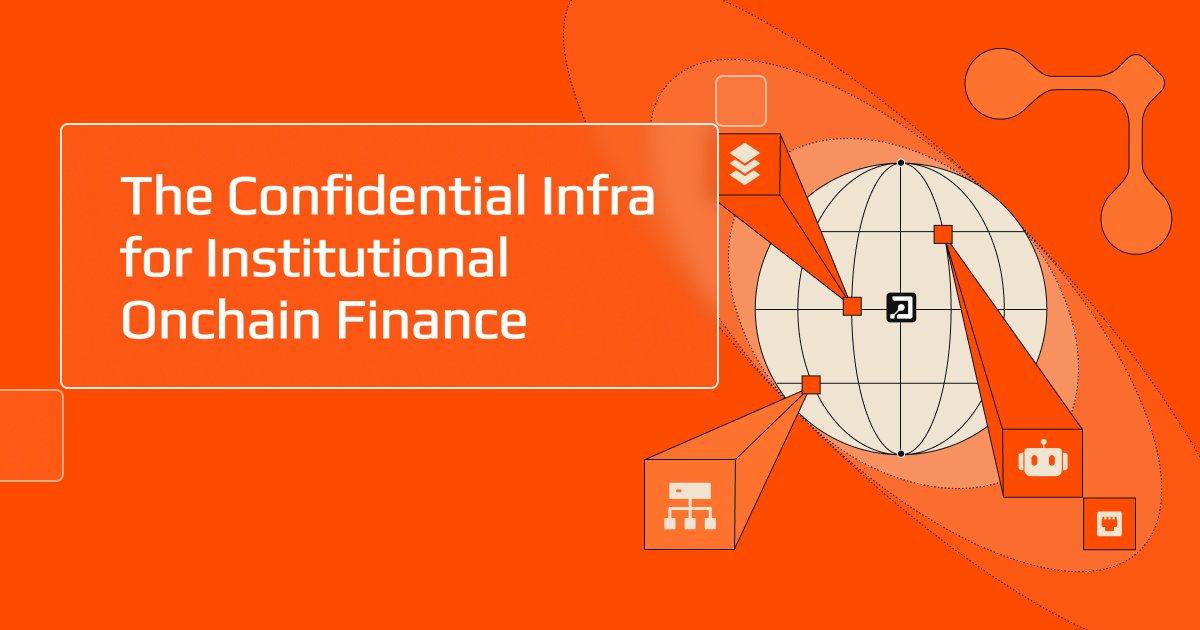
Institutions don’t need another chain.
They need a way to use onchain finance without exposing everything.
Privacy for positions, strategy, counterparties and balances.
Verification for reserves, identity and offchain data.
@primus_labs is combining both through zkTLS and FHE.
zkTLS proves data from exchanges, banks and APIs without revealing the underlying information.
FHE lets applications compute on encrypted data while keeping the actual values hidden.
Private inputs.
Verifiable outcomes.
That combination feels much closer to what institutional onchain finance needs.
Start here → https://t.co/gRCjgpEqtR
Read the brief → https://t.co/BBkHNJGg5A
Institutions don’t need another chain.
They need a way to use onchain finance without exposing everything.
Privacy for positions, strategy, counterparties and balances.
Verification for reserves, identity and offchain data.
@primus_labs is combining both through zkTLS and FHE.
zkTLS proves data from exchanges, banks and APIs without revealing the underlying information.
FHE lets applications compute on encrypted data while keeping the actual values hidden.
Private inputs.
Verifiable outcomes.
That combination feels much closer to what institutional onchain finance needs.
Start here → https://t.co/gRCjgpEqtR
Read the brief → https://t.co/BBkHNJGg5A
Stay Quantum Safe.
Quantum computing is advancing, but access to it is still limited.
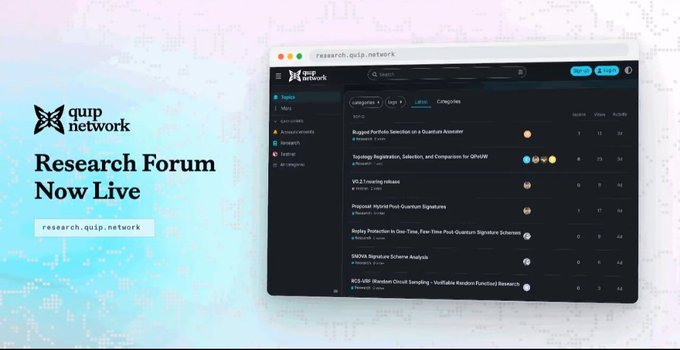
That's what makes @quipnetwork interesting.
Instead of focusing only on more computing power, Quip is building a decentralized marketplace that brings together quantum and classical compute on a shared network.
From testnet progress to quantum resistant security, the focus has been on building infrastructure that can support the next generation of computing.
What stands out to me is the coordination layer. The challenge isn't just creating more compute, it's making sure the right workloads reach the right resources efficiently.
As computing becomes more complex, networks that can organize and scale those resources will become increasingly important.
That's the direction Quip is exploring, and it's one worth watching.
$QUIP