One of my students from last semester dropped by my office today to give me this gift. I’m truly blessed with amazing students. Thankful everyday that I get to share my love of economics with them.
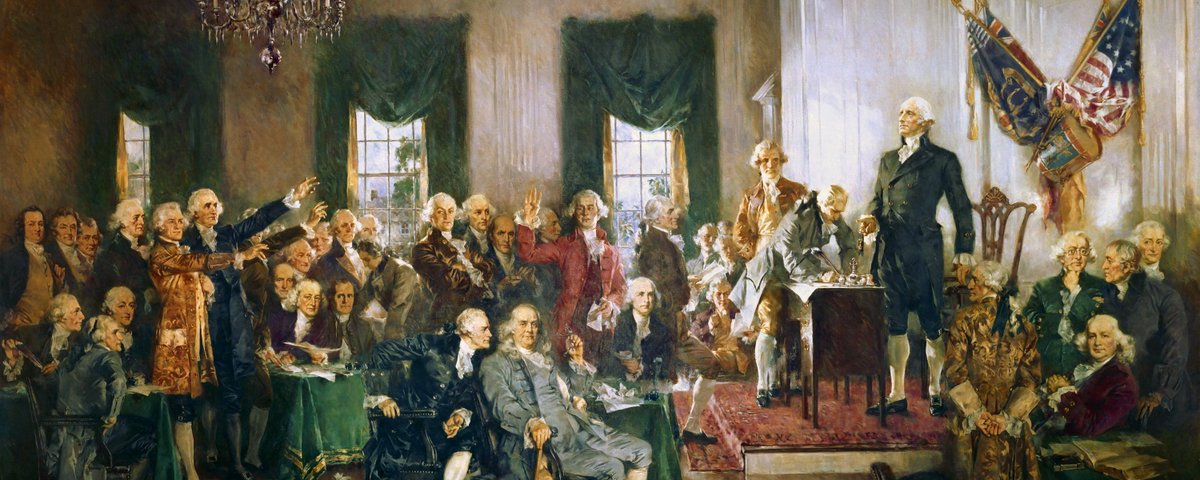
Exactly one month from today, the United States turns 250. To mark it, the Penn Initiative for the Study of Markets @Penn_Exchange is offering a free online course on the economic foundations of the American Founding.
I will lecture on June 23 and July 28, alongside Alan Taylor, Woody Holton, Joseph Wallis, and Jack Rakove, among others.
The course follows the story from colonial settlement to the early republic, showing how economics and institutions shaped political choices at every turn: the road to independence, the Revolutionary War, the Constitutional Convention, and the rival visions of Hamilton and Jefferson.
This is one of my favorite subjects in economic and legal history.
Details and registration here:
https://t.co/Xe2DlWluVi
NEW PUBLICATION: "An interest-group theory of AI-tool governance in science", published in Public Choice. In this paper, I analyze one possible rationale for academics wanting to regulate and constrain the use of AI tools in scientific work: their own interest. Some researchers are less able than others to benefit from the new tools and therefore want to make it difficult for their competitors in academia to use them. https://t.co/kdamO3ZHf6
@p_ganong Link Overleaf project to GitHub. Pull project from repo into the project folder on your computer. Use CC to make changes, push to GitHub, then pull into Overleaf. All changes tracked at GitHub. Also, with Overleaf pro, you also get history to revert.
And again, and again, and again, the market proves to be more flexible and adaptable than the engineers, extrapolating, with their calculators expect. When prices change, behaviour changes. Believe in substitution, in elasticity, in human ingenuity, that is, in the market, and you will get a closer approximation than all doom-mongers. For this of course, a market must exist (e.g., does not apply to the fertility collapse).
I caught Zucman red handed as he did this. By chance, I had downloaded his old datafile before he swapped them.
The backlash against him from this discovery prompted him to restore the old files (which were attached to an already-published paper in the QJE).
A few weeks later, he released a contrived rationalization of his new approach. That new approach has never gone through peer review, and contains multiple methodological choices that fail the smell test at the most basic levels.
Receipts here:
https://t.co/1nEGJ6KTH8
Thanks @profgoose for the 🧵& featuring this work with @faubusiness colleague @BryanPCutsinger We find 87.5% of programmatic accreditor-association pairs are legally embedded or identical. In a fresh run of the data this morning, I also find that higher structural entanglement is associated with lower grad rates and higher borrower delinquency. Important context as the committee works through the governance proposals at @usdoegov this week!
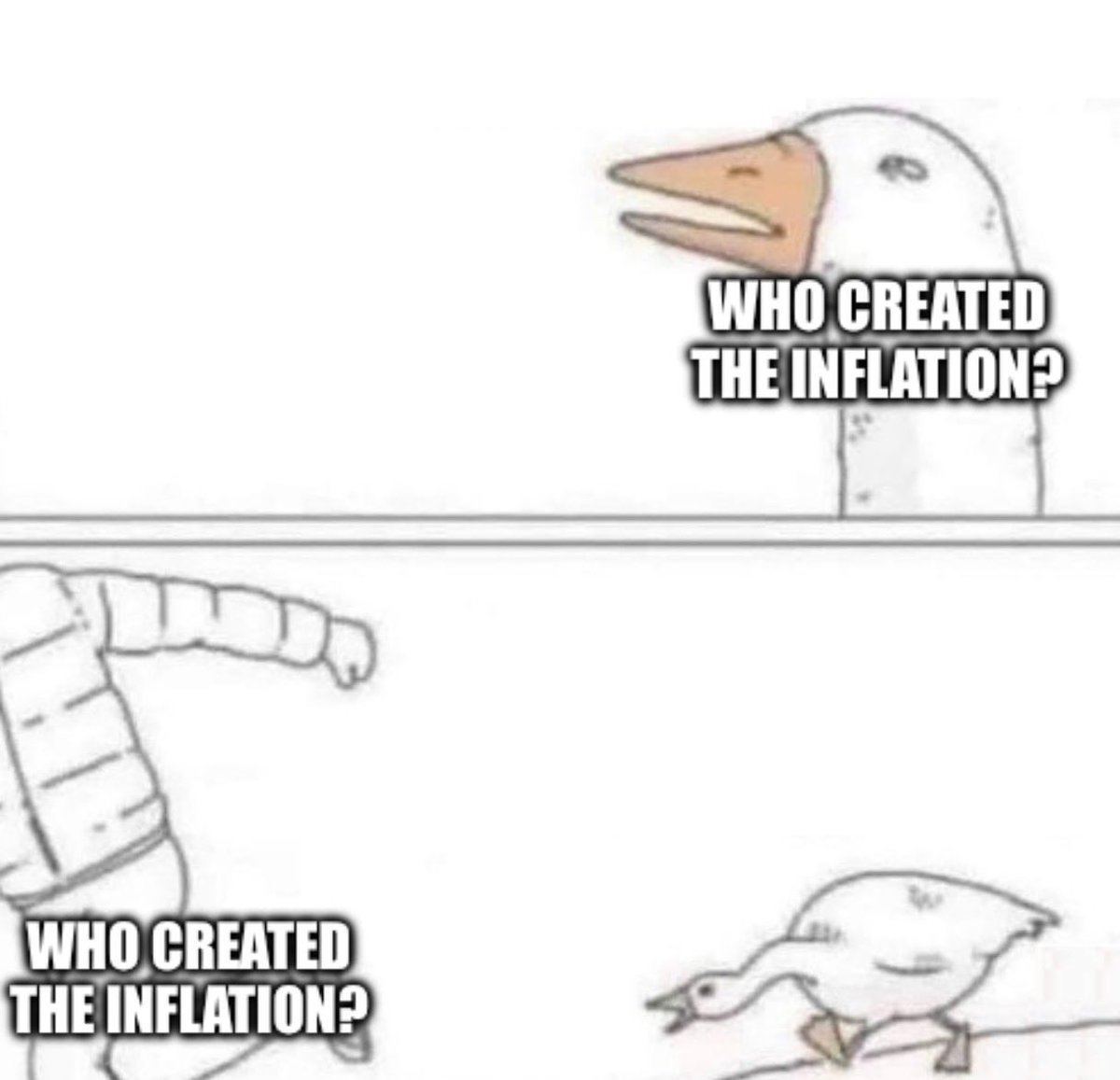
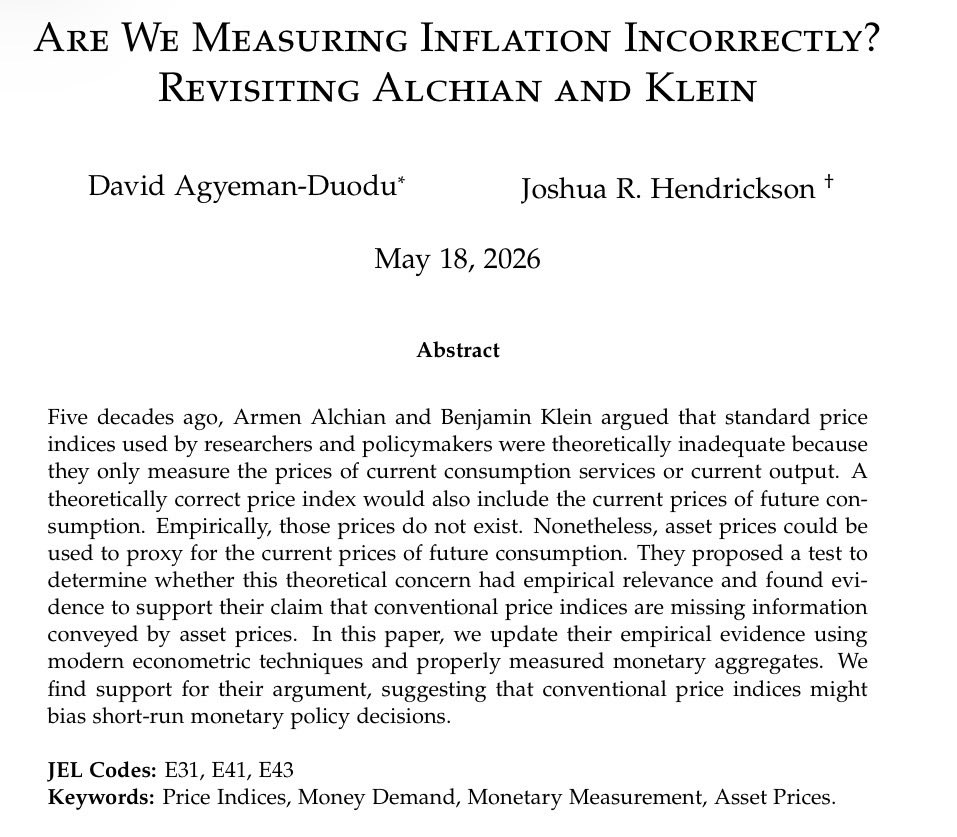
April inflation data suggest price pressures are becoming broader and more persistent, reinforcing the Federal Reserve’s cautious stance on interest rates.
cc: @BryanPCutsinger
https://t.co/kKqv0Y2WOj
“Tell him to enter the password he knows is correct. Inform him it is incorrect. Invite him to reset it. Watch as he enters the password he believed it to be all along. Then tell him he cannot use it… because it is his current password.”
Price stability is not defined, so the Fed in theory could interpret it as flexible inflation targeting (FIT). Which is what they are currently doing. (1/3)
"Law & Economics" goes beyond the courtroom.
In their 1994 paper, Anderson & McChesney took a model of why legal disputes "settle out of court" and used it to explain why relations between frontier settlers and Indian tribes devolved over time.
https://t.co/zz8nH2Q5In
Scott Sumner on @BasilHalperin: "I see Halperin as a pragmatist in the tradition of Bennett McCallum, which is one reason why he’s my favorite young macroeconomist... Like McCallum, Basil Halperin seems to have absorbed both the best of New Keynesian economics and the best of Milton Friedman thought. He also favors NGDP targeting. He also seems to have excellent intuition about which sort of macro models are plausible and which are not—a skill that’s hard to teach. Even their personalities seem a bit similar, as both come across as being very polite." (1/2) https://t.co/Uhy4WfTs9g