Growing a plant you cannot see : ex situ propagation of the endoparasite Rafflesia speciosa to strengthen in situ conservation | Sibbaldia: the International Journal of Botanic Garden Horticulture https://t.co/S6oH7sVA0V
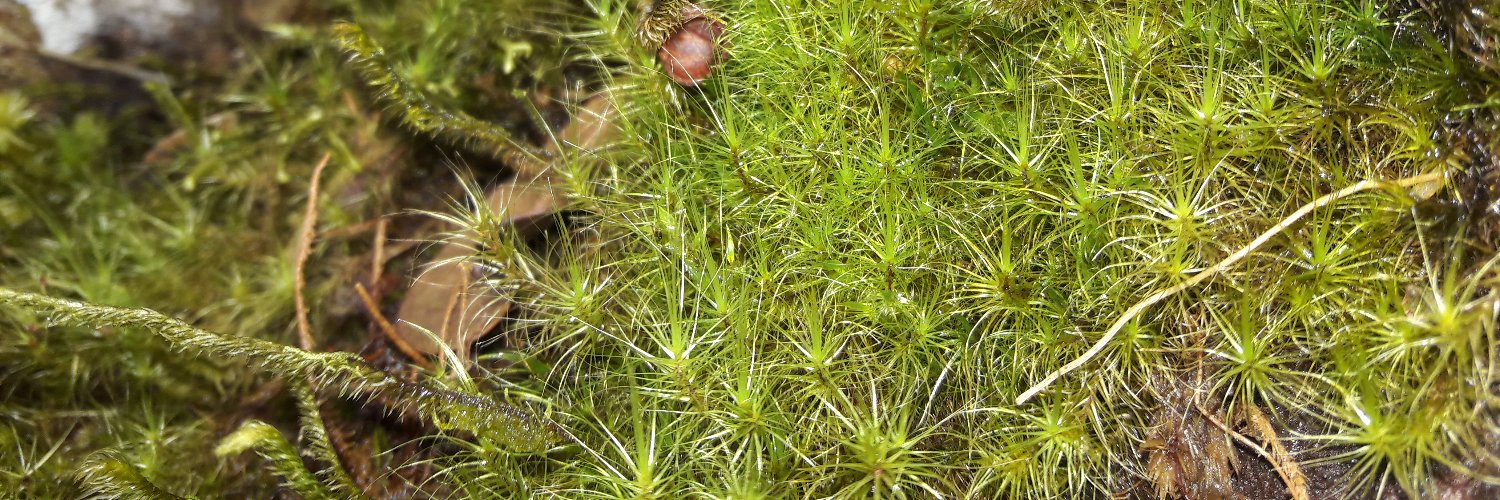
🔥ADVANCE ACCESS🔥: From Protosphagnum to Sphagnum? Additional support for M.F. Neuburg’s hypothesis on the evolution of leaf development in the Permian protosphagnalean mosses
https://t.co/LcrUTMEzb8
#PlantScience
Si les interesa aprender sobre el sexo como categoría biológica y sobre propuestas alternativas contemporáneas al binarismo, como el contextualismo sexual, este artículo, «¿Toda célula tiene un sexo?», está muy chévere. Además, en español y argentino 🙃👇https://t.co/LlPtxGKUNb
To celebrate International Day for Biological Diversity, here is a collection of living things I have painted over the years, from across the tree of life:
Slow motion video of a creeping woodsorrel plant (Oxalis corniculata) ejecting seeds at high speed, a method of seed dispersal known as ballochory, or ballistic dispersal.
📽: N Arun Kumar
🎉 Great news! The paper ‘Grazing mediates microclimate effects on lichen performance near its warm-range margin’ in @annbot by Sonia Merinero and co-authors is now #free for 2 weeks 🧵(1/9)
👉 https://t.co/bxnFToDLuj
#ClimateChange#Ecology#Lichens#PlantScience#AoBpapers
There was a lady who started her PhD a year ahead of me. Eventually, she went for her qualifying exam.
After her 30 mins presentation, she was questioned by the committee for another 1 hour and 30 minutes.
One of the questions she was asked was: Where do transcription and translation take place in the cell? She missed the question completely.
I think the committee was surprised because that was considered very basic science.
At the end of the exam, she was asked to assess her own performance, which is a common practice. She rated herself very highly, and I think that became another concern for the committee because her performance had been considered poor. They probably expected a more honest self-evaluation.
Sadly, she could not continue with the program after that. That was the end of her PhD journey there.
But beyond her experience, I learned something important very quickly: never neglect the basics of science. It is easy to become so focused on complex ideas, advanced techniques, and “big” concepts that you overlook the simple foundations that hold everything together.
After hearing that story, I intentionally went back to revisit my fundamentals. I downloaded materials, watched YouTube videos, and even refreshed my knowledge of statistics. Mind you, I had earned a distinction in Biostatistics…😁 Yet, I still realized there was more depth and clarity I needed.
And interestingly, statistics was part of the questions I was eventually asked during my own exam.
I think many people in science and academia become overly fascinated with complexity while underestimating the importance of truly understanding the basics. But the truth is, good science should be simple enough to explain clearly and understand deeply.
We must pay more attention to the fundamentals because they are what truly make science solid.
This #BiodiversityDay, BHL needs your help.
Since transitioning from the Smithsonian, we are reliant on public donations to keep BHL's 64 million pages freely accessible and discoverable online. 🧪🌱 🌏
Please consider a one-time or recurring donation: https://t.co/OCZBGcXwES
"There are those hearts, reader, that never mend again once they are broken. Or if they do mend, they heal themselves in a crooked and lopsided way, as if sewn together by a careless craftsman."
—Kate DiCamillo, The Tale of Despereaux.
"Science is about failure. We learn from the failures."
Even Nobel Prize laureates fail. Medicine laureate Craig Mello speaks about how the challenge of science goes hand in hand with encountering failure.
Mello shared the 2006 medicine prize with Andrew Fire “for their discovery of RNA interference - gene silencing by double-stranded RNA.”
Human rights are non-negotiable.
They belong to every member of the human family — no matter who they are or whom they love. ❤️💜💙💚💛🧡
#IDAHOBIT#StandUp4HumanRights
Across our planet, ocean animals are facing the climate crisis, habitat destruction, overfishing, and more.
Oceana is working tirelessly to campaign against these issues, but we can't do it without your help. Take action this #EndangeredSpeciesDay: https://t.co/NPEnEHj1he
The fascination in nature is the realisation that when we relax, everything around us is at work to give us the basis for life. This fact alone should fill us with gratitude and treat nature with respect and kindness 💚🌿☘️🌱🌲🌳🍀💚
Pioneering scientist Barbara McClintock made discovery after discovery over the course of her long career in cytogenetics. But she is best remembered for discovering genetic transposition, “jumping genes”.