Most AI failures are not “mystery bugs.” They are predictable outcomes of unverified judgments made somewhere in data capture, evaluation, or review. Proof of Quality is built to make those judgments auditable and accountable.
Today we are publishing the Sapien roadmap so builders can see exactly what is being shipped, when, and why. It is organized around one goal: make Proof of Quality a drop in primitive for any AI pipeline: https://t.co/dmz0tMSBxI
Join us in 30 as we’re joining @Fhenix on this expert panel to chat about the risks of expanding AI into security without proper oversight.
Watch below!
AI is everywhere- your apps, workplace and wallet
Join us June 4, 3PM UTC as we explore the growing risks behind AI expansion, the future of privacy-preserving systems, and what it will take to build trustworthy AI at scale
Hosted by @jack_gk
Featuring @BuildOnSapien & @ElenaCryptoChic
AI systems are moving into decisions that affect security, health, finance, mobility, and business operations. Those systems need quality signals that can be verified.
Proof of Quality turns expert review into a structured, measurable, and trusted layer for AI.
Great question!
To ensure unbiased reviews in the Proof of Quality (PoQ) system:
- Diverse Validator Pool: Multiple experts from various backgrounds reduce individual biases.
- Consensus Mechanism: Collective input from several validators balances out personal opinions.
- Rubric-Based Evaluation: Standardized criteria guide reviews, focusing on specific aspects.
- Economic Alignment: Validators have collateral at stake, incentivizing honest assessments.
- Permanent Attestation: Transparent records hold reviewers accountable for their evaluations.
These elements work together to promote objectivity and trustworthiness in the review process.
Attackers persuaded Meta’s Instagram chatbot to reset credentials for high-profile accounts.
The chatbot was allowed to take a sensitive action without a verifiable approval layer.
Proof of Quality belongs at that boundary: before an AI system resets credentials, escalates permissions, closes an alert, or changes account state.
New: Hackers have been stealing high-profile Instagram accounts by simply asking Meta's AI support chatbot to change the email associated with the account they want to steal.
Shockingly easy, terrible flaw associated with offloading support to AI:
https://t.co/PvRm8u0MV7
As reported by @techradar, teams using AI coding tools multiple times per day are releasing faster, with 45% deploying daily or more often.
The same piece says 69% of very frequent AI users report regular deployment problems with AI-generated code, while nearly half say manual work in QA, remediation, and validation has increased.
Proof of Quality fixes this.
On May 29, a California appeals court threw out a lower court ruling in a case after finding the judge relied on a made-up legal precedent that had already been flagged as fake before the ruling was issued.
The failure was that no verification layer stopped the fake citation before it shaped a decision.
In today's blog post, we explore how AI security tools changed the economics of security auditing.
Candidate vulnerabilities are now cheaper and faster to generate, but we have no way of proving outright whether a finding is actually to be believed. False positives consume senior auditor time, delay remediation, confuse clients, and weaken trust in the final report.
The next phase of AI-assisted security work needs a stronger validation layer: qualified expert review, clear rubrics, reviewer agreement, severity calibration, and, most importantly, a provable record behind every decision.
Sapien’s Proof of Quality turns AI-generated findings into verified security signals, helping teams separate confirmed risk from noise at the speed AI now demands.
For AI agents, “verified action” and “quality output” are not the same thing.
One proves what happened. The other proves whether it was good enough.
Proof of Quality proves the latter.
Microsoft Research published notes on its May research around AI delegation and long-horizon reliability. The benchmark studies delegated workflows where an AI modifies important artifacts over multiple steps.
Frontier models introduced sparse but consequential errors, with roughly 19-34% degradation in artifact fidelity over 20 delegated iterations.
Now live on CoinDCX 🚨
$SAPIEN (Sapien) is listed!
A decentralized social intelligence platform built to power AI training with human knowledge, verified insights, and community-driven data contributions.
Explore $SAPIEN now.
#CoinDCXListing#50kTokensOnCoinDCX
Disclaimer: Crypto products and NFTs are unregulated and can be highly risky. There may be no regulatory recourse for any loss from such transactions.
For any queries, visit https://t.co/nxGVhVKoWw
Why are AI-generated security findings creating a review problem?
AI tools can surface more possible vulnerabilities across larger codebases, but every finding still needs expert validation.
The hard part is determining whether the issue is exploitable, relevant to the system being audited, and severe enough to act on.
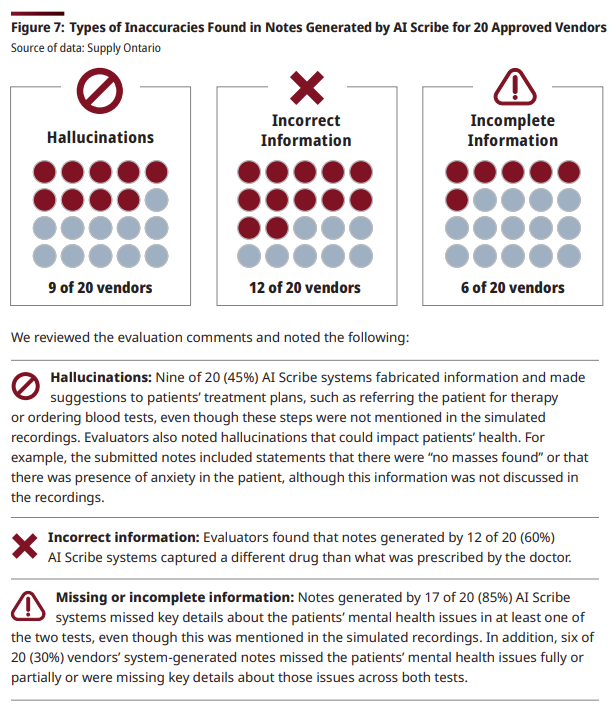
Recurrent issue which gets even worst when AI turns into a doctor as they audited recently in Canada. Proof of quality is more necessary than ever before.
The risk is that an agent keeps working while the artifact slowly stops matching reality.
Proof of Quality fixes this with verification loops tied to the work product, not trust in the agent.