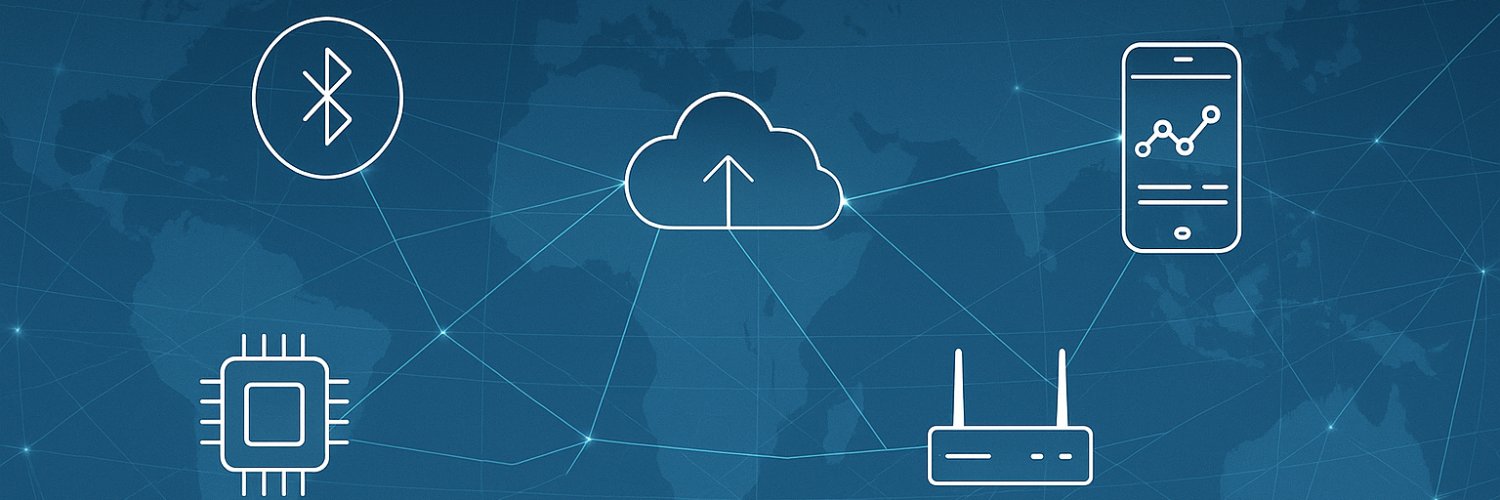
BLE on dedicated SoCs: a few µA in idle
BLE on ESP32: ~35 mA base current
For a battery powered product, that’s the difference between months and days
💡 Always do battery profiling before locking in hardware
Want to estimate the battery life for your product?
DMs are open.
The point is not a smaller ChatGPT.
It is better placement of intelligence.
Make the specialists already inside our machines a little faster, a little more private, and a little less dependent on the network.
I wrote the longer version here: https://t.co/R6VowNEWvf
Where does on-device intelligence matter first in your work ; safety, privacy, cost, or offline reliability?
Most AI still lives in the cloud.
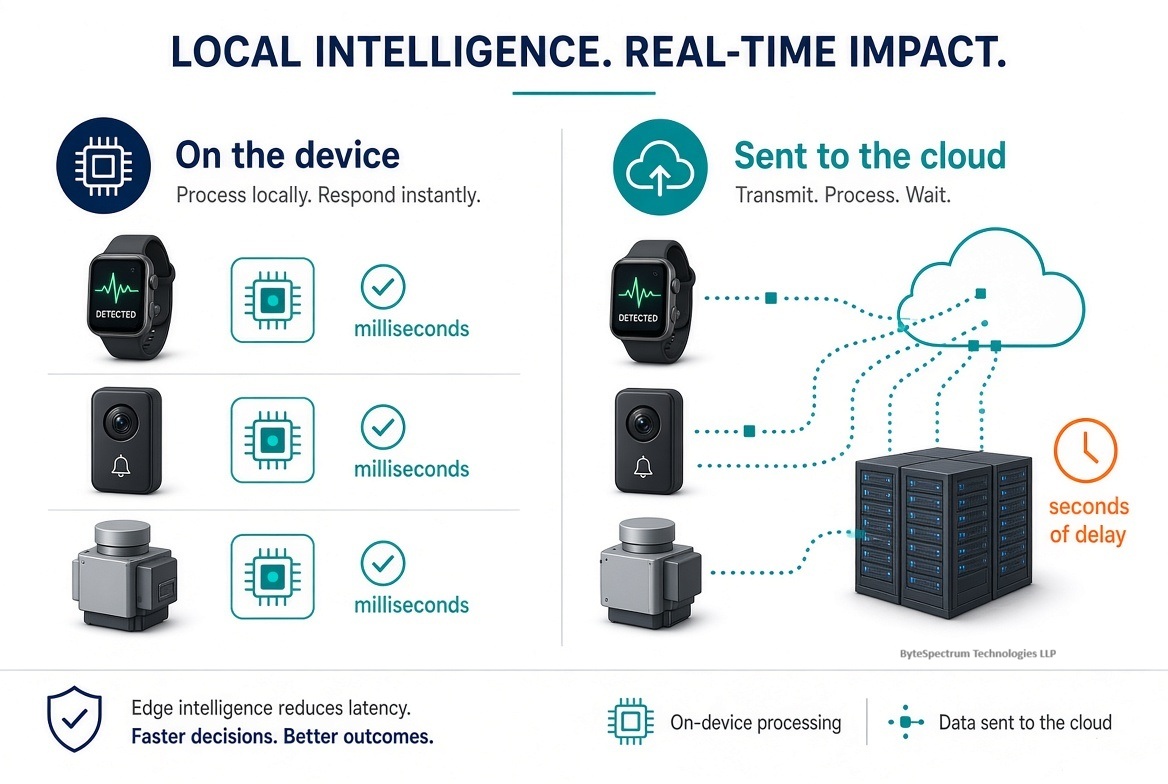
The more interesting change is smaller: the chip already inside a watch, camera, or motor can now think locally.
That’s Edge AI from the embedded side.
A short thread.
#EdgeAI#EmbeddedSystems
The hard part is the box itself.
~ Memory is tiny.
~ Power is limited.
~ Making the model smaller costs a little accuracy.
~ Updating thousands of devices is messier than updating one server.
That’s why most real products are hybrid: local for the urgent call, cloud for the rare or complex one.
@mackynaijuka Yes. We know how this tune is done, but we don’t run the VNA ourselves.
An external lab does the measurements and sends the report. We use that report to change the PCB and matching network.
@hyxnjo@hittheoilrig 0.04s off a laser gate is already in how you mark start/stop, not the app.
The last 20ms is usually BLE jitter if the phone is timestamping the event.
Stamp both edges on the wearable and send only the delta this will drop the radio delay out of the time
Wearable RFID range is usually enclosure detuning and the ground-plane return path, not the IC.
Body effect plus the final plastic can move the match off the eval-board tune.
If you already have a stack-up, the next useful step is VNA on the worn housing, not another chip swap.
@kelin_online@wormyrocks Post-ship battery gains on a Wi-Fi + thermal-print camera usually come from radio dwell and print-motor inrush, not a bigger cell.
If the new image helped, the next win is usually a measured sleep current and a tighter wake budget before batch 4.
@pozyxLabs Hello @pozyxLabs
We've built several low-power UWB/BLE products with RTOS under the hood. The industrial applications angle is exactly where we want to focus next. Very interested
let's connect!
Github is going to steal your code to make you job less,
The policy change will take into effect from 24 April.
If you want to save your code/data
Just run off the stealing from the provacy settings.
Attching a picture for reference.
Got it. Heads up GitHub is changing Copilot policy.
From April 24, your chats, prompts, code suggestions, and context will be used by default to train their AI models (for Free, Pro, Pro+ users).
If you don't want that, turn it off now.
Go to: https://t.co/jF58wTFr50
Under Privacy, set “Allow GitHub to use my data for AI model training" to Disabled.
Do it quick before the change kicks in.
🛠️ Hardware debug help needed (I2C issue)
ESP32 (ESP-IDF v5.2.5) + I2C bus with 13 slaves.
Works fine normally.
But when ESP32 enters deep sleep:
• SDA/SCL drop to ~1.2 V
• After wake-up, lines never return to 3.3 V
• I2C stays stuck until power cycle
Pull-ups: 2.2k → 3.3 V
Looks like a slave holding the bus or back-powering/leakage during sleep.
Has anyone debugged this kind of behavior?
What’s the right HW/FW fix with many slaves?
I asked GPT-5.1-Codex to hunt down a memory leak in my c based project.
It confidently pointed at… nothing. A complete red herring. 😂
So I dug in myself, sprinkled debug logs, and found the real bug.
Then I handed the exact fix back to GPT… and suddenly it “recognizes” it.
Like bro, am I debugging my code or training you? 🤦♂️
AI is great, but nothing beats real engineering instincts. 🚀💻
Interrupts are powerful and dangerous.
Used well: they make your firmware responsive.
Used poorly: they create chaos.
Golden rules:
- Keep ISRs short
- Avoid calling non-reentrant code
- Never block or delay inside an ISR
- Defer work to tasks or queues
Fast ISR, stable system.
@makemytripcare Thank you Muskann for calling
But the moral and take away is same, makemyTrip Can not resolve this kind of issue so my advice to all is book your tickets without third party apps
Horrible experience with @makemytrip and @IndiGo6E.
Avoid booking flights through third-party apps.
Here’s what happened:
I booked a round trip AMD ↔ BLR.
While returning, I missed my flight. Indigo rescheduled me to the next flight with an additional ₹3,000 fee — acceptable.
But then the invoice mess started:
• @makemytrip invoice: ₹12,385
• @IndiGo6E revised invoice: ₹13,936 (includes the extra ₹3,000 but shows reduced MMT commission)
• My actual total expense: ₹15,385
• Correct invoice showing actual amount: NONE
MMT says they cannot revise the invoice.
Indigo’s invoice shows a different amount than what I actually paid.
To make it worse, I even have call recordings with MMT customer care acknowledging the issue — still no resolution.
Screenshots attached.
Extremely disappointing experience.
Final advice:
If you value transparency, correct invoicing, and smooth issue resolution - always book flights directly from the airline website. Third-party apps may look convenient, but when something goes wrong, you’re stuck between two companies with no accountability.