महाराष्ट्रातील लोकप्रिय पॉडकास्ट नेटवर्क ‘अमुक तमुक – धनदौलत’ वर माझा नवीन भाग प्रकाशित झाला आहे.
🎙️ *Debt Trap Explained : आपण घेतलेलं कर्ज आपल्यासाठी काम करतंय की आपण कर्जासाठी?*
✅ आपण कर्ज का घेतो - खऱ्या गरजांसाठी की सामाजिक दबावामुळे?
✅ फोन, गाडी, क्रेडिट कार्ड EMI, BNPL, UPI खर्च आणि ‘आता घेऊ, नंतर भरू’ अशा सवयी आपल्याला आर्थिक दृष्ट्या कुठे नेतात?
✅ जर तुम्हाला “कर्ज घ्यावं का?”, “किती घ्यावं?”, “हे जास्त तर नाही ना?” असे प्रश्न पडत असतील, तर हा भाग उपयुक्त ठरेल.
👉 पाहण्यासाठी लिंक: https://t.co/halkOjDN5P
आपले मौल्यवान अभिप्राय नक्की कळवा. 🙏
सीए अभिजीत कोळपकर
.@BernieSanders , it is a time to celebrate. @elonmusk has created enormous value for society by building @SpaceX, driving down the cost of rocket launches and creating a global satellite communication network that has brought high speed, low-cost internet and communication access to hundreds of millions and eventually billions of people along with critical advantages for our military and our nation’s defense.
SpaceX and its technologies will cause an acceleration in the growth of wages and wealth creation globally, including in some of the poorest communities in the U.S. and around the world.
Access to low-cost, high speed communications everywhere will allow children around the world to be educated, families to build businesses, and life-saving medical knowledge and care to be available everywhere.
SpaceX will materially bring down the cost of compute, advancing AI and humanity.
Meanwhile, 4,000 SpaceX employees yesterday became millionaires, including hourly wage employees who you claim you are trying to help.
The Elon Musks of the world drive growth, global GDP, and provide access to goods and services at lower cost that would otherwise not exist.
Elon’s nominal trillionaire status is due to his ownership of SpaceX, Tesla, Neuralink, the Boring Company and his other initiatives that have brought new technologies that improve our everyday lives.
Elon is not sitting on a trillion dollar pile of cash, jewelry and gold. He is using his controlling stakes in his companies to advance mankind. Elon’s companies don’t pay dividends. They reinvest all of their capital to accelerate innovation and value creation.
Elon is working 24/7 for all of us. He deserves respect and appreciation, not smears.
Bernie, your socialism would never allow a SpaceX to be built. Socialism has only proven to impoverish mankind and lead to death and destruction.
We need to create the conditions for more SpaceXs to be built, not attack the great entrepreneurs who are helping to advance our country.
Your bank will never tell you this 🔥 RBI has removed major roadblocks to becoming debt-free (rules now in effect since Jan 2026):
• Zero foreclosure charges for individuals
• Zero prepayment penalties for MSEs
• Applies to floating rate loans
Got a bonus, tax refund or some extra cash in hand?
Don’t keep it idle — attack your loan principal right away.
Early repayment season is open! 🏦💰
#RBI #DebtFree #FinancialLiteracy #MoneyTips #moneyworks
Google which is cash surplus, just announced an additional capital raise of $80 bn.
Google annual profit is $160 bn, last quarter $62 bn, and market cap $4.5 trillion. That is close to total profits and market cap of all Indian listed companies put together.
It’s a wake up call to all companies to invest into the future, whatever the present maybe.
Now that IPL is done and dusted, time for India to focus on business of business.
I've already retweeted @Options_IndiaAB post.
Since I want this to reach lot of people, posting it separately too.
Here is the post:
I recently spent 2 weeks in China.
6 cities: Shanghai, Beijing, Xi’an, Zhangjiajie, Chongqing and Chengdu.
I went there with curiosity.
Like many Indians, I had heard a lot about China through media, social media and conversations. I expected to see progress, maybe discover some business ideas, and understand what the country is actually building.
I came back with a very uncomfortable feeling.
Not because I found a business idea for myself.
But because I saw 100 things that governments can do when infrastructure, tourism, transport, urban planning and civic systems are treated seriously.
I travelled within China by flights, trains, cars and local transport. The infrastructure was honestly stunning.
Clean cities. Smooth roads. High-speed trains. Well-managed traffic. Public spaces that actually feel designed for people. Tourist destinations that are built, maintained and promoted like national assets.
And then I kept thinking about India.
We keep comparing ourselves to China. Our media keeps telling us how India is catching up, how China is restrictive, how we are better in so many ways.
After spending time there and speaking to people, I realised how much of that narrative is just comfort food.
China is not perfect. No country is.
But on infrastructure, execution, tourism, civic discipline and quality of urban life, they are not 5 years ahead of us.
They are decades ahead.
The saddest part for me was the currency.
Everything felt expensive. Not because China was insanely expensive, but because the rupee has weakened so much that even normal spending starts feeling heavy. As an Indian taxpayer, that genuinely hurt.
We pay taxes. We work hard. We talk about becoming a global power.
But where is the quality of life?
Where is the civic sense?
Where is the infrastructure that makes daily life easier?
Where is the tourism vision beyond religious tourism?
I met travellers from other countries who were excited to visit China because they wanted to see its progress. When I asked about India, many had no real desire to visit. Not out of hate. India simply was not on their aspirational travel list.
That should bother us.
Even the so-called “closed internet” surprised me. We are told people there are missing out because they don’t use Google, Instagram, WhatsApp or Facebook.
But China has built its own digital ecosystem. Payments, maps, transport, messaging, shopping, everything works inside their own infrastructure. People did not seem to feel deprived. They seemed adapted.
Again, this is not a hate post.
I love India. That is exactly why this trip bothered me.
Patriotism cannot only be about saying we are great.
Real patriotism is having the courage to admit where we are falling behind.
China made me realise one thing very clearly:
India’s potential is not the problem.
Execution is.
And unless we stop comforting ourselves with comparisons and start demanding better infrastructure, better governance, better tourism, cleaner cities and a higher quality of life, we will keep celebrating the idea of progress instead of actually living it.
Matt LeBlanc had $11 to his name. In 1994, the director of Friends flew the cast to Vegas on a private jet. Over dinner, he warned them this was the last time they'd go anywhere without being mobbed. They didn't believe him.
His name was James Burrows. He'd directed the pilot and had a gut feeling the show was going to explode, so he called the head of Warner Bros. and said: "Give me the plane. I'll pay for dinner."
He took them to Spago, the famous restaurant inside Caesars Palace. Booked the center table on purpose. Then he had them look around at the strangers walking past without a second glance, and said: "This is your last shot at anonymity. Once the show airs, you guys will never be able to go anywhere without being hounded."
Lisa Kudrow remembers thinking, "Really? We don't know how the show's going to do. Why is he so certain?"
Burrows handed each of them $200 in chips. LeBlanc lost his on craps in seconds, so Burrows loaned him another $200. They all wrote him reimbursement checks the next week.
The pilot aired September 22, 1994. 22 million people watched.
By season 2, Warner Bros. had quietly started paying Aniston and Schwimmer more than the rest. The cast found out. They refused to negotiate one-by-one ever again, and Aniston and Schwimmer even took pay cuts so all six earned the same.
By the final season they were each pulling in $1 million an episode, which meant the cast alone cost $6 million every time they filmed a show. In 2000, they did something no TV cast had ever pulled off: they took 2 percent of every dollar Warner Bros. would ever earn from Friends. Forever.
Forbes says Warner Bros. has now made $4.8 billion off the show. It still pulls in roughly $1 billion a year from reruns, streaming, and international rights. In April 2026, Lisa Kudrow told The Times of London that she and her surviving castmates each still take home around $20 million a year from a show they finished filming 21 years ago.
Burrows was right. 52.5 million people watched the finale, the fifth most-watched finale in American TV history. None of them have walked through a casino unnoticed since that night at Spago.
I'll admit this might sound odd coming from me, maybe even clichéd. But it's something I've been sitting with for a while, so here goes.
When I started out, like most people, I had a simple wealth goal. I'd actually written it down: hit ₹5 crore, retire in Goa, beach shack, done. That was the dream.
After the Zerodha journey, I find myself on a very different side of that equation, and the dark inequalities of wealth and opportunity are harder to ignore than ever. We all know the numbers on inequality. The concentration of wealth among the top 1% is severe and getting worse, and it's even starker among the top 0.1%. The post-2008 era of rising asset prices has likely made this worse, because the people who hold financial assets are, by definition, people who already have money.
This isn't unique to India. Barring a few exceptions, it's a global phenomenon.
I'm cautious about attributing every socio-political problem we face today to inequality, but it's hard to deny the role it's played in the political upheavals we're seeing across the world. History rarely shows that sustained, extreme inequality ends well. To me, it increasingly feels like sitting in a car with the brakes cut, watching a cliff approach. Btw, all of this even before AI, which has a non-trivial probability of making things worse.
I'll stop short of prescribing solutions. It's too easy to reach for simple answers to complicated problems, and that's a separate conversation entirely. But I think we need to collectively acknowledge this: wealth that just sits in financial assets whose value keeps compounding upward doesn't do much good for anyone beyond those who already have it. And if that wealth isn't in motion, if it isn't doing some social good, the fabric that holds us together will only continue to fray and lead to cynicism, resentment, and worse yet, nihilism. We're already seeing all of it.
What I am saying is that even if a portion of that wealth were channelled into things that could materially improve lives, that seems worth doing. Hoarding wealth, in the grand scheme of things, doesn't really help anyone.
I recently had dinner with Dr Devi Shetty, the founder of Narayana Hospitals. For those who don't know him, he's the guy who figured out how to do open heart surgery for a few hundred dollars when the same procedure costs a bomb in the US. Narayana has 18,000 beds across India, and if you ask most middle-class people in Bangalore about it, they'll speak highly of it.
There was one thing I kept thinking about over and over again after meeting him.
Narayana's market cap is around ₹38,000 crore. Now compare that to pretty much any half-decent financial services business in India, and it'll be valued more than that, including Zerodha. A brokerage, worth more than a hospital chain, that has probably saved hundreds of thousands of lives.
I get the arguments. If you're a fund manager/analyst, you can immediately explain it away using margins, capex, asset-light vs asset-heavy, and all that, and I'm not saying the market is wrong.
But it's still a strange world we've built, where the businesses closest to money get valued the highest, and the ones doing the hard and essential things get priced like boring utilities. A hospital carries physical infrastructure, enormous liability, thin margins and the actual weight of keeping people alive. And somehow that's worth less than a platform for buying and selling stocks.
I don't have a clean take on this. All of this just felt odd.
Ps: Nothing here is investment advice. For that, go to @zerodhavarsity
🚨 RBI is changing how your credit score behaves.
Monthly reporting → 15 days → soon weekly (from July 1, 2026).
Your CIBIL score is no longer a snapshot. It’s becoming a live ledger.
What changes for you:
1. Faster impact: Prepay a loan → score improves within days
2. No loan stacking: Multiple loans won’t stay hidden
3. No cushion: Even short EMI delays hit quickly
4. Better pricing: Banks can assess you in near real-time
For businesses: Faster working capital + quicker credit decisions.
Bottom line:
Good behaviour gets rewarded faster.
Bad behaviour gets exposed faster.
Credit is no longer monthly. It’s continuous.
#RBI #CIBIL #CreditScore #PersonalFinance #Loans
थाईलैंड की एक उद्यमी महिला वर्ष 2005 में पुणे में श्रीमंत दगडूशेठ हलवाई गणपति के दर्शन के लिए आई थीं। इसके बाद वह महिला हर महीने थाईलैंड से पुणे दर्शन के लिए आने लगीं। उनकी इच्छा थी कि थाईलैंड में भी दगडूशेठ गणपति का मंदिर बनाया जाए। प्रारंभ में ट्रस्ट ने उन्हें इसकी अनुमति नहीं दी। परन्तु कुछ समय पश्चात, ट्रस्ट ने महिला की निस्सीम भक्ति को देखकर कुछ वर्षों बाद मंदिर निर्माण की अनुमति दे दी। श्री गणपति की सात सौ किलो वजनी मूर्ति जहाजों के माध्यम से थाईलैंड भेजी गई और पुणे के मंदिर की हूबहू प्रतिकृति जैसा ही मंदिर बनाया गया। इस वर्ष वहां का पहला गणपति उत्सव मनाया जा रहा है। गणपति बप्पा मोरया!
The most satisfying downfall for me.
Salespeople from Byju's would insult kids in front of their parents by asking them questions 2-3 grades above their standard to make them feel dumb and sell their shitty course.
One of their loser manager was boasting on linkedin how he tricked a poor farmer to take a loan against his small land to purchase a course from Byju's.
Not only that, the farmer put that loser manager's photo in the little temple they have build inside their home, thinking this guy is good for their kid's future.
Sales people from Byju's would trick people into getting loans telling them what they are filling is an EMI form and not a loan. They would get their money, and the collecting agents would later on harass the family.
All this is just a tip of the iceberg of the shady shit of Byju's
They did not build a business, they built an empire of malpractices and scams. I so glad the company is bankrupt.
Watched the Dinosaurs documentary on Netflix this weekend. Highly recommend, especially with kids.
Dinosaurs ruled this planet for 165 million years. Then an asteroid they never saw coming ended it all in a geological blink.
Put that in perspective.
Humans with abstract thinking, art, and complex language, what we'd call truly modern humans, have existed for maybe 50,000 to 100,000 years.
Civilisation as we know it? Writing, cities, organised society? Maybe 5,000 years.
The version with industrial-scale technology, global trade, and the ability to reshape the planet? Barely 200 years.
And the version with nuclear weapons, AI, and the ability to end all of it? Less than 100 years.
We solved the asteroid problem, by the way. NASA can now track and deflect them. The thing that wiped out 165 million years of dinosaurs, we've figured that one out.
And yet billions are being spent daily on war and destruction, making an already bad climate situation even worse.
The threats coming from the universe are becoming manageable. The ones we're creating ourselves, not so much.
The dinosaurs had no choice. The asteroid just came.
We do. That's what makes what's happening right now so much harder to watch.
छोट्यातून मोठ्याकडे
एकदम सोपा उपाय सांगतो. हा मी स्वतः अनेक वेळा यशस्वीरीत्या वापरला आहे.
१) एकदम दररोज रात्री लवकर झोपणे आणि सकाळी पाच वाजता उठणे सुरू करण्यापेक्षा दर आठवड्याला रात्री झोपण्याची आणि सकाळी उठण्याची वेळ पंधरा ते वीस मिनिटांनी कमी करत जावी आपोआप दोनेक महिन्यांमध्ये योग्य वेळा साध्य होतात.
२) एकदम मेडिटेशन करायला मनाचा विरोध असतो. त्यामुळे पाच मिनिटांपासून सुरुवात करून दर दोन चार पाच दिवसाला दोन-तीन मिनिटांनी वेळ वाढवत न्यावी.
३) एकदम तास दोन तास व्यायाम सुरू करण्यापेक्षा अगदी 15 ते 20 मिनिटांच्या हलक्या व्यायामापासून सुरुवात करून हळूहळू आपल्या सोयीप्रमाणे वेळ आणि इंटेन्सिटी वाढवत न्यावी.
४) आहारात मोठे बदल करण्यापेक्षा कालपेक्षा आज घास दोन घास कमी अशा पद्धतीने आहारातील कार्ब्स कमी करून प्रोटीन्स व फायबर वाढवत न्यावे.
५) एकदम पुस्तक वाचून काढण्यापेक्षा एखाद्या आवडीच्या विषयावरील पुस्तक निवडून किंवा मनोरंजक कादंबरी निवडून सुरुवातीला दोन चार पाने दररोज किंवा दहा मिनिटे दररोज अशी सुरुवात करून हळूहळू वेळ व वाचन वाढवत जावे.
६) एकदम स्क्रीन टाईम कमी करण्यापेक्षा आपल्या दररोजच्या ढोबळ टीव्ही, मोबाईल वरील आपला स्क्रीन टाईम लक्षात घेऊन दररोज किंवा ठराविक अंतराने त्यात 15 ते 20 मिनिटांची कपात करत जावे म्हणजे कालांतराने तो व्यापक कमी होऊन जातो.
७) अगदी संपूर्ण दिवसाचे नियोजन करण्यापेक्षा सुरुवातीला दुसऱ्या दिवसाची दोन ते तीन प्रमुख कामे लिहून काढून त्यांची नियोजन करावे व नियोजना प्रमाणे पार पाडावीत. दर आठवड्याला त्यात एक दोन एक दोन कामांची भर टाकत जावी. हळूहळू संपूर्ण दिवसाचे नियोजन करून त्याप्रमाणे काम करण्याची सवय पडून जाते.
८) एकदम ए आय किंवा मोठे स्किल शिकण्यापेक्षा दर आठवड्याला युट्युब किंवा इतर ठिकाणी ट्यूटर घेऊन त्याचे प्रॅक्टिकल एप्लीकेशन शिकून घ्यावे. म्हणजे आपल्या कौशल्यांमध्ये अधिकाधिक वाढ होत जाऊन हळूहळू आपण कोर सेक्टरमध्ये कौशल्य आत्मसात करायला सक्षम होत जातो.
एकदम मोठा बदल करायला मनाचा अवरोध असतो. पण छोट्या छोट्या बदलाला मात्र मन सहज तयार होते आणि सातत्यपूर्ण केलेल्या छोट्या छोट्या बदलांमुळे कालांतराने मोठे बदल आपोआप साध्य होऊन जातात.
डॉ प्रशांत भामरे.
In the 19th century, it was common for people to read every book in their family's library. Abraham Lincoln educated himself entirely through reading. He would walk miles to borrow a book and read it by firelight. No teachers. No curriculum. Just books and determination.
In fields that require solving problems, like mathematics and science, you have to actually practice. But in the humanities, extensive reading is almost all you need. If you read enough, you understand history and literature and philosophy and politics. The knowledge comes through the reading.
A Bengaluru resident lost his ₹1.20 crore flat after missing just three home loan EMIs due to job loss. The SARFAESI Act auctioned the flat for a mere ₹95 lakh.
CA Meenal Goel explained that her neighbour had been diligently paying EMIs for eight years. However, after default, the bank invoked the SARFAESI Act, which permits recovery without court intervention.
Within 60 days, the flat was auctioned. The bank managed to recover approximately ₹80 lakh of the outstanding loan, leaving the resident with a mere ₹15 lakh.
This unfortunate incident serves as a stark reminder of the significance of maintaining emergency funds, the potential risks associated with job loss, and the immense pressure that home loans can exert during periods of unemployment.
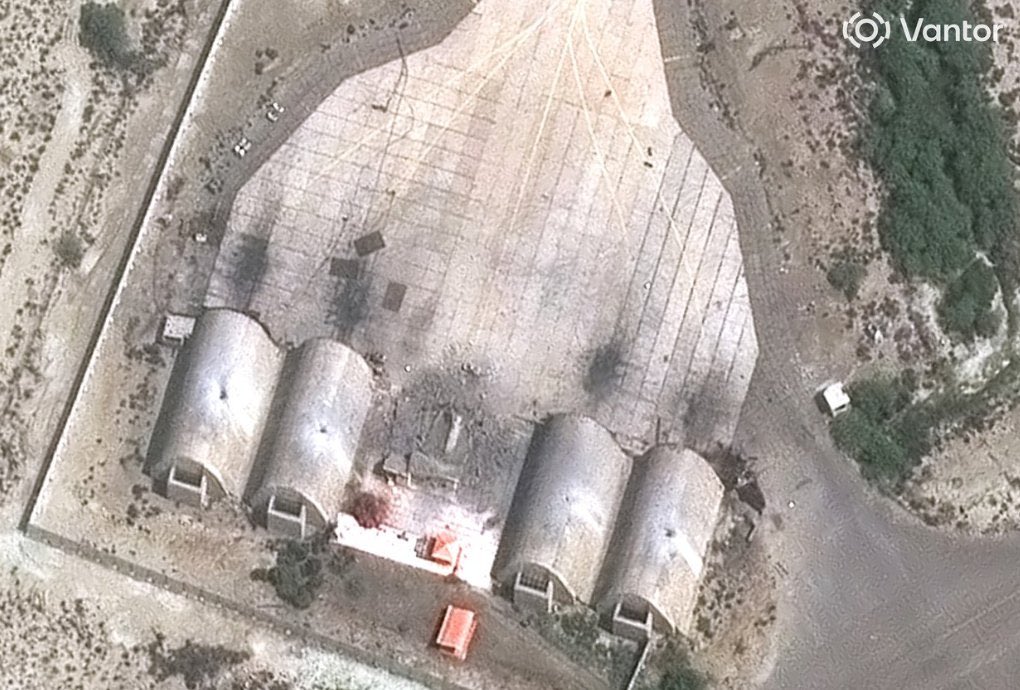
You’re probably overwhelmed by the flood of battle damage imagery from Iran etc on your timeline, but take a moment to look at this photograph of Iran’s Chabahar Konarak Airport.
Look closely at the holes punched cleanly through the roofs of the 4 hardened aircraft shelters by air-launched precision penetrator weapons.
Four clean holes practically in a straight line.
Notice how there are no chaotic scars of conventional bombing. Each entry point sits with almost elegant, geometric precision, spaced evenly, placed exactly where the structure is most vulnerable.
The air strikes cleanly calibrated to penetrate the reinforced concrete and detonate inside, collapsing the protected space within while leaving the outer structure largely intact.
It’s the visual signature of intelligence-led, precision-guided air warfare, where the goal is to kill the aircraft and infra inside. Just controlled, deliberate punctures that signal more than brute force (there’s plenty of that elsewhere).
The targeting design itself here is the message: your assets are mapped, your protections are understood, and even your most hardened spaces are reachable at will.
If your child becomes a reader, about 80% of the education job is already done. That's my honest assessment after working in education for over thirty years. Everything else is secondary. Most parents think science education is important. Yes it is. But if you can't read the biology textbook, you're not going to learn biology.
Reading is the meta-skill that enables all other skills. History requires reading. Science requires reading. Even math increasingly requires reading as it becomes more sophisticated. The child who reads voraciously will figure out everything else. The child who doesn't will struggle with everything.