We usually arrive in a hurry and leave in one. 🚑
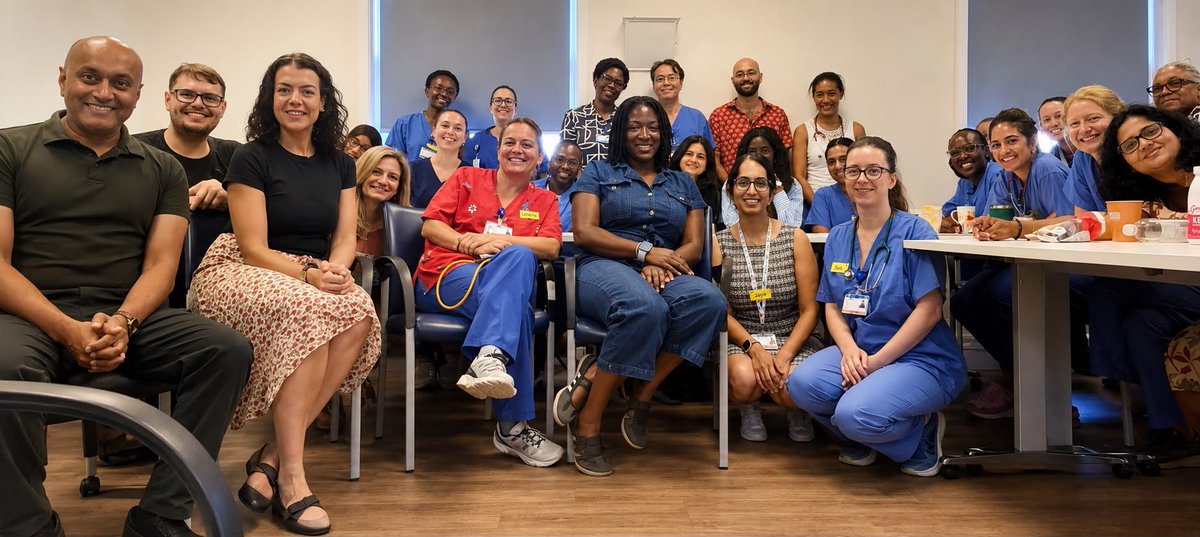
Today was the opposite: a full outreach study day with neonatal colleagues from St George's, Kingston and St Helier.
Same teams. Same phone numbers. Better acquainted. ☕
25 student doctors. 4 medical schools. 1 flight home. ✈️
Week 2 of the London Medical Exchange Summer School: we brought transport, retrievals, diagnostics, pathophysiology. On Friday morning, they brought their own work.
Safe flight home 🧡
25 student doctors. 4 medical schools. 1 very long flight. ✈️
Week 1 of the London Medical Exchange Summer School is done and STORKS brought the emergencies: neonatal resuscitation, alongside healthcare policy and AI in healthcare. 🧡
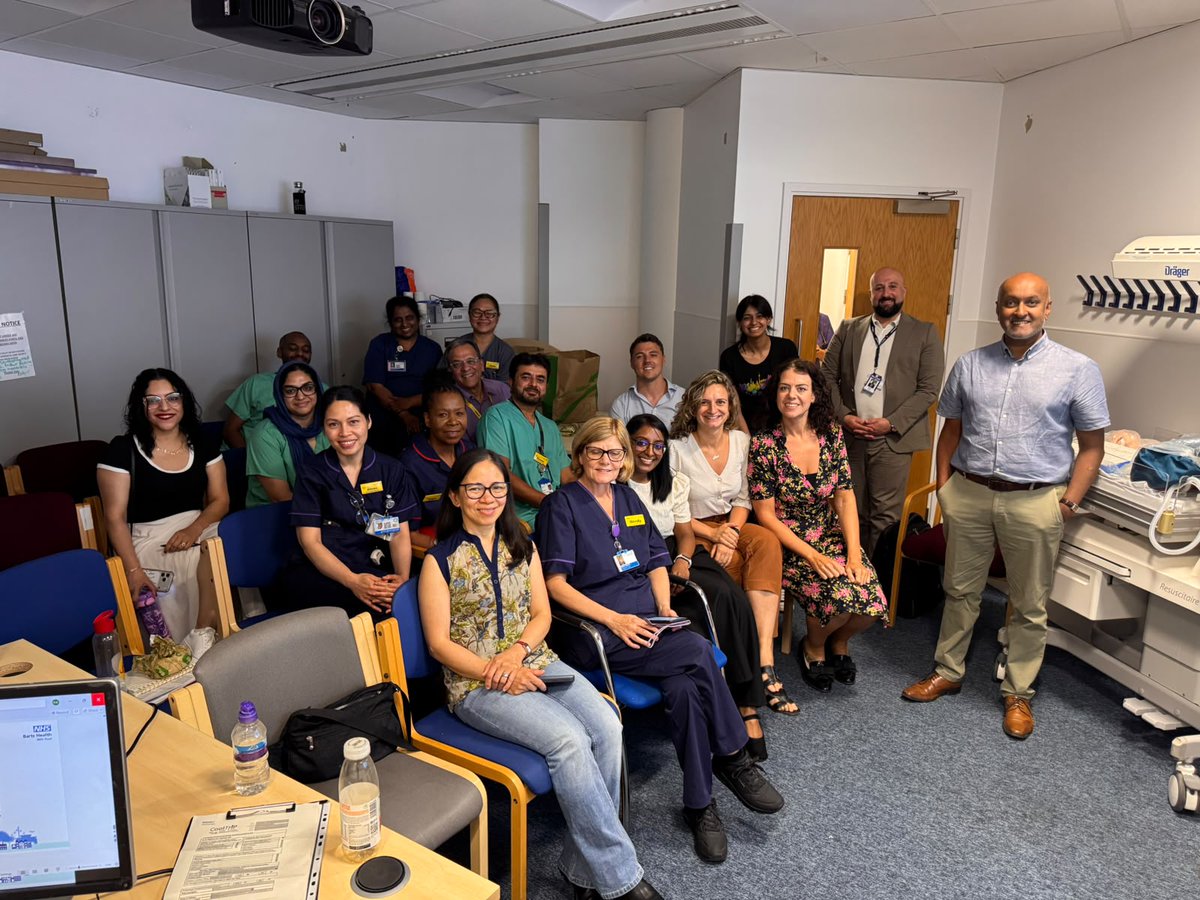
🚑 Thank you to the neonatal teams at Queen's Hospital, Romford and Whipps Cross Hospital for hosting the two latest London NTS Outreach Study Days. 👶
That is two more of London's 27 neonatal units and the tour rolls on.
Your door is next.
No referral required. 🌟
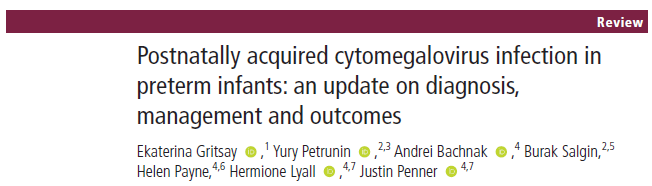
1.5% or 27%? Same preterm babies - the difference is how hard you look. 🔎
Postnatally acquired CMV isn't rare so much as under-tested. It hides behind "sepsis", NEC and chronic lung disease, skips classic clues and often shows in blood before urine or saliva. 🩸
Our new review in Archives of Disease in Childhood (Fetal & Neonatal Edition) turns the 2019-2025 evidence into a practical strategy.
Led by Ekaterina Gritsay, with our QMUL doctoral researcher Yury Petrunin among the co-authors. More to come. Watch this space.
🔗 https://t.co/QuosjBGMQ7
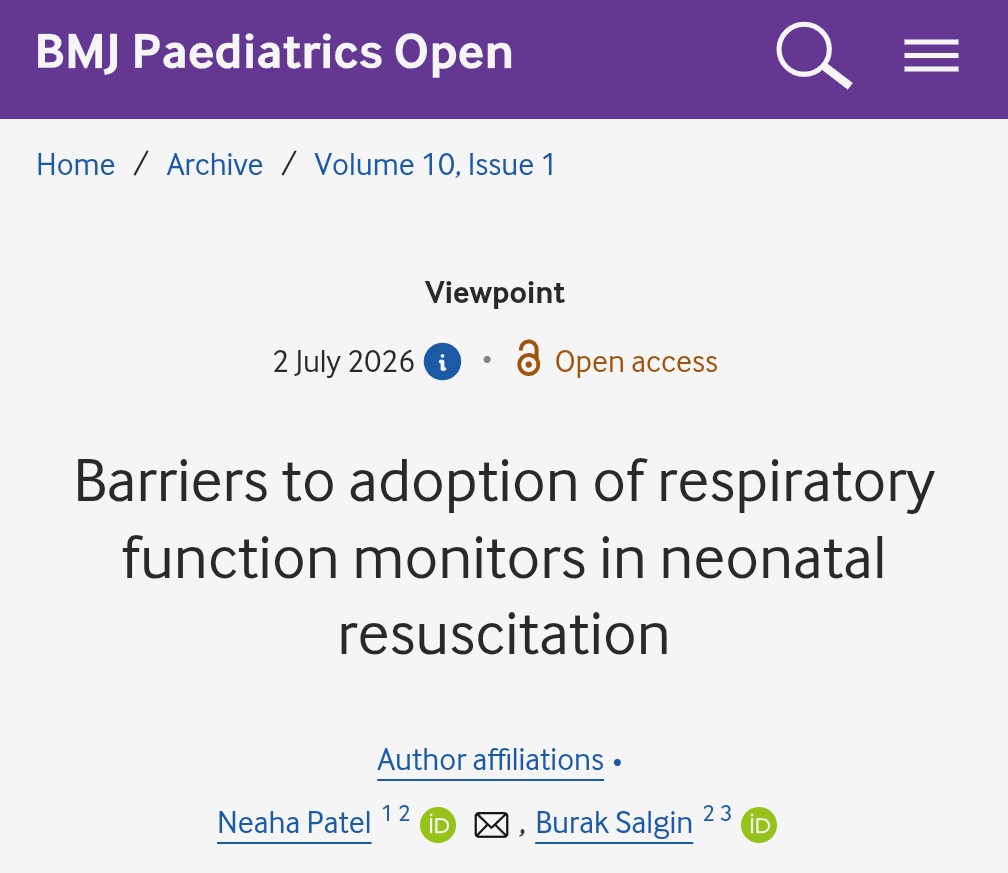
RFMs could make breathing support at birth safer for many babies. So why aren't they everywhere? 🍼
The comfortable answer is 'not enough evidence'. The more honest one: a system that quietly taxes anyone trying to improve the device, a market judged too small to bother with, and a neat deadlock - guidelines wait for evidence and the money for the evidence waits for the guidelines.
None of this is a law of physics. It's a set of choices - and choices can be remade. That matters most here, because the babies who would gain the most are the ones with the least room for us to get it wrong.
Good ideas rarely fail for being wrong. They fail for being inconvenient.
New in BMJ Paediatrics Open, led by @npatel_84 👇📄
https://t.co/m9BeDT74ek
🚑 Thank you to the neonatal unit at Queen Elizabeth Hospital, Woolwich for hosting the latest London NTS Outreach Study Day. 👶
That's another of London's 27 brilliant neonatal units, and the tour continues. Your door is next. ☀️
If one afternoon leaves you wanting the two-year version, much of the same faculty teach on the MSc Advanced Neonatal Practice (Online) at QMUL. 🎓
🔗 https://t.co/XeInj31YeD
🚑 Thank you to the neonatal unit at University Hospital Lewisham for hosting the London NTS Outreach Study Day.
We are making our way around all 27 brilliant London neonatal units. Your door is next. 🌟
🎓 Thanks @UniWestLondon for having me at Innovate to Educate 2026.
Human Factors in neonatal care: when things go wrong, it is rarely the person - it is the system. Make the right thing the easy thing. 🚑✈️
🔗 MSc: https://t.co/0aitIVyIPl
🔗 STORKS:
https://t.co/ATs7ETHI1p
Day 2 of STAN:
The day we stopped talking about ambulances and got inside them. 🚑
Turns out a confined space changes every skill you thought you'd already mastered. 🧠
And that's STAN April 2026. See you at the next one. 👋
STORKS: https://t.co/ATs7ETHI1p
🚑 The ambulance doesn't care that you've read about it.
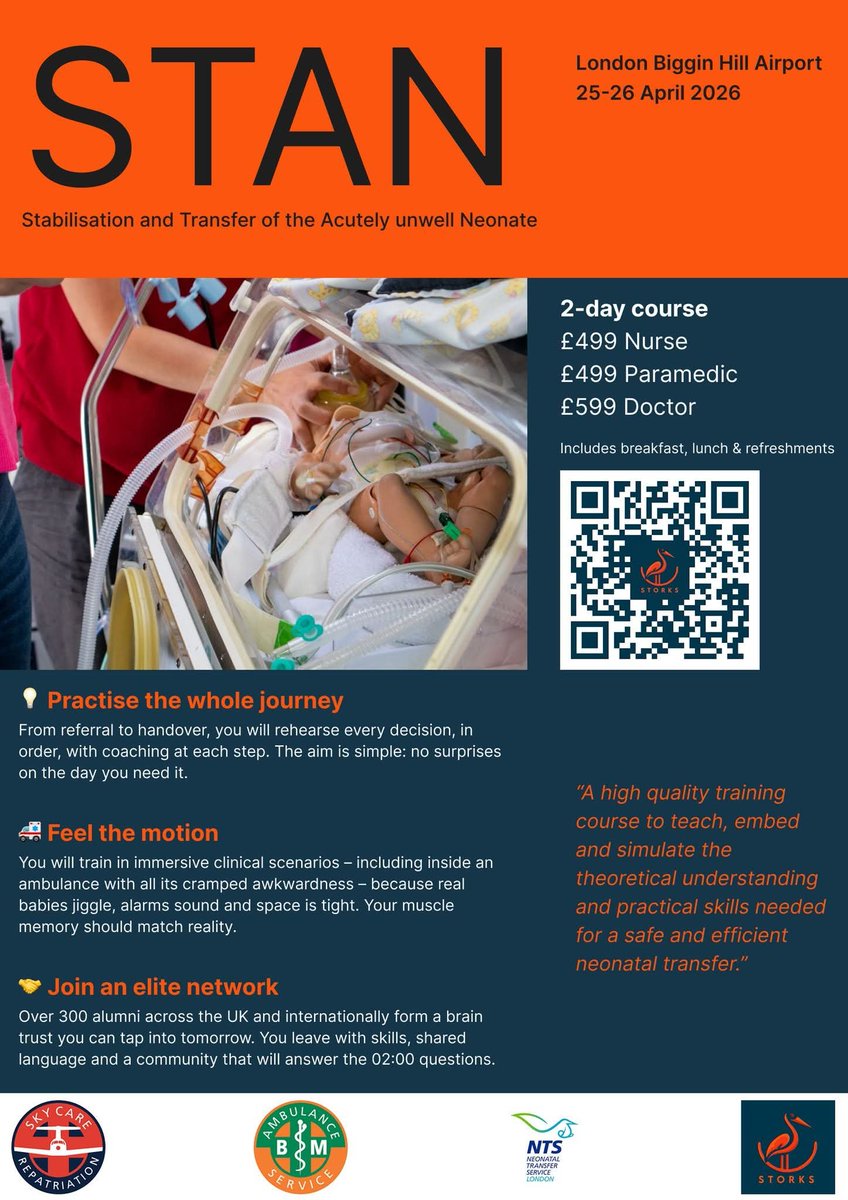
Last places on STAN:
2 days at Biggin Hill where you rehearse the full journey, referral to handover, inside cramped ambulances with alarms, jiggle and all the awkwardness reality brings.
25-26 April 2026
£499 Nurse/ACP/Paramedic
£599 Doctor
Includes meals. Excludes excuses. 🧡
Your move:
https://t.co/qw1l31eQ7q
Part 3 of 3 of our end-of-year round-up and today’s finale: The Royal London Hospital NICU / London NTS Christmas Quiz 🎄🚑
After a year of serious work across education, innovation and safer systems, we are ending the only appropriate way: with festive chaos and questions nobody should be answering on low sleep. 🧠
Expect:
Anagrams (because apparently we enjoy suffering) 🔤
Emoji song challenge (no spoilers, yes judgement) 🎶
And much more… 👀
Play along and tag the colleague who will absolutely insist they got full marks. 😉
From all of us, thank you for backing better care, better training and better decisions all year. 💙
See you in 2026. ✨
Neonatal Tech: Better signals, better decisions.
Part 2 of 3 of our end-of-year round-up, with the RLH NICU / London NTS Christmas quiz tomorrow. 🎄
This year, our focus has been simple and serious: building and testing new ways of working, measuring and learning that can genuinely move neonatal and paediatric care forward. Not “shiny ideas”, but practical advances that deepen understanding, strengthen decision-making and expand what is possible at the bedside. 🔬📈
The best part is that none of this is solo work. It is a close-knit, multi-disciplinary group doing the hard thing: taking ideas that might sound outrageous and turning them into something testable, safe and useful.
I want to single out five people who have been integral to that momentum and who also sit at the heart of STORKS and the MSc Advanced Neonatal Practice (Online): Neaha, Arameh, Yury, Lee and Ludo. Thank you for bringing rigour, creativity and the calm insistence on doing this properly. 🤝🧠
Our motto remains the guardrail: there is nothing worse than optimising something that should not exist. ✅
See you tomorrow for the quiz, then we will take this energy into 2026. 😉✨
MSc:
https://t.co/XeInj31YeD
STORKS:
https://t.co/qw1l31eQ7q
Ever been taught Human Factors in Neonatal Medicine & Transport from a cockpit? ✈️🧠
Part 1 of 3 of our end-of-year round-up, culminating in the Royal London Hospital NICU / London NTS Christmas quiz on 24 December. 🎄
We closed out the year on the MSc Advanced Neonatal Practice (Online) at the @blizard_inst, @QMUL, and next term’s Module 8 – Ergonomics and Human Factors in Neonatal Medicine and Transport for Year 2 students, led by Lee Collier (Chair of Trustees, @storkscharity), captures the point of the MSc: real-world capability, built deliberately.
What makes this MSc different is the design: the modules are not isolated topics, they are an integrated pathway building strength across the four pillars of advanced practice:
Clinical Practice
Leadership and Management
Education
Research and Quality Improvement
A key milestone: Module 7 (Quality improvement and research methods in neonatology) has just been completed, and Year 2 Scientific Paper (dissertation) project proposals are already written. They are ambitious, highly relevant and genuinely high quality. 🔬👶
At the same time, our Year 1 cohort has just completed three concurrent modules, at pace and at standard, as the Year 2 cohort did before. The programme is demanding by design and supported by design, so students are not learning “at a distance”. They are learning as individuals and as part of a team.
MSc details:
https://t.co/XeInj31YeD 🎓
STORKS charity:
https://t.co/qw1l31eQ7q 💙
Next in the series:
Part 2 (tomorrow): Neonatal tech and research
Part 3 (24 December): RLH NICU / London NTS Christmas quiz 🎁
🌟 Neonatology turned up to eleven – in one MSc
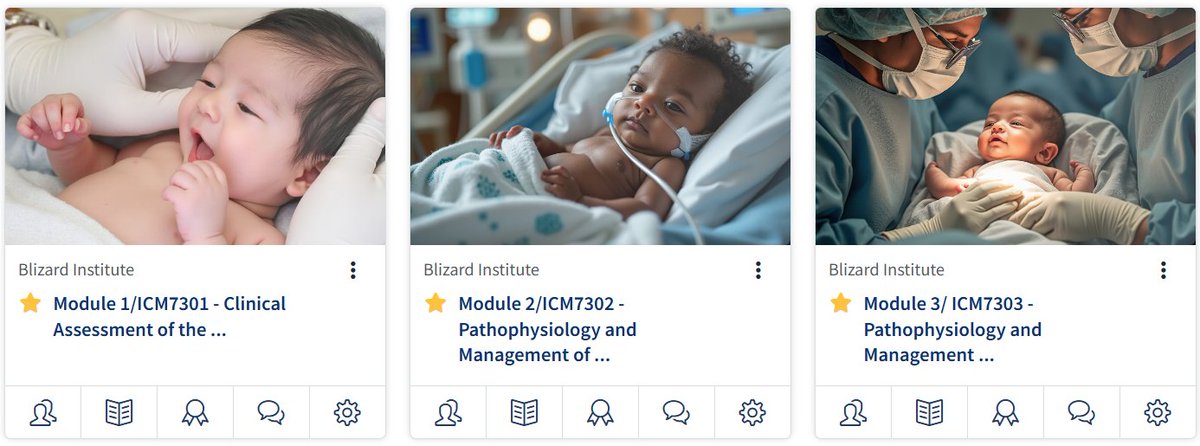
👶 Year 1 students are about to submit their final written and oral assessments for Modules 1-3, spanning clinical assessment through to the pathophysiology and management of medical and surgical conditions. The enclosed images are not decoration; they are the front door to the content they have just lived and breathed.
🧠 Year 2 students are now immersed in Module 7: Quality improvement and research methods in neonatology – within a learning culture built deliberately around depth, continuity and genuine mentorship. This is a two-year commitment in which students are coached, challenged and supported by Lucilla Ogley, Lee Collier, Deanna Gibbsand myself. It is not “watch a video and hope for the best”. It is structured guidance, shared problem-solving and a steady, intentional push towards advanced clinical, academic and leadership practice – the kind that does not end when the module does.
📊 At the same time, every Year 2 student has already produced a fully developed 60-credit Scientific Paper project plan – the kind of work that feels far less like an academic exercise and far more like genuine service improvement. Their proposals span communication, safety, workforce, simulation, parent experience and even molecular approaches to neonatal sepsis. In short: projects with the ambition and relevance to shift how neonatal care is delivered, not just how it is studied.
💻 The content lives online; the craft is built together. 🩺
When you design a comprehensive and contemporary online programme with the Digital Education Studio and @blizard_inst at @QMUL around real teaching, genuine continuity and close academic and clinical mentorship, something distinctive happens: people from across the multidisciplinary team do not simply progress, they evolve.
This MSc has been built deliberately: flexibility without compromise, high-touch, online done properly.
If you want to be part of a community that develops advanced capability with intent and momentum, you can explore the programme here:
https://t.co/XeInj31YeD
🚑 Neonatal transport is where miles, minutes and mindset all collide.
Such a pleasure to join colleagues from across the UK at the National Neonatal Transport Group Conference in Bristol.
Thank you to everyone who stopped by the STORKS + MSc Advanced Neonatal Practice (Online) stand, shared stories and helped us demolish the sweet basket. If you left thinking “I want more of this, baked into my practice”, here are your next steps:
🎓 MSc Advanced Neonatal Practice (Online):
https://t.co/XeInj31YeD
🪽 STORKS:
https://t.co/qw1l31eQ7q
The past two weeks have been neonatology at full tilt 🧠
Across our live MSc masterclasses, small-group discussions and international conversations, we have tackled the real questions facing advanced practitioners: the fine lines between research, audit and service evaluation 📊; contrasting approaches for 22 weekers around the world 🌍; and how evidence, ethics and communication meet at the bedside.
We also went deep into the science and systems that shape outcomes:
• Updates to newborn life support and the physiology behind each decision 👶
• Non-invasive ventilation strategies for extremely preterm infants
• Multidisciplinary teaching bringing NICU and academia into one room 🩺🎓
This is online learning without the distance - a high-touch, expert-led programme that builds clear thinking under pressure, effective leadership and real-world impact, with true flexibility and a community where you are taught, coached and known.
If you want an MSc that strengthens all four pillars of advanced practice and prepares you to make better decisions on Monday morning, explore the Advanced Neonatal Practice (Online) MSc at Queen Mary University of London.
🔗 https://t.co/XeInj31YeD
🚑 After the sirens fade, the learning begins.
At the UK National Neonatal Transport Group Conference 2025, Dr Diana Aguirre – Senior Clinical Fellow with the London Neonatal Transfer Service and core faculty of the STORKS charity STAN course – will present her national work:
“After-action debrief in Neonatal Transport Services – Where are we at nationally, and how useful is this practice?”
🍼 Debriefing is not a luxury. It is the handbrake on drift.
STORKS:
https://t.co/qw1l31eQ7q
MSc Advanced Neonatal Practice:
https://t.co/XeInj31YeD
💨 Invasive ventilation: the art, the physics, the practice
There is nothing “routine” about a ventilated baby.
Every knob you turn is a hypothesis about physiology.
In the most recent MSc masterclasses, we followed hydrops fetalis from diagnosis to delivery room, and then into the real work: invasive ventilation that tests judgment, not just knowledge.
📊 Blood gases that whisper clues.
📈 Pressures that behave like ecosystems - adjust one, and everything else responds..
👥 Teams that must think as one under time pressure.
Advanced neonatal practice is not just about keeping a number in range.
It is about understanding what that number is telling you.
This is how the MSc Advanced Neonatal Practice (Online) at Queen Mary approaches learning: structured, high-touch and unapologetically real.
🎓 Flexibility without compromise. High-touch. Online done properly.
🔗 https://t.co/XeInj31YeD