CAN PROPERTY PRICES FALL BELOW THE COST OF CONSTRUCTION? LET'S LOOK AT HISTORY.
One argument I keep hearing about Australian property is that prices can't fall significantly because construction costs keep rising.
It's a reasonable argument, but history suggests there's another side worth understanding.
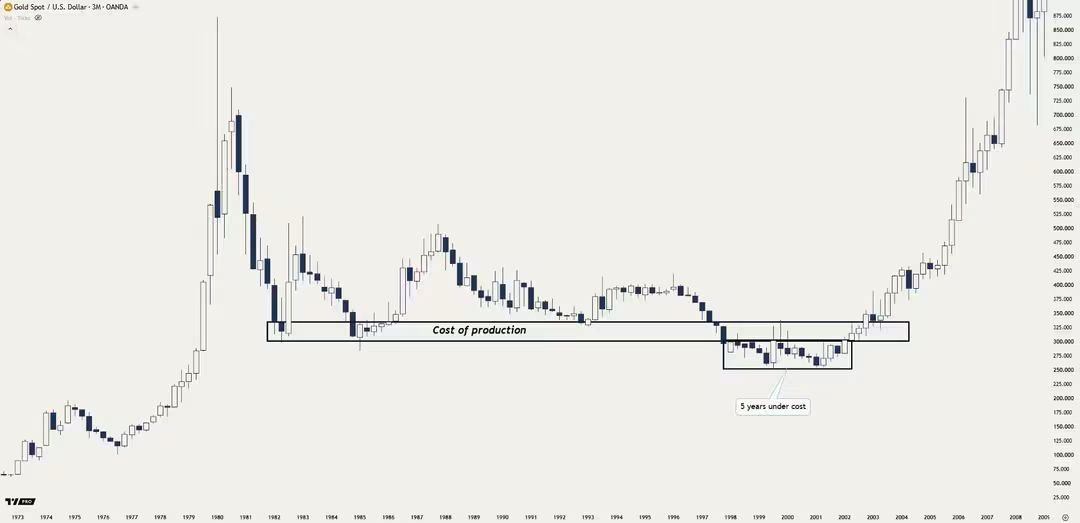
GOLD: WHAT HAPPENS WHEN PRICES FALL BELOW PRODUCTION COSTS?
Gold peaked in 1980 before experiencing a major bear market. Within two years, prices had fallen dramatically, approaching the production costs of some miners.
By the late 1990s, gold was trading at levels where some producers struggled to cover their full costs. Prices remained depressed for years.
This is what major bear markets often do. They remove the excesses created during the previous boom.
High gold prices had attracted speculative companies, inexperienced operators and plenty of leverage. When the cycle turned, weaker businesses struggled, while those with lower costs and stronger balance sheets were better positioned to survive.
We've seen this pattern across asset classes throughout history.
NOW, LET'S LOOK AT HOUSING.
During the US housing crash, the national median existing-home price fell to US$176,600 in 2012.
According to the National Association of Home Builders, constructing a new home in 2011 cost approximately US$184,125, excluding land.
Add the average land cost of US$67,551, and you're looking at US$251,676.
That's almost 30% more than the median existing-home price!
Of course, these aren't identical properties, so it's not a direct comparison. But it illustrates how existing property prices can disconnect from new construction economics.
Ireland, Spain and Japan also experienced major property downturns, with distressed properties in some markets selling below replacement costs.
Different countries, same lesson. Construction costs don't guarantee property values.
NOW, BACK TO AUSTRALIA.
During property booms, rising prices attract developers, agents, investors and leverage.
Anyone else notice how everyone wanted to become a real estate agent over the past few years? Of course, the houses practically sold themselves!
But when the cycle turns, financing becomes harder, margins shrink, and those relying on continually rising prices can find themselves under pressure.
HERE'S WHAT I FIND MOST INTERESTING.
Australia's aggregate land-to-building value ratio has increased from approximately 1.3:1 in the 1980s to around 3:1 in recent years.
That means land represents roughly 75% of the combined value of Australia's housing stock.
Think about that.
Construction costs could remain at record highs, yet property prices could still fall significantly through a correction in land values alone.
For example, a 30% fall in land values would mathematically translate into approximately a 22.5% decline in total property values, assuming buildings retain their value and using that national 75% land share.
I'm not suggesting that's necessarily what will happen, and the ratio varies between properties. But it shows why rising construction costs don't guarantee rising property prices.
Higher construction costs may discourage new supply, but they don't prevent existing property values from falling.
Ultimately, prices are determined by what buyers are willing and able to pay. Interest rates, household incomes, credit availability and market cycles all matter.
I'm not suggesting Australia must follow the US, Ireland, Spain or Japan. Every market is different.
But studying historical cycles teaches us what's possible, rather than assuming something can't happen simply because we haven't experienced it recently.
Perhaps the better question isn't whether construction costs are rising.
It's whether the land component of Australian property has become overvalued relative to household incomes and borrowing.
Property values can fall through land repricing, even while construction costs remain high.
New Hope Corporation ($NHC) Investment Thesis (2026)
1) Meaning: Australian thermal coal producer with production growing toward ~15Mt + strong Asian exposure.
2) Moat: Low-cost, long-life assets + net cash balance sheet + proximity to key Asian buyers.
3) Management: WHSP 39.3% ownership + insider skin in the game + disciplined growth and strong shareholder returns.
4) Margin of Safety: Attractive cycle-adjusted FCF + dividends + strong business economics, but coal cyclicality remains.
Full Video:
https://t.co/EOgQYT69gJ
Australia's next silver producer Boab Metals $BML ($BMLQF) CEO Simon Noon presented at the America's mining Forum this week.
It is very well structured and goes through the big announcements made in the last few days and project status updates.
Well worth the time to view.
https://t.co/rdi1rSJyFS
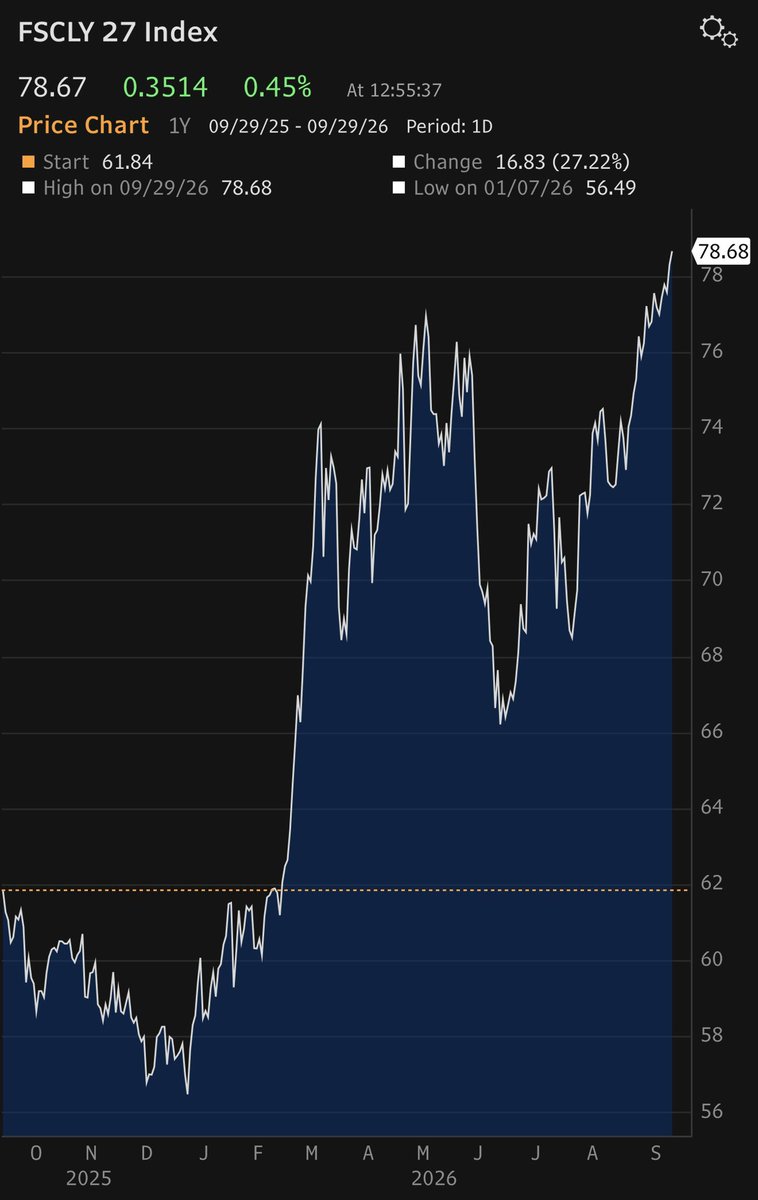
Most watch spot WTI, which is victim to daily fake headlines and tweets. I’m more interested in the curve. Importantly, 2027 WTI strip is making an all-time high today at over $78/bbl. Despite very strong YTD gains, some oil stocks are cheaper today than pre-war levels.
Jeff Currie is stunned: paper oil has fully uncoupled from the physical market. Price discovery looks broken. Something’s off. Physical reality will educate the entire market — whether it wants the lesson or not.
HT: YouTube Mario Nawfal
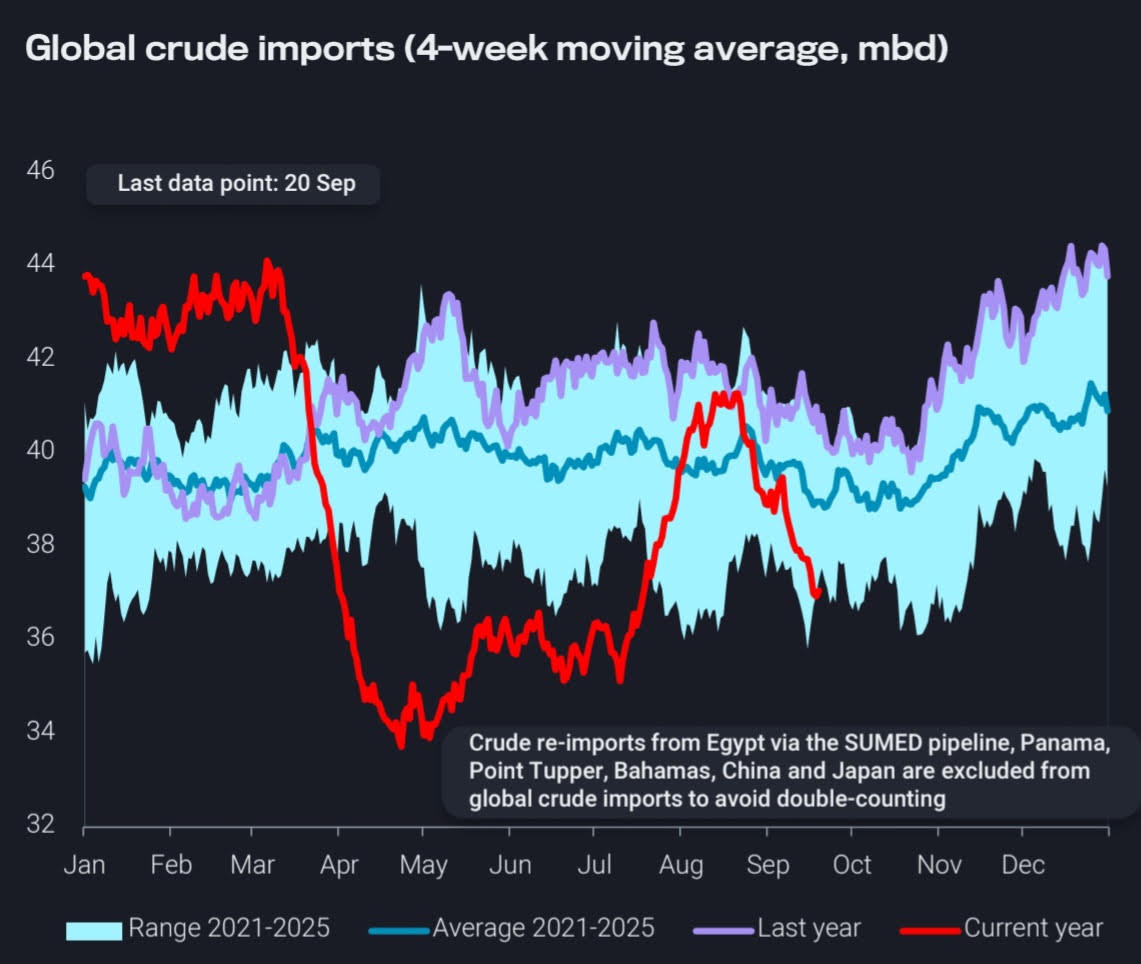
Global crude oil imports have fallen rapidly over the last 4 weeks as June MOU armada of tankers and 🇺🇸 SPR barrels are no longer available!
With strong refinery runs and robust product demand, expect a large drawdown in global onshore crude inventories over next few weeks. 🛢️💰