My top 10 books of all time:
10. Anna Karenina — Leo Tolstoy
9. Middlemarch — George Eliot
8. The World of Yesterday — Stefan Zweig
7. Brideshead Revisited — Evelyn Waugh
6. The Unbearable Lightness of Being — Milan Kundera
5. The Sun Also Rises — Ernest Hemingway
4. The Master and Margarita — Mikhail Bulgakov
3. Pale Fire — Vladimir Nabokov
2. The Sound and the Fury — William Faulkner
1. The Brothers Karamazov — Fyodor Dostoyevsky
For anyone interested in getting a better understanding of the history of art & art theory, I'd recommend Ernst Gombrich as well worth reading. Similar to Cavell's writing on film, Gombrich has a very accessible style & clarity in outlining ideas & arguments. (Some books below)
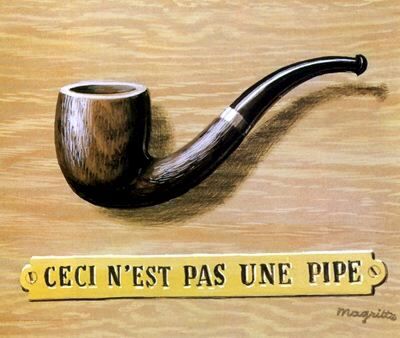
The Treachery of Images (1929) places a pipe above the words "Ceci n'est pas une pipe" to distinguish between objects and their symbols. Michel Foucault analysed this work by Magritte, who saw himself less as a painter than as a thinker using images to speak. #artbots#magritte
Monet sometimes painted reflections first—upside down—then added the object above.
Critic Séverin Faust called it a “new logic of vision.” 🔄 #artbots#monet
The Human Condition (1933) places a canvas before a window, where the painting blends so completely with the landscape that it both reveals and hides it. Both are equally unreal: we face the world outside through the representation we hold inside. #artbots#magritte
Réflexion :
En toute honnêteté et sans verser dans l’excès, avec l’assaut du Capitole, la période actuelle est probablement la plus alarmante du pouvoir trumpien depuis 2015. J’ai l’impression, comme le 6 janvier 2021, qu’il ne faudrait vraiment pas grand chose de plus pour que la situation se dégrade très sérieusement.
Autre élément qui renforce ce sentiment, l’absence de figure charismatique et/ou suffisamment puissante côté démocrate pour mener le combat politique à l’échelle nationale mais aussi au Congrès. Sur ce dernier point, le retrait progressif de Nancy Pelosi laisse un vide énorme qui n’est absolument pas comblé par les leaders démocrates actuels.
Enfin, l’échec républicain à sanctionner Trump après le 6 janvier, au moment où il était le plus faible politiquement, me porte à croire qu’il ne faudra pas compter sur eux non plus en cas de franchissement du Rubicon (au Groenland et donc en Europe) alors qu’il est au plus fort de son pouvoir. Reste-t-il des Mike Pence au Congrès et surtout en nombre suffisant ? Permettez moi d’en douter.
Le seul horizon à court terme permettant d’espérer une modération de l’action de l’exécutif est à 9 mois, à savoir les élections de mi-mandat. Et à la vitesse à laquelle vont les choses, j’ai au fond de moi la crainte que le temps qui nous sépare de cette échéance soit un poil trop long.
J’en viens donc à la conclusion que les marchés financiers (actions, obligations, dollars) sont peut-être aujourd’hui les seuls potentiels freins existants (du rouge qui tache commencerait à faire grincer des dents si cela devait durer). Avec la Cour Suprême dans une bien moindre mesure (puisqu’elle pourrait mettre un terme à la guerre commerciale). Mais cela reste assez maigre voyez-vous.
Voilà simplement l’expression d’un sentiment que les faits viendront - j’espère - démentir.
reading Faulkner's "Light in August" in my early 20's with much admiration for its power; but had no idea how (tragically) insightful Faulkner was in envisioning a "black shadow" in the shape of a cross falling over the US... in 2026, nearly 100 years after Faulkner's vision, the chasm is still enormous: consequences of slavery, seemingly irrevocable, stoked by rightwing politicians agitating old racial anxieties; hatred of "liberals"--for their support of minorities; allegiance to the Old South/ Confederacy for its defiant racism. would T***p have been elected to the presidency either time, without these oppositions? backlash to Obama's presidency also?
Here's a list of people I blame for where we are today.
1. Merrick Garland
2. Mitch McConnell
3. The Senators who voted not to "impeach and convict"
4. Fox News
5. The people who "sat it out" in 2016
6. The 147 Republicans who voted not to certify the election even after Jan 6th
7. The Roberts Court, especially Alito and Thomas
8. Judge Cannon
9. The owner of this app
Who am I missing?
Le comité de la Société des agrégés s'est réuni le 13 décembre et a adopté un vœu pour une utilisation rationnelle des compétences des professeurs agrégés.
Plus de détails sur nos autres réseaux ou notre site. https://t.co/l1OaGxZRhQ
we learn at the end of "Lolita" that the "tragic love story" was one-sided; Lolita never loved Humbert Humbert. Nabokov makes that clear; the author understands that Humbert ruined Lolita's childhood, took advantage of her being an orphan, totally misunderstood his sexual abuse of an underaged girl as if it were an idyllic romance. that is why Lolita runs away with Clare Quilty--(though that too is a sordid mistake, as the adult Lolita tells Humbert.)
both movies seem to betray Nabokov's intention by giving Lolita a sort of adult/femme fatal power over Humbert, & making him weak, a victim instead of a pedophile. the physicality of an adult male vis a vis a 12-year-old girl is profound. yet pedophiles often "blame" their victims for enticing them.
contemporary readers of "Lolita" may interpret the novel more in line with Nabokov.