Wait until you try SIBARIST premium filter papers and replace that Hario dripper for a OREA V4 metal or the O in stainless steel. Game changer for you, much premium quality brews and same easiness.
I would suggest to try other beans outside of Brasil for a more premium cup
People always ask me how I make coffee so I make it with Brazil coffee beans I grind coarse with a Fellow Ode 2 and then pour over with stainless steel Hario V60 and Hario filter paper and a stainless steel Fellow EKG PRO kettle and ceramic Le Creuset mugs
I tried lots of ways to make coffee over the years like AeroPress (a pain to clean), Nespresso (utterly disgusting, I wouldn't call it coffe), etc.
V60 is nice because you can throw away the filter paper quickly after using and it's clean
You need one extra cup in the back for drip after u finish
Also everyone likes custom amount of coffee strength, I want 20g, gf want 10g etc, so it's superior to do it per cup than one big pot of coffee
One important part here is we avoid plastic in every step of the process, important because you're dealing with boiling water
When I was in Brazil we found a water kettle at gf parents house that was fully white plastic inside and out, super common, imagine boiling hot water in plastic! Many V60 filters are also made of plastic. And I remember in Bali often getting hot coffee in plastic cups! Luckily you can get everything here in stainless steel and ceramic!
Enjoy!
@petersamokhin@levelsio Strong believer too - never hurts to take some liquidity at some point for a gratification and hold the larger bags. Alumni sale due in coming months - see you on the other side 🫡
@financefraz I can’t actually believe the hate people spread on someone wanting to better their life and inspire other doing it. Amazon isn’t the fairest pay? Ok but things has to start somewhere.Ccomplaining mindset won’t take you far in life. He is doing something and life rewards those
@davidalvarezdlt@DavidLunaF@nachog@getbanktrack Issue here is you are looking for someone to repair something that clearly is not working (or at least that’s the tone of your approach) so that 10% isn’t really valuable at this stage, not even potential factor.
When creating a company from scratch, you don’t have that
Everyone talks about Iranian oil in barrels. Nobody talks about what is inside them. That difference is why Western refineries have been running shadow networks through Dubai for twenty years to get it despite the sanctions.
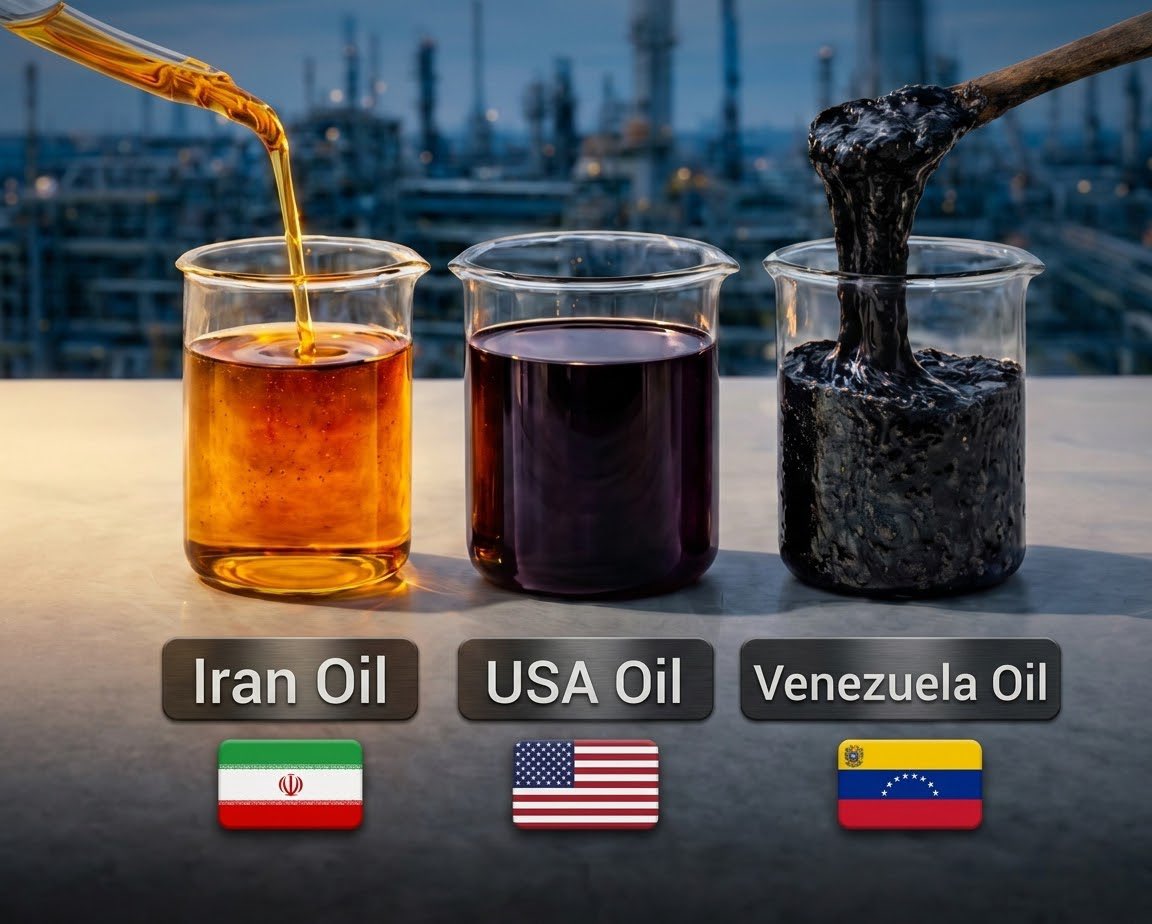
Crude oil is not a uniform commodity. It is a spectrum of hydrocarbons with different molecular weights, and the composition of a given crude determines how easily it converts into the products refineries actually want to sell: gasoline, diesel, jet fuel, heating oil. The measurement that captures this is API gravity. Higher API gravity means lighter crude with shorter carbon chains, which means lower energy cost to crack, lower processing cost to refine, and higher yield of the light distillates that carry premium pricing. Lower API gravity means heavier crude requiring more energy, more processing steps, more capital equipment, and producing a higher share of lower-value residuals.
Iranian Light crude runs at 33 to 36 degrees API gravity with sulfur content between 1.36 and 1.5 percent. That is the refinery sweet spot. It is light enough to yield high fractions of gasoline and middle distillates without excessive processing costs, but heavy enough to produce the full range of products that complex refineries are designed to process. It is what petroleum engineers call an optimal blend crude.
Now compare the alternatives.
Venezuelan Merey heavy crude runs at approximately 16 degrees API gravity with sulfur between 3 and 5 percent. Refining it profitably requires a coking unit, a hydrocracker, and an extensive desulfurization train. The equipment exists. The economics work for refineries purpose-built around Venezuelan feedstock. It is not a substitute for Iranian crude. It is a different product requiring different industrial infrastructure.
US West Texas Intermediate runs at 39 to 40 degrees API with sulfur below 0.25 percent. In theory, the cleanest and easiest crude to process. In practice, it is so light that it does not yield the heavier middle distillates a complex refinery needs to run at full capacity. European and Asian refineries built around medium crudes cannot switch to WTI without blending it with heavier crudes to achieve the molecular weight distribution their process units require. WTI is not a drop-in replacement for Iranian medium.
Iranian oil fits where both US shale and Venezuelan heavy do not. It is the liquid that flows through the middle of the global refining system without requiring either the coking infrastructure for heavy crudes or the blending operations for ultra-light shale. That molecular fit is why it commands a persistent premium above comparable grades. It is why Indian refineries maintained Iranian crude purchases through every round of sanctions and negotiated the logistics to keep that flow moving. It is why the Dubai shadow banking and trading network that the UAE is now considering dismantling existed in the first place.
The Strait of Hormuz does not just carry oil. It carries the specific category of oil that the global refining system was built to process most efficiently. Closing it does not just reduce supply. It removes the grade of crude that the system runs best on and forces every refinery in the world to run less efficiently on whatever it can find as a substitute.
That is the premium embedded in the $82 oil price. Not just volume. Molecular weight.
https://t.co/ULBgEzZ3A8
🚨 Research shows repeated complaining physically rewires your brain to prioritize stress and negativity.
The way we speak about our daily challenges does more than just vent frustration; it physically alters the architecture of the brain.
When we engage in chronic complaining, we repeatedly activate neural networks responsible for detecting threats and processing stress.
Through the biological process of neuroplasticity, these circuits become stronger and more efficient every time they are used. Essentially, the brain learns to become more adept at finding things to be unhappy about, turning a temporary mood into a permanent biological predisposition toward negativity and fear-based thinking.
As these negative pathways become the brain's default setting, individuals often experience a measurable increase in baseline stress levels and emotional volatility. This heightened sensitivity means that even minor inconveniences can trigger an intense stress response because the brain has been conditioned to interpret the world through a lens of threat. Findings discussed by the Stanford University School of Medicine emphasize that while this mechanism is powerful, understanding the science of affective neuroscience is the first step in consciously redirecting those pathways toward more resilient emotional patterns.
Source: Stanford University School of Medicine. (2023). Neural Plasticity and the Impact of Negative Thought Patterns on Emotional Regulation. Stanford Medicine News.
🚨 Billionaire investor Ron Baron explains the silent math destroying your wealth.
Your money loses 4 to 5% of its purchasing power every single year. The economy grinds higher at roughly 2%. That is a relentless 7% headwind against you, annually.
What that really means. Prices double every 10 to 12 years. Your savings are cut in half in real terms within about 15 years. Cash sitting idle is not safe, it is decaying.
The system is structurally engineered to punish savers and force capital into risk just to survive.
@ownsomeshares This is not a suspicious event or movement at all, this is common technical financial move with no impact to investors or shareholders, just moving funds from a locked account to a earnings via a bonus share, a mandatory process by the UK regulation
@ownsomeshares It’s a legal way to move money from a “locked” account (merger reserve) to a more usable account (retained earnings) without impacting regular shareholders. This process is sometimes called a capital reduction and is common in large companies.