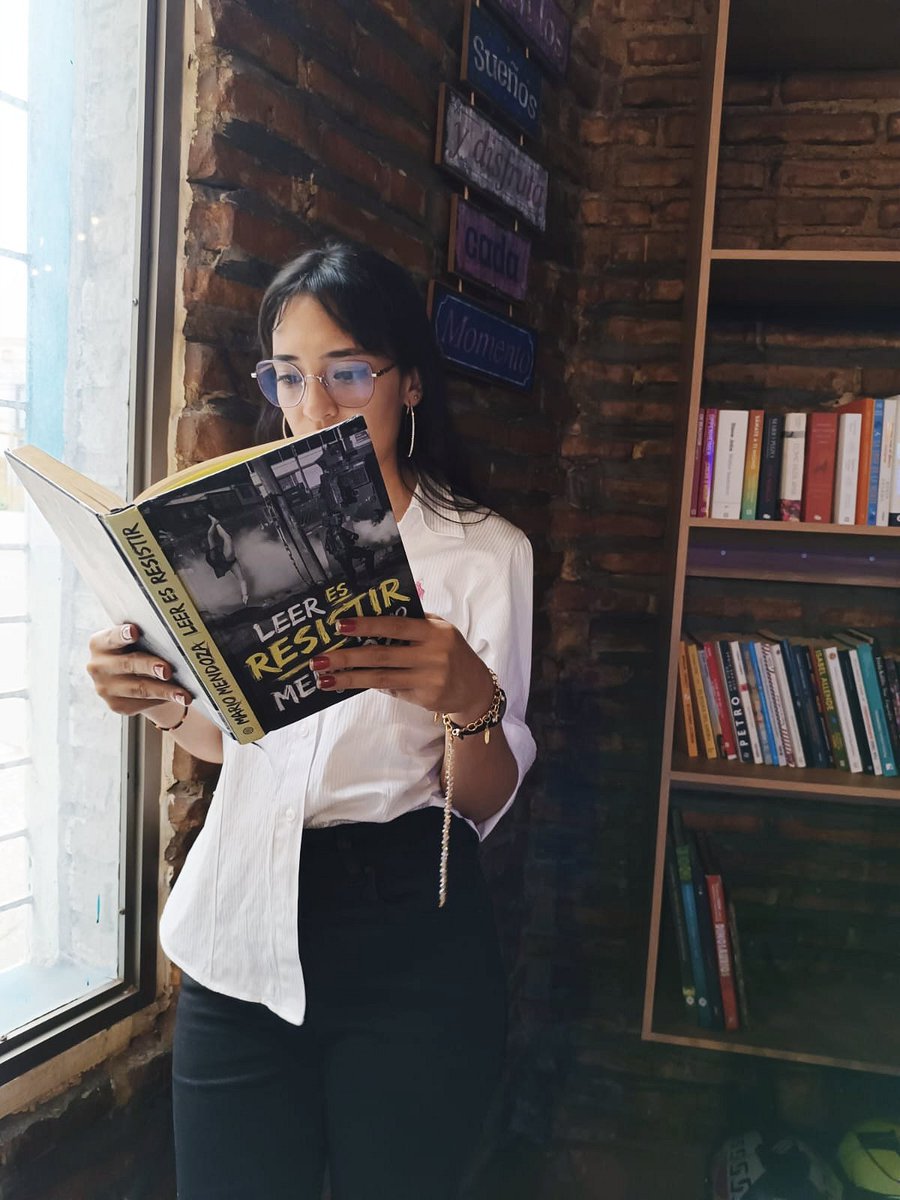
Dos colombianas hacen historia en la NASA. 🚀🇨🇴
Diana Trujillo, caleña y Directora de Vuelo en Artemis II, lidera operaciones clave desde Houston. Y Liliana Villarreal coordinará el operativo en el océano Pacífico para rescatar a la tripulación y la cápsula Orion tras el amerizaje, una de las fases más críticas de la misión. ¡Orgullo colombiano!
#NASA
#ArtemisaII
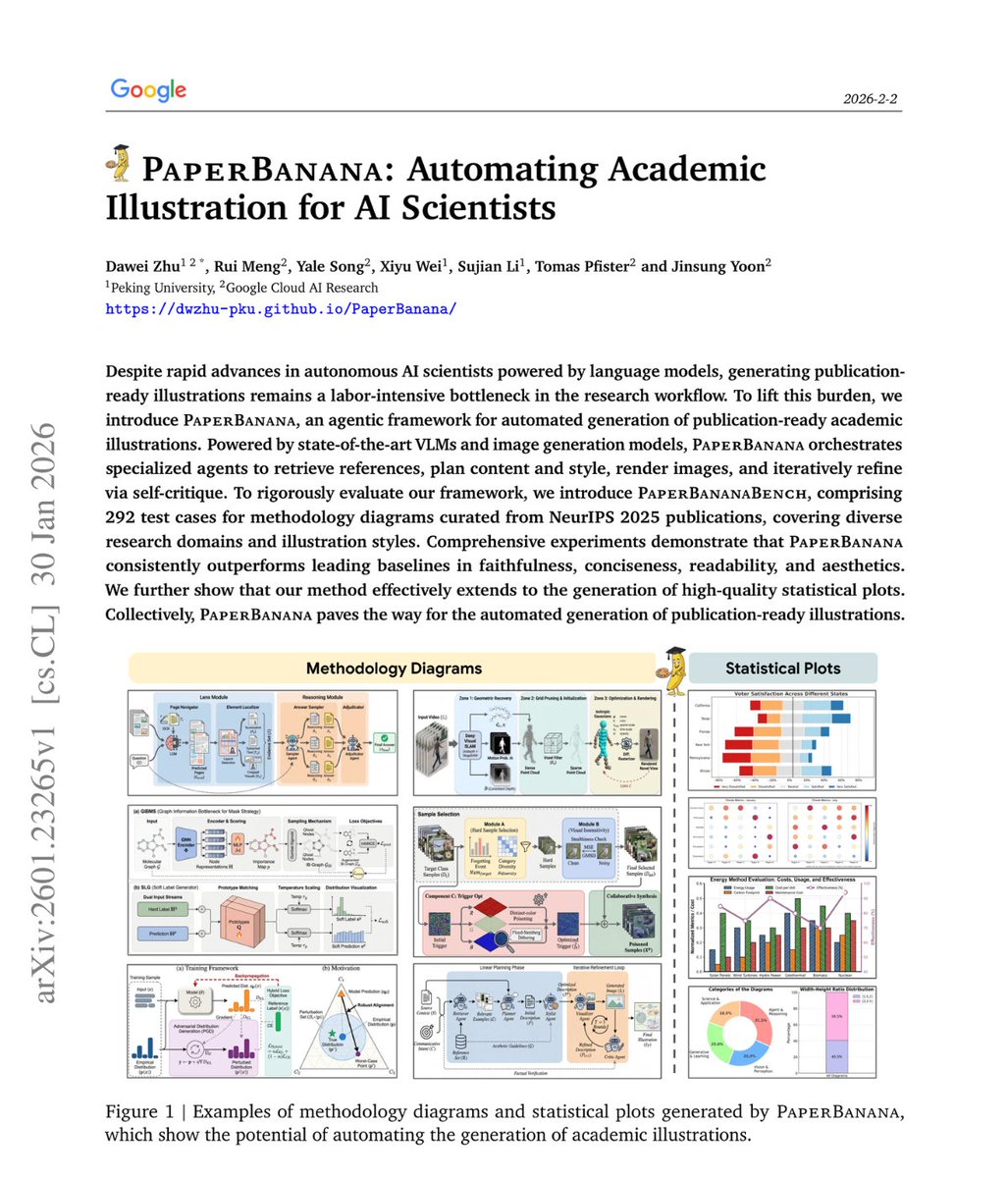
🚨BREAKING: Google just dropped another hit!
It's called PaperBanana and it generates publication-ready academic illustrations from just your methodology text.
No Figma. No manual design. No illustration skills needed.
Here's how it works:
A team of AI agents runs behind the scenes
→ One finds good diagram examples
→ One plans the structure
→ One styles the layout
→ One generates the image
→ One critiques and improves it
Here's the wildest part:
Random reference examples work nearly as well as perfectly matched ones. What matters is showing the model what good diagrams look like, not finding the topically perfect reference.
In blind evaluations, humans preferred PaperBanana outputs 75% of the time.
This is the recursion we've been waiting for AI systems that can fully document themselves visually.
Waitlist’s open, Link in the first comment.
This article concludes:
“… AI tools seem to automate established fields rather than explore new ones….”
Advancing scientific research needs creative approaches and directions.
1/3
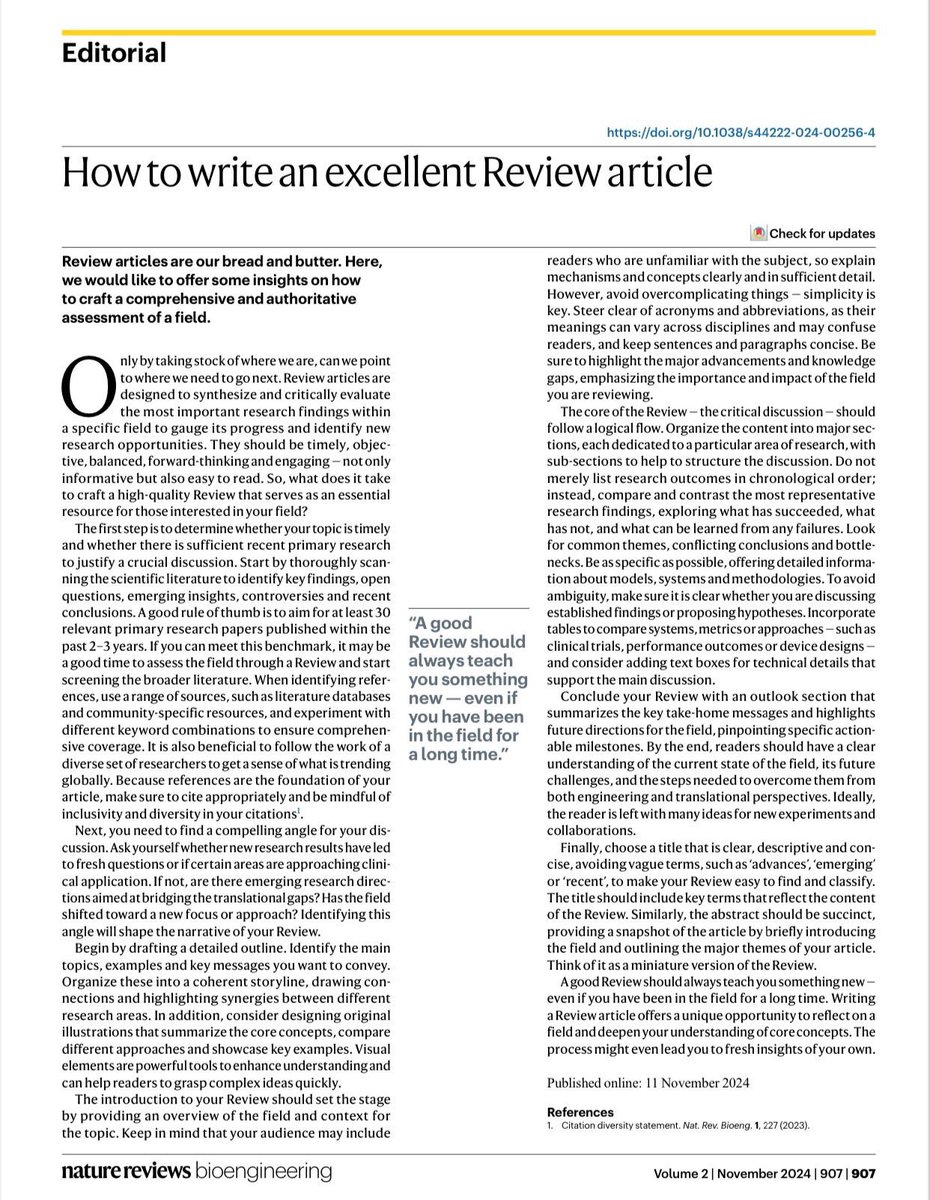
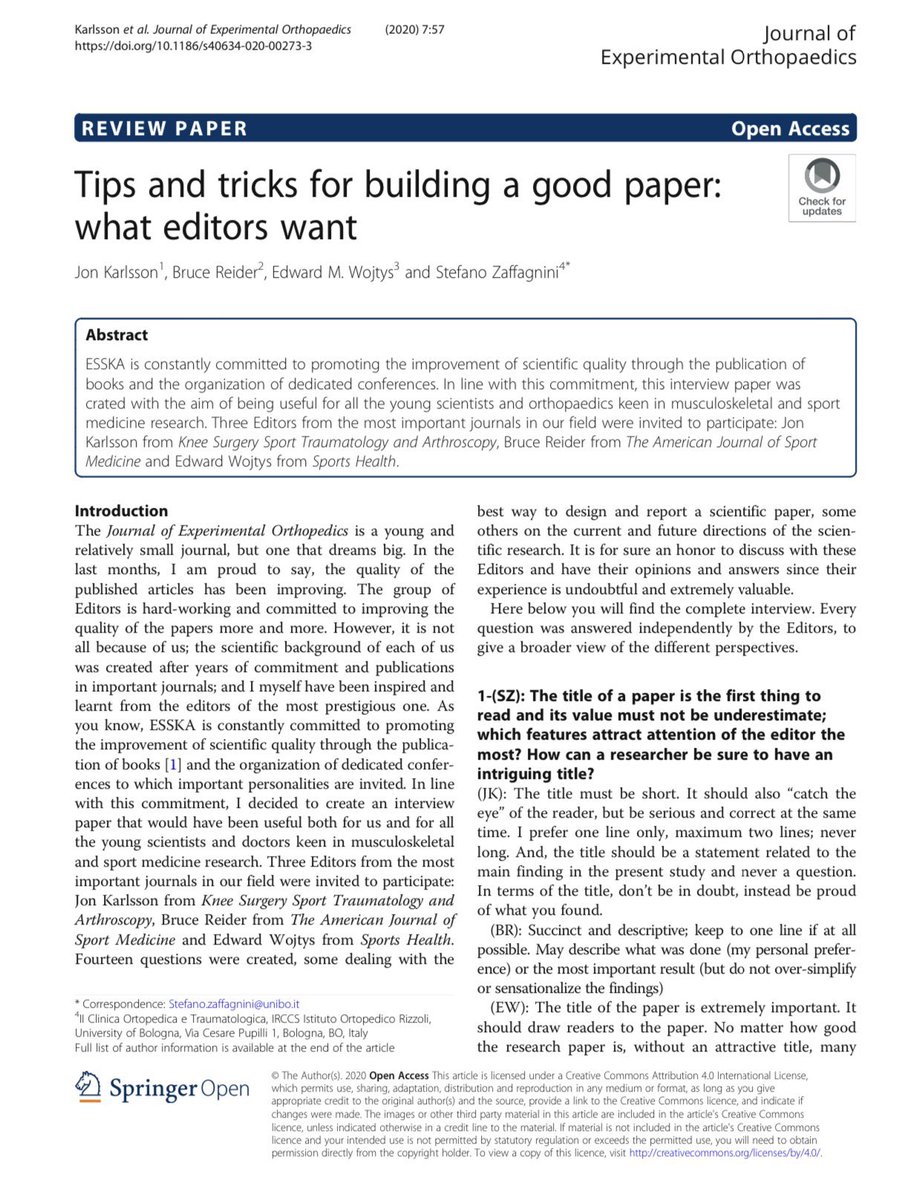
PhD Students - This is what a good literature review writing looks like.
A good literature review should have structured synthesis, critical positioning, and clear contribution.
Which section do you find the hardest to write in a literature review?
#phd#research
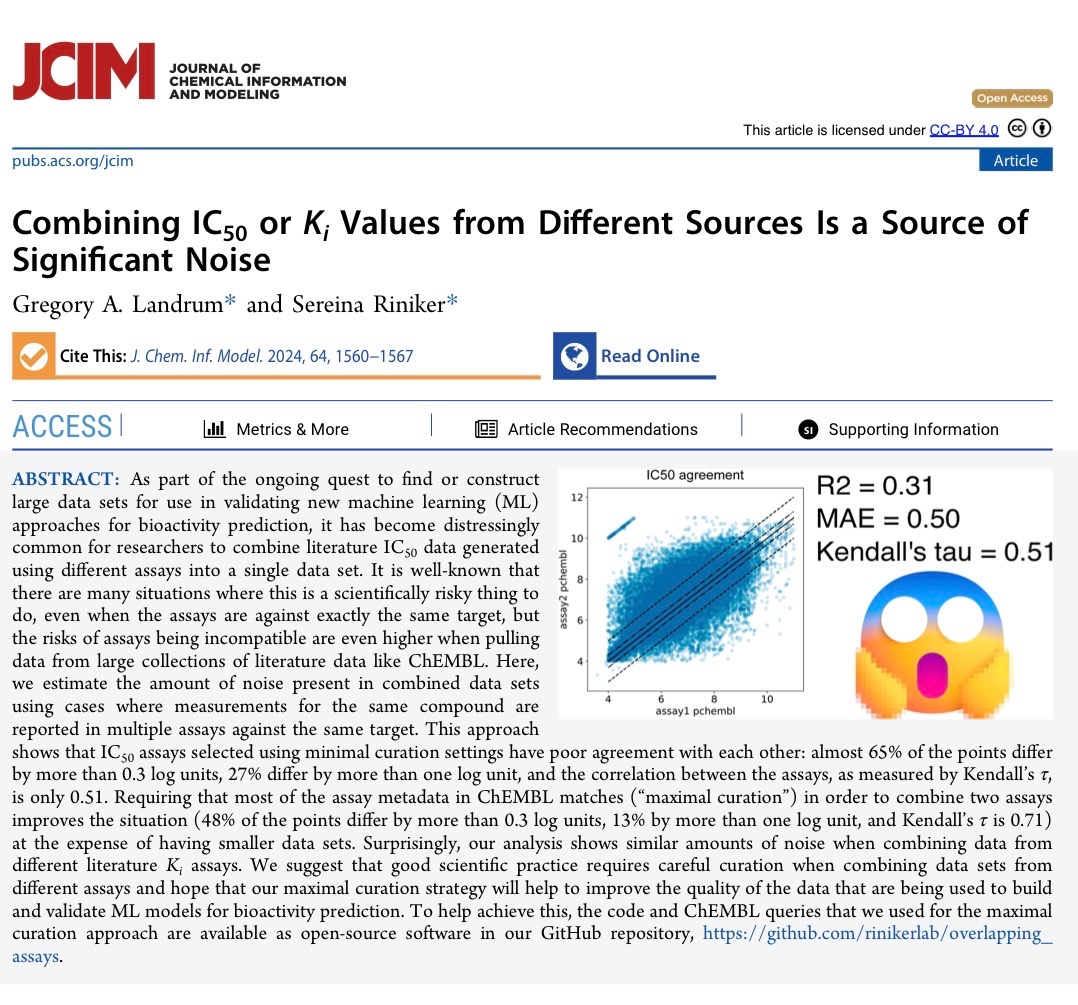
I wonder how much of these results are due to the quirks of antibodies specifically, and how much is due to the reasons outlined in the Paper With The Greatest Graphical Abstract Of All Time
MSE's Rampi Ramprasad has received a $2M NSF grant to use AI in designing recyclable, biodegradable packaging materials. A major step toward a sustainable future! ♻️ #GTMSE https://t.co/eBFZEWtk7z
Deep Learning for Predicting Biomolecular Binding Sites of Proteins @SPJournals
1/ This study explores recent advances in deep learning models for predicting protein-biomolecule binding sites, a crucial task for drug discovery, mutation analysis, and molecular biology. The work compares sequence-based and structure-based approaches, highlighting their advantages and limitations.
2/ Sequence-based methods leverage amino acid sequences and evolutionary features for fast and efficient predictions. These models are computationally lightweight but struggle to capture spatial features crucial for accurate binding site identification.
3/ Structure-based methods rely on 3D protein structures, incorporating spatial relationships for higher precision. However, they require high-quality structural data, which can be challenging to obtain experimentally or computationally.
4/ The study highlights hybrid models that integrate sequence and structural data, improving accuracy and generalizability. Geometric deep learning, graph neural networks (GNNs), and transformer-based approaches are particularly promising for capturing both local and global molecular features.
5/ Point cloud models and surface property-based methods are emerging as effective ways to model protein binding interfaces. These techniques analyze molecular surfaces for features like hydrophobicity and electrostatics, aiding in accurate binding site prediction.
6/ Multi-task learning frameworks, such as DeepDISOBind, demonstrate the power of capturing shared features across different biomolecular interactions, including DNA, RNA, and protein binding sites. Ensemble learning methods further improve model robustness.
7/ The study identifies key challenges, such as the need for more computationally efficient models that can incorporate dynamic protein conformations. Future advancements may involve integrating molecular dynamics simulations and real-time binding predictions.
8/ Ultimately, the research calls for developing flexible, multimodal AI models that integrate sequence, structure, and physicochemical properties to enhance binding site prediction and expand applications across biomedicine.
📜Paper: https://t.co/ziqeq7FYMO
#DeepLearning #ProteinBinding #Bioinformatics #DrugDiscovery #MachineLearning #ComputationalBiology #AI
Running solubility predictions couldn't be easier! With Rowan's latest release, you can go from drawing a molecule to viewing predicted temperature- and solvent-dependent solubility in <2 minutes.
(Video sped up 2x because we respect your time)
2023 LinkedIn data on https://t.co/FcLysasXlL: Definitions for AI occupations are more specific, women in more AI jobs as career transitions to AI grow https://t.co/Udm9RCoJUW #OECD
Do you think #LatinXChem24 is over? This week we will share who were the best posters of each category! Please spread the word.
Also, are you concerned about your certificate of participation? Don't worry! We will send them over this week. Be aware of your email accounts!
Mass Spectrometry Probe Combined with Machine Learning to Capture the Relationship between Metabolites and Mitochondrial Complex Activity at the Whole-Cell Level #AC https://t.co/0zlbWzW0cE