🚨This University of Michigan professor just gave his PhD students a Code Red about AI:
"These AI models are now able to reason through things at my level of expertise, in areas that I'm one of the world's experts in.
Things that would have taken me 4-5 months are now getting done in a weekend. Until December of 2025, I talked about the potential of these AI tools. But over the past few months, they've gotten as good as leading edge researchers.
But there's still value in developing your own intuition and thinking. The best way to learn physics is by working through the problems. You develop a lot of intuition by doing things the slow way.
If want to continue to be competitive going forward, you need to experience the friction of learning everything yourself while also mastering how to use AI."
New @ThePeelPod with University of Michigan professor Karthik Duraisamy
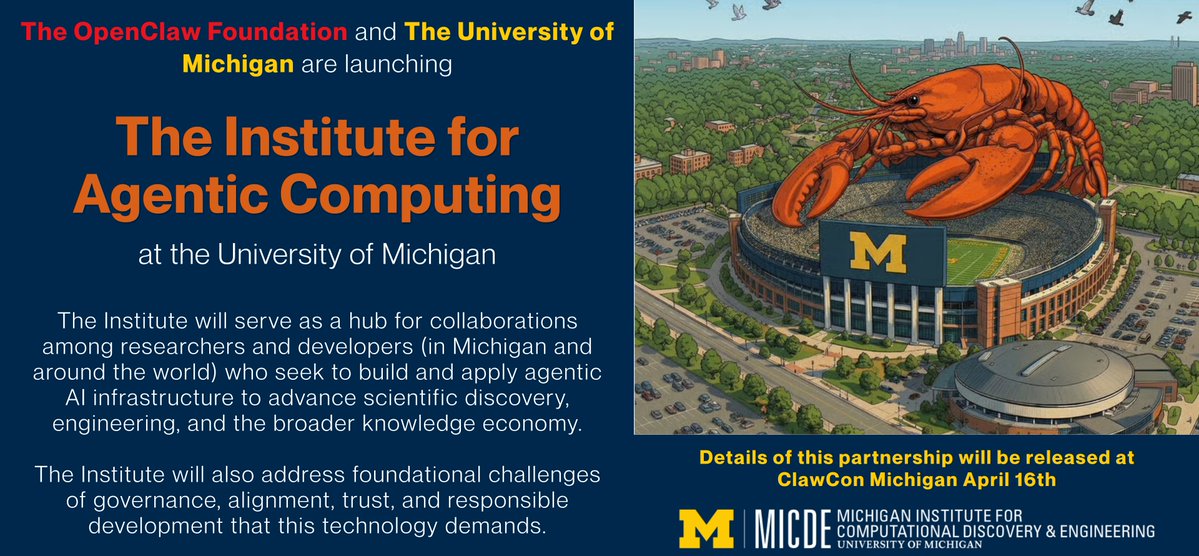
Karthik co-leads U of M's newly created Institute of Agentic Computing. It's a central node for the OpenClaw platform and helps researchers and developers using AI to advance scientific discovery and engineering.
This is Karthik's first public conversation going deep on the new institute.
We talk about how AI has increased the pace of scientific research, two new discoveries announced yesterday at ClawCon in Ann Arbor, how universities actually work, how AI has impacted students and education, what's happening with college grade inflation, and the code red advice he gave students.
Thank you to @Numeral, @FlexSuperApp, and @Amplitude_HQ for supporting this episode!
Timestamps:
0:25 The Institute for Agentic Computing
4:27 OpenClaw Foundation and Lobster Compute Company
8:19 How Universities actually work
12:33 ClawCon in Ann Arbor
15:24 Two scientific discoveries made with ScienceClaw
20:06 How AI is speeding up scientific discovery
25:42 Supporting AI and OpenClaw development
29:55 Why universities function like VC funds
34:29 How universities get money from the government
40:55 Why some academics believe AI is a fad
46:17 Biggest bottlenecks in AI today
49:26 How AI will change the world
53:10 Karthik's Code Red advice for students
59:19 Separating learning and doing
1:03:10 Ways COVID and AI impacted college students
1:14:53 How the role of universities is changing
1:23:21 Why college classes suffered from grade inflation
1:26:05 How AI is actually impacting the job market
1:32:49 Karthik’s advice for students
1:39:16 Winning two NCAA basketball national championships
1:43:04 Almost dying in the Grand Teton National Park
Every phase transition in intelligence was triggered by new forms of social aggregation (language, writing, printing, internet).
Agents powered by strong reasoning models with access to powerful tools are the next inflection.
Details @ ClawCon Michigan
https://t.co/pw6EzVXV1R
I started this new blog because the public (and scientific) discourse around these topics is very noisy and biased and so this is an attempt to amplify signals.
https://t.co/9WNkLR3hvb
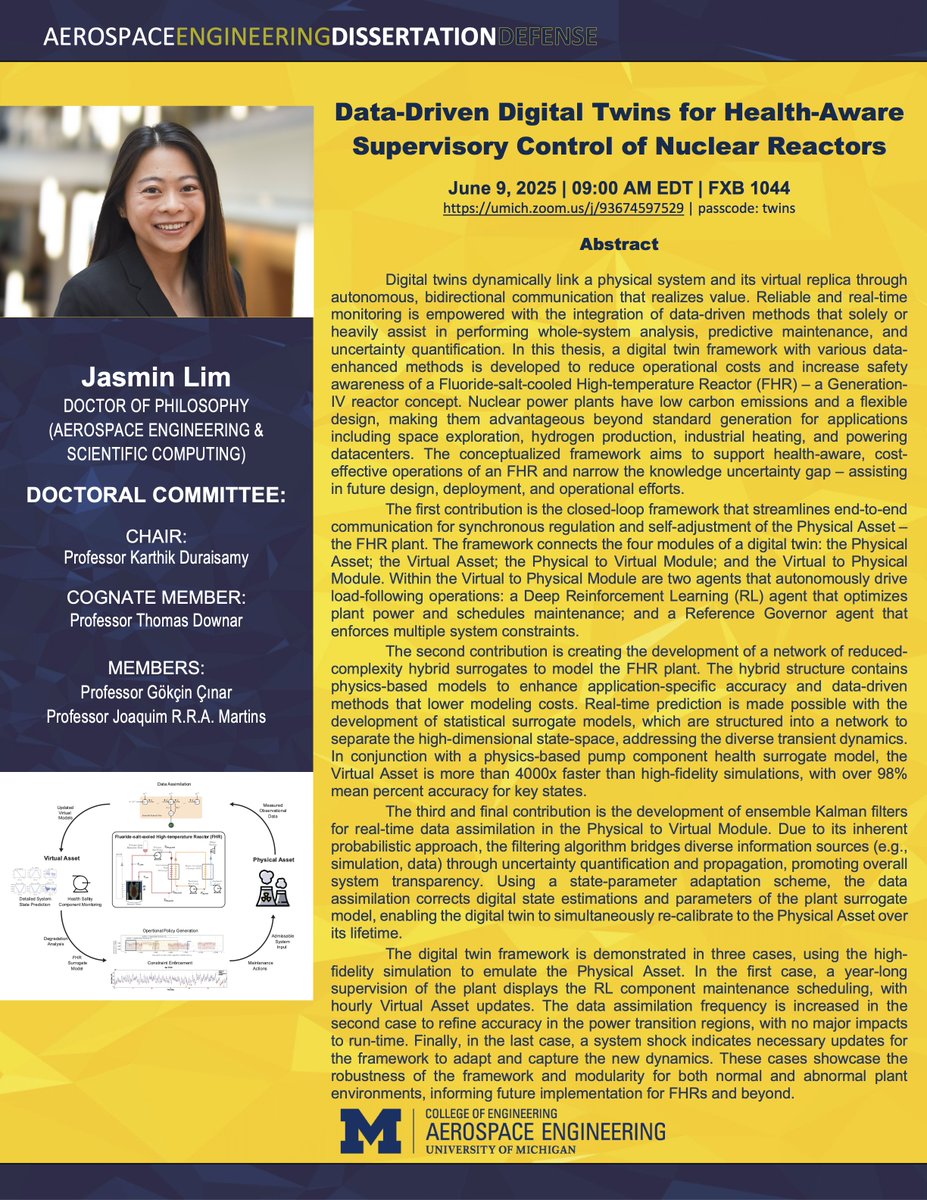
Jasmin came to us with a Bachelor's in Computational Engineering from UT Austin, will be graduating with a PhD in Aerospace Engineering & Scientific Computing, and will start as a research scientist at MIT Lincoln Labs soon.
We are all set for Jasmin Lim's PhD defense. Jasmin was the centre point for a complex ARPA-E funded center (https://t.co/pYv2kFNPRE) that involved multiple companies and national laboratories - a unique role among PhD students (much less coming right off undergrad)
Thanks to several collaborators in the SAFARI project, particularly Dan O' Grady, Akshay Dave (Argonne NL), Jin Li & Tom Downar (U-M), Humberto Garcia & Dimitrios Pyolorof (Idaho NL) and many others for helping Jasmin with her work.
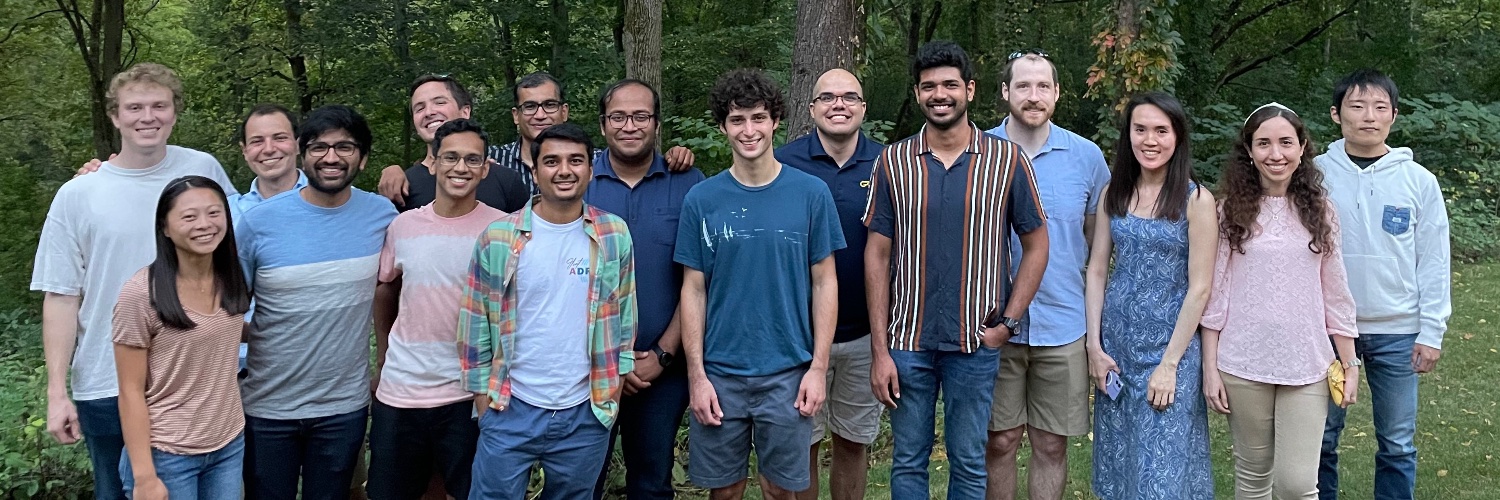
𝗛𝗮𝗽𝗽𝘆 𝗡𝗲𝘄 𝗬𝗲𝗮𝗿 𝗳𝗿𝗼𝗺 𝘁𝗵𝗲 𝗖𝗼𝗺𝗽𝘂𝘁𝗮𝘁𝗶𝗼𝗻𝗮𝗹 𝗔𝗲𝗿𝗼𝘀𝗰𝗶𝗲𝗻𝗰𝗲𝘀 𝗟𝗮𝗯𝗼𝗿𝗮𝘁𝗼𝗿𝘆.
What a privilege to be part of this journey with such an amazing team. Here are a few highlights that made this year special:
https://t.co/Zh4vxPgMMw
Enjoyed the panel on AI for science, energy & security @ the NVIDIA AI Summit. Energy Secretary Jennifer Granholm set the stage for the discussion with a great talk. Fun talking about how an AI scientific assistant might look like, among other things. https://t.co/HpUBxdzF0u
Incredible two hours with Sam Altman at U-M on Sep 12 right as o1 was released. Reasoning engines like o1 will have a transformative impact on science. Sam said no less than three times that the most important things to him are 1 Scientific research, 2 Education, 3 Healthcare.
In April, we organized the first-ever conference on Scientific Foundation Models with in-person participants from 50+ institutions. We are pleased to share a summary of the conference in the form of a special issue of the MICDE Magazine: https://t.co/6XvegY0UhC
All set for Bernardo Pacini's defense. Bernardo joined us from Princeton in Fall 2018 and has been patiently putting together a multi-disciplinary optimization framework toward the end of improving efficiencies and reducing noise in advanced air mobility applications.
With a $15M award from the U.S. Department of @Energy’s @LosAlamosNatLab, U-M will partner with the lab to develop advanced computing technologies — including artificial intelligence and sophisticated modeling techniques — to address critical challenges. https://t.co/YEv9L8a2D2
MICDE and U-M are partnering with @LosAlamosNatLab to develop computing-driven solutions to some of the most pressing problems in science and society, integrating algorithms, AI, scientific software, and computer architecture. More info: https://t.co/u5CcgrWu7S