Upholding the Jaw: Role of the lymphatic system in arthritic and painful joints revealed – presenting a therapeutic avenue
📹 Yang Shu et al @USC in @NatureComms
➡️ https://t.co/J4cHTjLlDq with @DrJohnAnkers
An interview with Jingyu He, Hong Colleen Feng, and Junxi Guo on their latest publication in Disease Models & Mechanisms, "Distinct biological and biomechanical features in jaw and knee cartilage contribute to their degenerative susceptibility." #Science
https://t.co/2aObgCD7or
🦷 Call for submissions for a special issue of Cells with guest editors Dr. Rucha Arun Bapat and Dr. Marziyeh Aghazadeh!
Oral Disease: Cellular Mechanisms and Emerging Therapeutic Strategies For more information: https://t.co/eMFPQbjFSr
#Science#MDPI#Cells#DentalResearch
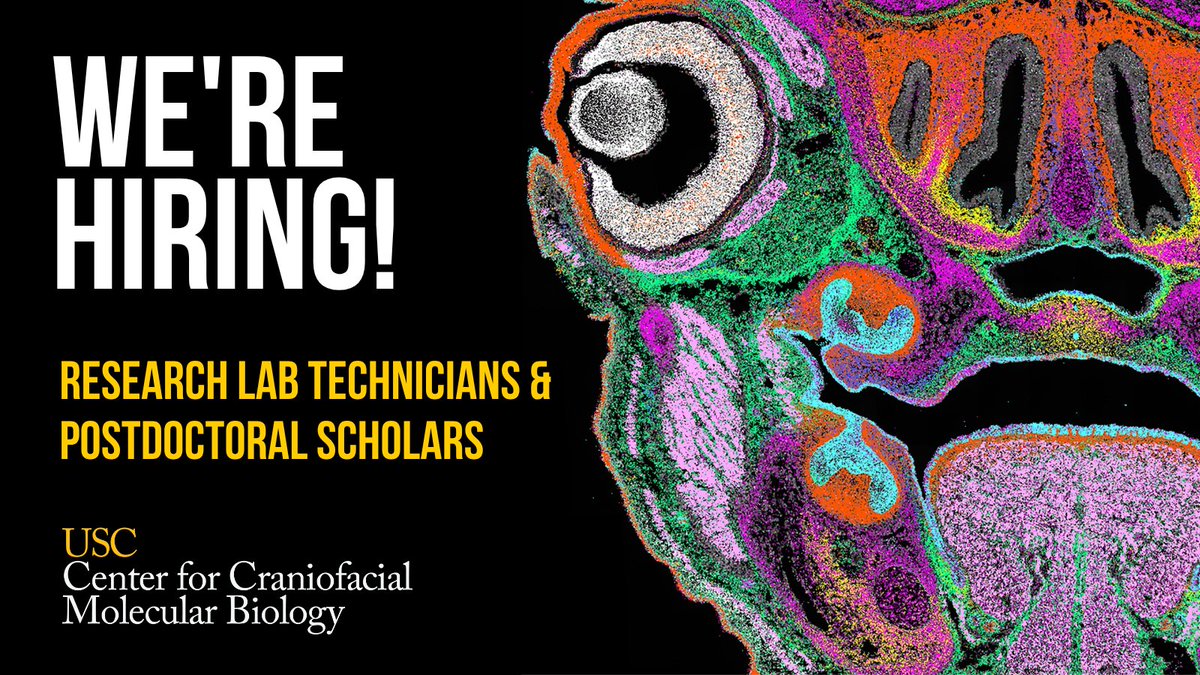
Interested in working in a collaborative research environment, where you can use your laboratory skills to make a significant impact in the scientific community?
We’re looking for passionate individuals to join our team. #Science#ScienceJobs#LabJobs https://t.co/sMMHrKvI9e
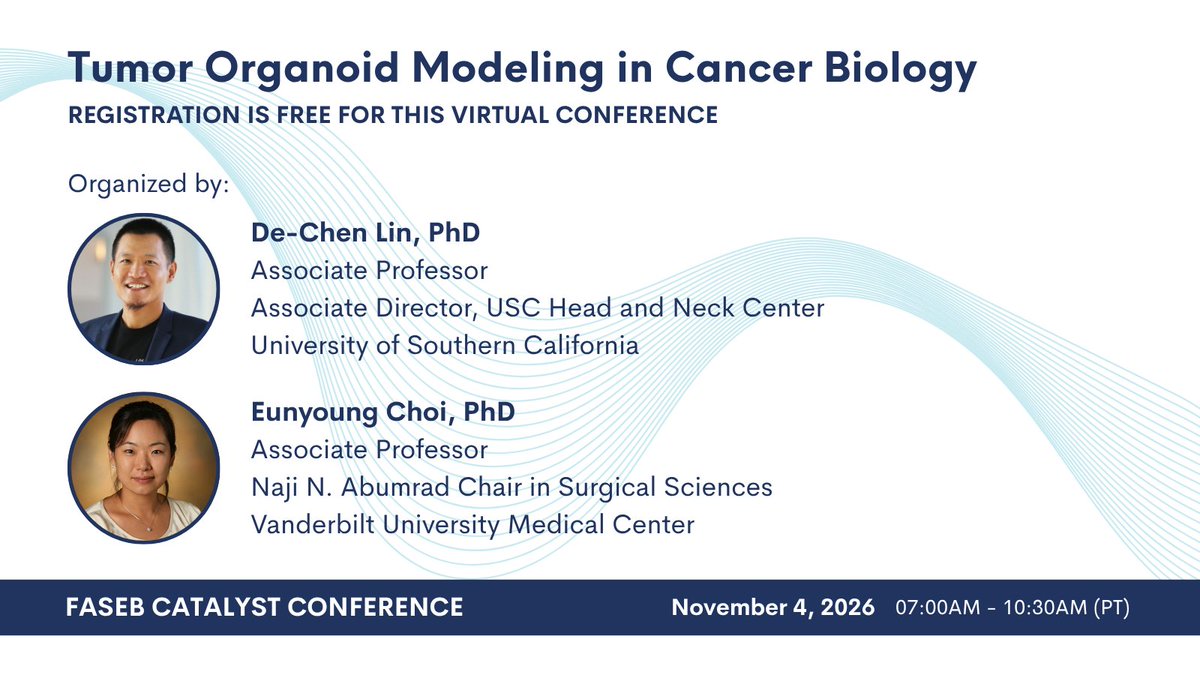
Excited to co-organize the upcoming FASEB Catalyst Conference: Tumor Organoid Modeling in Cancer Biology on Nov 4!
Free virtual meeting — register here:
https://t.co/gwzyFgGLbR
@FASEBorg#Organoids#CancerResearch#TumorOrganoids
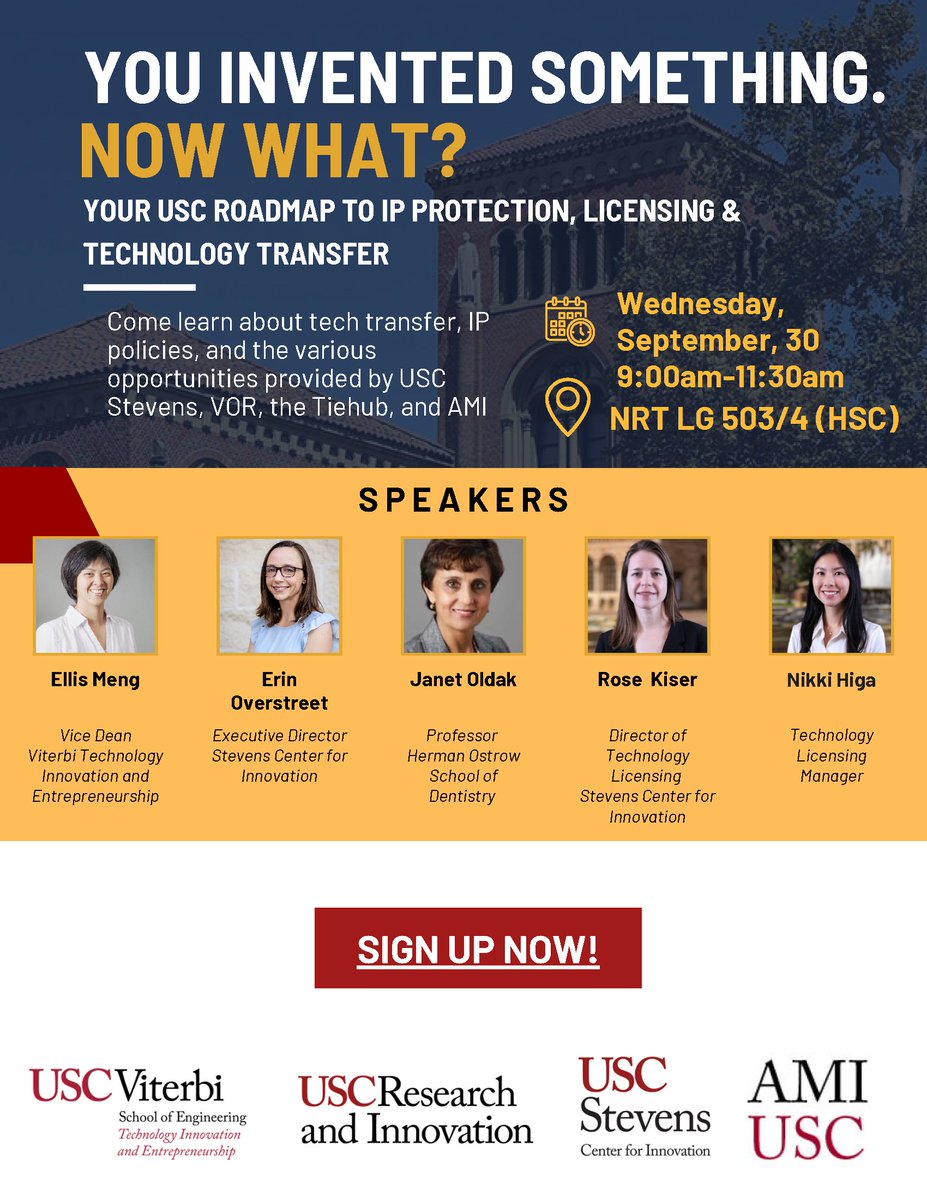
Register here for a Stevens Center for Innovation workshop featuring CCMB’s Dr. Janet Moradian-Oldak presenting on her commercialization journey for her new peptide that repairs white spot lesions and other tooth enamel damage:
https://t.co/dRSz1KxvsD
Dr. De-Chen Lin will co-host the FASEB Catalyst Conference: Tumor Organoid Modeling in Cancer Biology, which will be held virtually on November 4. Visit the link for more information and to register for this free event. #CancerResearch#Organoids
https://t.co/5vyTDx0a2w
After decades of research, @OstrowOnline Prof. Janet Oldak developed a biomimetic gel that can help repair damaged #enamel. We helped #license the technology to Verdant Nature, Inc. Congrats to Dr. Moradian-Oldak!
Read more: https://t.co/TwMQGWXfBb
Congrats to Dr. Dechen Lin on his new NIH-funded R01, which will allow him to use human organoids to understand how KMT2C mutations affect the immune system’s response to therapeutic treatments in head & neck cancers. #CCMBUSC#USCResearch#CancerResearch
https://t.co/3eG3moBuz9
CCMB’s Dr. Janet Moradian-Oldak teams up with Verdant Nature Incorporated to bring her innovative biomimetic gel for repairing white spot lesions and other enamel damage to market. #CCMBResearch#USCResearch#DentalResearch#Dentistry
Read about it here. https://t.co/FuoWSwXKir
Nerves don't just wire up muscle - they help build it. New in FaceBase: single-cell, bulk RNA-seq, and SeqFISH showing trigeminal nerve-derived GDF11 shaping soft palate muscle architecture. @CCMB_USC#craniofacial#scRNAseq#spatialtranscriptomics
https://t.co/UIzvcjOw7o
Normal #enamel thickness does not guarantee normal enamel quality. In mice, disrupting a cell-binding motif in ameloblastin impaired ameloblast polarity and prism organization. Homozygous mutants also had hypomineralized enamel—revealing how cell–matrix contact shapes enamel architecture.😀
@IJOS_Office
https://t.co/7RN4WI4Oi6
It's that time again! Join us for Office Hours this week:
📅 Wed, August 26, 1 pm Eastern / 10 am Pacific
Ask the FaceBase team about finding, submitting, and citing data and more!
Register: https://t.co/41spc4k6nV
#craniofacial@NIDCR_NIH#innerear@NIH_NIDCD#OpenData
The Xu lab at USC's CCMB explores the effects of dioxins on dental and craniofacial development in their latest review article published in @FrontiersIn Cell and Developmental Biology! #CCMBUSC#USCResearch#Science#Biology
https://t.co/Qwskr63AX1
Why do #coronal sutures sometimes fuse too early? In mice, excessive FGFR2–P38 signaling during an early postnatal window increased retinoic acid and pushed GLI1+ progenitor cells to form bone too soon. Restoring #retinoic acid signaling kept the coronal suture open and rescued related #neurocognitive problems.🧐
@IJOS_Office
https://t.co/Y4DZgvHDG3
Why do some cranial sutures fuse too early? New FaceBase data point to timing: FGFR2 signaling normally declines after birth, dialing down retinoic acid to keep the coronal suture open. Overactivate it and the suture closes. Chai lab, USC. @CCMB_USC
https://t.co/fKYL4MRatc
It was such a pleasure to visit @CCMB_USC@ostrowusc. Thank you @ZhaoyangLiu_5 and Dean Yang Chai for the invitation! I learned so much from interesting conversations with faculty and students that have given me many ideas for exciting new collaborations.
How do continuously growing teeth withstand constant mechanical load? New FaceBase data identify a KDM6B–BMI1–PIEZO1 "mechanostat" that shields incisor progenitors from stress-induced apoptosis. Bulk RNA-seq + Cut&Run-seq, Chai lab, USC. @CCMB_USC
https://t.co/wDRfsFqvlv