No More Dyes or Pigments in Concrete: This Is the Color of Earth!
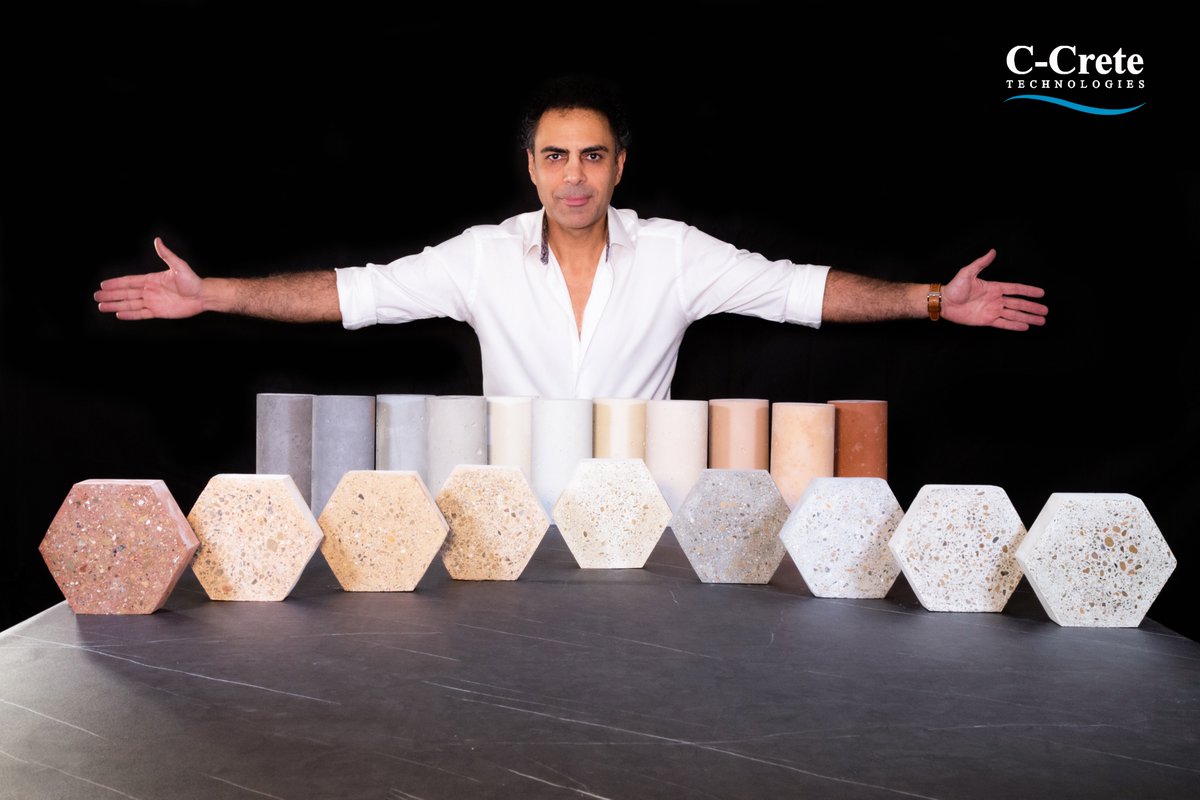
After nearly two decades of work, we are thrilled to unveil a groundbreaking advancement in concrete—a naturally occurring color palette. Gone are the days of artificial dyes and pigments; the earthy tones in this image reflect the hues of the Earth itself, manifested "as-is" in C-Crete products!
While our primary mission was to create Portland cement-free concrete (C-Crete) by changing the form and function of naturally occurring non-carbonate rocks—such as granite, basalt, and zeolite—this preservation of rock color emerged as a delightful by-product. It’s one of those serendipitous moments in science that has brought us more joy than we could have imagined.
The lack of color change in C-Crete is the visual proof that we are not altering the rocks; rather, we are honoring nature with essentially no CO2 emissions. In contrast, traditional Portland cement concrete is gray—due to the high-temperature burning of materials, releasing massive CO2.
To all architects, designers, artists, and engineers: you are no longer bound by gray concrete. Like choosing paint colors for your home, you can now select from a spectrum of naturally occurring colors in concrete that complement your design—colors that never fade.
What you are witnessing here is the world’s first concrete representing the color of our planet – without Portland cement and its CO2 emissions. With that, welcome to C-Crete's world!
C-Crete Takes the Spotlight by Pouring in a Museum!
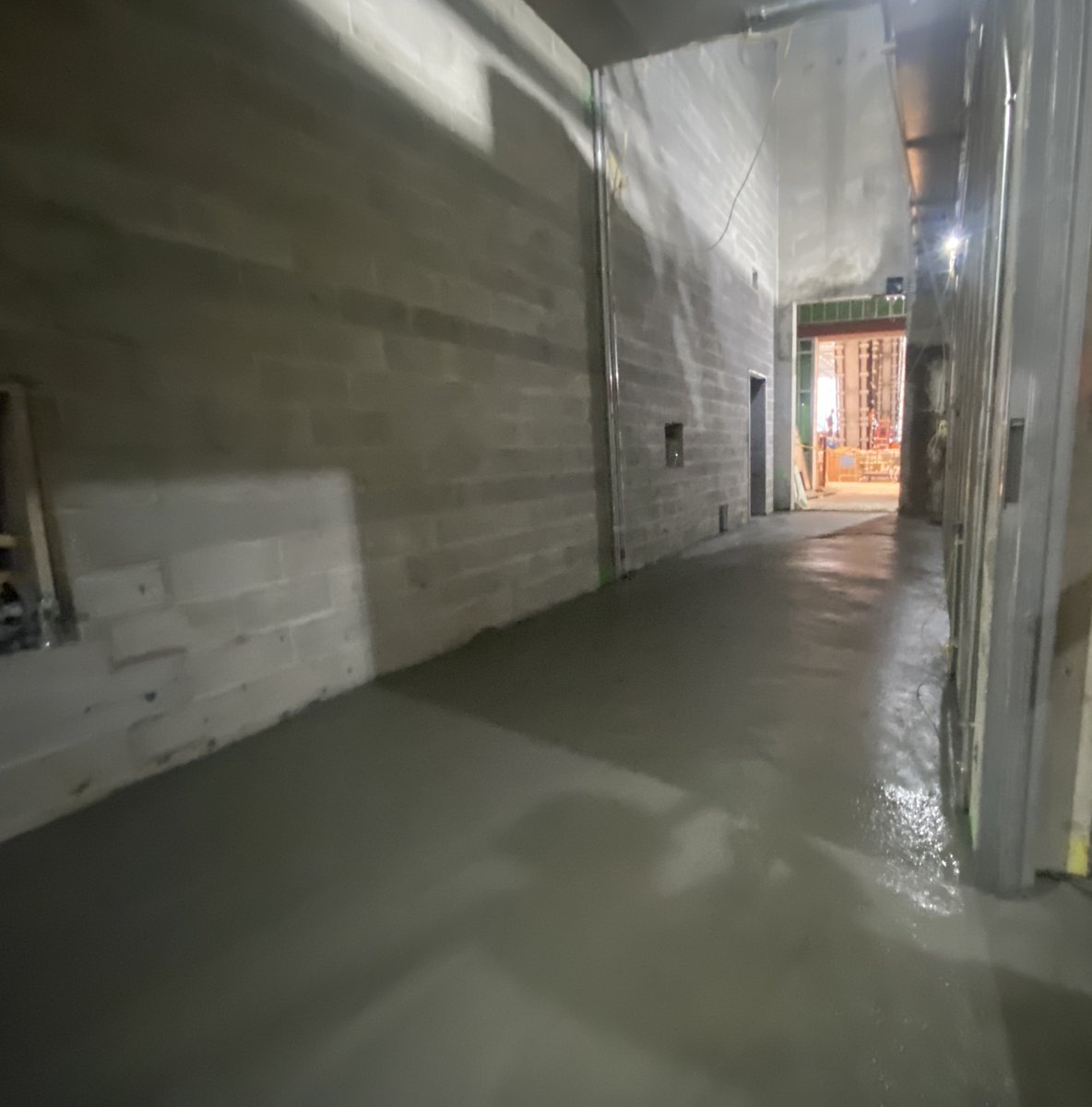
In Oct, coinciding with the 200th anniversary of Portland cement's empire, we proudly began pouring Cement-free Concrete (C-Crete) at the Sandy Spring Museum in Montgomery County, Maryland. This ~180 cubic-yard expansion project marks the first use of Portland cement-free concrete in the entire Mid-Atlantic, highlighting C-Crete’s status as a museum-quality product by defying the entrenched norms of Portland cement usage, which contribute to a staggering ~3 billion tons of CO2 emissions annually.
To date, Portland cement-free concrete (C-Crete) has been poured in CA, WA, AZ, NY, MN, TX, Ontario (Canada), and now MD. We are committed to continuing this journey across all states and provinces in North America and beyond, with the goal of eventually ending this once-untouchable empire.
Many thanks to the following who welcomed C-Crete into the museum: Scott Knudson (Architect), Jerry Therrien, LEED AP (Owner Rep), Allison Weiss (Museum Director), Nate Tarbox (Bay Ready Mix Company), Sanjoy Bose and Charles Fountain, CQA (Structural Engineers), and Ken McCormack (General Contractor). Hope this historic pour inspires both artists and visitors alike, sparking a wave of creativity that unfolds the adoption of low-carbon materials beyond our imagination!
Breaking Ground with Cement-Free Concrete at LA’s Sustainable Campus!
Earlier this month, we began the exciting journey of pouring cement-free concrete (C-Crete) at a unique, nature-integrated Live-Work-Thrive Campus in Los Angeles, masterfully designed by SHoP Architects and Steinberg Hart and brought to life by Lendlease’s global placemaking expertise.
This pour represents the first use of Portland-cement-free concrete in Southern California, perfectly aligning with the sustainability mission of Habitat. The project features biophilic design elements interwoven with vibrant greenspaces as well as inviting amenities and inspiring workspaces aimed at elevating the content capital of the world.
Many thanks to the teams who embraced this pioneering pour - free of Portland cement and its CO2 emissions - within such an inspiring project: Lendlease (Jack McTavish, and former members AMANDA KAMINSKY, Sara Neff and Joan Gibbons), Holmes US (Nina A. Mahjoub, Megan Stringer, Adam Slivers), Cemex Ready Mix (Hernan Jose Perez, Christopher Iaccio, Ronald Taber), JT Wimsatt Contracting Co., Inc. (Wesley Catig), ClimateWorks Foundation (Don Davies, Larry Sutter), and others.
Hope the innovative low-carbon materials continue to flow into thoughtfully crafted urban campuses like this, enriching our planet's habitat globally!
An exciting video that heralds a new era, paving the way for a brighter future!
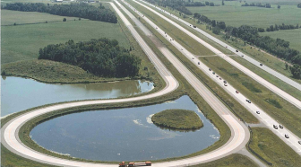
In September, a section of Highway I-94 in Minnesota underwent a transformation, paved with Cement-free Concrete (C-Crete) - a revolutionary product that stands free from the shackles of Portland cement and its CO2 emissions – cracking the 200-year reign of Portland cement concrete, the very backbone of our infrastructure.
Interestingly, we met the final technical requirements of the Minnesota Department of Transportation (MnDOT) in less than a day - compared to the usual 28 days. So, the highway section paved with C-Crete could have opened to traffic in less than 24 hours.
A special shoutout to these groups for helping pave the way for a brighter future (pun intended): Larry Sutter; Maria Masten, Emil Bautista, PhD, PE, Bernard Izevbekhai, P.E., Ph.D., Tom Burnham, and Benjamin Worel at MnDOT; Alfred Gardiner, PE and Ben Holbrook at Braun Intertec Corporation; Holcim Ready Mix; and others. You will be recognized as vanguards of change in road construction. Looking forward to paving the entire highway with cement-free concrete, all the way to the net-zero carbon destination!
Enjoy the video (ensure that the sound is on).
Credit for drone images: Jagan Gudimettla, P.E.
The End Has Begun!
In 2024, we stand at a pivotal crossroads, marking the exact 200th anniversary of the Portland cement patent. For two centuries, this substance has been the undisputed choice as a structural binder, shaping our modern civilization. So far, the thought of any construction project without Portland cement, especially at its foundation, seemed unfathomable. Yet, this legacy comes at a cost: the age-old process relies on burning limestone, currently resulting in a staggering annual emission of ~3 billion tons of CO2.
Since last year, C-Crete has made a bold stride into the future, pouring over 2,500 tons of Portland cement-free concrete in various projects, shaking the very foundations of this once-glorious reign! This volume of cement-free concrete surpasses that of any other company globally, proving that it is indeed possible to transcend the status quo while maintaining comparable performance and cost.
Special shoutout to our partners and collaborators - including developers, general contractors, architects, structural engineers, ready-mix companies, contractors, independent testing firms, and state and government agencies - who have bravely embraced innovation, paving the way for new, low-carbon materials to flourish!
As reflected in an announcement recently by the White House, C-Crete is proud to be recognized among the leading U.S. companies committed to bolstering innovation and producing low-carbon concrete. As a world’s pioneer in the development and pouring of portland cement-free concrete, C-Crete is dedicated to advancing sustainable construction by utilizing abundant non-carbonate feedstocks and scalable processes.
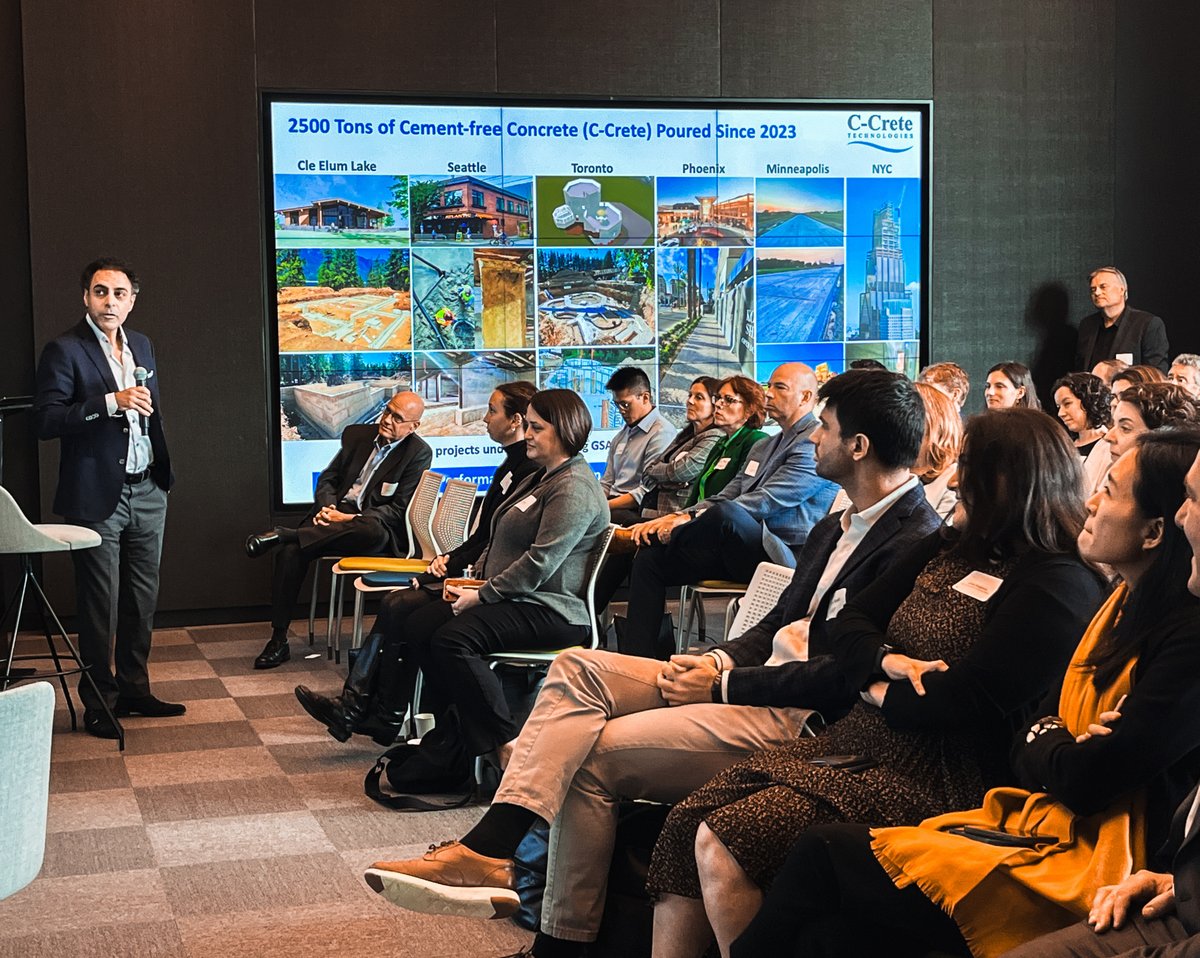
Thanks to Andres Clarens, Madeline Reeves, James Hove, Anish Tilak, The Natural Resources Defense Council, RMI, NRMCA Group and others for putting together regional convenings. The image below shows a recent talk by C-Crete in the regional convening in the East (Boston) sponsored by the above groups.
The White House announcement is in the comments.
Here is a fun fact about C-Crete's motivation behind what we are developing, directly quoted by our founder, Rouzbeh Savary:
During the winter seasons, I find myself drawn to the slopes of Palisade ski resort in CA, snowboarding every 2-3 weeks. The Granite Chief lift, a personal favorite, ascends into the heart of the 20,000-acre Granite Chief Wilderness national park in Lake Tahoe. Each time I rode this lift or carved my way down, I gazed at the towering trees and rugged granite rocks, pondering what it takes to transform these formations “as-is” into a cementitious binder.
With nature offering a bounty of non-carbonate rocks like granite, why cling to carbonate rocks like limestone for cement? For context, the processing of limestone to make Portland cement emits ~3 billion tons of CO2 per year. Isn’t it an obvious misstep to rely on limestone as a starting material? These thoughts swirled in my mind even while shredding the slopes at other resorts like Aspen, CO, where basalt caught my eye and ignited the same reflections.
But at C-Crete, we turned those musings into reality! After 200-year dominance of limestone-based concrete, we not only developed and poured the world’s first granite-based concrete in NYC but also pioneered and poured the world’s first basalt-based and zeolite-based concretes in Seattle – all without Portland cement. The reserves of these non-carbonate rocks surpass those of limestone while their processing does not emit CO2, keeping our beautiful nature “as-is”.
We are excited to share that C-Crete has been awarded $10.4 million by the California Energy Commission and the U.S. Department of Energy (DOE) to operate at a larger scale in the manufacturing of Cement-free Concrete (C-Crete). This funding recognizes C-Crete’s science-based technology, which utilizes non-carbonate rocks - such as zeolite, basalt, and granite - rather than carbon-heavy limestone, to reduce the environmental footprint of the concrete industry.
We are very thankful to the state of California, the DOE, and our partners and collaborators, including ready-mix companies and third-party testing companies, for fostering innovation in sustainable construction technologies.
Press release is here: https://t.co/FRJ7ddiiJQ
Last week, C-Crete participated in the “Eastern US Low-Carbon Concrete Convening” in Boston, sponsored by the White House, the Natural Resources Defense Council (@NRDC), @nrmca , and @RockyMtnInst. C-Crete founder, Rouzbeh Savary, gave a talk on C-Crete’s cement-free concrete projects, highlighting those in the Northeast, and shared the stage with other low-carbon enthusiasts including Ben Myers, Jim Carreira, Beverly Craig, Patrick Grasso and Craig Dauphinais.
Returning to Boston always brings back good memories of where C-Crete was initially started and how far we have come, from reducing the carbon footprint of Portland cement to entirely eliminating it from concrete, coinciding with its 200th anniversary of use in concrete. Currently, the volume of Portland cement-free concrete that C-Crete has poured in various projects is greater than that of any other company in the world, whether small or large.
Thanks to Andres Clarens, @FrankMruk , Anish Tilak, and others who organized this exciting event and dialogue.
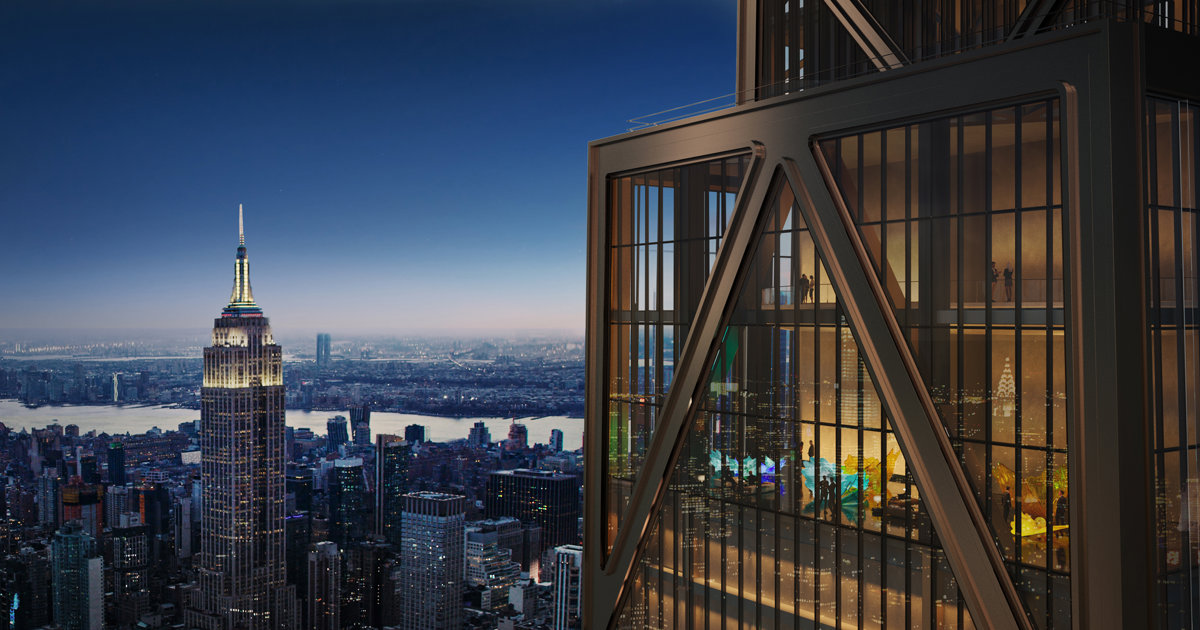
We are thrilled to officially announce the development and pouring of the world’s first granite-based concrete - free from Portland cement and its CO2 emissions - at a supertall building in NYC.
Thanks to the C-Crete team for their unparalleled commitment: so far, C-Crete has introduced and poured various Cement-free Concrete (C-Crete) products based on basalt, zeolite, and now granite. Each of these products represents a world record following the 200-year reign of carbon-heavy limestone-based portland cement concrete. The reserves of each rock sit on every continent, and their deposits are on par with or exceed those of limestone.
C-Crete founder, Rouzbeh Savary, shared the following: "Regarding 270 Park Ave in Manhattan, the new global HQ of @jpmorgan, I first became familiar with Lord Norman Foster’s aesthetically designed structures about 26 years ago. Captivated by their majesty - his Millau Viaduct was the cover of my presentations for years - I followed my passion for material design and discovery of the elementary units that hold up such magnificent structures. Now my “material design” breaks into his “building design”! immense joy… Even if it is small for now, every giant leap begins with a small step."
Many thanks to the following for helping this pivotal pour in Manhattan: Allan Paull, Max Driscoll, and Jeremy Williams at @AECOMTishman; Fortunato Orlando at Severud Associates; Chris De Luca at @tishmanspeyer; Michael Prince at JPMorganChase; Michael Zagula and Constantine Quadrozzi at @SRMCONCRETE; and others. History will remember you as harbingers of sustainable supertall buildings. Looking forward to the day we pump cement-free concrete to the last floor, touching the sky!
Press release is here: https://t.co/jzzR1kMuBX
Photo Credits: @FosterPartners, C-Crete Technologies and NYC Constructors.
Exciting news: We paved the way for a brighter future!
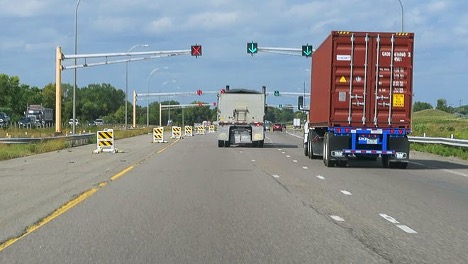
Last month, we paved a section of Highway I-94 Westbound in Minnesota with Cement-free Concrete (C-Crete), which is free of Portland cement and its CO2 emissions. We captured these shots at the sunrise on the horizon of the first-ever highway paved with C-Crete. Hope paving with new low-carbon materials on this and similar highways continues, taking us sooner to net-zero carbon destination.
If you ever pass Highway I-94 Westbound in MN around Mile 198, remember two things: 1) you are driving on Cement-free Concrete (C-Crete), and 2) how excited the C-Crete team was! Not because our product was used there, but because the 200-year reign of Portland-cement concrete on infrastructure of human civilization has begun its descent.
For this project, from introduction to implementation took only about a month (including meeting MnDOT testing requirements, independent third-party verifications, approval, shipping, paving, curing, etc.).
Many thanks to the Minnesota Department of Transportation (@MnDOT), @MnROAD, Holcim, Braun Intertec Corporation, Larry Sutter, and others who helped make this happen.
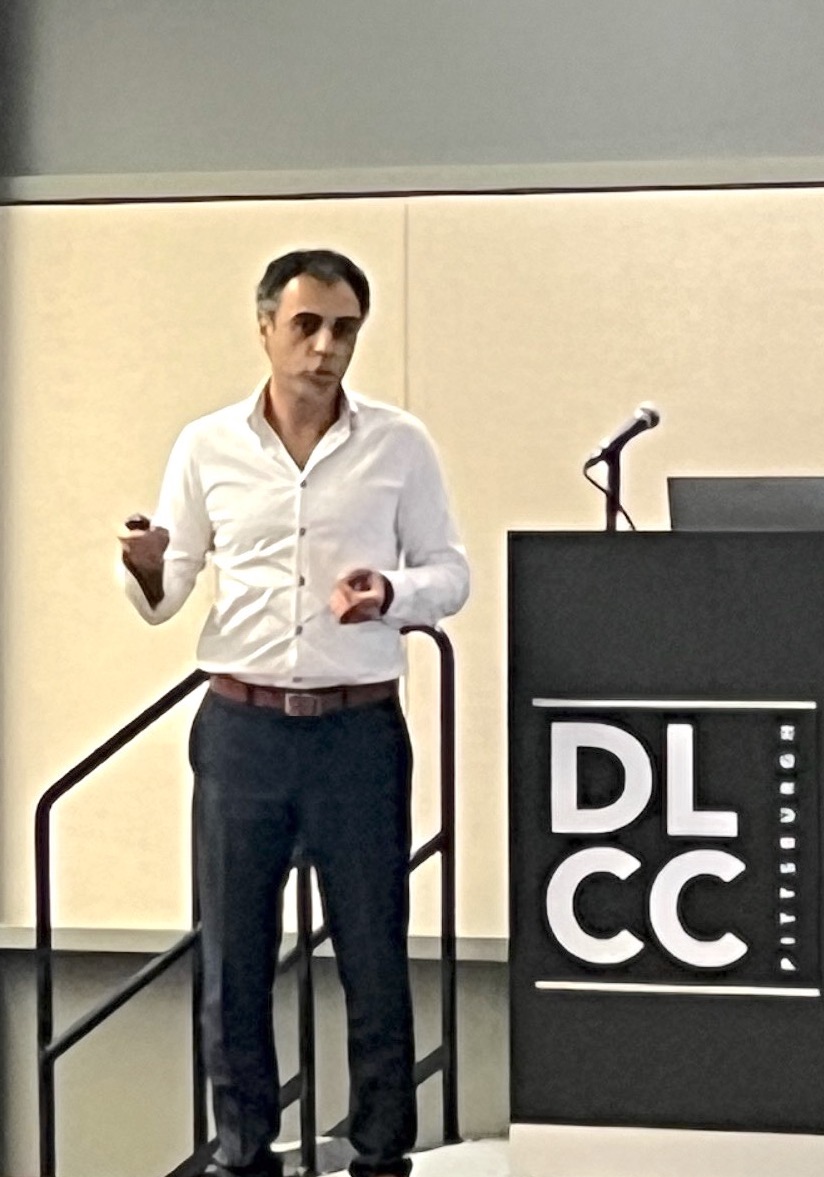
Recently, C-Crete founder, Dr. Rouzbeh Savary, gave a presentation on Cement-free Concrete (C-Crete) in the steel city of America, Pittsburgh, PA, during the US DOE’s Annual Carbon Management meeting. Verified by independent third parties, C-Crete’s latest strength reaches more than 5000 psi in just one day and increases over time, effectively capturing a significant portion of steel’s strength while costing a fraction of steel’s cost - all without Portland cement and its CO2 emissions (see enclosed C-Crete cylinder).
Last year, when C-Crete launched the product it was reaching ~5000 psi in 28 days. We are now applying C-Crete in both precast and cast-in-place structural concrete applications
Exciting news in paving the road towards a sustainable future! On the heels of the US Government Services Administration (GSA) announcement regarding the use of Cement-free Concrete (C-Crete) in federal buildings, C-Crete has been selected by the Minnesota Department of Transportation (@MnDOT) to pour a section of Highway I-94 Westbound, covering approximately 160 cubic yards. C-Crete contains no Portland cement and thus has no associated CO2 emissions. This pour is planned to be implemented via a slip-form paver in a few weeks. Thanks to MnDOT for arranging this.
Onward and upward!
Recently C-Crete was featured in an article in Scientific American. “Their hearts are in the right place. Their economic eye is in the right place,” said Dr. Jeff Bullard, a professor at Texas A&M University. “But a lot of times the construction industry is very resistant to this kind of stuff.” That is right, but C-Crete team is on a mission to change this pattern and mentality. Thanks to @politico and Francisco Camacho for covering this. Read more here: https://t.co/VX3x7NZs8K
Exciting news! Last month, the U.S. General Services Administration (GSA) announced that its Green Proving Ground (GPG) program has selected Cement-free Concrete (C-Crete), along with other sustainable technologies, for evaluation in real-world government buildings towards the goal of net-zero emission federal buildings. GSA provides centralized procurement and shared services for the federal government, managing a nationwide real estate portfolio of nearly 370 million rentable square feet. Given that more than half of the total concrete in the US is used for government applications, C-Crete is proud to be included in this GSA program, which is run in collaboration with DOE. For more information, see https://t.co/AlsEYctAUK
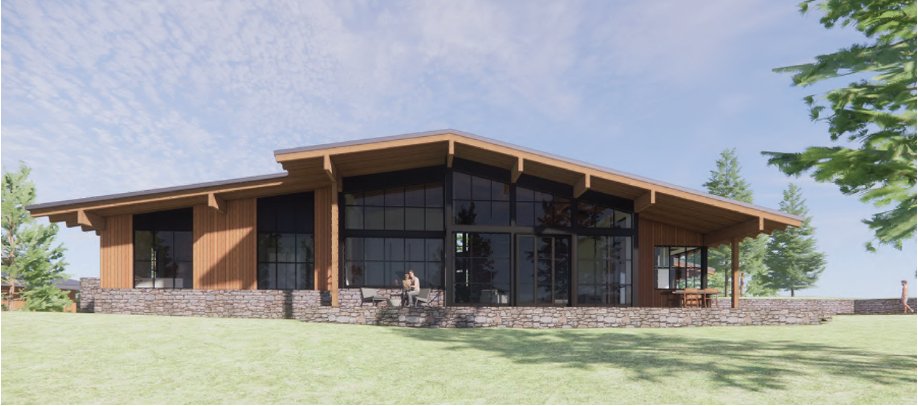
Recently, another pour of Cement-free Concrete (C-Crete) began for a ground-up residential house overlooking the beautiful Cle Elum Lake near Seattle, WA. The design somewhat resembles to Eichler Houses but is enhanced because it was conceived by Ray Johnston with an ultra-low embodied carbon footprint in mind, utilizing C-Crete, which is free of Portland cement and CO2 emissions — something Eichler could never have imagined.
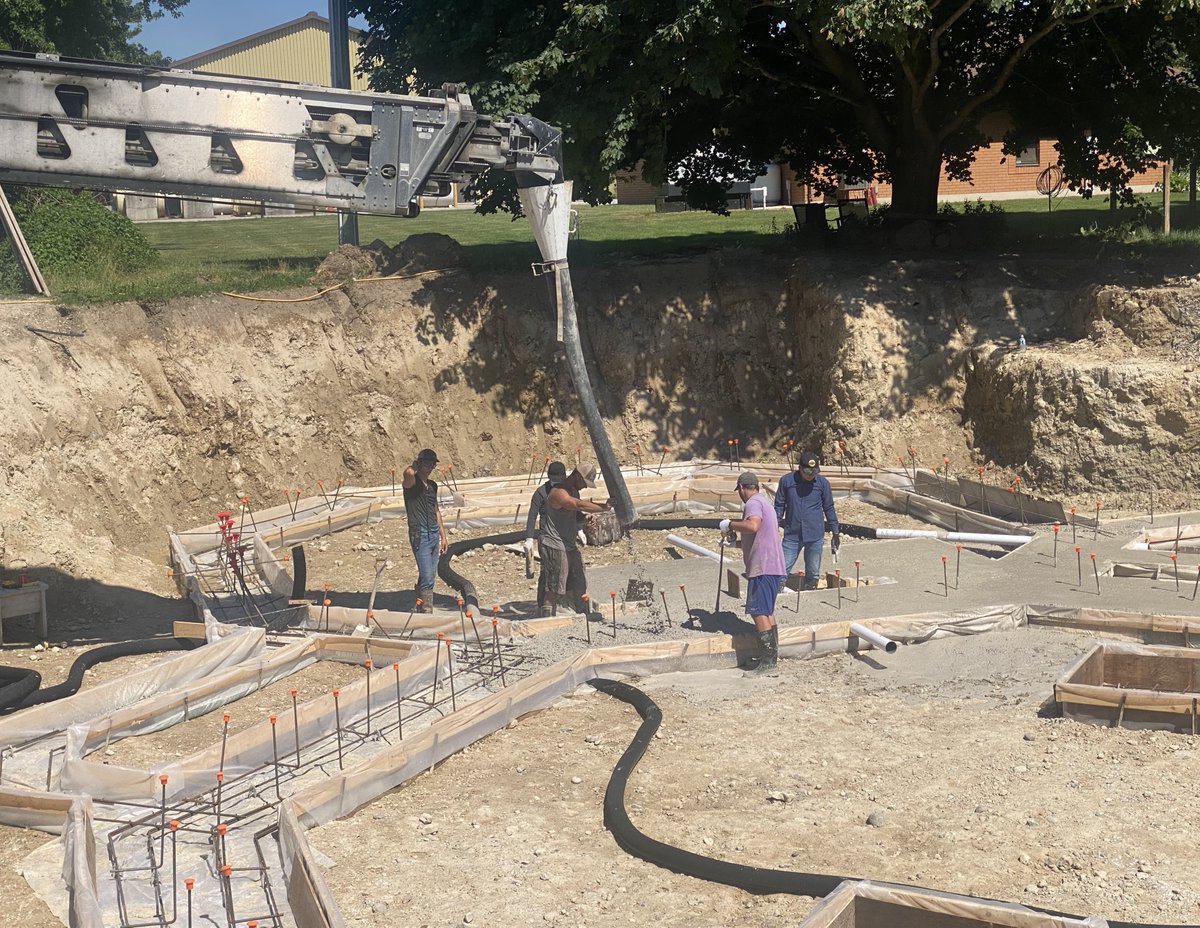
The project, totaling ~200 cubic yards of C-Crete, started with ~50 cubic yards for the house's foundation, detached guest room, and detached garage. The remainder will be used for pouring walls, slabs, driveways, and a swimming pool, where C-Crete will be applied via shotcrete. For this project, a boom pump with several sharp angles was employed to deliver C-Crete, which intriguingly flowed from the tube like ice cream!
Last month, C-Crete was poured in a 3-story ground-up residential building near Toronto, marking the first-ever use of cement-free concrete in the entire Canada. The project, totaling 400 cubic yards of concrete, commenced with 60 cubic yards poured for the footings, with the remainder earmarked for walls, columns, slab-on-deck, driveway, etc. Unlike the US, there was no direct ASTM C1157 standard code or a precedent for pouring Portland cement free concrete in Canada. However, the building owner, Trevor, navigated these challenges by leveraging the closest equivalent standard code in Canada (with inputs from C-Crete). His persuasive efforts convinced both the building inspector and structural engineer, paving the way for future adoption of this eco-friendly product in Canada. With Canada's harsh winters, this pour stands as the ultimate durability test for C-Crete under extreme conditions.
Next week, C-Crete will be participating in the Northeast Embodied Carbon Summit in Boston as a sponsor. Please stop by our booth to learn more about Cement-free Concrete (C-Crete), which boasts zero carbon emissions. We will also have C-Crete samples available with different surface finishes and natural earthy tone colors. Returning to Boston reminds us of where C-Crete was initially started. The event is organized by the Boston Society for Architecture (BSA). Full schedule here: https://t.co/2JxXTSCn2J
C-Crete is presenting Cement-free Concrete product at the American Institute of Architects (AIA) Conference this week in Washington, DC. Stop by our booth # 3008 to learn more and discuss synergies with your construction projects with low carbon goals.