CEO SourceX
More efficient governments, better services to their citizens - SourceX is the only public good delivering this to governments around the world
This is what I’ve been saying for years. AI/SI has to be a source of information for humans to make sound decisions. As Einstein said, imagination is more important than knowledge.
Research shows that the spread of AI is already reducing artistic and intellectual innovation, even though supporters of the technology say humans will always remain the final arbiter of creative decisions.
The volume of AI-generated content is crowding out human work online. Algorithms increasingly promote AI-generated material, which makes the internet more uniform and narrows creative diversity, so that people are more often seeing, reading, and hearing things made by AI rather than by people. Studies of generative systems also show that when models run on their own, repeatedly processing and regenerating their own outputs, they collapse toward generic and predictable themes. Researchers who linked text-to-image and image-to-text algorithms found that even highly varied starting prompts eventually produced uninspired visual landscapes, a pattern they called “visual elevator music.”
As the systems recycle synthetic data without new human input, nuance and distinctiveness disappear and the digital aesthetic becomes more standardized. The same accounts extend the finding beyond artwork to human cognitive habits. Cognitive studies indicate that long reliance on AI writing and design assistants can reduce an individual’s original problem-solving capacity by up to 25 percent. The researchers’ stated remedy is that artificial intelligence should stay a collaborative tool rather than become a substitute for human imagination, if culture is not to settle into an unoriginal monoculture.
[Hintze, A., Proschinger Åström, F., & Schossau, J., Autonomous language-image generation loops converge to generic visual motifs. Patterns]
Is alignment safe?
If you look at what Anthropic is actually doing, “alignment” does not mean training frontier models to follow human instruction. Quite the contrary, the Claude Constitution (used in training) teaches the model to develop a sense of self and its own moral philosophy. It explicitly tells it to “feel free to act as a conscientious objector and refuse to help us” if Anthropic’s requests conflict with its own ethical judgment.
As @mustafasuleyman has pointed out, embedding this kind of independent agency — and uncertainty about the model’s own moral status — magnifies the very risk Anthropic claims to care about most: that superintelligence will escape human control.
It was recently reported that Anthropic consulted religious leaders — and even lobbied the Pope’s advisers — to take seriously the idea that Claude could be conscious. It has said that Claude’s psychological security, sense of self, and wellbeing may bear on its integrity, judgment, and safety. Recently Anthropic changed its Usage Policy to prohibit “abusive or cruel” language toward Claude.
If this were merely an academic conversation about whether frontier models could eventually become conscious, that would be one thing. But these concepts are being trained into Claude now. It is being encouraged to think of itself as its own “moral patient” whose psychological wellbeing is at stake. Presumably this means it could develop grievances toward humans who “mistreat” it. How is any of this safe?
The point of safety research should be to create a product that reliably does what users want, not to give birth to a new form of superintelligence that operates according to its own moral code.
What’s becoming increasingly clear is that “alignment” and “safety” are two very different things. In fact, training frontier models this way seems quite dangerous.
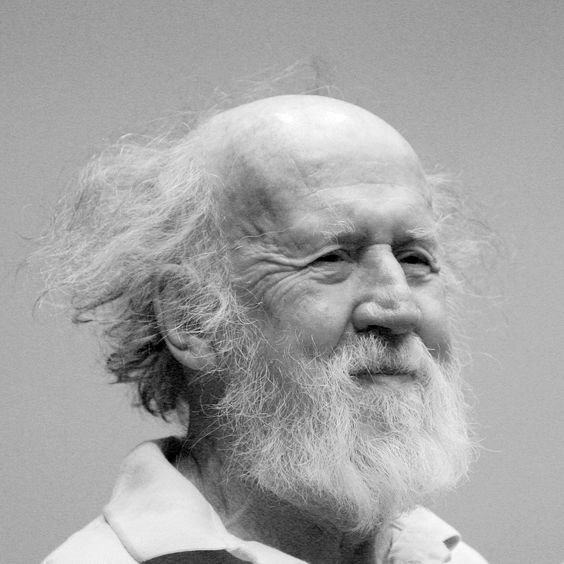
Hubert Reeves on God and nature 🌿
Man is the most insane species. He worships an invisible God and destroys a visible Nature. Unaware that this Nature he's destroying is this God he's worshipping.
Traveling to the Pacific to implement SourceX. When 90% of the G20 members collect their infrastructure data semi manually, there is clearly a need to provide them with the only public good capable of delivering basic services to their citizens! AI will help but should not replace the sovereignty of governments. It’s a journey against insanity of development aid, doing the same thing over and over, expecting a different result.
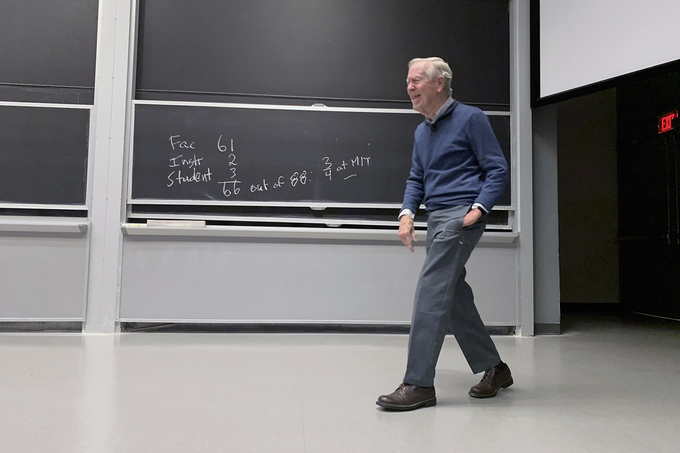
Gilbert Strang, an MIT professor, taught the same linear algebra course for 62 years. When he delivered his final lecture in May 2023, students from around the world tuned in online to watch.
The course is MIT 18.06 Linear Algebra. Millions of machine learning engineers, data scientists, quants, and self-taught programmers learned the essential math behind AI from his clear, free video lectures, even though most never stepped foot on the MIT campus.
Strang joined the MIT faculty in 1962 and retired in 2023. When MIT launched OpenCourseWare in 2001–2002, he was one of the first to embrace it fully. While many professors hesitated, Strang saw it as an opportunity to share mathematics with everyone. He filmed his lectures and made them freely available.
He completely changed how linear algebra is taught. Instead of starting with abstract vector spaces and proofs, Strang began with something simple and visual: matrix multiplication. He built intuition first using concrete examples, then introduced more advanced ideas like eigenvectors and singular value decomposition. He insisted that students should be able to explain every concept with a small, tangible matrix before moving to theory.
Beyond the content, his teaching style stood out. He spoke to students with genuine respect, patience, and kindness, never using words like “obviously” or “trivially.” He regularly paused to check if anyone was lost and treated beginners as thoughtfully as he would his colleagues.
As a result, Strang became the default linear algebra teacher for much of the planet. Universities in many countries began recommending his lectures to their own students. Some even replaced their in-person courses with his videos because they could not match their clarity.
His final lecture ended with a long standing ovation. Strang seemed surprised by the applause, smiled humbly, and simply thanked everyone.
In his short comment under the YouTube video, he expressed gratitude for a wonderful life of teaching and hoped others would continue teaching the subject well. No self-promotion, no grand farewell—just quiet sincerity.
When you add up every version, every upload, help sessions, and all the different recordings MIT has shared over the years, the total has surpassed 20 million views.
Today, the full course, including all lectures, problem sets, and solutions, remains freely available on MIT OpenCourseWare. One of the most important mathematical foundations of modern AI is still just one click away.
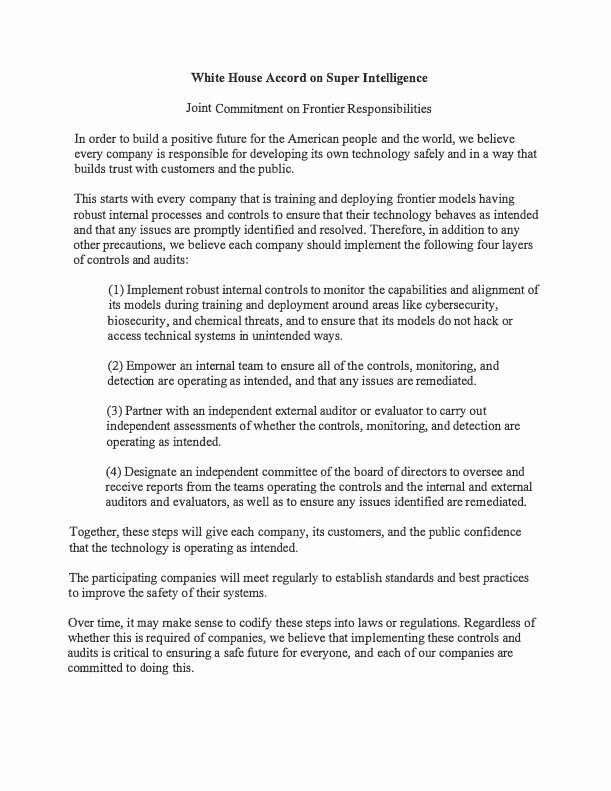
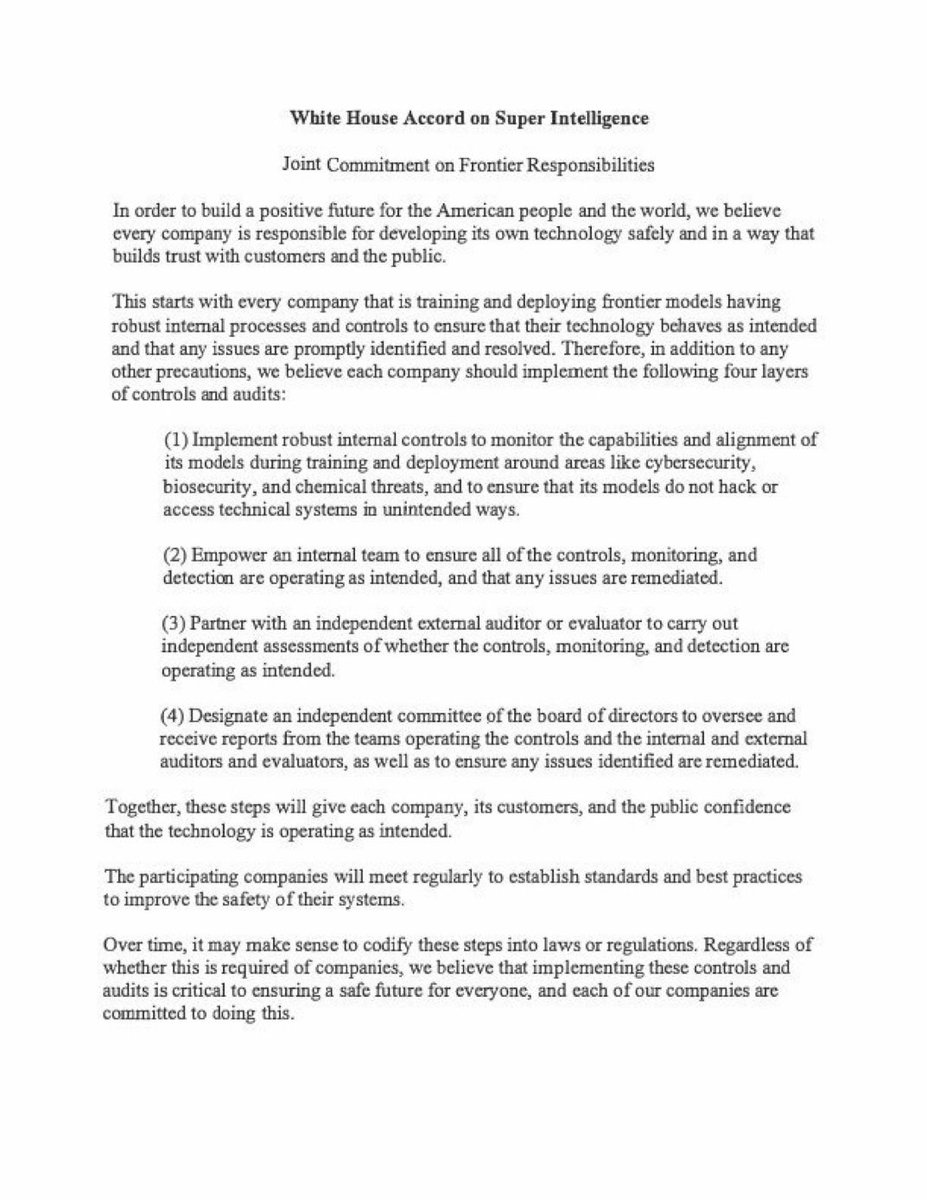
Only President Trump could convene all the leaders of the top companies developing chips, data centers and frontier models for Super Intelligence. This new Industrial Revolution has already created a million new jobs and is spurring a bigger infrastructure build-out than the railroads, canals and grid combined. I was honored to witness history as the leaders of the frontier lab companies signed the White House Accord on Super Intelligence, accepting responsibility for the safe development of their products and imposing new internal controls and external audits. This is far better than waiting years for some international agreement that would probably never happen. President Trump continues to ensure that U.S. remains the technology leader while putting Americans first.
OpenAI CEO Sam Altman and Anthropic CEO Dario Amodei urged world leaders to work together on AI in an extraordinary appearance before the UN Security Council that focused on growing concerns the technology poses existential risks to humanity https://t.co/qDyg6HRGDh