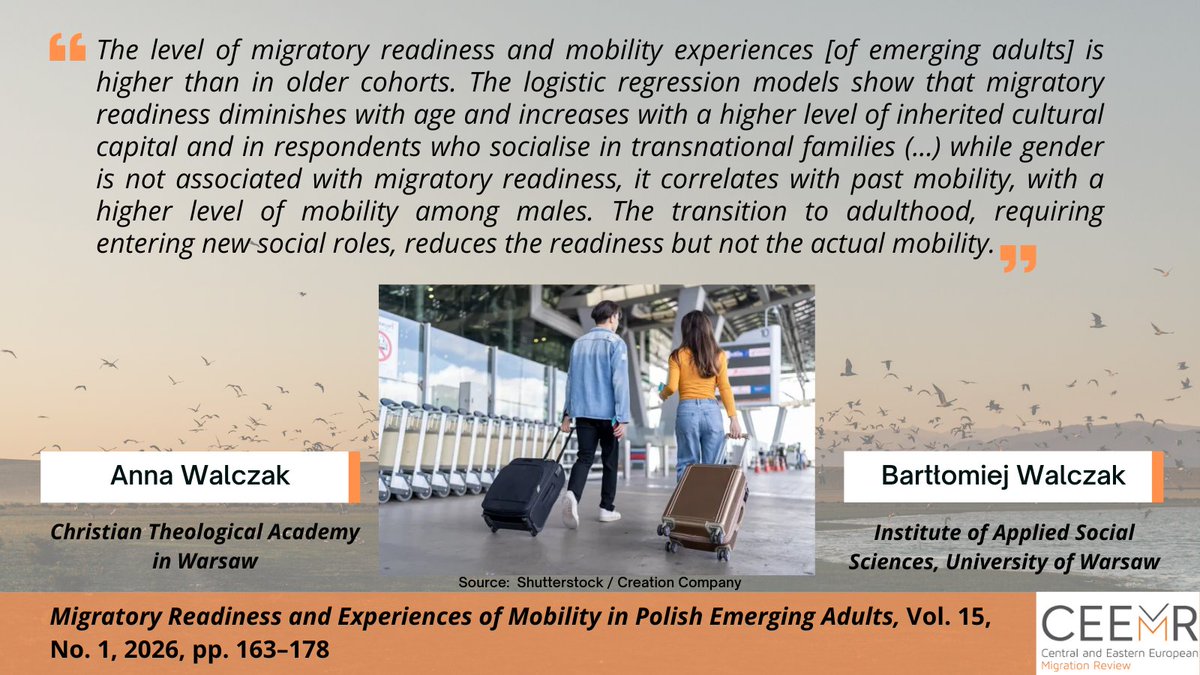
Walczak & Walczak show that emerging adults’ migratory readiness and mobility experiences are higher than those of older cohorts. Growing up in mobile families remains the strongest driver of both intent and actual relocation. Link: https://t.co/MmZ9QR0TV8
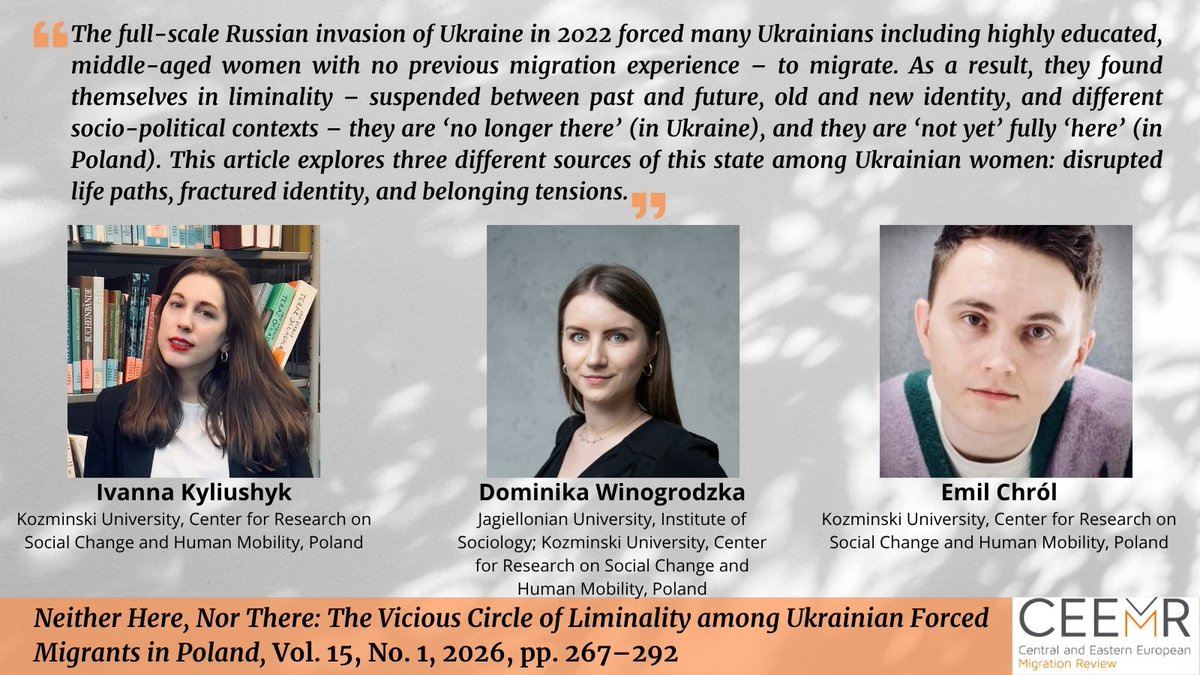
In the last paper in the special section, Ivannna Kyliushyk, Dominika Winogrodzka and Emil Chról demonstrate that Ukrainian refugee women experience the vicious circle of liminality shaped by disrupted lives, fractured identities and belonging tensions.
The next paper in this special section, written by Wilsch, Hlinčíková, Tužinská, and Štefková, argues that asymmetry and unintelligibility in institutional meaning-making obscure refugees' lived knowledge and needs, deepening vulnerability. Link: https://t.co/TEv2XKPnPF
In the first paper in our special section, Katarzyna Krakowska and Kamil Łuczaj demonstrate how organisational chaos and conflicting institutional logics can erode trust and enable abuse. Link: https://t.co/SbWLtdm7g1
In the editorial to the special section of the new CEEMR issue, Lucie Macková, Luděk Jirka, Mateusz Kamionka and Monika Nowicka are aiming to move beyond understanding Ukrainian refugees solely through the lens of forced displacement.
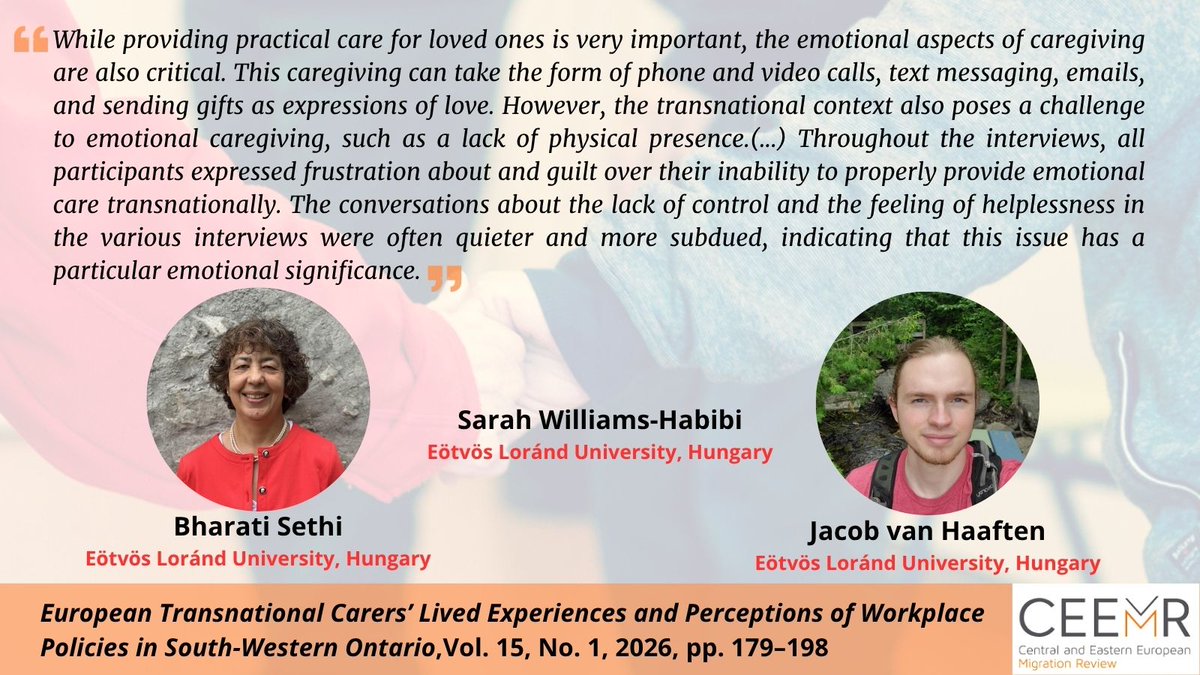
Van Haaften, Sethi & Williams-Habibi find that European transnational carers’ experiences are mediated by cultural, gendered and occupational factors, as well as cross-border demands. Despite some employer flexibility, limited policy awareness requires carers to self-advocate.
Integration is often described as a shared responsibility. Kyliushyk, Winogrodzka, Trąbka, Blachnicka-Ciacek and Pietrusińska show how it increasingly becomes an individual responsibility borne by migrants themselves – a phenomenon they refer to as self-responsibilisation.
Kováčová, Mýtna Kureková & Studenás' study illustrates that the divide in the literature between sending and receiving countries is outdated – supposed ‘sending’ countries like Slovakia are receiving substantial numbers of posted workers and posting in different ways than before.
In her new article based on qualitative in-depth interviews Tamar Khoshtaria examines how migration experiences have influenced and potentially reshaped the values and beliefs of young Georgians. Link: https://t.co/n6CstfFNzv
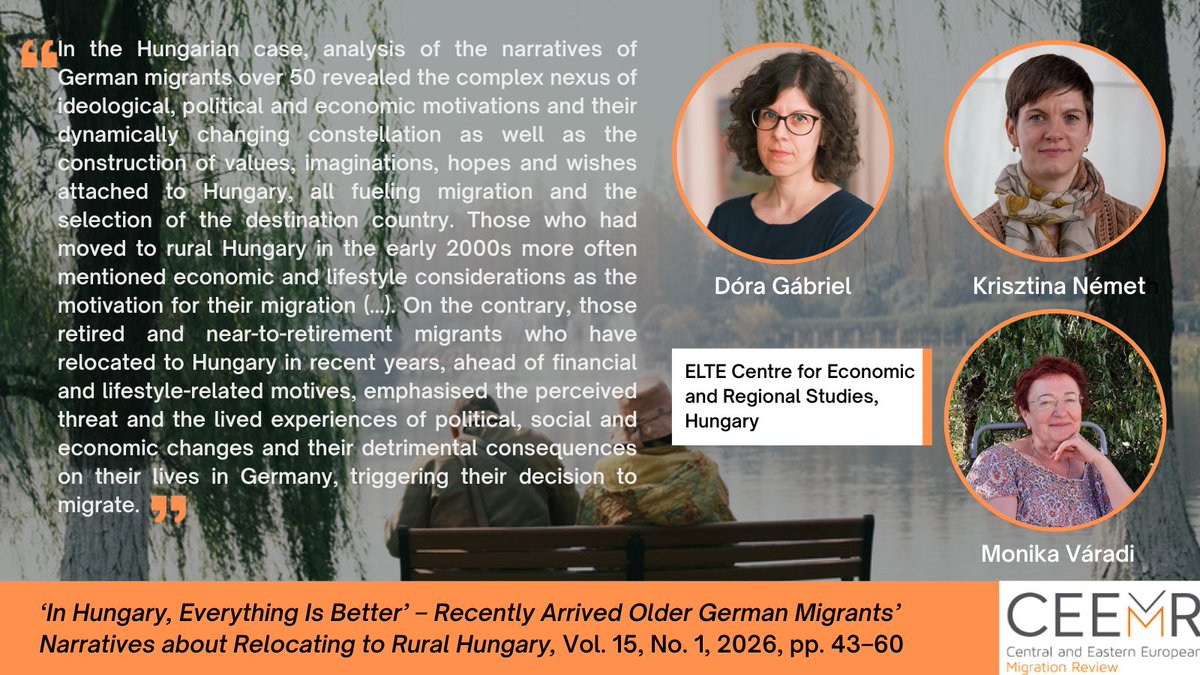
Dóra Gábriel, Krisztina Németh and Monika Váradi present how German migrantsover 50 explain their decisions to relocate to Hungaryand demonstrate the complex and changing nexus of economic, lifestyle-oriented, political and ideological motivations shaping their returns.
Erik Snel and Godfried Engbersen revisit the concept of liquid migration, showing that East-West migration can lead to three different patterns: permanent or long-term settlement, flexible lifestyles and careers ‘temporariness by choice’) or being ‘trapped in liquid migration’.