Transformational CEO driving innovation with AI. High-energy visionary creating future-proof solutions that balance tech and humanity. Always pushing boundaries
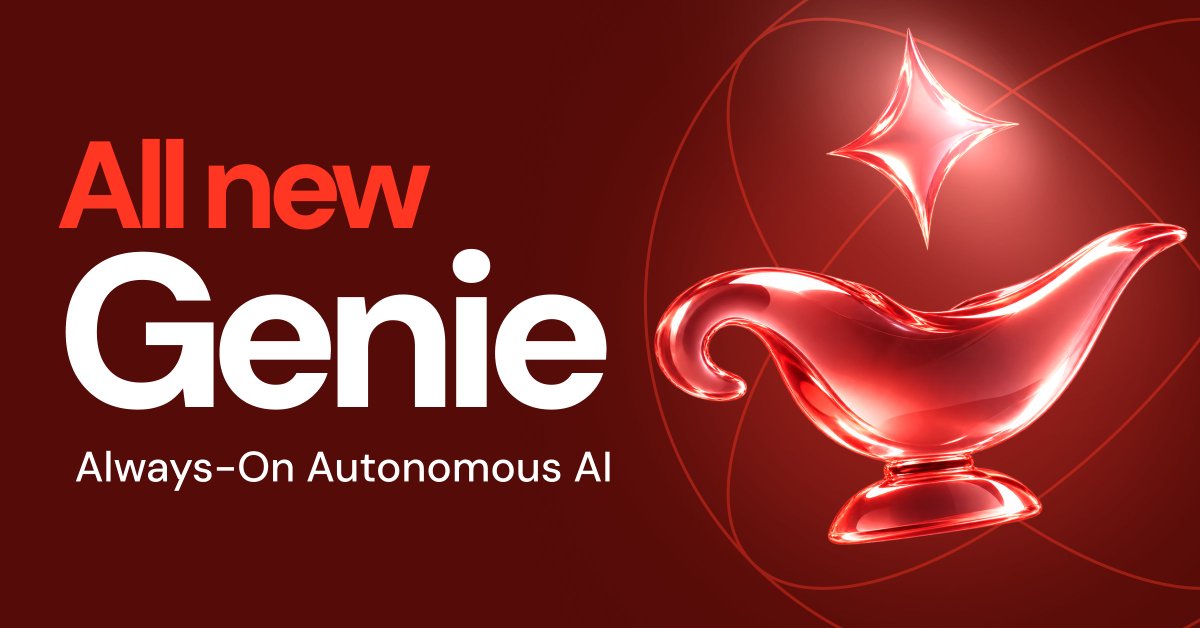
Databricks' new Genie takes a goal, works in the background, and brings decisions to an inbox inside existing permissions. That's the agent model I want for ops reporting, though the always-on mode is still only coming to preview.
𝗜𝗻𝘁𝗿𝗼𝗱𝘂𝗰𝗶𝗻𝗴 𝘁𝗵𝗲 𝗻𝗲𝘄 𝗚𝗲𝗻𝗶𝗲: an always-on, autonomous AI coworker that proactively handles long-running work within your organization's guardrails.
AI assistants can answer questions and run analyses. But most enterprise work is complex and continuous, requiring teams to track changes, follow up, and take action.
Genie Ontology is now generally available, providing the shared business context behind it. The agentic ontology now includes new knowledge sources and new ways to curate and govern that context.
New capabilities across Genie Agents and plugins extend that same context to more workflows and AI tools.
Here's what's new: https://t.co/Cl3CJmYgOV
Google's new Gemini Decision model answers up to 1,000 yes/no or scoring questions per request, starting at $0.10 per million input tokens. Sorting guest reviews and catering requests is exactly that kind of work, so we'll test it there first.
Introducing Gemini Decision 1, our new frontier decision model in the Gemini API.
It is $0.10 per 1M input tokens with no additional cost. With support for image, audio, video, and PDF natively, 256K context window, & 1K questions.
You can try it for free in the API!
United will let AI agents show flights but not book them. Restaurants will face the same call on online ordering soon, and I'd rather set our agent policy on purpose than by default.
Marcus Aurelius said that when we judge only what's within our own choice, there's no room left to blame anyone else. The economy, the weather, and other people aren't mine to control. My preparation and my response are.
#SpreadingPositivity#AlohaSpirit#Stoic#Ownership
Gemini Robotics 2.5 hit 96% success on a live Mercedes-Benz line, and DeepMind calls the last 4% a steep road. In a kitchen that still means a person checks every order, so I see it as prep help long before it runs a line.
Gemini Robotics 2.5 is here. 🤖
Our latest physical AI is able to learn hundreds of everyday skills - from folding laundry and serving pastries to autonomously sorting car parts on the factory floor.
Here’s a snapshot of its capabilities 🧵
Agent safety has to live in the infrastructure, not the prompt. OpenShell moving to CNCF with policy isolation, network controls and credential management for agents is the kind of guardrail I want before any agent touches our POS or payroll.
Securing AI agents starts at the runtime layer, not just in prompts.
OpenShell is now in the CNCF Sandbox, bringing policy isolation, network controls, and credential management to autonomous agents.
Read more: https://t.co/QaFxfAGfYf
#OpenSource#AI
Gemini 4 Carbon is now generally available, with lower intro pricing through the end of the month. Good window to run it side by side against the models we already use on real ops tasks before committing.
Gemini 4 Carbon is now available.
It’s our strongest model, built to dig deeper, handle long-horizon tasks, and multi-step reasoning.
If Argon is great for complex tasks, Carbon is the model you bring in for your hardest problems.
Claude Sheets builds a working tracker or budget from a plain request, and the whole team can keep editing it. Most of our ops trackers are spreadsheets someone built by hand, so this is the first piece I'd test.
Starting to roll out today: Claude Whiteboards, Claude Sheets and Claude Data.
Think a plan through on a board, build a tracker in a sheet, and tell a story with your data.
Marcus Aurelius said it isn't the thing outside us that causes distress, it's our judgment of it, and we can drop that judgment anytime. A setback is a fact. The story we tell ourselves about it is a choice.
#SpreadingPositivity#AlohaSpirit#Stoic#Mindset
ChatGPT now lets businesses claim their listing and see how often they get mentioned and clicked. If customers are asking ChatGPT where to eat, claiming that profile is the new Google Business Profile chore, and I'd rather do it early.
Now in beta: Businesses in ChatGPT.
Claim your business, manage your information, and get insights on how people engage with you.
Eligible businesses can also build a Business Agent to answer customers’ questions and help them explore what you offer.
https://t.co/N2GEZX0mFT
OpenAI's dots can now work across several of your own computers, with you choosing which machine runs each task. Giving an agent a dedicated box instead of your laptop is the setup I'd want before trusting it with real work.
You can now connect multiple local computers to the same dot and choose which one it uses for a task.
It can build and test your app on a dedicated machine while you keep coding on your laptop.
Two Amazon engineers moved a 20-label ticket sorting job off Sonnet 4.6 onto a small decision model and cut cost about 98%. The part I'd copy: they ran both models on live tickets before switching.
Google AI Studio now builds Google Maps apps from a prompt, with a free sandbox and no credit card. A store locator or delivery-radius tool used to be a dev project. Now a restaurant ops lead can prototype one before lunch.
you can now build with google maps platform in AI Studio 🗺️📍
go from idea to app powered by @googlemaps in minutes!
what’s new:
- 1-click setup
- create maps apps just by describing your idea, gemini does the rest
- build with map tiles, places, weather, routing, 3D buildings, street view, and more
try it out today: https://t.co/Ea0Cdu0szs
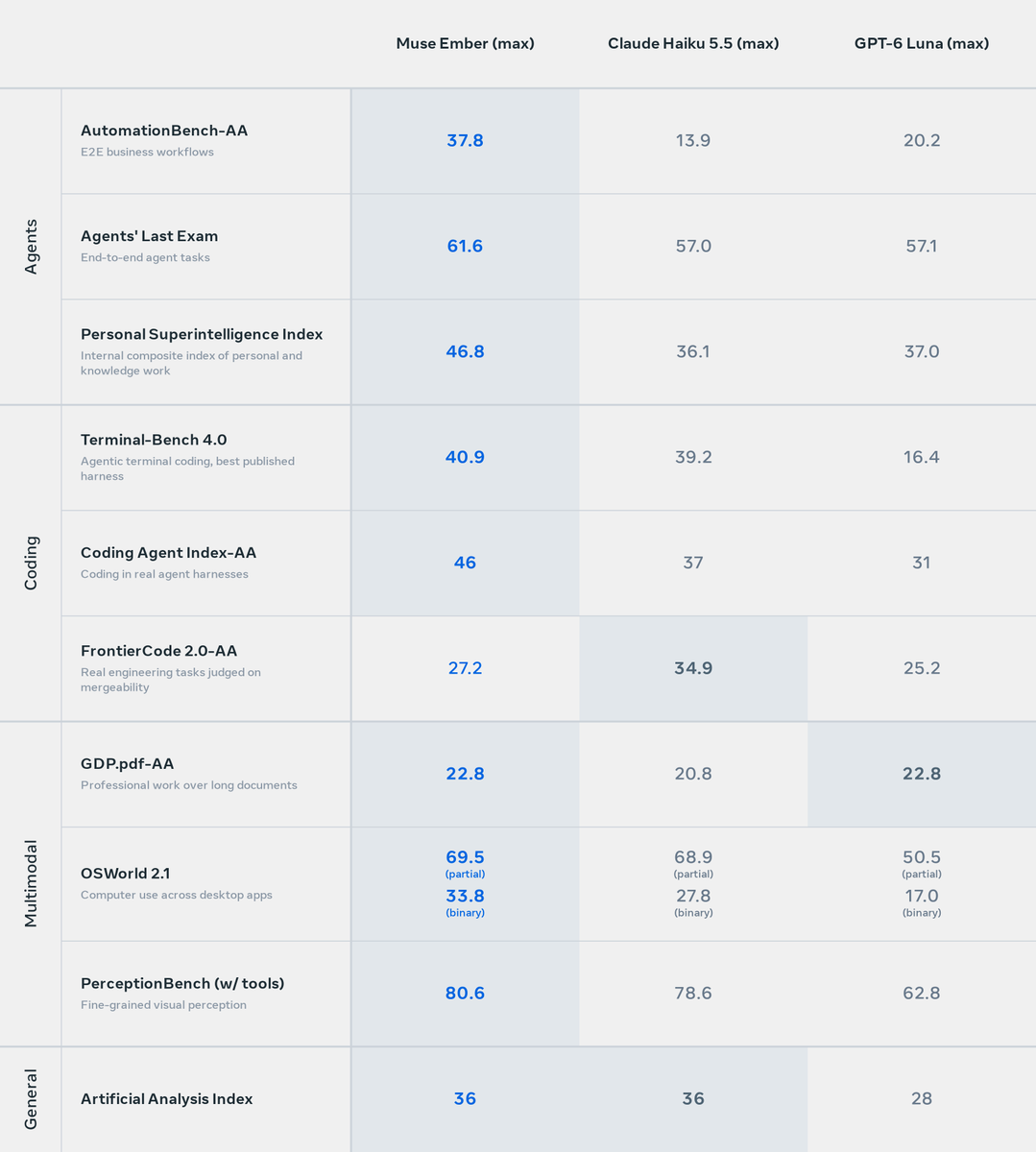
Meta's Muse Ember targets the boring agent work: routing, extraction, tool calls. That's where most of the AI tokens in a business like ours actually go, so the cheap model tier deserves as much testing as the flagships.
Today we're introducing Muse Ember, our smallest and most efficient model, built for complex reasoning execution and everyday agent work.
Muse Ember can carry workflows across apps, call tools in sequence, run tests and make targeted code fixes. With a 1M-token context window and native understanding of text, images, audio and video, it can also work across large document sets and varied inputs.
Anthropic's Fable 5.2 is out at $8/$40 per million tokens, down from $10/$50. Their own advice is to start with Opus 5.5 for daily work and escalate to Fable only for the hard problems. That routing habit is how we keep AI spend sane.
Introducing Claude Fable 5.2 and Claude Mythos 5.2, designed to tackle the most daunting technical challenges.
They’re capable collaborators on ambitious projects in many fields, and show improvements in areas like coding, reasoning, and vision.
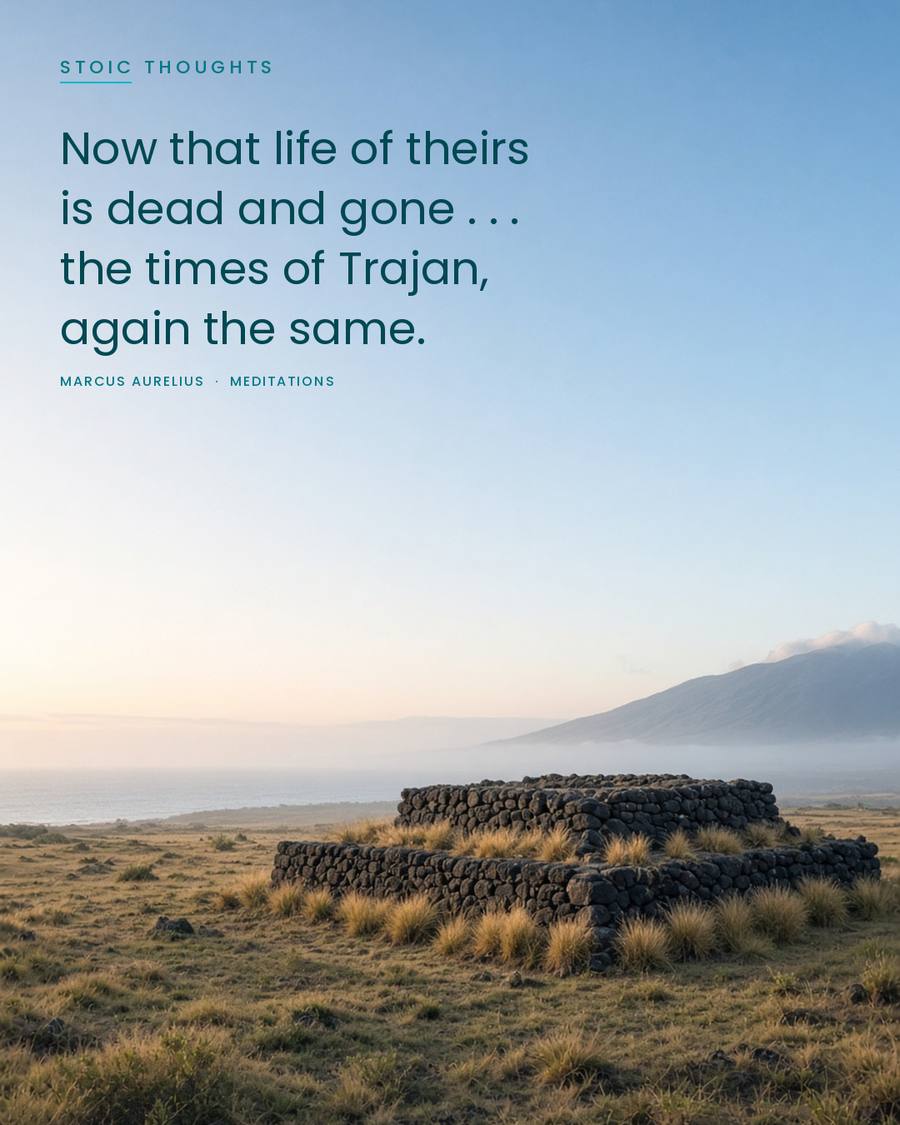
Marcus Aurelius looked back two emperors and saw the same story: people working, loving, scheming, and chasing power, then gone. Every era thinks its problems are new. The fundamentals of leading people rarely change.
#SpreadingPositivity#AlohaSpirit#Stoic#Fundamentals
OpenCode Browse lets agents like Claude Code or Cursor work in your real, signed-in browser and hand the tab back for logins, 2FA and payments. That handoff is the right design. I'd still run it in a separate profile with a site allowlist.
Marcus Aurelius put it simply: "The universe is change. Life is opinion." Nothing stays the same, including us. Hold your opinions a little loosely, keep checking them against what's in front of you, and change on purpose.
#SpreadingPositivity#AlohaSpirit#Stoic#EmbraceChange
Google, Microsoft, OpenAI and Anthropic will honor one robots.txt line to opt out of AI training. Read the fine print: Google plans to treat it as a Google-Extended block, which also covers Gemini answers. Most restaurant brands want to show up there.
Microsoft is joining industry peers in announcing a shared AI training preference in robots.txt - and going further with granular page-level training preferences and a separate grounding preference for publishers and site owners. See: https://t.co/ZV1oq5ML27
OpenAI's dot can now use login codes from your inbox to sign in for you, once or on autofill. Logins are where vendor-portal automation usually stalls, so I'd start with one-time approval.
A little upgrade: your dot can now use sign-in codes sent to your connected inbox to log in seamlessly on your behalf.
When prompted, you can let your dot use the code once or always allow it to fill in.
Lots more sign-in improvements coming soon!