Happy Pride Month 🌈💜 This June we celebrate the beautiful diversity of the CF community including every LGBTQ+ patient, caregiver, family member, provider & advocate who makes this community what it is.
At CFRI everyone is welcome. Everyone belongs💜🌈
CFRI WORKSHOP: Alternative & Complementary Therapies in CF Care: Addressing Stigma & Improving Relationships. THUS 6/11@12pm PT We'll discuss ways that a patient's cultural background influences their preferences & relationship to care provided in the US.
https://t.co/W2SX2CMdmu
☀️ Longer days, familiar faces. Summer brings change, but support stays steady. CFRI’s online Support Groups meet monthly and welcome participants from around the world. Connection that fits into your life, wherever you are. #cysticfibrosis Register: https://t.co/QHesa33lR3
CFTR modulators like have transformed countless lives & changed the future of CF care but they are not a cure. Many still have no effective treatment at all. We honor those lost, stand with those still fighting & keep pushing towards a cure.
Research shows social connection and belonging are powerful protective factors for mental health. For people with CF, who often face isolation from illness and cross-infection risks, community is more than comfort. It is therapeutic, life-sustaining, and essential.
Living with CF can mean years of hospitalizations, invasive procedures, and medical uncertainty. For many, that leads to PTSD, anxiety, and medical trauma that often goes unrecognized. Mental health care is part of CF care, and people with CF deserve support without stigma.
A lung transplant can extend & save the lives of people with advanced CF but it is not a cure. CF still affects every other organ & lifelong immunosuppressants bring added risks including infection, cancer, and difficult side effects. The lungs may be new. The fight is not over.
CF-related cancer risk extends beyond the GI tract. CFTR mutations, chronic inflammation, and transplant medications can raise risks for colon, skin, cervical, and lung cancers. The message is clear: screen early, stay vigilant, and advocate for yourself at every appointment.
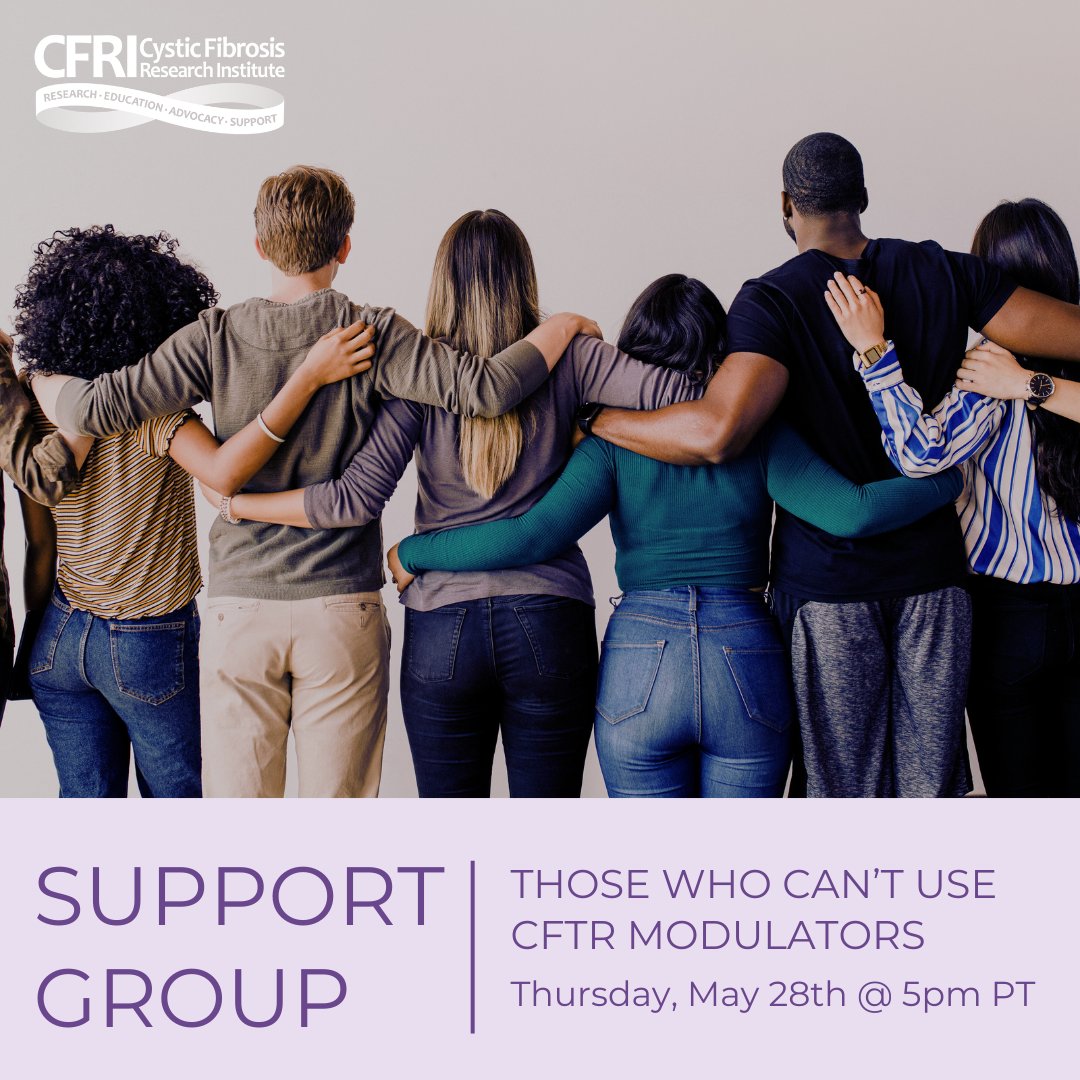
If modulator therapy is not an option for you — this space was made with you in mind. CFRI's Virtual Support Group for Those Who Cannot Benefit from CFTR Modulators meets monthly — facilitated by Sonya Haggett, LCSW. #cysticfibrosis.
May 28th / 5pm PT / https://t.co/rBy0af4hEv
As people with CF live longer, colorectal cancer has become a growing concern. People with CF face a much higher risk, especially after transplant. Symptoms can mimic CF GI issues, making screening critical. Colonoscopies can catch & remove polyps early. Don’t wait for symptoms.
People with CF are 2-3x more likely to experience anxiety & depression. The psychological burden of daily treatments, hospitalizations, uncertain futures & physical exhaustion is significant. Mental health care is not a luxury in CF management. It is a clinical necessity.
Decades of research, advocacy & treatment advances have transformed CF life expectancy. Once considered a childhood disease now has a median predicted survival of 50+. This progress is extraordinary but also means a new generation aging w/CF & facing challenges never seen before
CF affects the gut microbiome from early life. CFTR dysfunction & frequent antibiotic use reduce microbial diversity & disrupt functions with digestion, immunity, & inflammation control. A CF gut is under constant pressure & only starting to receiv research attention it deserves.
The GI system is one of the most affected and under-discussed parts of CF. Complications like DIOS bowel blockages, liver disease, chronic constipation, and pancreatitis impact daily life far beyond enzymes and calories. These issues also connect to increased cancer risk in CF.
Huge congratulations to Dr. Deepika Polineni and Dr. Raksha Jain on receiving prestigious awards from the ATS Public Advisory Roundtable! 🎉 Two extraordinary clinician scientists advancing CF research and patient care — and valued members of the CFRI family. We are so proud! 💜
People with CF often face a perfect storm: higher calorie needs, overwhelming medical costs, and health limitations that can affect work and income. Food insecurity in the CF community is real, under-recognized, and directly impacts health outcomes.
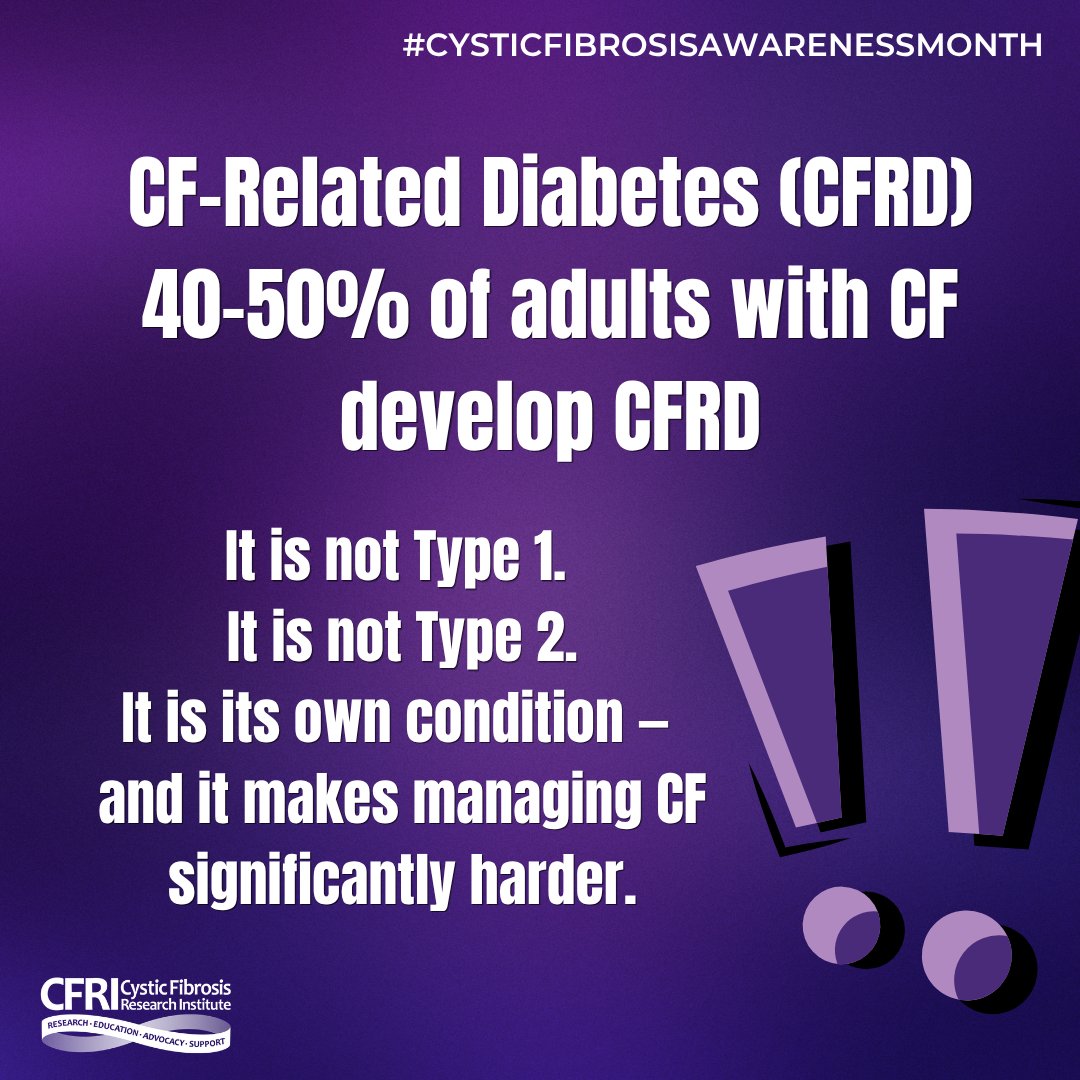
CF-Related Diabetes affects about 40–50% of adults w/CF and is one of the most common CF complications, yet one of the least discussed - adding yet another layer of daily management for people already carrying an enormous disease burden.
WORKSHOP: Can Mindfulness Help You Sleep? June 9 @ 5pm PT. Explore the connection between narrative thinking & sleep. You'll discover how to work with the storytelling mind that keeps you awake rather than fighting it, and gain practical mindfulness tools. https://t.co/fn7PSkeTmf
More than 90% of people w/CF have pancreatic insufficiency and cannot produce enough digestive enzymes. Leading to malnutrition & weight loss — even when the person is eating plenty. This means taking enzyme capsules with every single meal & snack. Mealtime is a medical event.
CF nutrition is not one-size-fits-all. Some w/CF can’t tolerate highfiber foods, others manage gluten sensitivity or CFRD while trying to meet extreme calorie needs. Modulators have changed nutrition needs again. CF nutrition is constant adjustment, strategy & experimentation.