We aim to drive science, innovation, and collaboration to transform food, land, and water systems for a climate-resilient, net-zero, and equitable future.
@CGIAR Climate Action has awarded 6 GESI research grants across 4 CGIAR Centers: @IITA_CGIAR@ILRI@irri@IFPRI.
The projects will examine adaptation, climate finance and women’s empowerment across food, land and water systems. @CGIARgender
Science can drive climate action, but only when it is practical, targeted and available in time to inform decisions.
In Year 1 of 6, @CGIAR Climate Action supported countries and partners working across food, land and water systems.
⏩ Learn more: https://t.co/MdNAEspzMT
More than 4 million displaced people in Sudan have started going home.
But return is not recovery when food, water, & energy systems have collapsed.
@CGIAR Climate Security and UNHCR are identifying recovery options for displaced & host communities.
⏩ https://t.co/BY8mfZHVJY
A woman may receive climate information and still lack the credit, land right & decision-making power to act on it.
@CGIAR Climate Action has awarded 6 GESI research grants to study where climate interventions support inclusion & where they fall short.
⏩ https://t.co/00hqiSy02P
At #SB64, @CGIAR's Laura Cramer highlighted why identifying promising practices is no longer enough.
Countries need better data, stronger MRV systems, & a clearer understanding of trade-offs to turn climate solutions into real-world impact.
⏩ Read more: https://t.co/9yv3hzQmfd
Climate-resilient food systems need more than promising practices.
At #SB64 in Bonn, @CGIAR’s Dr. Laura Cramer showed how agricultural research can help climate solutions scale by connecting evidence, policy, finance and implementation within the right contexts.
@ILRI
If we ignore Somalia’s diaspora, we miss a key resilience network.
@CGIAR research reveals how diaspora support helps pastoralists in Mudug absorb drought shocks, improve camel-milk markets and mediate disputes.
But risks remain.
⏩Read: https://t.co/43z3LAWcMV
Can protecting biodiversity strengthen peace at the community level? In Honduras, the Pech community is proving it can.
Read the full @CGIAR#ClimateSecurity study.
⏩ https://t.co/mMMPsd9i1u
#BiodiversityDay
Markets can predict food insecurity as reliably as rainfall.
@CGIAR researchers used machine learning to analyze 1,414 @FEWSNET reports across 33 countries and found that food prices appeared in 95% of reports documenting food insecurity.
➡️ Learn more: https://t.co/GlUzYdI52U
What happens when disinformation shapes how people understand the Amazon?
@CGIAR#ClimateSecurity researchers analyzed ~40,000 Telegram messages from Brazil and found false narratives spread faster than climate science during the 2019 fires.
Learn more: https://t.co/JfCsRWJLez
Climate risk is becoming compounding risk.
Drought, flooding, heat, water scarcity & economic strain are converging across South African provinces, sometimes within the same season.
@CGIAR research is investigating how institutions can coordinate quickly to match unfolding risk
Adaptive social protection works best when local realities shape national systems.
In Honduras, @CGIAR supported SEDESOL with evidence from 15 municipalities to inform the country’s first policy for responding to compounding shocks.
Read more: https://t.co/wWhQz8K229
In As-Sweida, Syria, violence in mid-2025 more than doubled inadequate food consumption, from 28% to 60%.
@CGIAR Climate Security’s latest brief shows why land, water, returnee reintegration, and climate stress must be addressed together.
⏩ Read: https://t.co/FQ1q1SteT7
🌍 Today is Earth Day.
At CGIAR we believe that caring for the Earth starts with how we produce our food.
🌱 What we grow and how we grow it shapes our planet, our health and our future.
In Cabo Delgado, livelihoods and conflict are tightly linked so recovery programs cannot be neutral.
@CGIAR Climate Security and @wfp_mozambique mapped ecological services & social dynamics, designing solutions that don’t fuel conflict.
Learn more: https://t.co/g8gOpbjLvl
Disinformation can stall climate action if it shapes public debate.
In Brazil, @CGIAR mapped how Amazon disinformation spreads online and fed insights directly into government systems and national coordination efforts.
⏩ Discover more: https://t.co/UdoYwa8F9O
What if displacement data misses the climate story behind why people move?
@CGIAR#ClimateSecurity researchers worked with @Refugees & the Honduras statistics office to redesign national surveys, to now identify climate drivers of mobility.
⏩Read more: https://t.co/nUEMV9Xi5G
Climate action can reduce risk, but only if it accounts for conflict dynamics.
Across 30+ African countries, @CGIAR Climate Security trained 1,000+ decision-makers to connect climate governance with security planning.
⏩ Learn more: https://t.co/4UNw2ys283
Climate, peace & resilience work best when science meets policy.
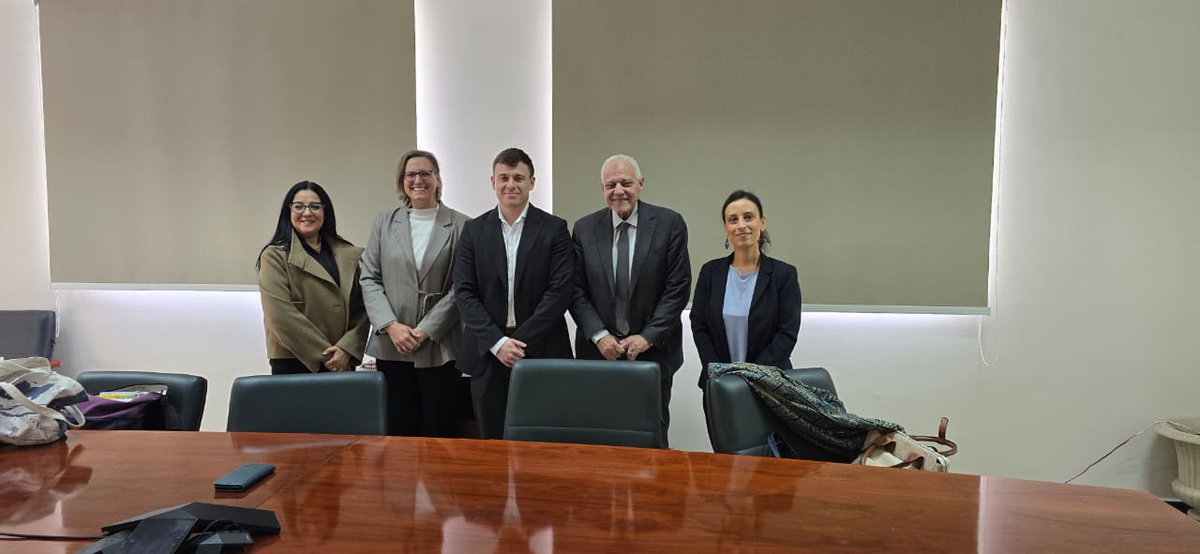
Following their 2025 MoU, this week, @BiovIntCIAT_eng & @AW_Council kicked off a new collaboration linking CGIAR research with regional expertise to support climate resilience & cooperation across the MENA region.
Can devolved climate finance avoid reinforcing inequality?
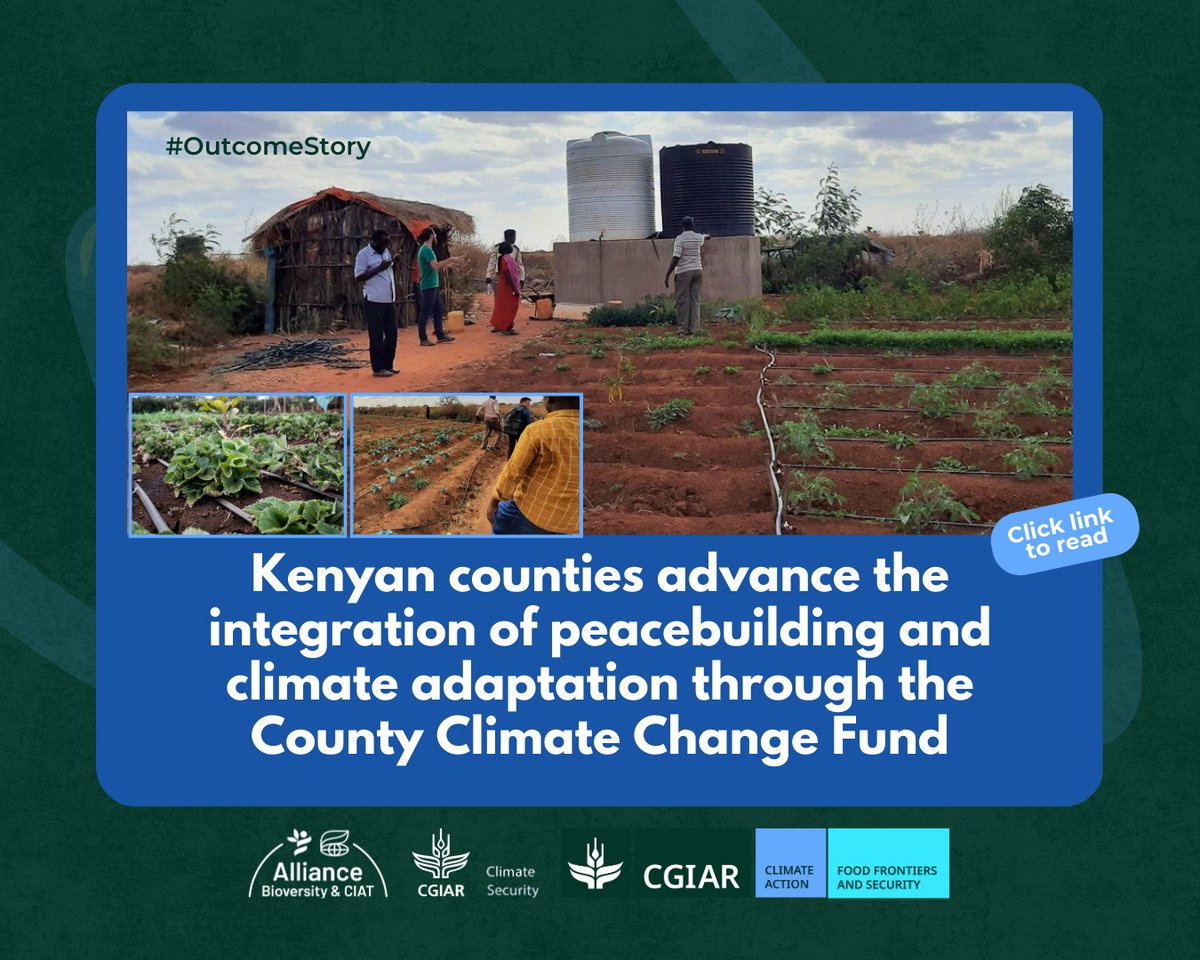
In 2025, @CGIAR Climate Security partnered with @adaconsortium to assess how Kenya’s County Climate Change Fund can manage conflict risks as it scales nationwide.
Learn more ⏩: https://t.co/lqzldbB9hj