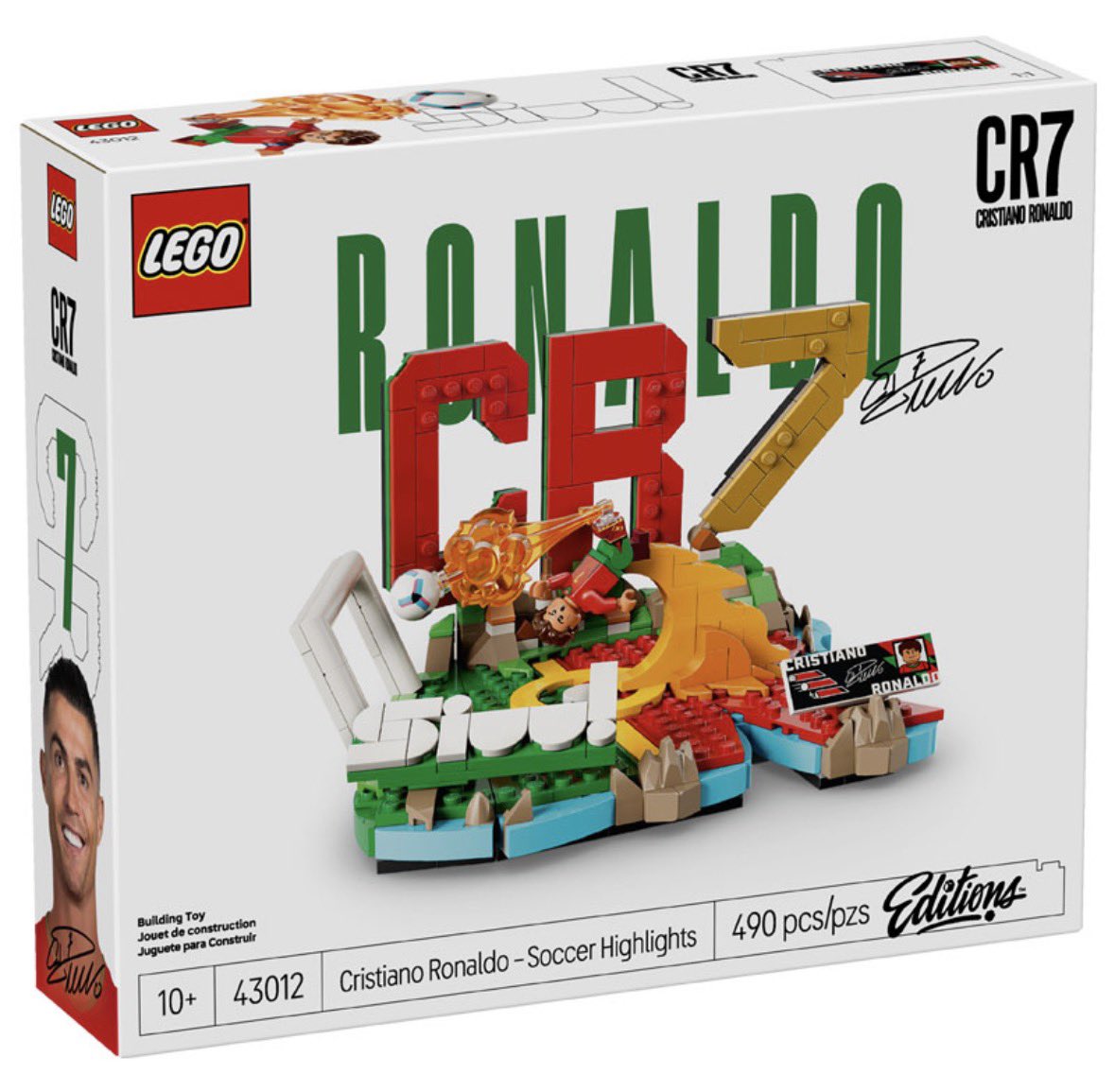
LEGO just dropped its largest set ever: La Sagrada Familia.
It has 12,060 pieces and costs $800. The set comes 100 years after Antoni Gaudi’s death (June 10, 1926).
The details are insane including spires, carvings and interior with light shining through stain-glass windows.
It’s not a straight shot to the far side of the Moon! 🌕
Over approximately 10 days, the Artemis II astronauts will orbit Earth twice before looping around the far side of the Moon in a figure eight and returning home.
You have your mother's cells in your brain right now. If she ever carried you, yours are in hers.
Scientists looked at the brains of 59 women after they died, ages 32 to 101. In 63% of them, they found their sons' DNA scattered across different brain regions. The cells had traveled from the womb, through the blood, past the wall that normally keeps foreign material out of the brain, and settled in. The oldest woman still carrying her son's cells in her brain was 94. In mice, those cells became functional brain cells.
The transfer starts as early as 7 weeks into pregnancy. Your cells slip through the placenta into your mother's body. Hers slips into yours. One study found a mother still had her son's cells in her blood 27 years after giving birth. After delivery, between 50 and 75% of women carry their child's cells. During pregnancy, up to 6% of a woman's blood DNA comes from the baby.
When a mother's heart gets damaged during or after pregnancy, the baby's cells travel to the injury, latch on, and turn into beating heart cells, blood vessel lining, and muscle. Heart failure tied to pregnancy has a 50% spontaneous recovery rate, better than every other kind. The Mount Sinai team behind the research thinks the baby's cells are fixing the mother's heart from the inside.
The cancer data caught me off guard. A study compared healthy women to women with breast cancer. 85% of the healthy group still carried their children's cells. Only 64% of the breast cancer group did. That works out to about 4x lower odds of getting breast cancer if you kept those cells. The working theory is that they patrol the body and catch cancer cells before they grow.
A 2022 study found that in developing mouse brains, a mother's cells controlled the brain's immune cells, preventing them from cutting too many connections between brain cells. Your mom's cells helped wire your brain before you were born.
And it stacks across generations. A woman can carry cells from her kids, from her own mother, and even from pregnancies her mother had before her. Three generations of cells from different people, living inside one body.
I went to my uncle’s pig farm today, but I didn’t meet him. So I decided to walk around the farm. I was surprised to see some pigs ‘naked’ like that, and then in another section, I saw some pigs wearing jackets. I’m confused…what’s going on? Why are some in jackets while others are not?
JUST IN: American skier Lindsey Vonn says she has no regrets after her crash, tells her supporters that "life is too short not to take chances on yourself."
"I tried. I dreamt. I jumped."
"I hope if you take away anything from my journey, it's that you all have the courage to dare greatly."
Read her full statement below:
"Yesterday, my Olympic dream did not finish the way I dreamt it would. It wasn't a story book ending or a fairy tail, it was just life. I dared to dream and had worked so hard to achieve it. Because in Downhill ski racing the difference between a strategic line and a catastrophic injury can be as small as 5 inches.
I was simply 5 inches too tight on my line when my right arm hooked inside of the gate, twisting me and resulted in my crash. My ACL and past injuries had nothing to do with my crash whatsoever.
Unfortunately, I sustained a complex tibia fracture that is currently stable but will require multiple surgeries to fix properly.
While yesterday did not end the way I had hoped, and despite the intense physical pain it caused, I have no regrets. Standing in the starting gate yesterday was an incredible feeling that I will never forget. Knowing I stood there having a chance to win was a victory in and of itself. I also knew that racing was a risk.
It always was and always will be an incredibly dangerous sport.
And similar to ski racing, we take risks in life. We dream. We love. We jump. And sometimes we fall. Sometimes our hearts are broken. Sometimes we don't achieve the dreams we know we could have. But that is also the beauty of life; we can try.
I tried. I dreamt. I jumped.
I hope if you take away anything from my journey it's that you all have the courage to dare greatly. Life is too short not to take chances on yourself. Because the only failure in life is not trying.
I believe in you, just as you believed in me."