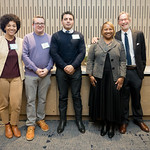
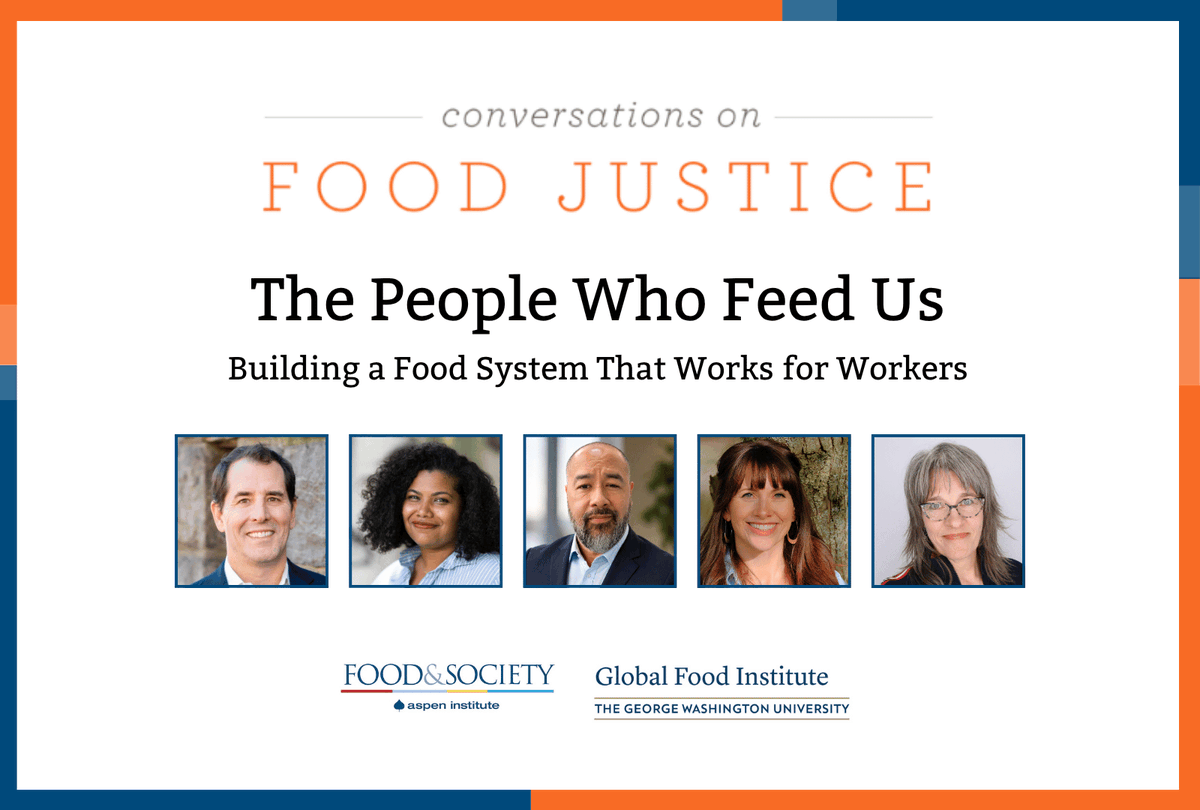
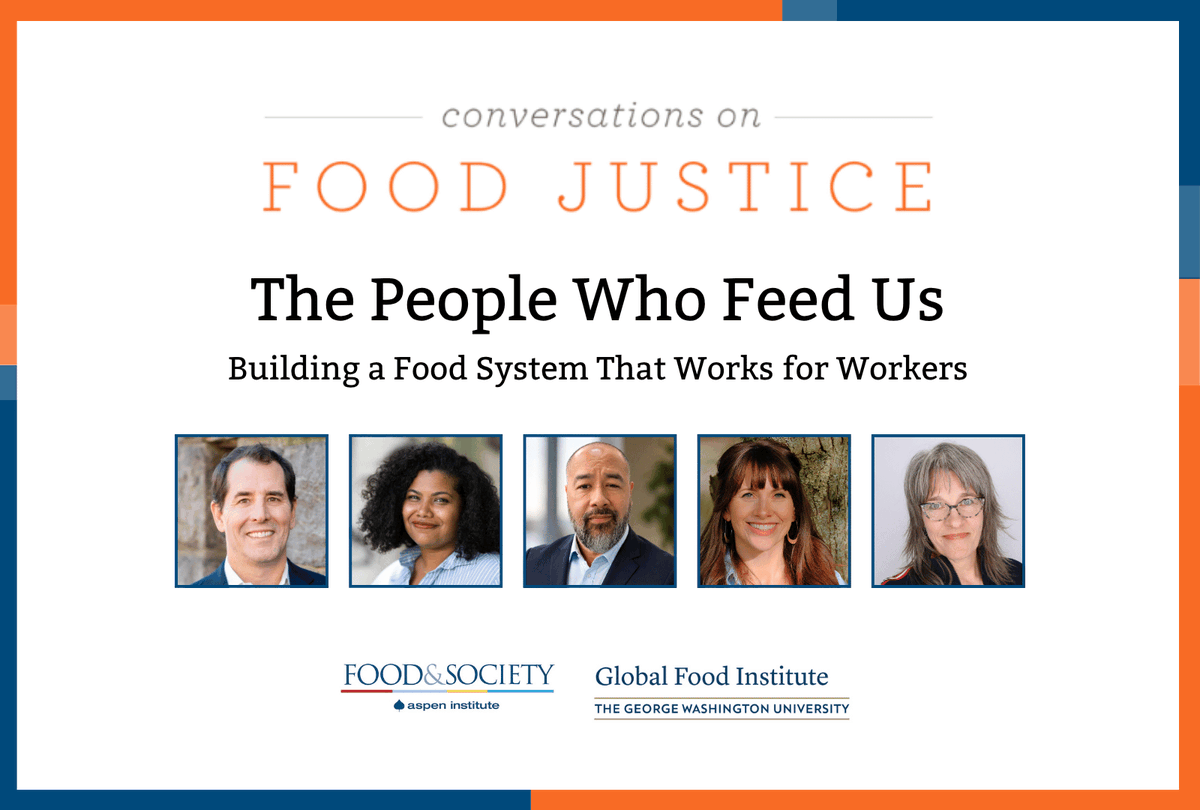
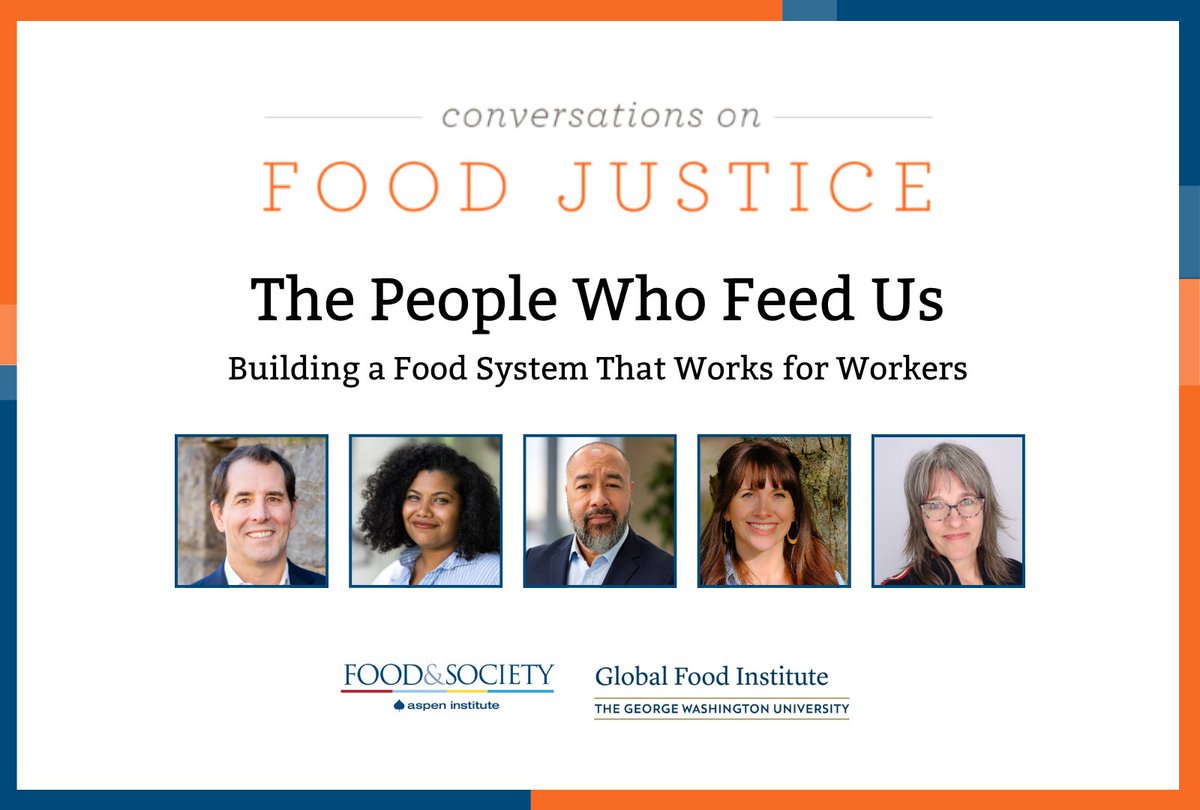
Conversations on Food Justice recording now available: 4 leaders on building a fairer food system—employee ownership, farm labor organizing, and why 2 in 3 food workers can't afford to eat the food they help produce.
Watch: https://t.co/zi3g4DVTe8
@GW_GlobalFood#FoodJustice #ConversationsOnFoodJustice
Food insecurity is a health issue.
Last month I had the privilege of sitting down with Public Health Solutions President and CEO Cassaundra Howell for a fireside chat at Beyond the Plate, a policy briefing on food insecurity in New York. We talked about how policy, health care, and community organizations can work together so every New Yorker has access to nutritious food.
Read PHS’s case study on its Food is Medicine Community Action Plan: https://t.co/rESSVMASlf
#FoodInsecurity #FoodIsMedicine
The people who feed America can't afford to eat. Thank you to Jose Oliva, HEAL Food Alliance for sharing this reality on Conversations on Food Justice.
Watch: https://t.co/19Mx2VI01T
#FoodJustice#FarmWorkerRights
Dignity isn't a benefit. It's a baseline. Emma Scott, Vermont Law & Graduate School, on why worker-owned cooperatives are gaining ground.
More: https://t.co/19Mx2VI01T
#FoodJustice#WorkerOwnedCoop
Young farmers. Veterans. Immigrants. Former farm workers. They're not just filling labor gaps, they're the future of American agriculture. Aspen Food Leaders Fellow Vanessa Garcia Polanco of the National Young Farmers Coalition on Conversations on Food Justice.
https://t.co/DWySKAO2yI
#FoodJustice #FarmWorkers
The recording from our Conversations on Food Justice panel is up.
Mike Brady, CEO of 40 Million Owners, shares why employee ownership is the next frontier of food and economic justice. More: https://t.co/uowdFHNT8A
Conversations on Food Justice recording now available: 4 leaders on building a fairer food system—employee ownership, farm labor organizing, and why 2 in 3 food workers can't afford to eat the food they help produce.
Watch: https://t.co/zi3g4DVTe8
@GW_GlobalFood#FoodJustice #ConversationsOnFoodJustice
I asked a room of food-systems people when they last bought cod: four hands went up.
Turns out cod might be america's original heirloom food — 10,000 years of history, an entire trade economy built on it — and we just... stopped eating it. Turn on the volume or even better, listen to a great panel hosted by @foodtank!
@CKummer asked a climate week crowd who's bought cod lately. four hands went up. That gap is the whole reason we love gatherings like this hosted by @foodtank! Watch this incredible panel: https://t.co/PVkZWl3EyJ
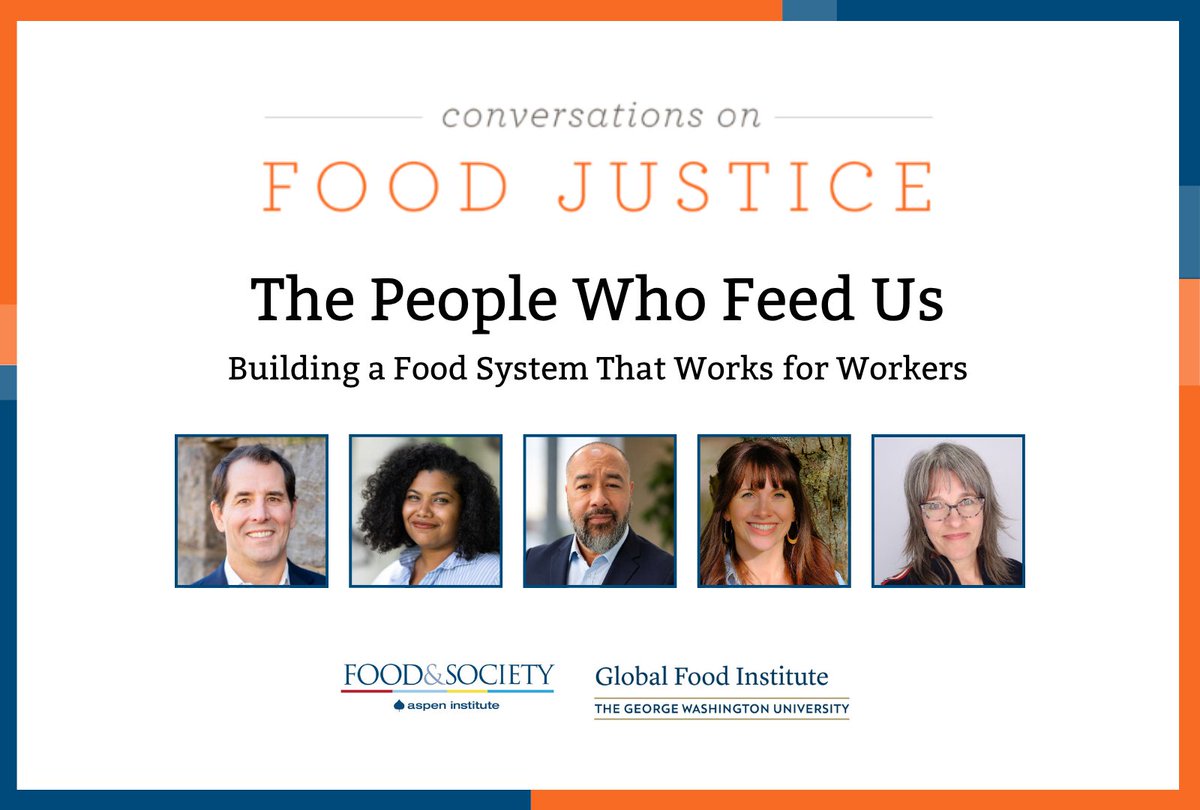
Tomorrow! "The People Who Feed Us: Building a Food System That Works for Workers," prodced by @AspenFood and @GW_GlobalFood, airs live Oct 1, 1-2 PM ET. Free and open to all: grab your spot now: https://t.co/vhV20S4vWJ
I liked this very, very much. In a gently amusing and friendly but unsettling way, it’s the most fascinating personal discussion about what AI will do to our future and why our anxiety is rising. @NewYorker https://t.co/c4o1iD5wng
Lovely Dan Imhoff account of lunch with @AliceWaters:
The juicy Bronx grapes she placed in my hand as I drove off literally stuck to me on the way home as did one of the last things she said:
“When I think I have an idea that I have talked to lots of people about, I don't let it go,” she said. “School Supported Agriculture is what I believe in right now. I'll let it go ... if it really doesn't work. But I was always that way with Chez. I was sure it was going to work. And I don't know whether it's about love or determination, but they kind of go together for me."
https://t.co/aWPUsZncY7
Marion folded her arms, looked into the camera, and said: "Presumably, you asked me here for a reason." That was mid-pandemic, my students star-struck into small talk. Ten minutes in, she'd had enough. Vintage Marion. Happy 90th to the most matchlessly lucid person I know.
Thank you @foodtank for hosting a great celebration: https://t.co/K2k9wWveA3
One week away 📅 "The People Who Feed Us" asks a simple but urgent question: who benefits from the food economy and who should? Join our panel of labor, policy, and ownership experts Oct 1 at 1 PM ET. Free, register today. https://t.co/yZ3Tw4bJ4W
What a powerful day at @AspenInstitute for "Strengthening Nutrition and Health for Rural Older Adults."
Huge thanks from me and @AspenFood to our facilitators, who brought their expertise and leadership to guide these conversations:
🔹 Rani Snyder, @johnahartford
🔹 Patrick Stover, Florida State University
🔹 Robert Blancato, NANASP
🔹 Holly Freishtat, @MilkenInstitute
🔹 Elizabeth Burger, @SunflowerFDN
🔹 John Auerbach, ICF
🔹 Deirdre McGinley-Gieser, @_MealsOnWheels
Together with participants from across the country, this group dug into the real barriers rural older adults face in accessing good nutrition, and started mapping out what it will take to close those gaps. Thank you to Chef Kevin J Devine and Carolina Gomez of @cravecateringco for a day of delicious food!
Want to see what came out of the room? Sign up for our newsletter to get the full recap and next steps: https://t.co/3CcSSdYPSy
"I've really liked living here. It's been a good place." — Wendell Berry, in a recording made just weeks before his death.
On @BosPublicRadio, I remember the writer who spent 50 years making the case for small farms, tight communities, and land we actually care for.
More: https://t.co/0JnO4t88qv
This weekend, the Berry Center holds its annual ALL Festival—ice cream, a bake-off, book group choices for the next year. The center is a beautiful, active, instructive place carrying forward the connections that were the spine of Wendell’s 50 books: respect for yourself, your work, your community, the land you walk on, the air you breathe. This year’s festival will be suffused with the life-giving, spiritually renewing, joyous voice of Wendell—a voice I was lucky enough to hear and record just six weeks before he died.
Here's my tribute to Wendell: https://t.co/RYnaKzqo6V
Food systems problems are too often solved for people, not by them. @AspenInstitute Food Leaders Fellow Jaime Hansen, in collaboration with the @GW_GlobalFood (thanks to support from the Longer Tables Fund), developed a toolkit that flips that script.
The human-centered design process turns community members into co-designers: generating ideas, weighing trade-offs, and pitching real solutions.
Case in point: at the Swipe Out Hunger Student Summit in Boston, 10 students from 8 campuses used it to produce 3 fully developed pitches on campus food insecurity, in 2 hours.
Check out the toolkit: https://t.co/dlFP9tcOPk
I was lucky enough to spend the day with Wendell, his wife of 69 years, Tanya, and his daughter, Mary, who has created the extraordinary Berry Center to further his life’s work. I’d visited Wendell and Tanya several times at their kitchen table, and certainly hoped this wouldn’t be my last visit. But just six weeks later he was gone. Here’s an excerpt from part of the day I’m so glad I filmed.