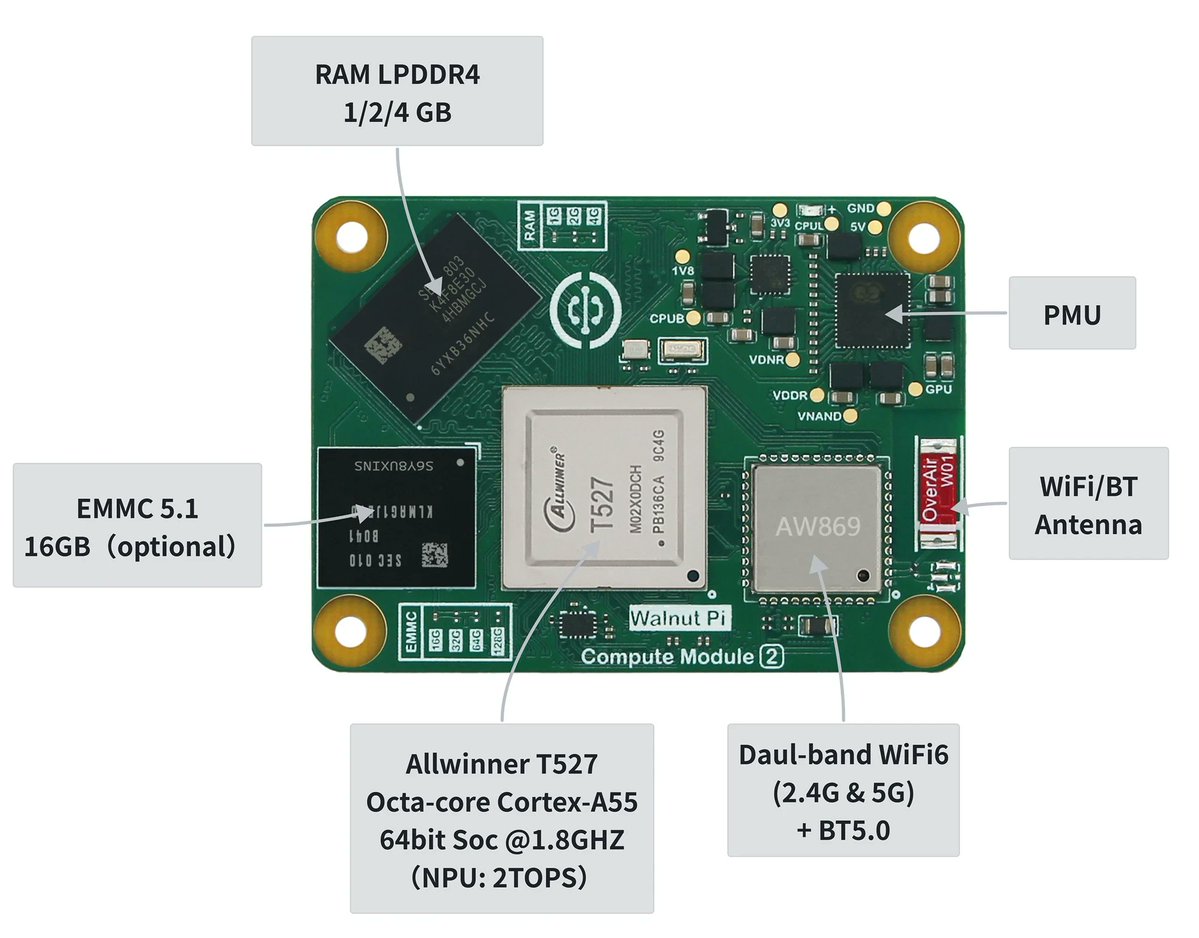
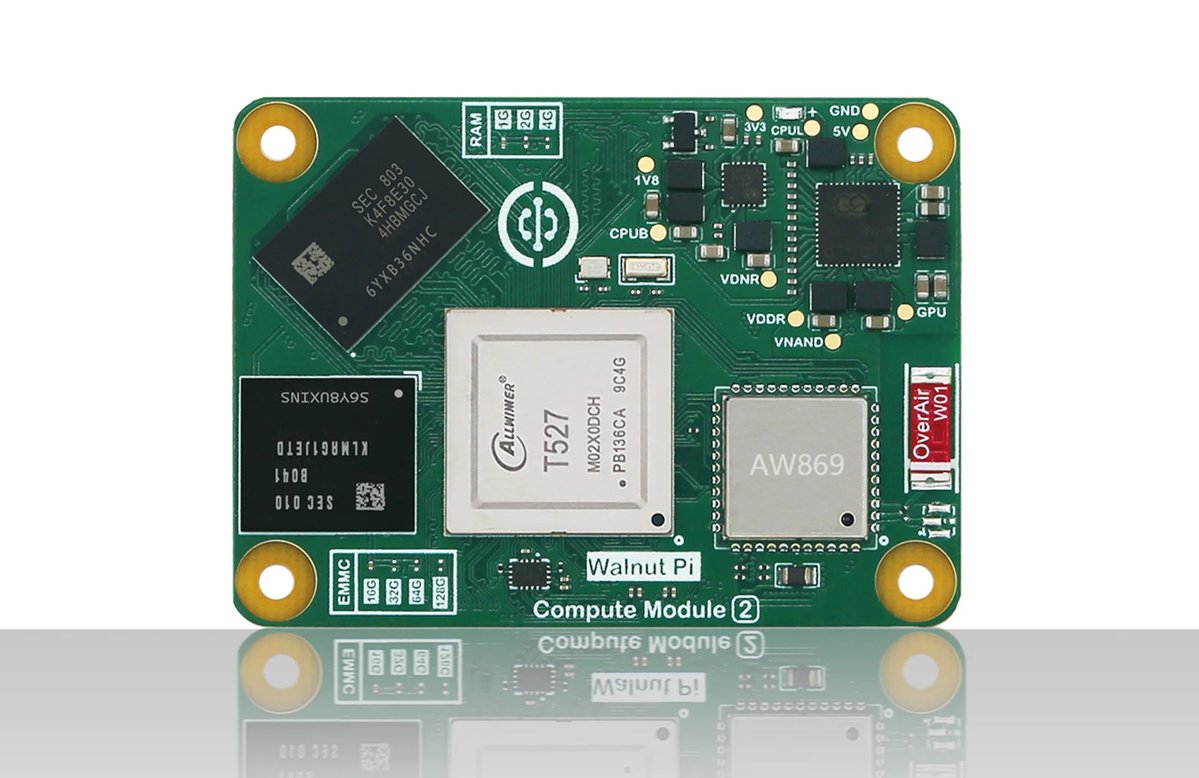
Low-cost Raspberry Pi CM5 alternative powered by Allwinner T527 octa-core SoC.
https://t.co/ou68jyKqDz
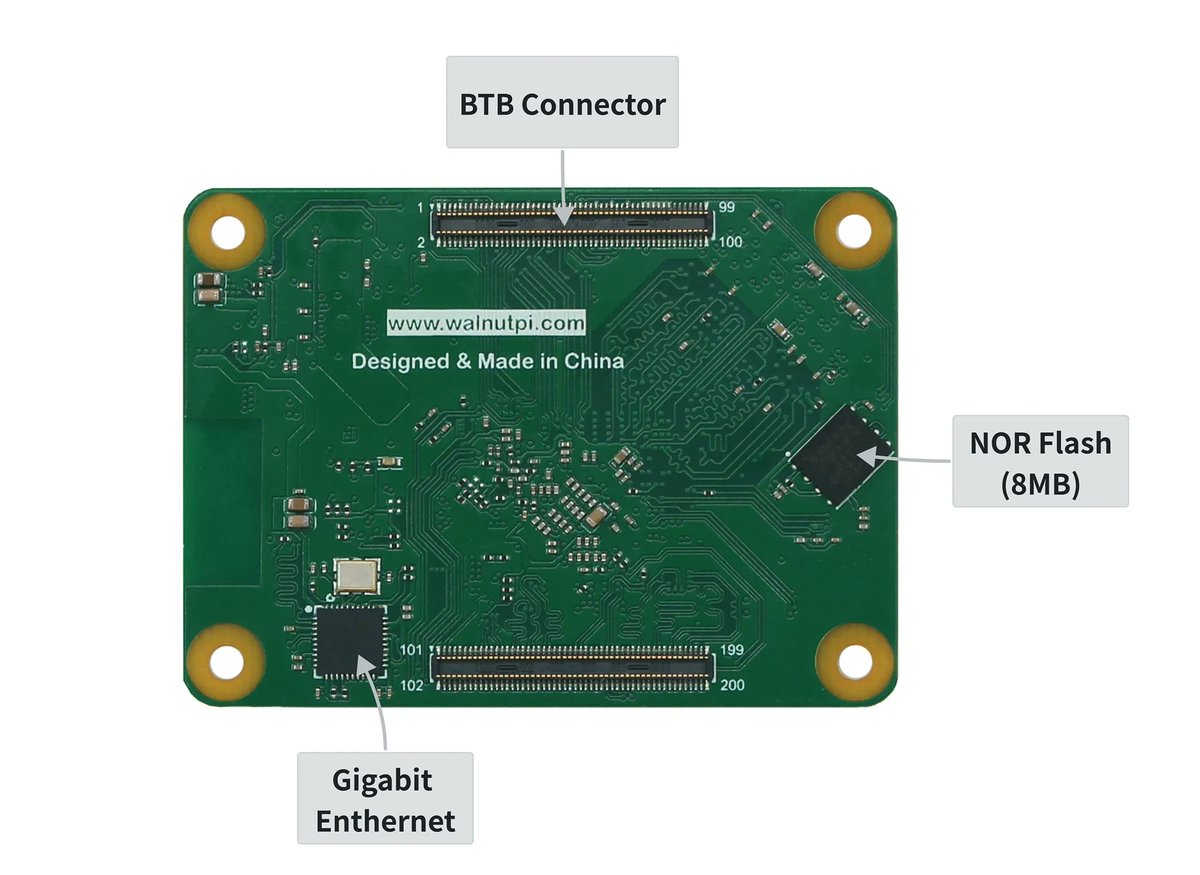
Walnut Pi CM2 pairs the octa-core Cortex-A55 Edge AI (2 TOPS) processor with up to 4GB LPDDR4 RAM, 16GB eMMC flash, and an optional wireless module.
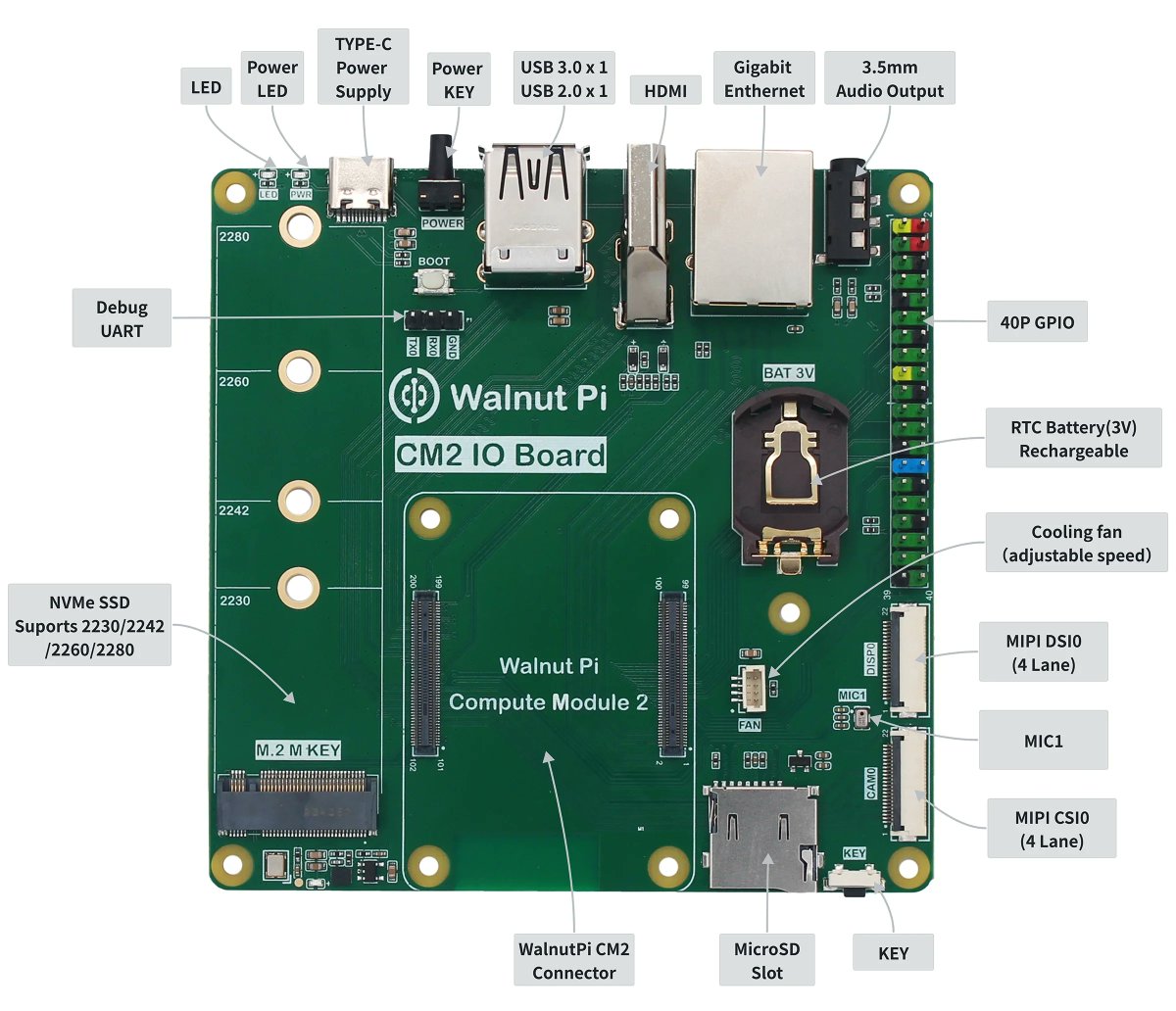
The company provides support for the Debian 12-based Walnut Pi OS, Ubuntu, Android, and Home Assistant. A carrier board is also offered for evaluation, since it won't be 100% compatible with all features of most CM5 carrier boards.
Price starts at $28, and the 2GB/16GB/wireless module is about half the price compared to the equivalent CM5
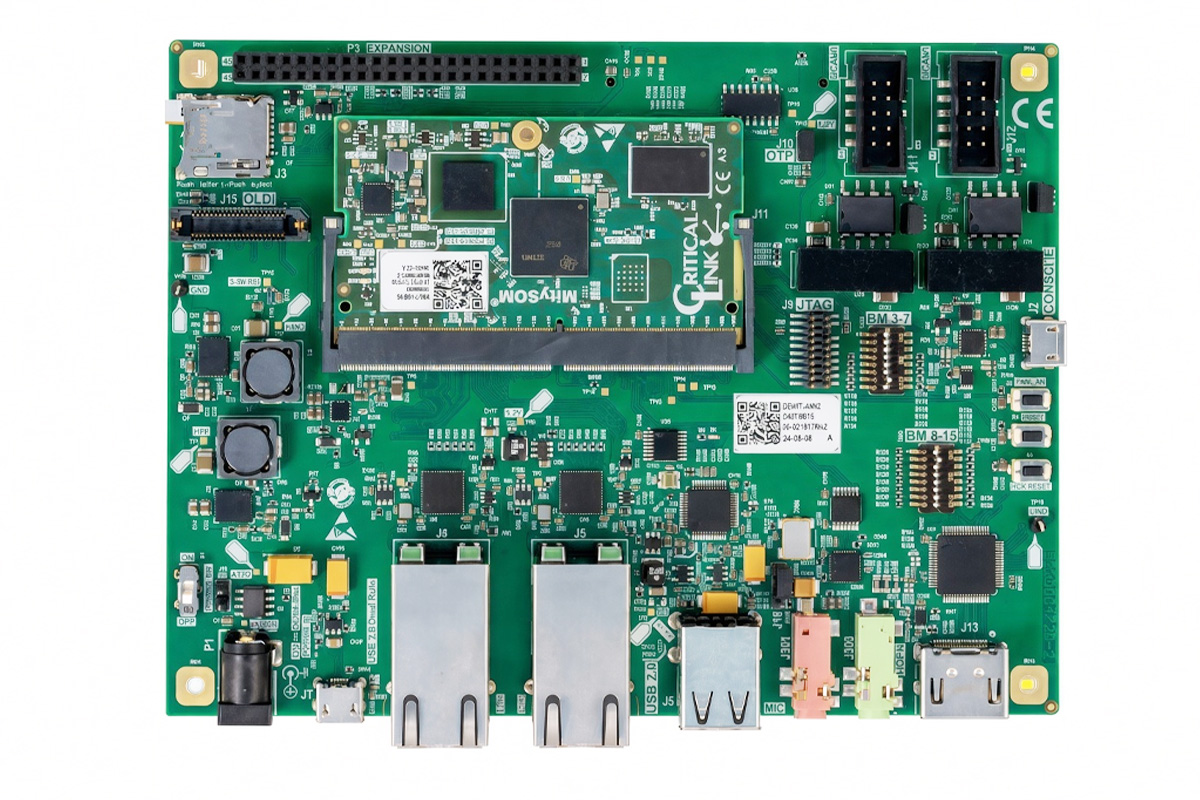
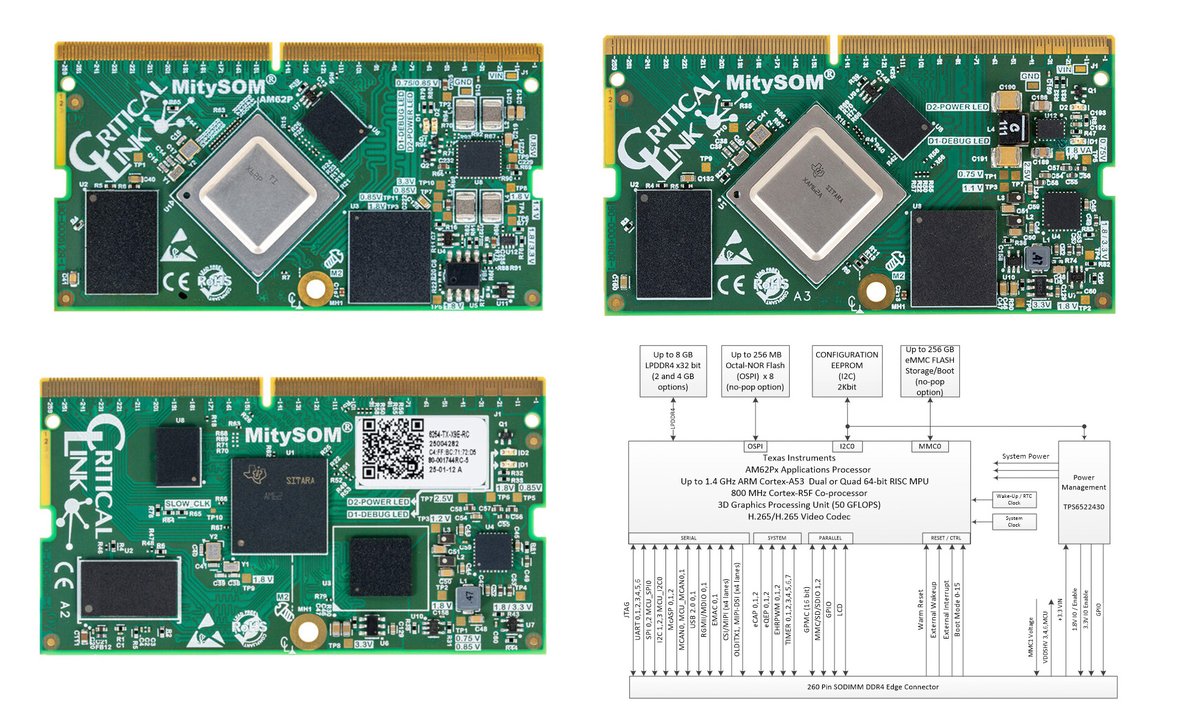
SO-DIMM system-on-modules powered by Texas Instruments AM62, AM62A, or AM62P SoCs.
https://t.co/hWHGKpzAUj
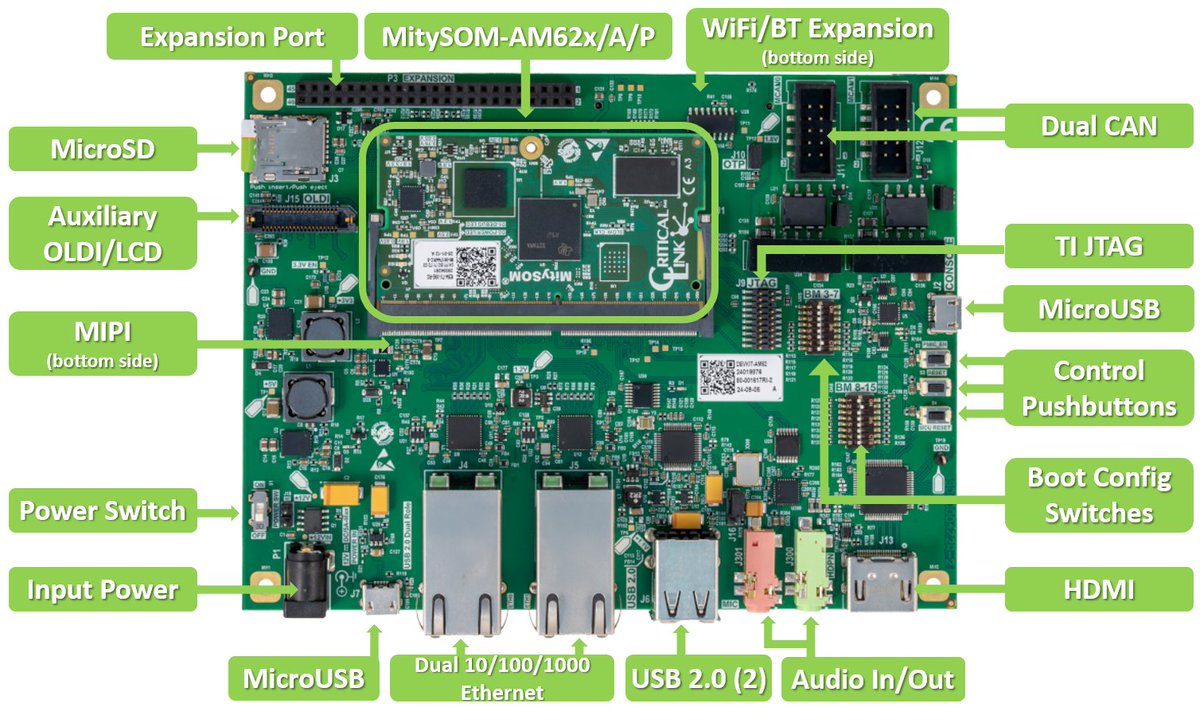
Critical Link MitySOM-AM62x/A/P is a family of SoMs designed for industrial automation, HMI, and other embedded applications. The family includes the general-purpose MitySOM-AM62, AI-focused MitySOM-AM62A, and multimedia-oriented MitySOM-AM62P system-on-modules.
The modules are supported by TI’s Processor SDKs and Critical Link’s software stack, which provides Yocto-based Linux, prebuilt images, Linux kernel and U-Boot sources, and toolchains. The company also offers the MitySOM-AM62x/A/P Development Kit, exposing the SoM’s main interfaces, such as dual Gigabit Ethernet, dual 10/100 Ethernet, dual CAN, HDMI, etc.
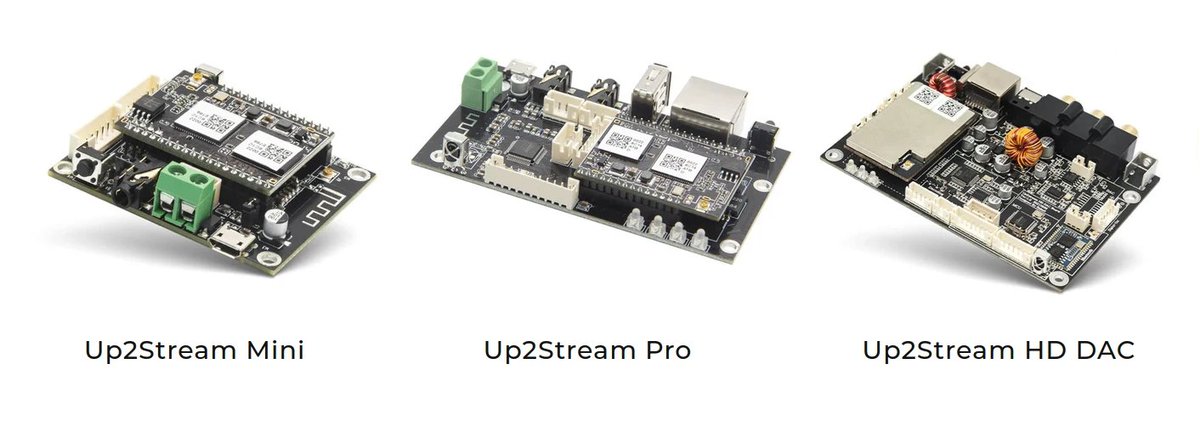
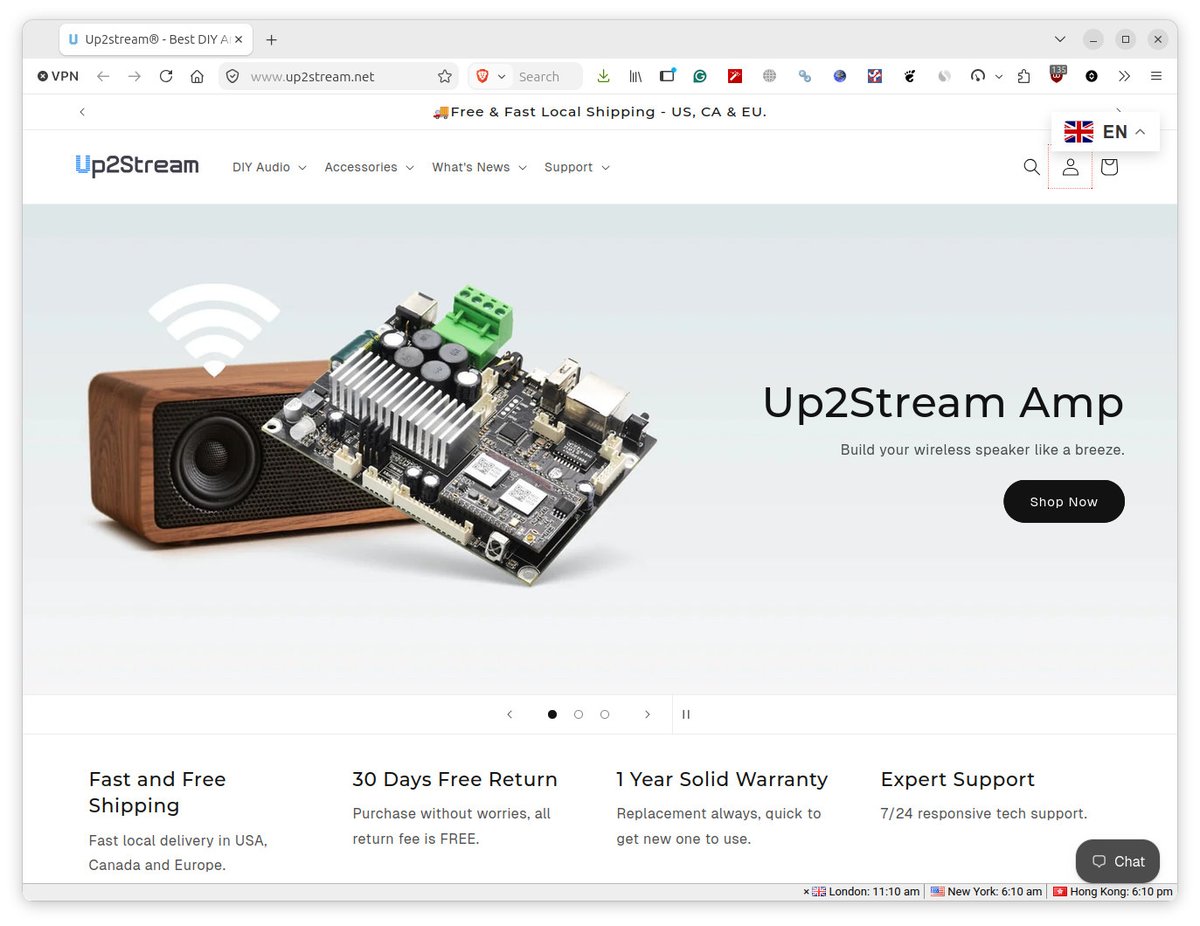
Sponsored: Up2Stream is an independent brand for DIY audio projects.
https://t.co/8jFGEPp9xe
The product lineup features compact streamer boards to add Wi-Fi, Bluetooth, AirPlay, Spotify Connect, DLNA/UPnP, USB playback, and analog or digital I/O to an existing amp or active speaker, as well as a range of Amplifier boards.
The boards are supported by the 4STREAM / Go Control apps, plus HTTP/UART/TCP APIs for home-automation hooks. A premium ACPWorkbench DSP/EQ tool is also available to advanced users.
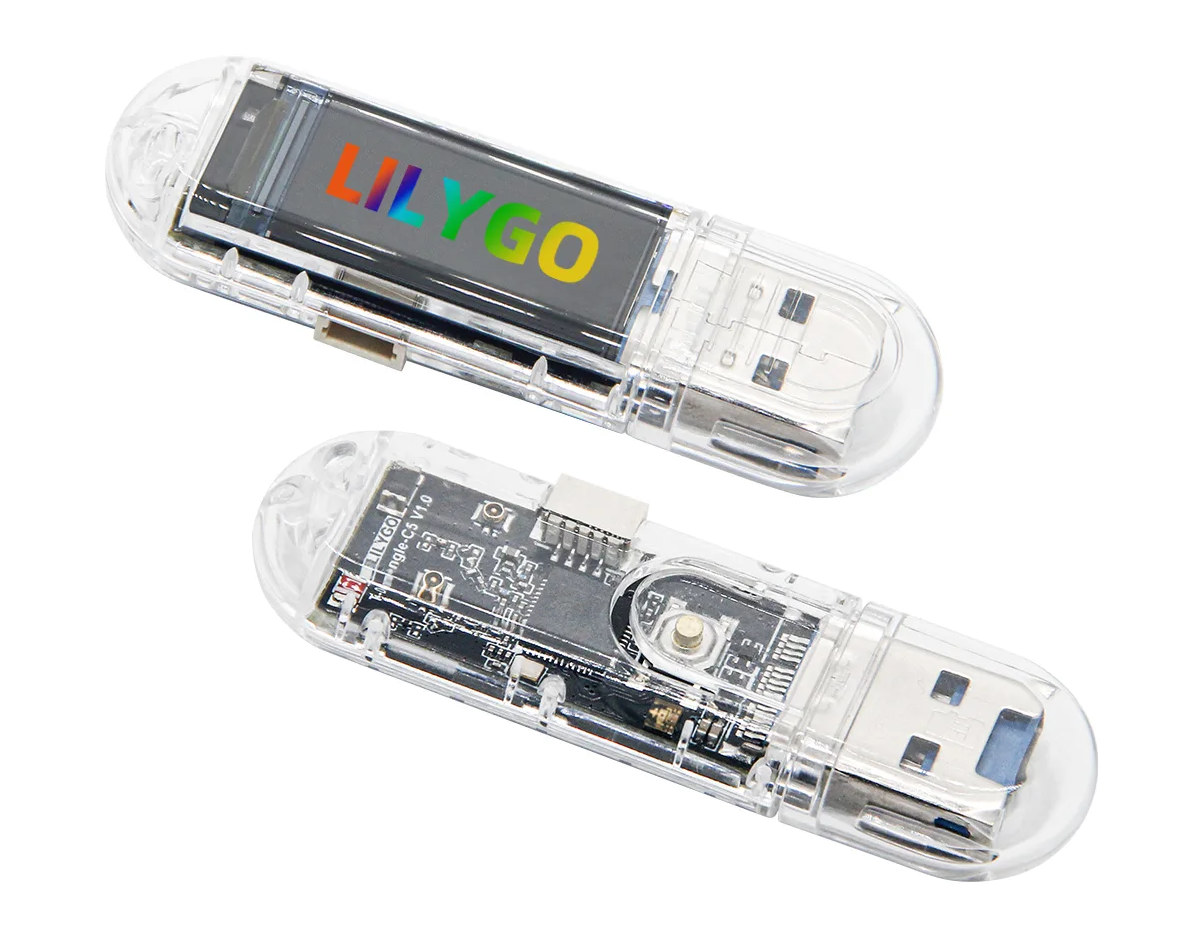
ESP32-C5 USB dongle with dual-band WiFi 6 support.
https://t.co/vAIiEx49oB
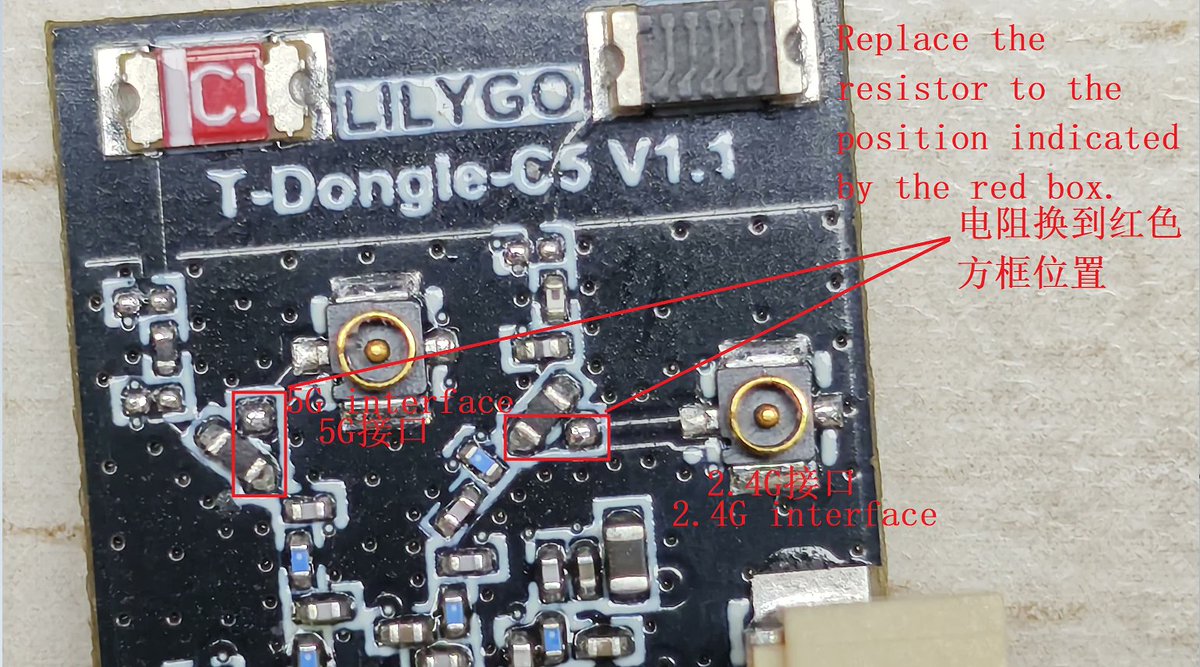
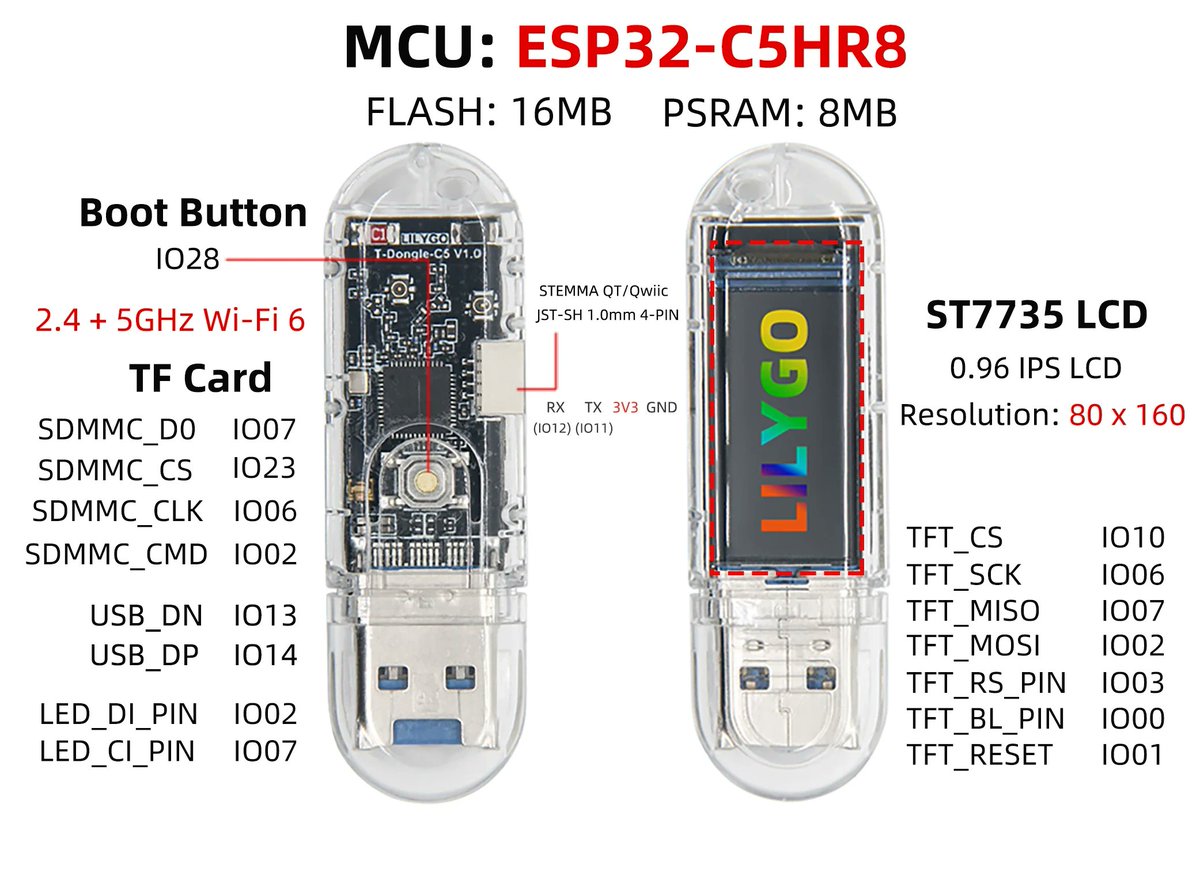
@lilygo9 T-Dongle-C5 offers dual-band WiFi 6, BLE, and 802.15.4 connectivity, an optional 0.96-inch color display, a microSD card slot, and a USB-A male port. It's also equipped with 16MB flash, 8MB PSRAM, and a Qwiic expansion connector.
In addition to the Arduino-based factory firmware and code samples provided by LILYGO, the devkit also supports ESP32 Marauder, DIY Biscuit, and Void C5 firmware for wireless security testing and experimentation.
A JavaScript OS with a GUI for ESP32 targets.
https://t.co/ORru1kwaQD
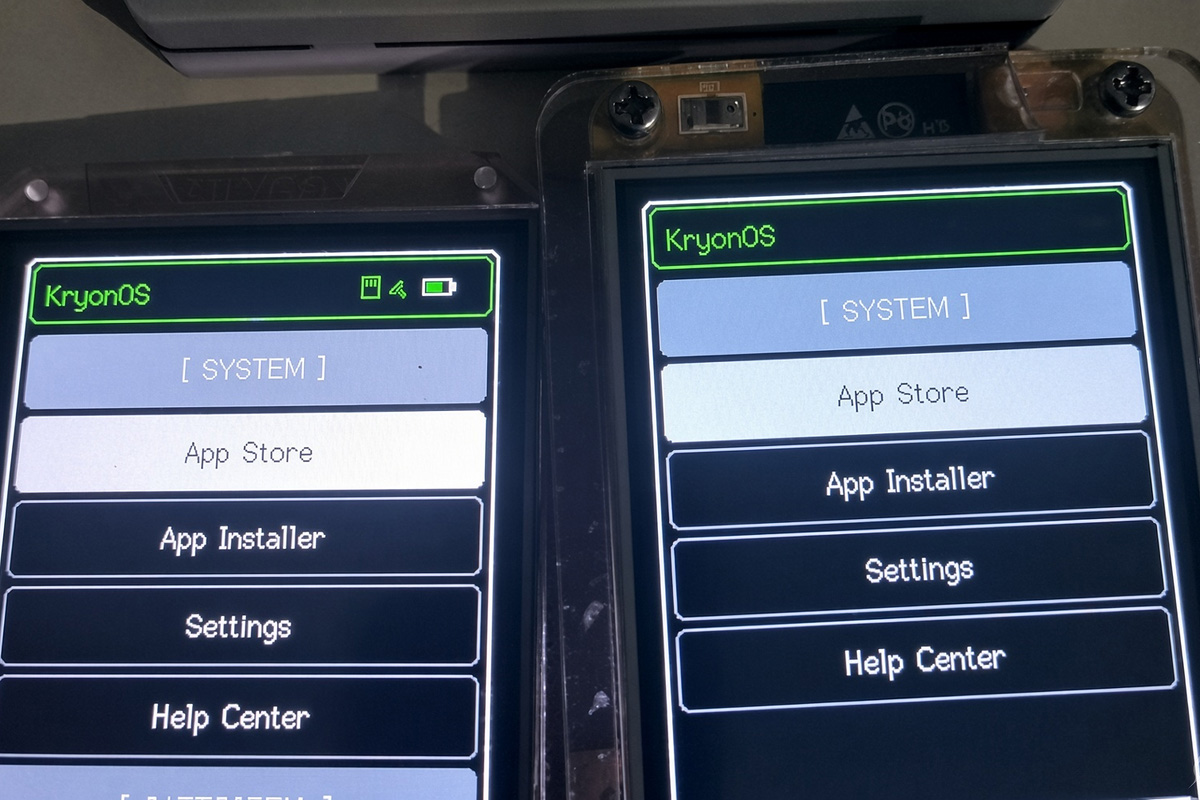
KryonOS is a small JavaScript-powered OS that turns a supported ESP32 development board with a touchscreen into a standalone computer with its own graphical interface, application launcher, and file storage.
Applications are written in JavaScript and run on the Duktape 2.x engine. The runtime supports ECMAScript 5.1, along with some ES6 features.
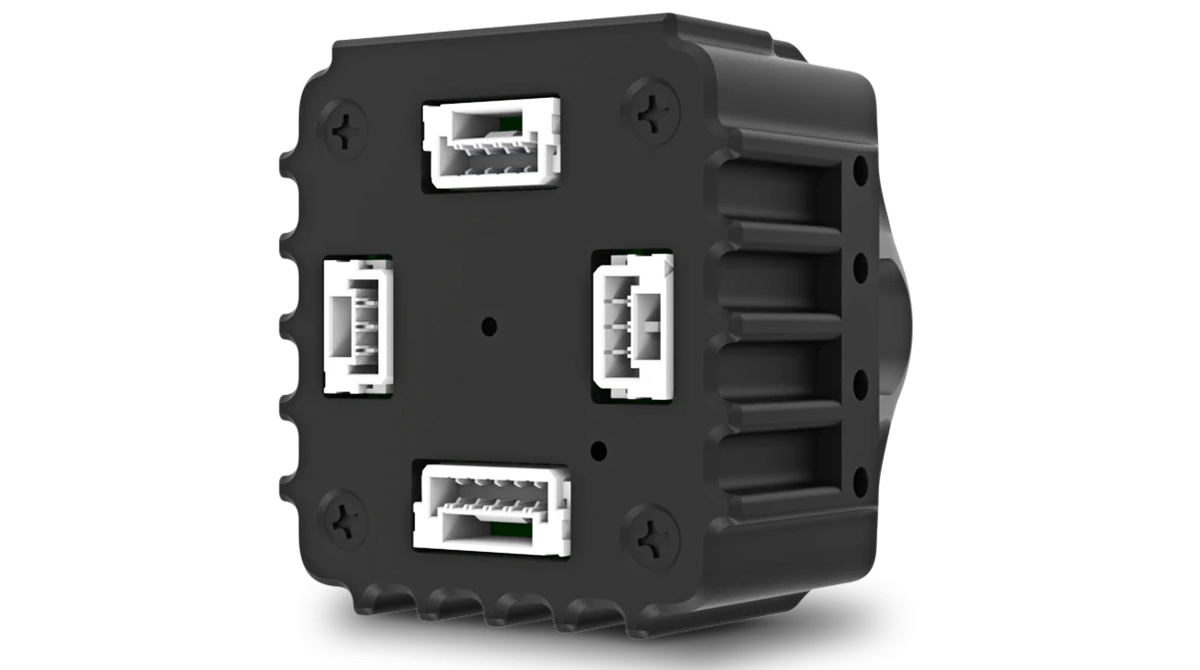
Thermal camera based on an STM32N6 MCU and a high-resolution 320 x 240 LWIR sensor.
https://t.co/RSbar8ROMG
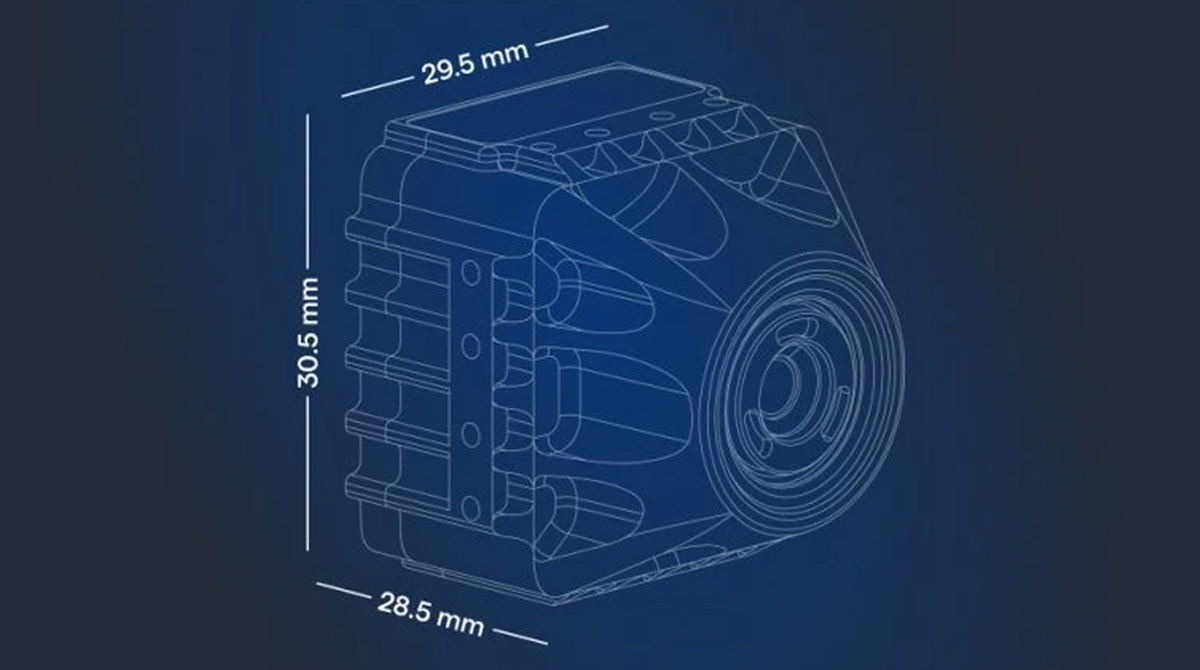
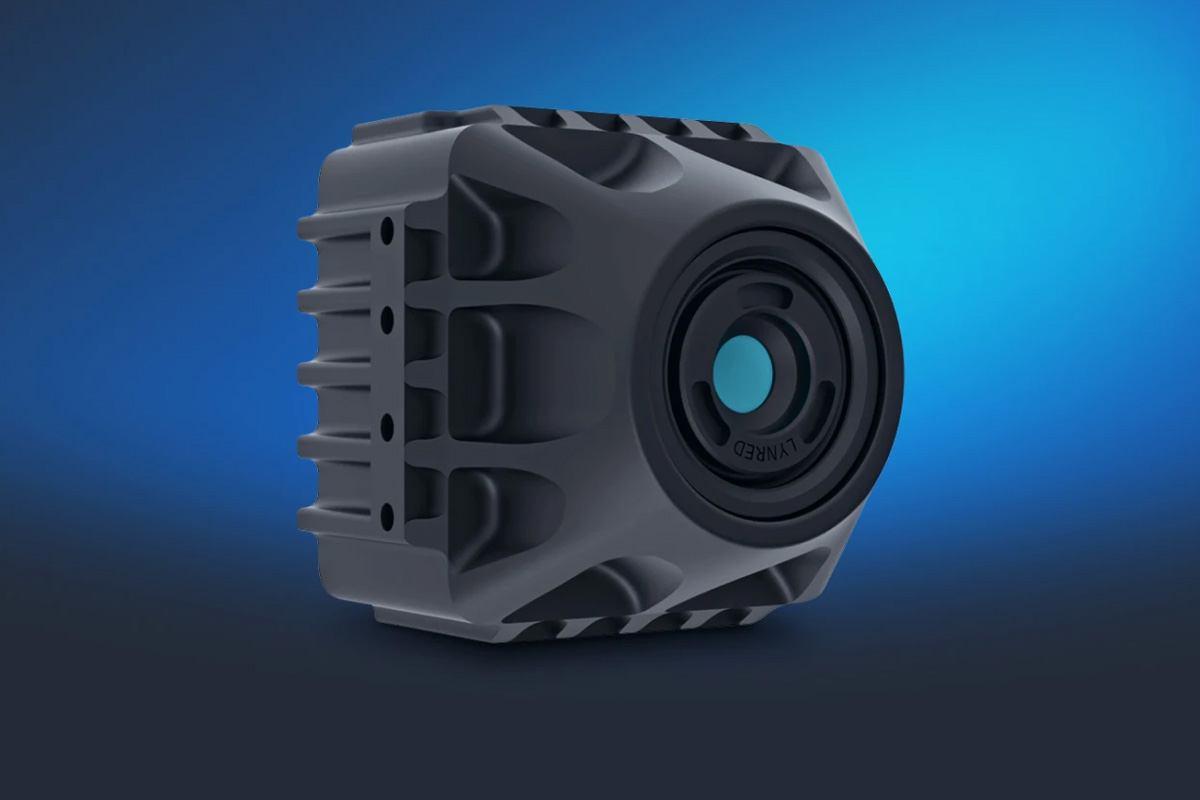
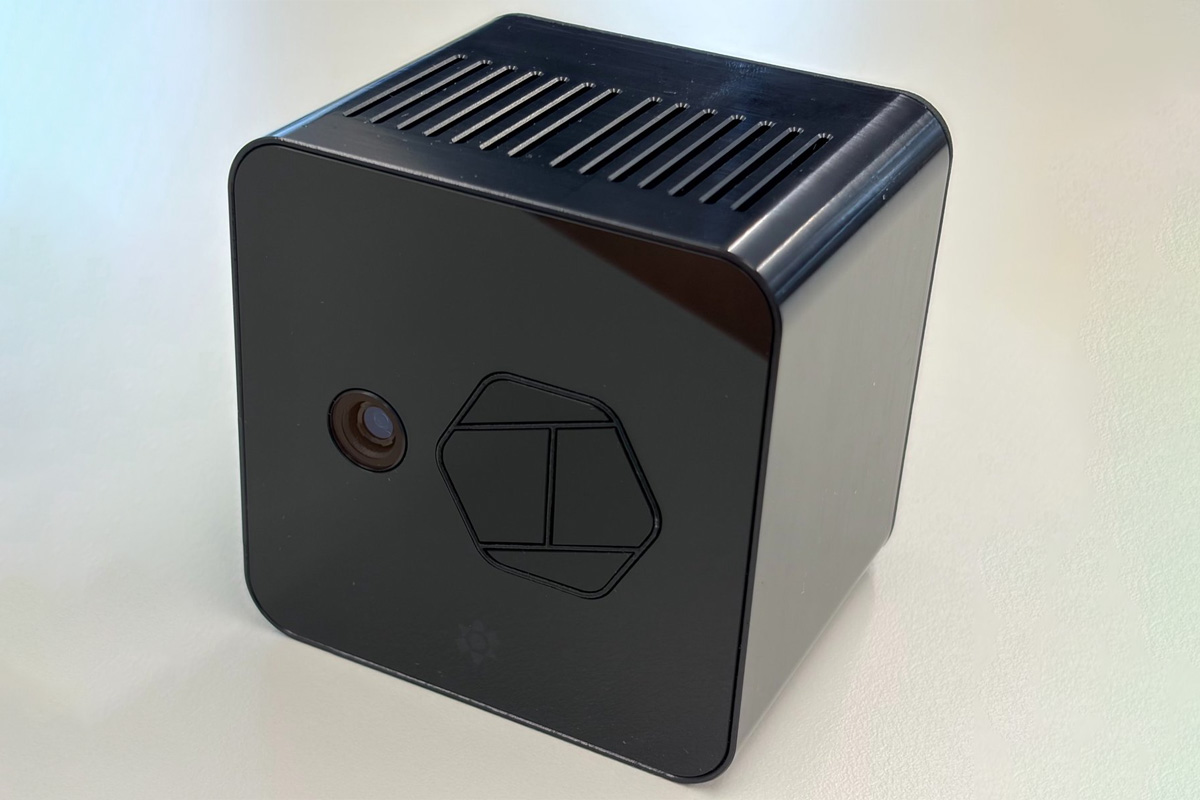
8devices 8Sight T100 is a compact Long-Wave Infrared (LWIR) camera with USB 2.0 and Ethernet interfaces for UAS, robotics, and industrial applications. It's based on a Lynred ATI320 sensor and delivers 320×240 thermal video at 60 FPS.
It operates completely offline, with the STM43N6 handling custom AI models for object detection, anomaly detection, or temperature-triggered events.
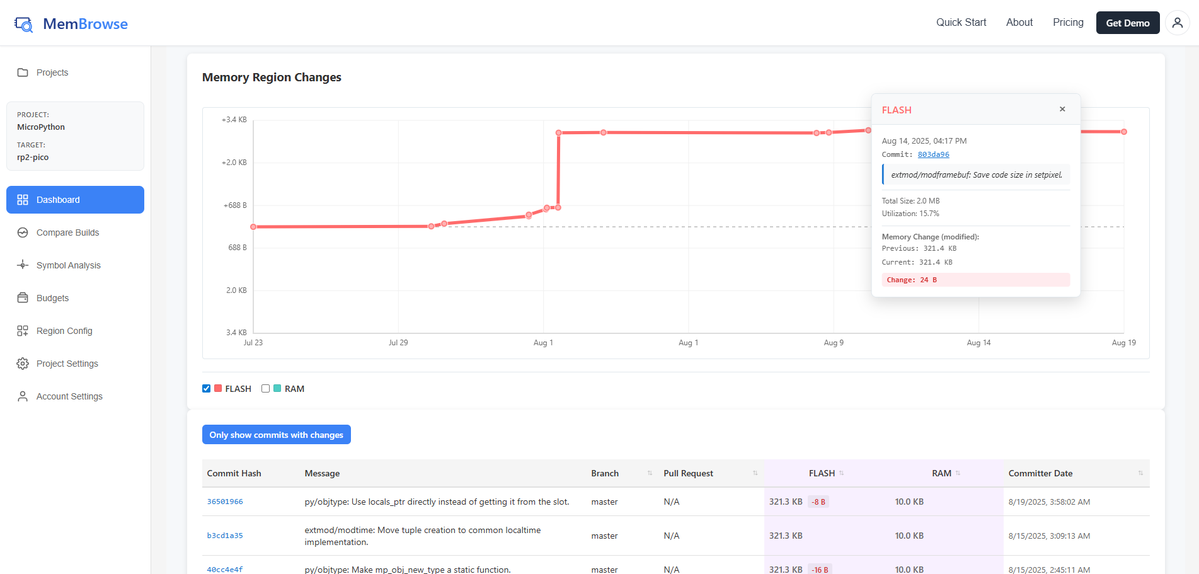
Solution to track firmware flash and RAM usage during development.
https://t.co/tJSLjLwIXH
MemBrowse tool supports GitHub Actions, GitLab CI/CD, and other continuous integration (CI) solutions. Engineers can monitor footprint changes in a granular way each time code is submitted to their project, instead of finding out when the firmware image stops fitting into the target’s flash, or can’t run due to excessive RAM usage. MemBrowse also provides the full history showing how memory usage progressed over time, and how much is left for extra features.
It's completely free for open-source projects on public repos.
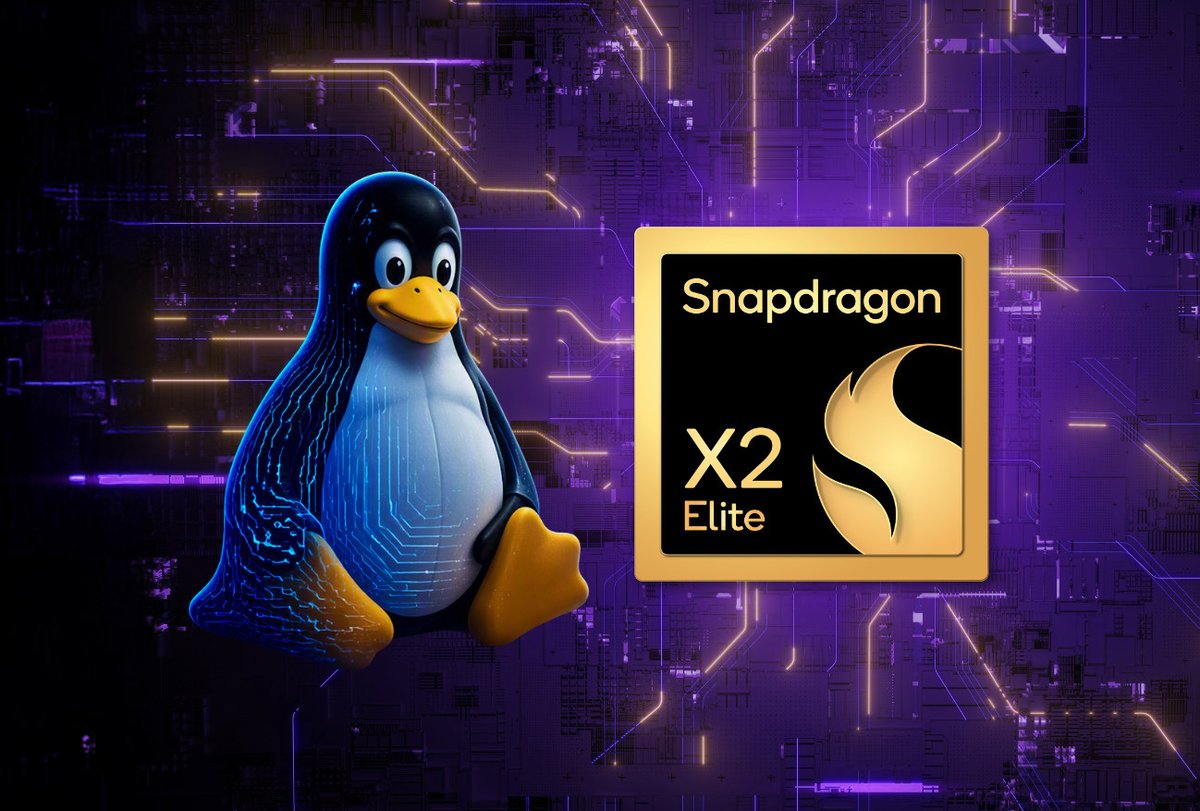
.@Qualcomm_dev has released a Linux developer preview for Snapdragon X2 SoCs.
https://t.co/RuSInlKgj7
This release is meant for distribution maintainers, toolchain developers, kernel contributors, and hardware enablement engineers. The company will focus on Linux enablement for the X2, and it will be up to distro vendors to release and maintain ISO images if they wish to.
For now, Qualcomm provides instructions to build a Linux image based on Debian 13.
27-inch 4K monitor mounted on a smart 6 DoF robotic arm powered by a Rockchip RK3588 SoC.
https://t.co/07F26vjJJS
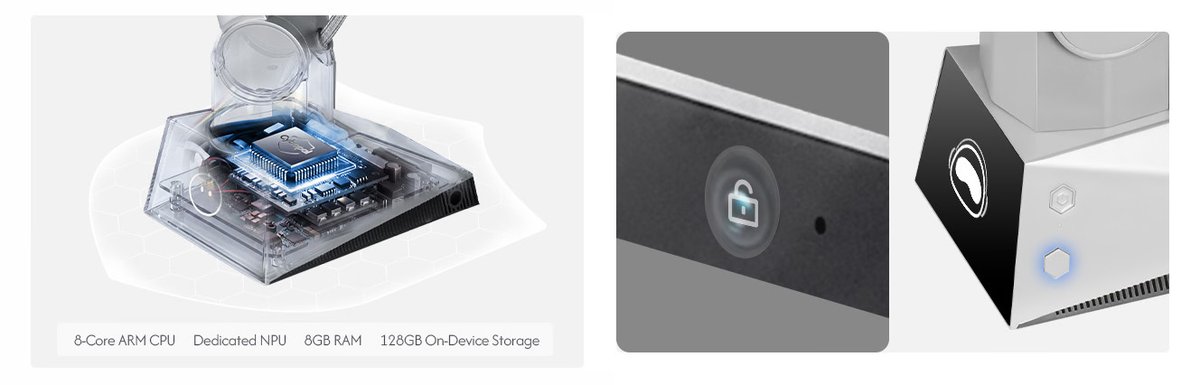
CyboPal ONE is a 6-axis desktop robotic display using voice and gesture control, spatial sensing, and automatic display positioning based on the user’s position. It includes a camera, a binocular 3D sensor, and a motion sensor (IMU), and supports joint force sensing, obstacle avoidance, collision detection, and power-loss soft landing.
The built-in Pauli AI agent provides voice control for screen positioning, application control, text input, and workflow tasks across Windows, macOS, and Linux.
Rockchip RV1126B-based LLC + LGA system-on-module for multi-camera AI vision applications.
https://t.co/DyCmP0u1qK
@Quectel_IoT SE200ZC-AP 40 x 40 mm smart module supports up to five 12MP cameras through two 4-lane MIPI CSI interfaces and one DVP interface, and also offers Gigabit Ethernet, USB 3.0/2.0, two CAN FD, and various other I/Os. It ships with up to 4GB LPDDR4x and 64GB eMMC flash, and is available in commercial and industrial grades.
The company will provide a Debian (Linux 6.1) image and BSP for the module.
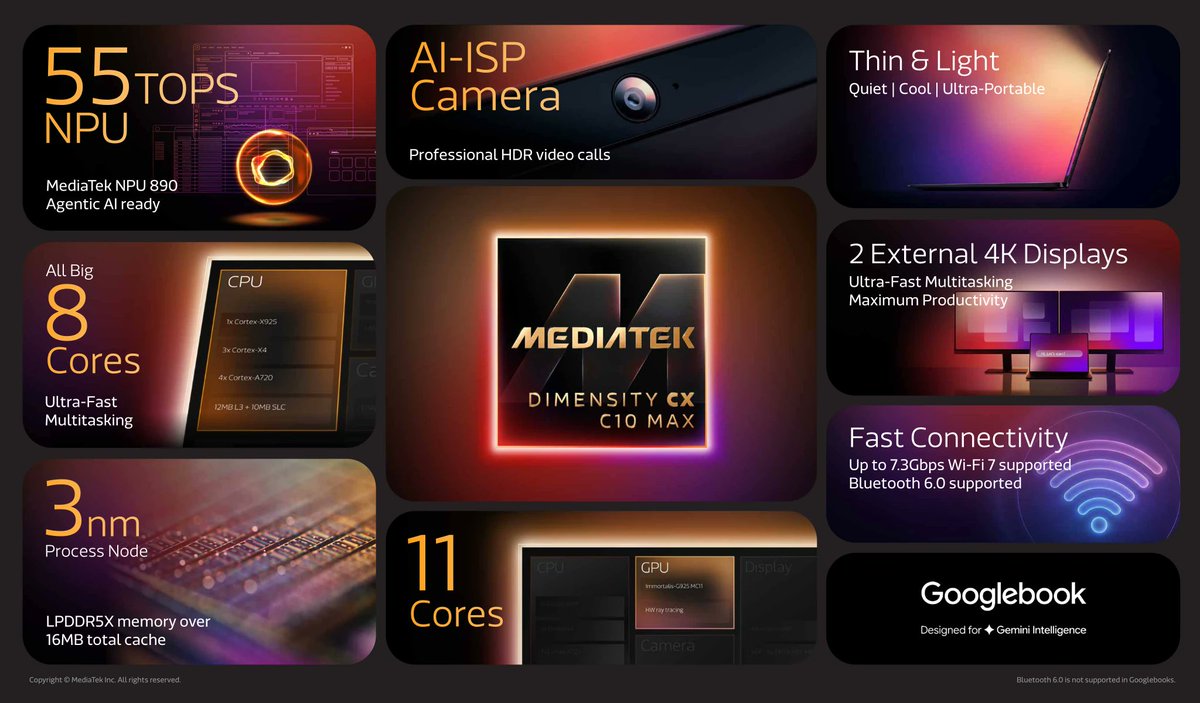
"All Big Core" Armv9 SoC for Googlebook "AI-first" laptops.
https://t.co/PSmIAw56bt
@MediaTek Dimensity CX C10 Max features a 3.73 GHz Cortex-X925 core, three Cortex-X4 cores, and four Cortex-A720 cores, as well as an 11-core Immortalis-G925 MC11 GPU and MediaTek’s 890 NPU delivering up to 55 TOPS. It also supports 4Kp60 video output (internal and external displays), and 4Kp60 video encoding and decoding.
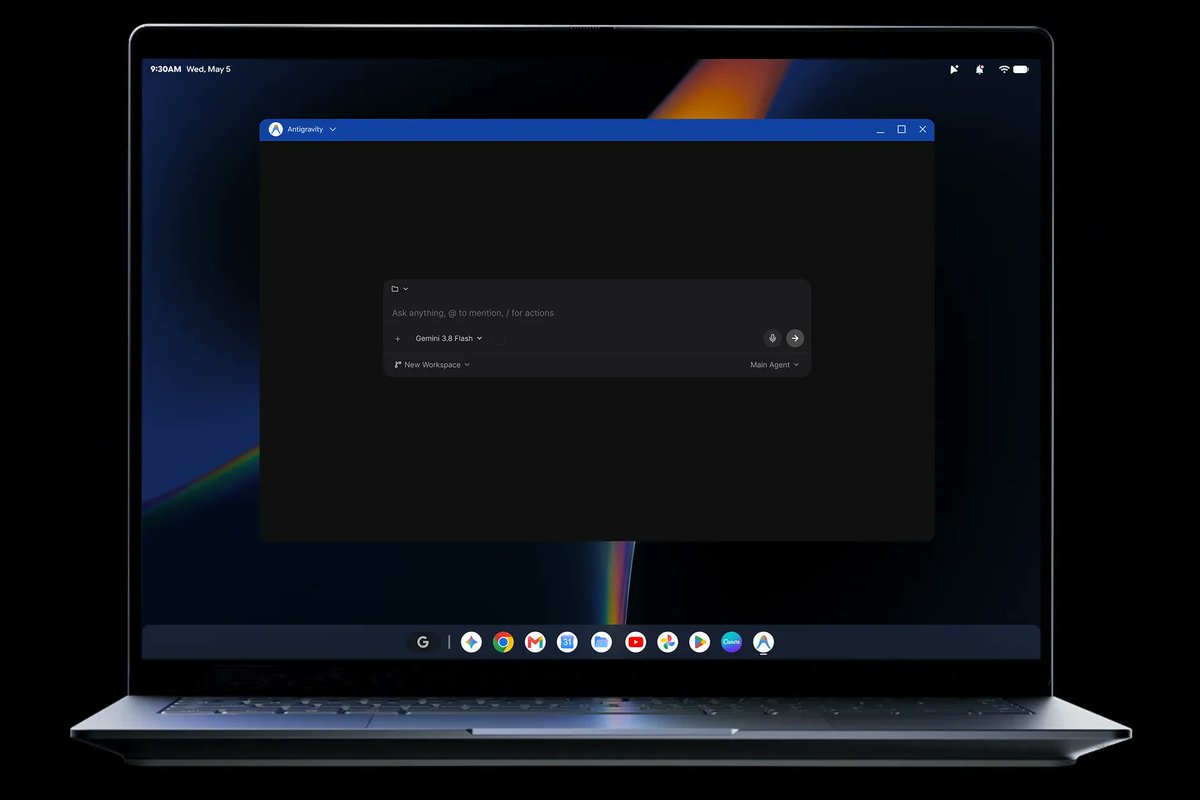
It's designed to run Googlebook OS, mostly based on Android 17 under the hood, with some Chrome OS features.
Markerless full-body motion tracker for VR, VTubing, and motion capture.
https://t.co/qQyvvDfCyr
The Soulart Station relies on a Time-of-Flight (ToF) sensor and an onboard Neural Processing Unit (NPU) to capture 3D point cloud data and process motion tracking on the device. It delivers 23-joint 6DoF motion data with a claimed ML latency of under 10 milliseconds. The system also features 4K RGB and NIR cameras.
The cross-platform Soulart App is supported on Windows, Meta Quest, Android XR, and SteamVR.
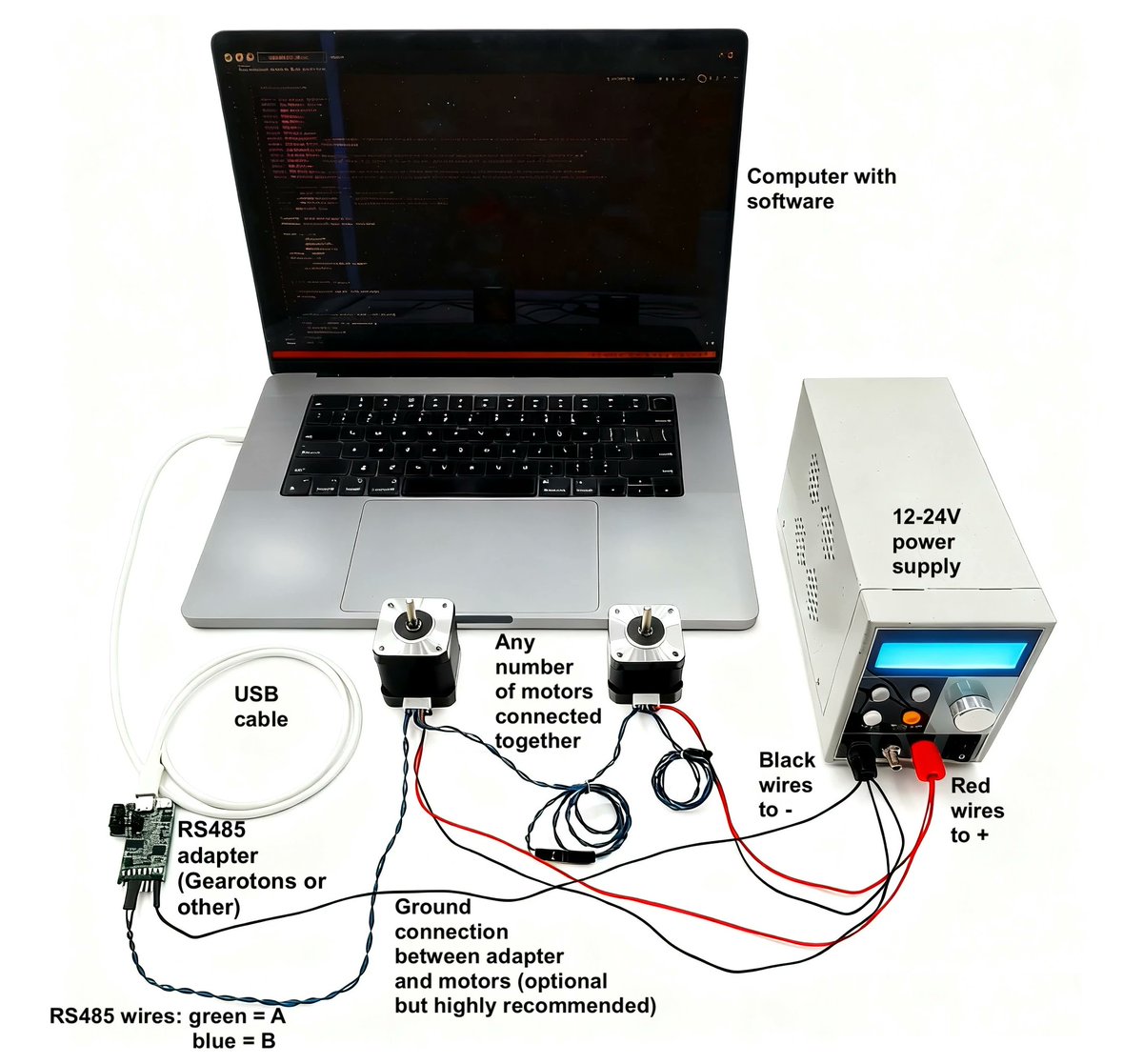
Open-source hardware servomotor with a motor, driver, motion controller, and encoder embedded in one NEMA-17 body.
https://t.co/d7xIIlxnQT
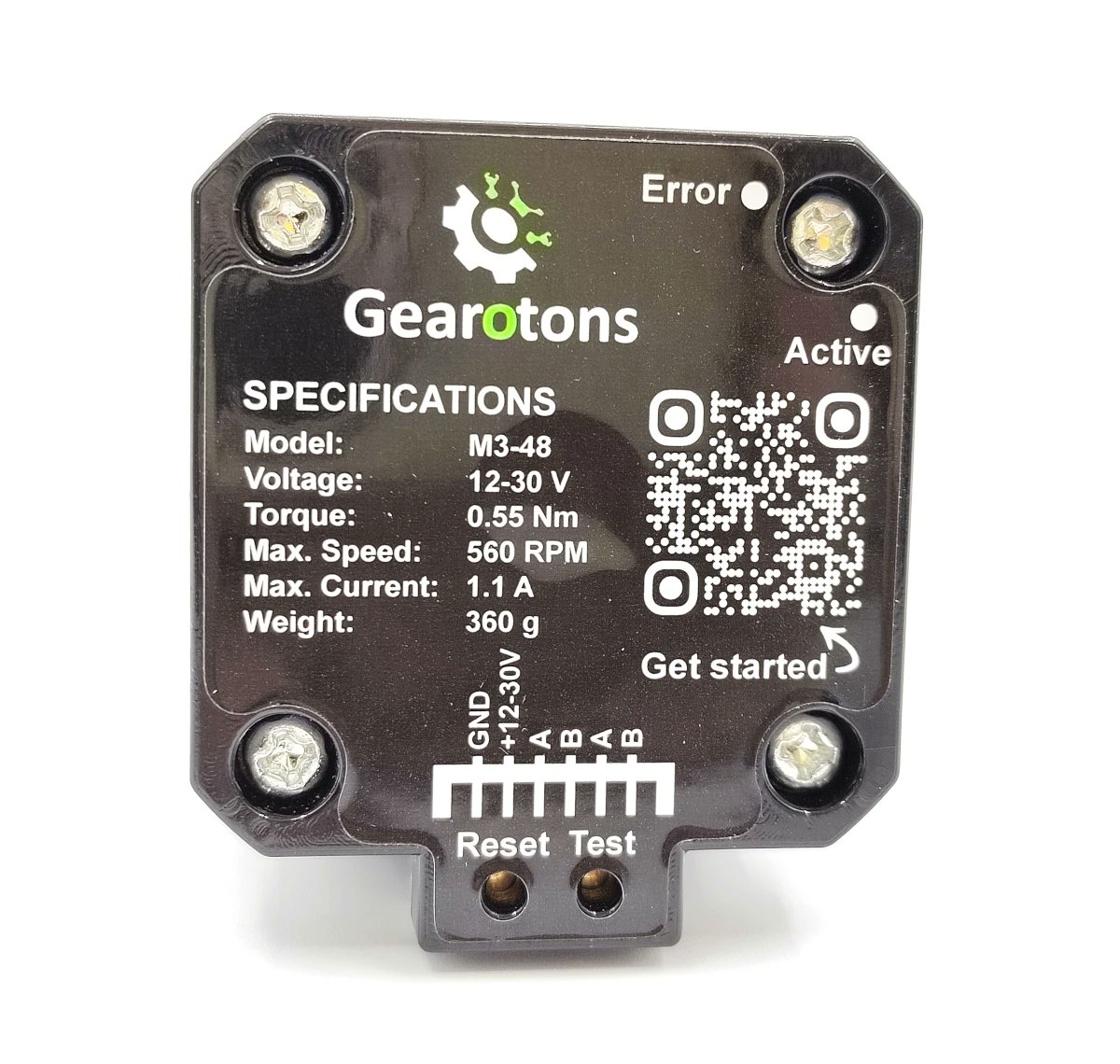
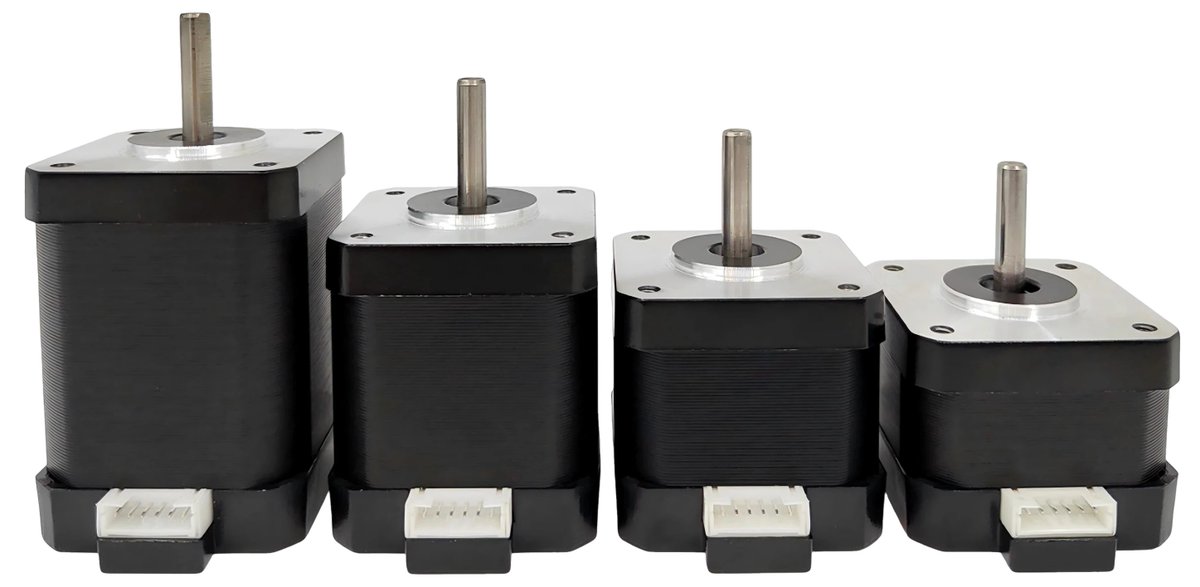
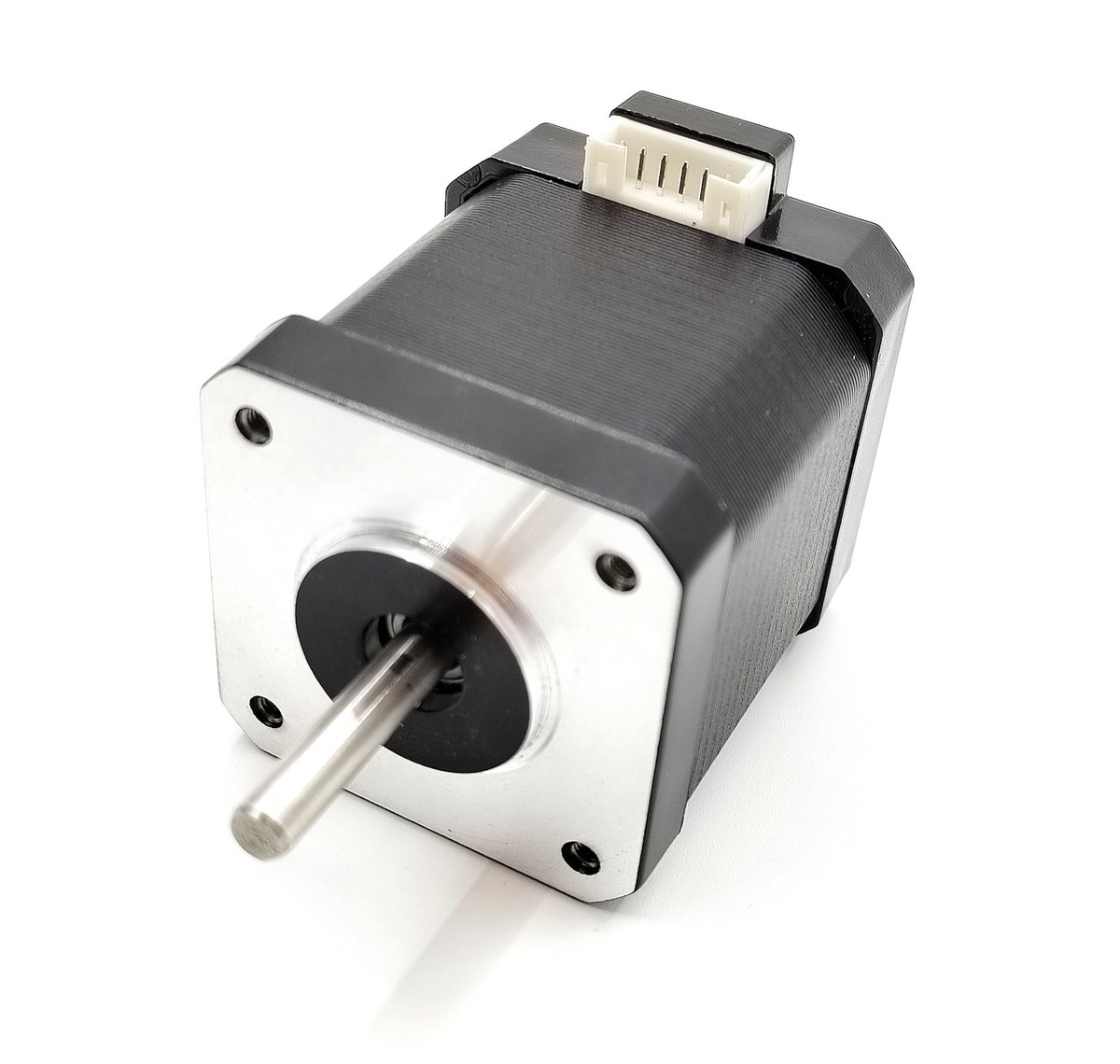
This level of integration enables the Gearotons M17 to be low-cost ($20 and up) and easier to use. The user has nothing to source and match, nothing to wire between boards, and nothing to configure. Just connect power and one (RS-485) data cable, and you’re good to go.
The STM32G0 firmware, Python and Arduino libraries, the KiCad hardware design files, and 3D files are all open-source.
.@NordicTweets nRF54LC10A is a tiny Cortex-M33 wireless MCU designed for 3V coin cell operation.
https://t.co/hgmbKATgdn
The SoC supports Bluetooth LE with Channel Sounding and IEEE 802.15.4 for Thread, Zigbee, and Matter. It has fewer peripherals than nRF54L15 and nRF54L10, notably lacking NFC, PDM, I2S, PWM, and QDEC. It also features a sub-50 nA hibernation mode to reduce battery drain during storage and transportation.
The nRF54LC10A is supported by the nRF Connect SDK built on Zephyr RTOS, and the company will soon offer the nRF54LC10A DK development board.
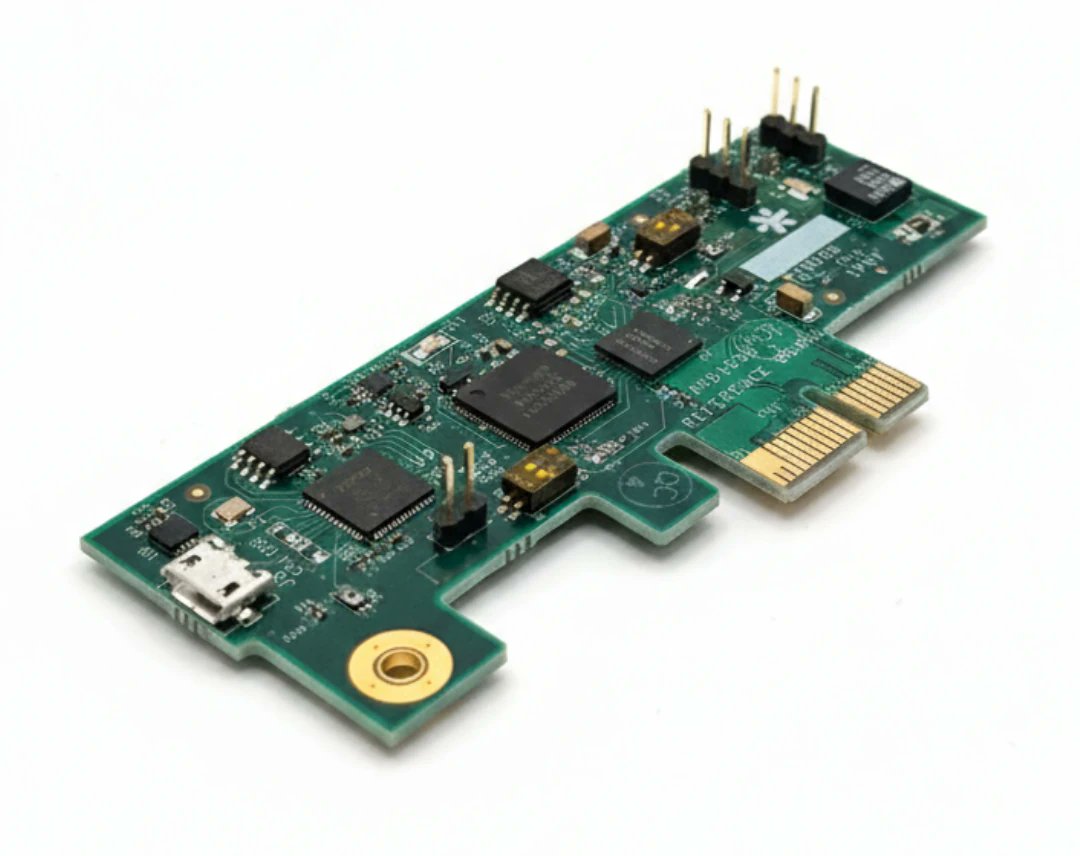
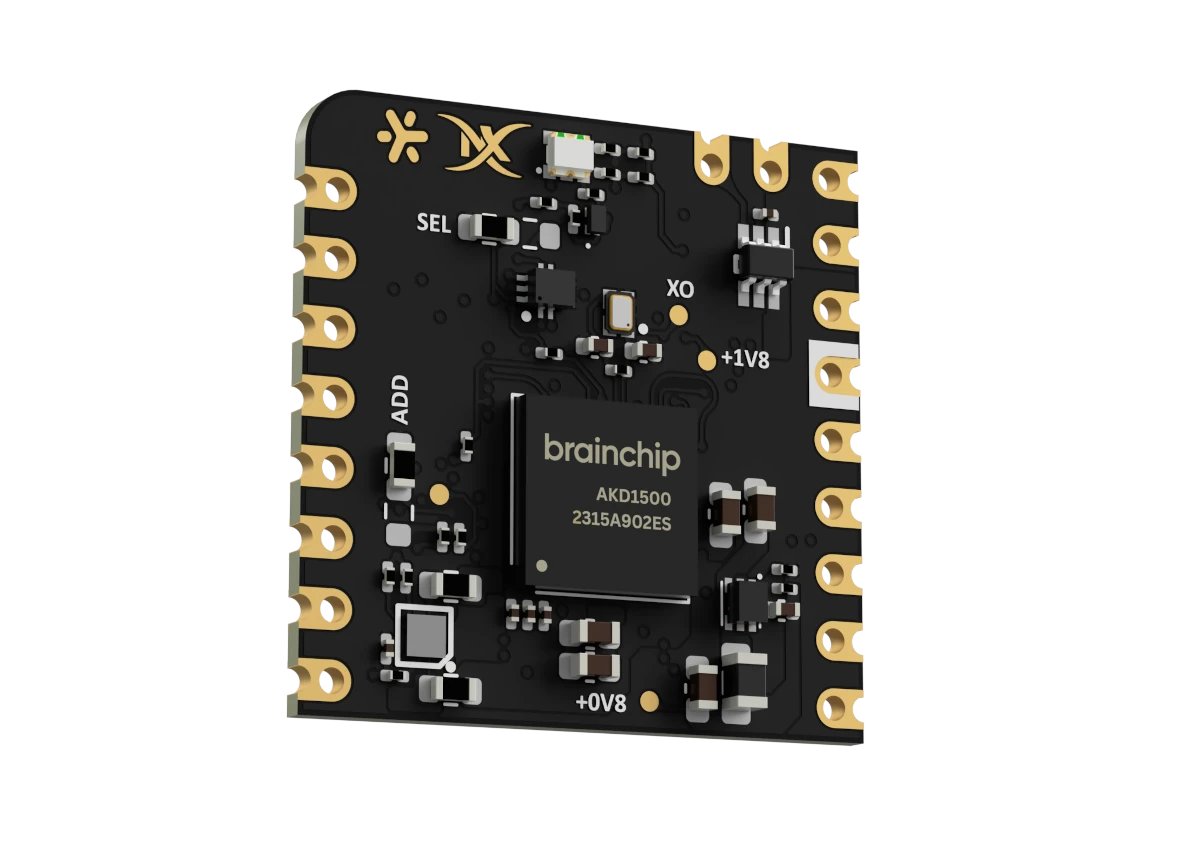
The ultra-low-power @BrainChip_inc AKD1500 Edge AI accelerator is now available in various form factors.
https://t.co/liEhuaVB6V
A $99 BrainBoard 1500 SPI module based on the Arduino Nicla form factor, a $129 M.2 PCIe/SPI M.2 development card, and a $149 PCIe x1 development card. Power consumption is about 250 mW typical at 400 MHz (800 GOPS of AI inference).
The two development cards work with Linux hosts, including the Raspberry Pi 5, while the BrainBoard 1500 module is supported by the Arduino IDE.
First Bluetooth 7-ready wireless MCU we've seen so far.
https://t.co/5GWWxVQCC6
The Realtek RTL8773J features a dual-core design with a 200 MHz Cortex-M55 application core and a Cortex-M33 sensor and network core, along with DSPs for high-fidelity codec processing and an accelerator for ANC, Talk Clear, and Keyword Spotting.
Other features include up to 2MB SRAM, 8MB PSRAM, 16MB flash on-chip, Bluetooth 6.2/7 and 2.4 GHz proprietary, audio features, and a range of I/Os. The main feature of the upcoming Bluetooth 7 release will be High Data Throughput (HDT), delivering up to a 7.5 Mbps data link over Bluetooth, and Realtek HDT+ brings that up to 15 Mbps.
No firmware, SDK, or dev kits for now.
@someoak2@BrainChip_inc They have some data here: https://t.co/6gpv4sRHrl
The AKD1500's main selling point is its ultra-low power consumption, so it might not perform as well in standard benchmarks, unless it's compared to NPUs found in MCUs.
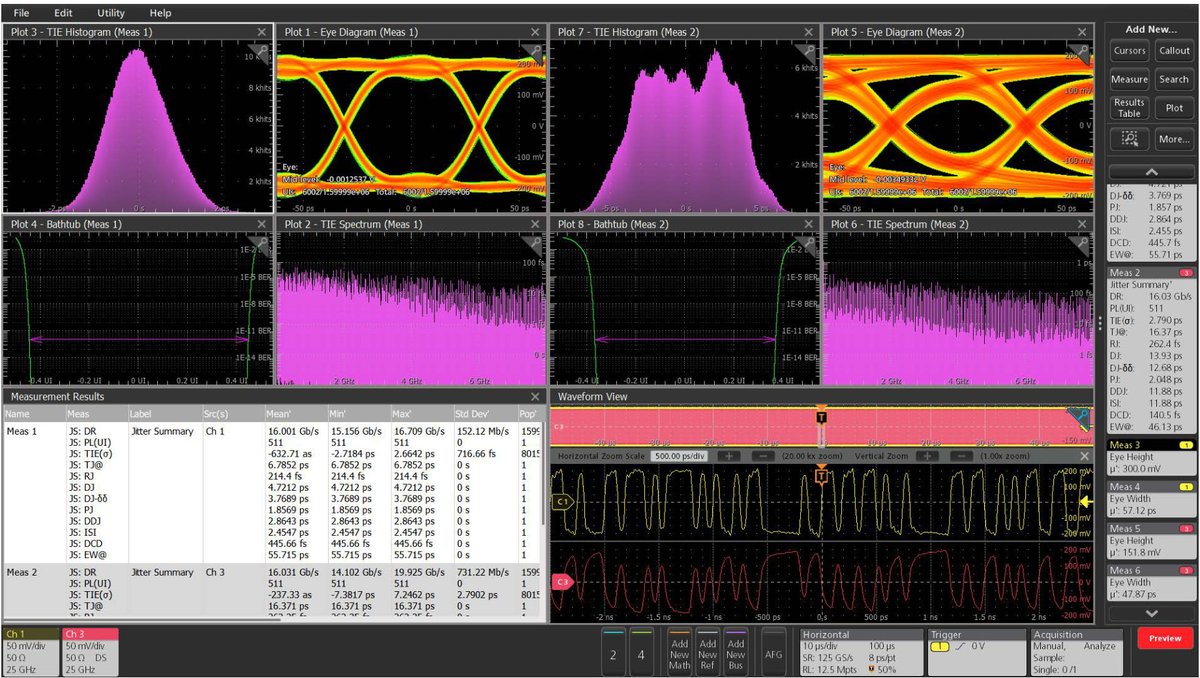
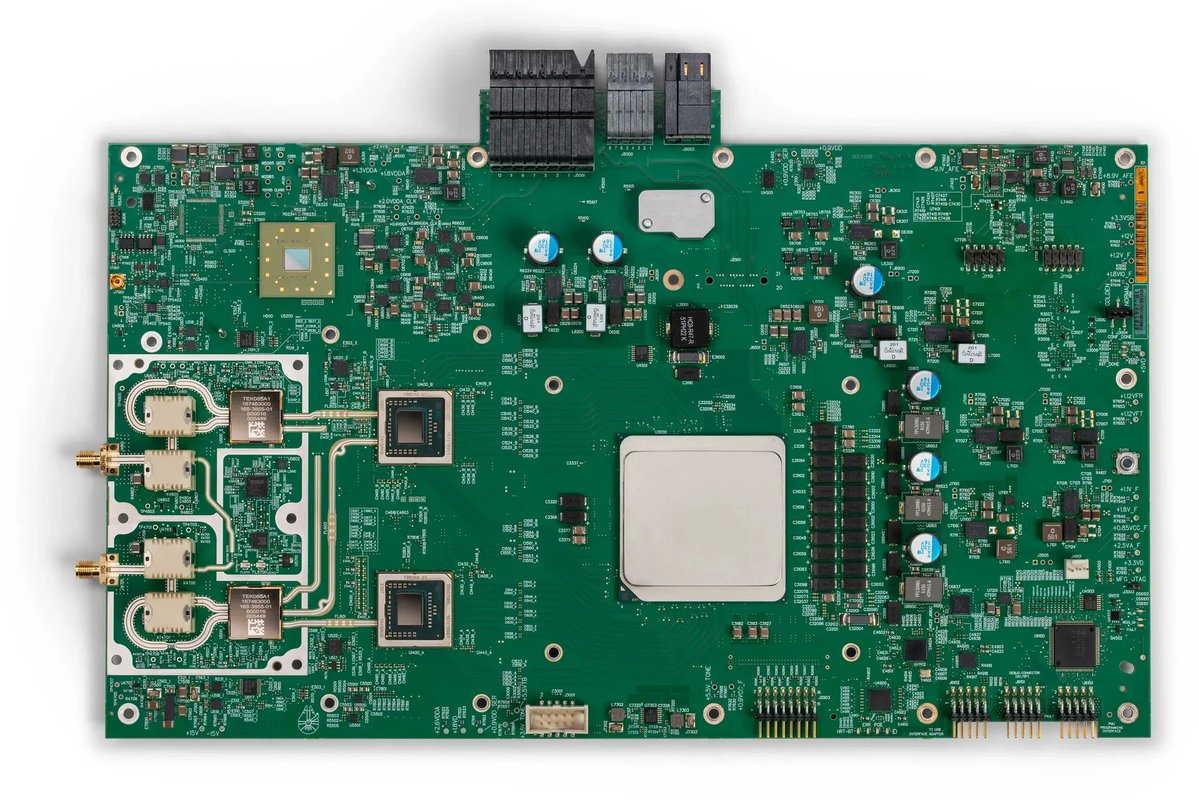
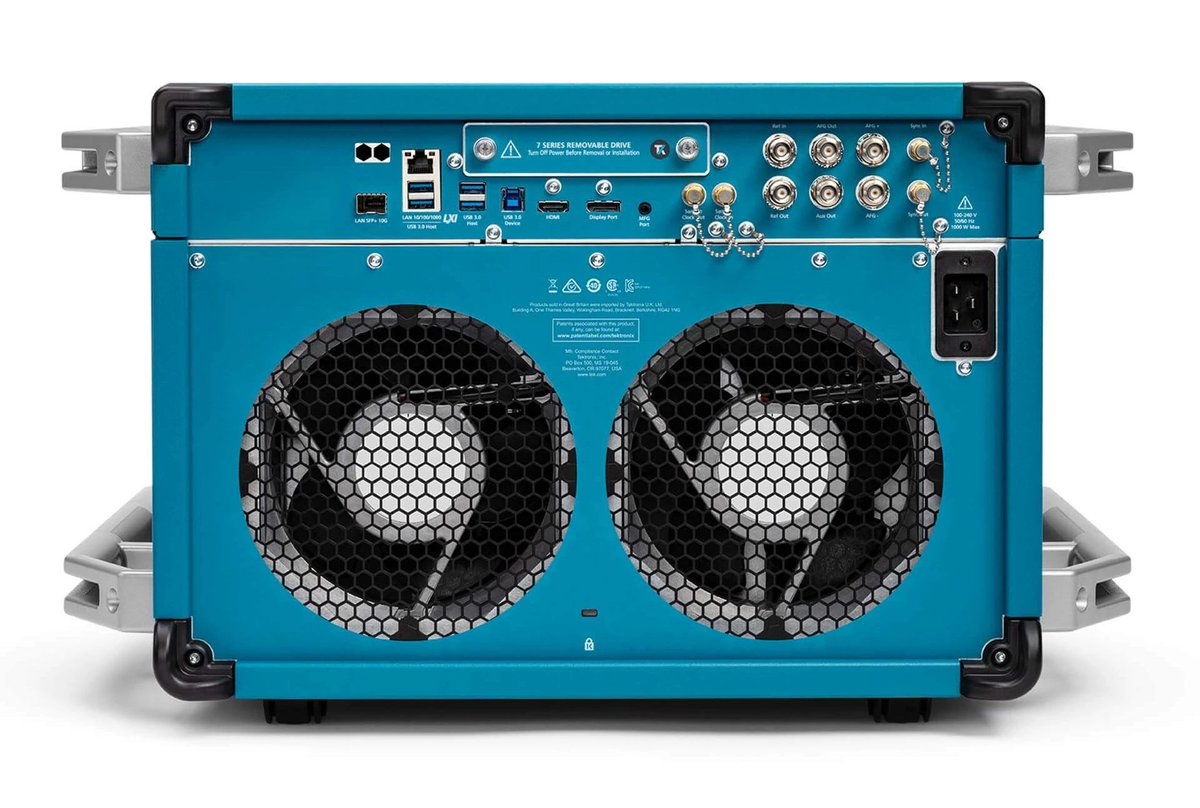
$308K+ 8-channel oscilloscope with 12-core @AMD EPYC Embedded CPU, @NVIDIA T1000 GPU, 96GB RAM, and a 15.6-inch touchscreen display.
https://t.co/FMamjueBG4
Tektronix says the DPO718AX is the world’s first 8-channel performance oscilloscope with up to 25 GHz analog bandwidth per channel (and 125 GS/s sampling). It also includes a 10 Gbps SFP+ port with TekHSI technology for transferring large waveform datasets to an external PC.
The oscilloscope runs Linux or Windows 10 LTSC and is equipped with TekScope software. Other software options can also be added for an additional cost.