weekend project: https://t.co/SirJJ7epLk
one shelf for books, manifestos, essays, etc... built it for myself to keep everything I want to read and everything i love in one place.
We’ve been on a side-quest, and we have good news from the other side! 40 million Kenyans now have a bitcoin Lightning Address! They didn’t need to sign up for one because they had it this entire time, attached to the phone number in their pocket!
Try it: send bitcoin to [email protected] (254 is optional). The BTC arrives as KES in their M-Pesa. ⚡ EVERY M-Pesa number works. All 40,000,000.
Wallets with LUD-09 support give you a nice clickable link to see your M-Pesa receipt. For example: https://t.co/OK0R62jNWt
Nostr Mail | The Open Protocol for Decentralized Email -
The first decentralized email protocol powered by Nostr. Own your identity, your keys, and your inbox. No central authority. No gatekeepers.
https://t.co/iS5LCrYHlK
You are absolutely right that token usage will continue to explode and even go significantly higher. At the same time the cloud share per user could actually turn out lower than many expect because more and more tasks will run directly on the devices.
For this shift to scale fully across billions of phones cars robots and industrial systems what still needs to be built is a massive expansion of power efficient semiconductors advanced sensors photonics thermal management and the underlying power conversion infrastructure at the edge level.
But that does not change the overall picture because the sheer mass of devices agents and physical systems will drive demand massively anyway.
Our paper on Giovanni’s discovery of Bitcoin’s Power LawS has reached viral status on CERN preprint site with > 10K views and ~9K downloads.
Quite fitting since Bitcoin adoption has grown in a viral manner as demonstrated in paper.
Adoption cube of time & Metcalfe @ScientificBTC
After years of work, Digital Real Estate is finally available for pre-order—with a Bitcoin Conference special offer.
Pre-order for $21 (regular $29) · April 27 – May 4 only.
If you have ever wondered why Bitcoin behaves the way it does, not as a financial instrument but as a living system, this conversation is worth your time.
Giovanni is a physicist. He does not opine. He measures. And what he has measured over twelve years is that Bitcoin follows the same mathematical patterns found in planetary orbits, animal metabolism, forest fires, the spread of viruses, the growth of cities, and the architecture of the brain. Not similar patterns. The same ones.
He calls them power laws. Physicists do not use that word loosely.
The conversation covers three things that are worth understanding regardless of where you stand on Bitcoin.
First, why Bitcoin price behaves the way it does, and why that behavior is not noise or speculation but a measurable, reproducible signature of a network growing the way nature grows things.
Second, why the most common argument for Bitcoin's value, scarcity, is not only imprecise but works against understanding what Bitcoin actually is. Finite and scarce are not the same concept. The difference is not semantic. It changes everything about how you think about using it.
Third, what Giovanni calls the Bitcoin growth game. A simple simulation that shows how value in a network accumulates not despite dilution but through it. Counterintuitive. Mathematically exact. And once you see it, difficult to unsee.
This is not a conversation about price targets or market cycles.
It is a conversation about what kind of thing Bitcoin is.
That question turns out to have a precise answer.
Is Bitcoin scarce? No, it's finite.
This appears to be a topic of debate and potential confusion. Giovanni Santostasi @Giovann35084111 joined me to unpack how 'finite' and 'scarce' are not about semantics but fundamentally different concepts. The Bitcoin network is a participatory network unlike anything we have ever seen before. Let's take a moment to listen to what the network is saying.
Timestamps
00:00 Exploring Bitcoin as a Living System
06:52 The Intersection of Physics and Bitcoin
12:29 Power Laws and Their Significance
18:11 The Growth Patterns of Networks
23:55 Understanding Bitcoin's Unique Behavior
31:37 Theoretical Foundations and Future Research
43:32 The Role of Financial Systems in Civilization
47:12 Miscommunication and Scarcity in Bitcoin
48:08 Power Laws: Natural and Social Phenomena
49:56 The Nature of Power Laws in Various Systems
51:25 The Sandpile Analogy and System Behavior
54:08 Power Laws in the Universe and Bitcoin
55:50 Exponential vs. Power Law Growth
57:00 The Value of Bitcoin Beyond Scarcity
58:15 Critique of Scarcity in Bitcoin
01:00:52 The Vicious Circle of Scarcity and Demand
01:02:45 Bitcoin's Fixed Supply and Inflation
01:04:29 Conservation Laws and Bitcoin's Value
01:05:53 Econophysics and Bitcoin's Monetary Properties
01:07:09 The Ledger's Integrity and Value
01:07:33 Dividing Bitcoin: Value and Perception
01:08:51 The Game of Bitcoin: Network Growth Dynamics
01:11:35 Simulating Bitcoin's Growth and Value Distribution
01:17:54 The Value of Participation in Networks
01:22:24 Understanding Non-Scarcity in Bitcoin
01:28:04 Power Laws and Network Dynamics
01:33:12 The Role of Scarcity in Economic Models
01:39:22 Bitcoin as a System of Abundance
01:47:48 The Future of Bitcoin Research
01:51:29 Understanding Bitcoin's Value Proposition
01:55:08 Visualizing Bitcoin's Network Dynamics
Steve Keen has done genuinely interesting work on debt and financial instability, and his 2008 warnings held up. That credibility is real.
But the utility question is more complicated than this framing suggests. There are places in the world where people use Bitcoin not as a speculative bet but as the least bad option available to them.
People in countries with 60% annual inflation are using it as a savings tool because their alternative is watching their wages disappear.
Cross-border transfers that would cost 10% through a wire service cost a fraction of that on chain.
In parts of Kenya, Malawi, and Zambia, Bitcoin mining is being used as an economic anchor for small hydro and solar installations that were not viable without a reliable buyer for their surplus output. The result in documented cases has been significant reductions in local electricity costs and the electrification of households, health centers, and schools that previously ran on kerosene.
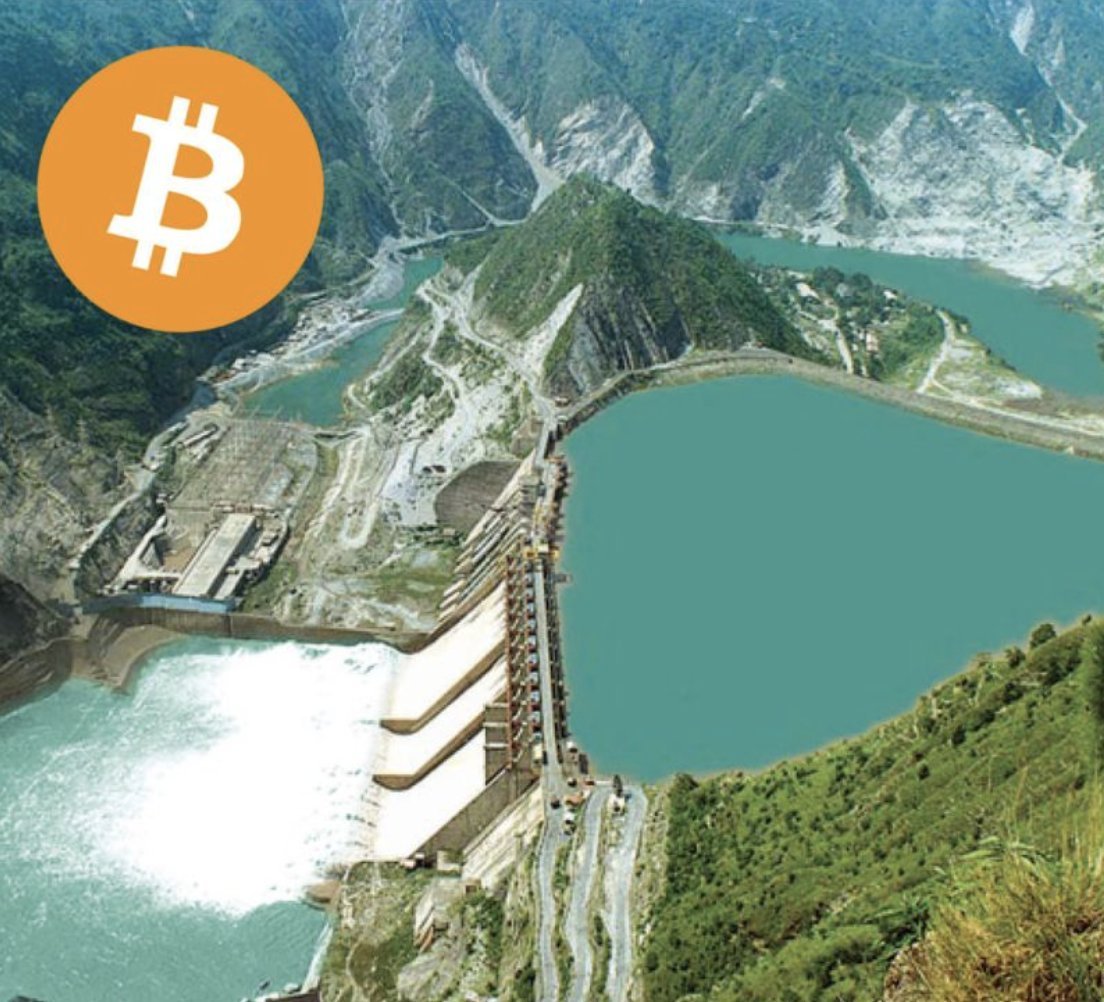
In Ethiopia, Bitcoin mining generated $220 million in foreign exchange revenue in a single fiscal year from hydropower that would otherwise have gone unexported, contributing to infrastructure expansion including the construction of tens of thousands of kilometers of new transmission lines.
On energy: Keen understands proof of work better than most critics, and the concern is legitimate. What the climate framing tends to miss is that not all energy is the same. Miners follow the cheapest electricity on earth, which is structurally surplus renewable energy that no other buyer wants at that moment. Hydropower that cannot be exported. Wind that exceeds grid capacity at night. A mining operation can power down in seconds when demand elsewhere rises, which is why grid operators in Texas have started treating miners as a stabilizing asset rather than a liability. The question is not whether energy matters. It is what that energy would otherwise have done.
Buffett and Munger are worth listening to. They are also both products of a financial system that worked exceptionally well for people born in the right country at the right time. That context shapes what problems feel real and what solutions feel necessary.
Whether Bitcoin solves every problem its advocates claim is a fair debate. Whether it solves some real problems for real people is increasingly hard to argue with.
Daniel, the scale of what you are documenting has not yet landed. It will.
67% of Ethiopia's foreign exchange electricity revenue. 28,571 km of new power lines. A grid expansion backlog that, when fully energized, represents a 10-20x acceleration of historical buildout rates. Not a projection. Infrastructure already under construction.
This is not an argument about Bitcoin mining. It is a demonstration of something more fundamental.
Proof of Work is not energy consumption. It is energy transformation. The work is real, the heat is real, the revenue is real, and the grid being constructed with that revenue is real. Every kilowatt that would have dissipated into nothing instead became a transmission line in a country where half the population has no electricity.
The institutions that have spent decades and billions on rural electrification in Sub-Saharan Africa were not wrong in their intentions. They were working with the tools available to them. External funding, conditional lending, development frameworks built for a world where energy and money moved through centralized systems. That was the only model that existed.
Bitcoin mining introduced a different question: how do you make stranded energy economically valuable at the point of generation, so that infrastructure funds itself. It is not a criticism of what came before. It is what becomes possible when the tools change.
Energy is real. Work is real. The result is real. This is not financial speculation. It is physics transforming into infrastructure.
What Ethiopia has demonstrated is not a pilot. It is a model. And it emerged not from a development agenda but from the economic logic of a network that needed energy exactly where institutions could not yet reach.
Those who still frame Proof of Work as waste are not malicious. Most formed that view when the data was incomplete, when mining was dominated by fossil fuels and the infrastructure argument had not yet been made with numbers. The data has changed. The model has been demonstrated.
We live in an information system that structurally works against depth. Attention is the scarcest resource, and the systems competing for it reward speed, emotion and simplicity. A headline about Bitcoin energy consumption spreads in minutes. An analysis of Ethiopia's grid expansion with verified sources requires thirty minutes and prior knowledge. That is not a failure of individuals. It is a structural mismatch between the complexity of reality and the capacity of our information systems to carry it.
But the mismatch is not stable. Reality is physical. 28,571 km of power lines exist whether anyone read the post or not. Ethiopia either has electricity or it does not. That is not interpretable.
Thank you Daniel for doing the work that complexity demands. The people who are ready to read it will find it. And they are more than we think.
We now have official EEP data that shows Bitcoin mining has nearly doubled Ethiopia’s annual net transmission grid expansion rate
Even more importantly, it has catalyzed an unprecedented level of new construction activity never before reported by EEP at this scale.
Consider this context:
Delivery of power to rural Africa, alongside combatting youth unemployment is one of the two biggest political changes in sub-Saharan Africa.
Bitcoin mining has just demonstrated it can be a viable solution for one of them
Let's dig in.
Ethiopia made $220 million from Bitcoin mining in 2024/25 which is expecting to increase to $312 million this year (source: https://t.co/oqTCnWhvSq
This electricity would otherwise have been wasted
Why?
Although Ethiopia has the capacity to generate 6 Gigawatts from the new dam, Ethiopian Electric Power (EEP) hasn't yet built the transmission lines to supply all that electricity generated.
So, in the meantime the dam authorities sell electricity to Bitcoin mining companies.
These electricity sales to Bitcoin miners were 67% of EEP's total Foreign Exchange revenue last year, vastly improving profitability.
source: https://t.co/5KWbElZYOb
What do they do with that unexpected extra profit?
EEP has stated repeatedly that the revenue from Bitcoin mining is used to support "infrastructure expansion" and "rural electrification" source: https://t.co/k94weeyjNQ
News channel Aljazeera recently confirmed
"Ethiopia doesn't yet have the distribution network to take electricity to 1/2 the population...The idea is the fees paid by the Bitcoin miners will go towards funding the expansion of the grid."
source: https://t.co/RLlzTJsw31
Significantly, EEP's own data shows revenue from Bitcoin mining supported EEP's 2024/25 fiscal year
* 28,571 km new power lines built
* 8,700 substation bays installed
Source: https://t.co/5KWbElZYOb
Bitcoin mining revenue has already almost doubled EEP's rate of energized network buildout from ~358 km/year average to +662 km last year.
But more important is what is in the imminent pipeline: the 28,571 km of new power lines is larger than the entire size of their grid!
source: https://t.co/jvRxu55nMX
Let's be clear, we cannot say that "Ethiopia build more than their whole grid in a year" because not all of that new capacity has been fully energized yet, so that would be an apples-for-oranges comparison.
But it is still an unprecedented rate of new construction.
The good news is that the bulk of this infrastructure constructed but not yet fully energized is not “waiting years”, it is in active commissioning right now and is expected to come online progressively over the next 12–18 months.
Source: Birr Metrics (EEP’s 2025/26 budget announcement) https://t.co/t7B8rCNc9S
When that new network is fully energized, the increase in the speed of energized network buildout will not be 2x. It will be substantially higher, potentially more than 10-20x the historical average as the backlog comes online.
Read that last sentence again.
A forecast 10-20x faster buildout of Ethiopia's electrical grid.
Rural electrification of Sub-Saharan Africa is a key strategic focus for over 20 global institutions and development banks, including the UN, World Bank, IRENA, African Development Bank, and Rockefeller Foundation.
It is even explicitly one of the UN’s Sustainable Development Goals (SDG 7), where Target 7.1 calls for “universal access to affordable, reliable, and modern energy services by 2030.” Sub-Saharan Africa accounts for 85% of the world’s people still without electricity (mostly in rural areas), making this one of the biggest global priorities.
How Ethiopia is achieving this should be one of the biggest stories at the UN right now.
Far from “taking renewable power away” from people, Bitcoin mining’s use of otherwise wasted renewable energy is catalyzing the accelerated delivery of electricity to rural Africa. Bitcoin mining has created a pragmatic solution to an issue that has plagued powerful global institutions for decades.
If you are still gaslighting Bitcoin mining in 2026 (based on early studies, now been widely debunked), you are no longer just uninformed. You are perpetuating harmful myths that slows down power delivery to people living without electricity.
You are right on the definition. And that is precisely the point.
If scarcity requires demand, then scarcity is a consequence of value, not its cause. It tells you the current state of the market. It tells you nothing about what the system will do tomorrow when demand shifts.
Finiteness requires nothing. The 21 million exist whether anyone wants them or not. Whether the price is zero or a million. Whether every holder sells tomorrow.
A system whose fundamental property depends on demand is not invariant. A system whose fundamental property exists independent of demand is.
That is the distinction worth making.
@thebigmihi@relai_app Stimmt, technisch gesehen verwahren Hardware Wallets private Schlüssel, nicht Bitcoin selbst. Relai vereinfacht das bewusst für Menschen, die gerade erst anfangen. Beides hat seinen Platz.