Supporting the space operations community with software products and services that address current and emerging challenges in the space environment. 🌎🛰️
ICYMI: COMSPOC is featured in “Space Wars,” a @novapbs documentary that premiered earlier this month on Oct. 7 on @PBS.
The documentary examines the escalating military struggle to control space, the threats facing satellites we rely on, and what can be done to protect them. Learn about the technology and strategy of a rapidly developing arms race and hear how experts are wrestling with the implications of this looming conflict.
Watch online ➡️ https://t.co/vjt8LFtCbY
#NOVAPBS #SpaceWars
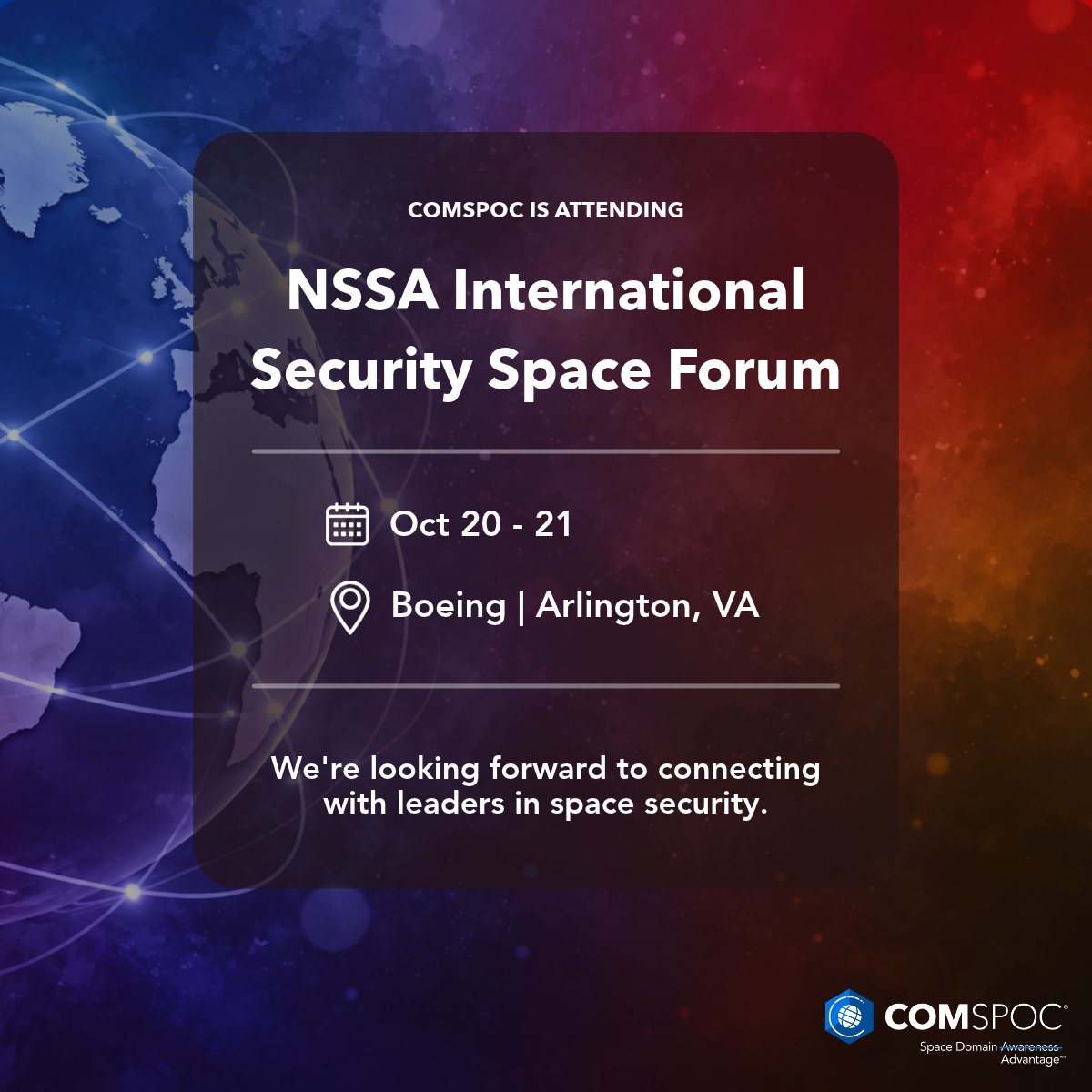
Jim Cooper, COMSPOC’s government relations manager, will attend @NSSASpace's International Security Space Forum 2026, Oct. 20-21 in Arlington, Virginia.
The forum will bring together senior government, military and industry leaders from the U.S. and allied nations to discuss strengthening partnerships, improving interoperability, and addressing evolving security challenges in space.
This insightful commentary from Clayton Swope and Chantal Li of @CSIS underscores the fact that detecting and characterizing maneuvers, accurately and quickly, isn't just the concern of advanced militaries. Any spacefaring nation — whether through civil, military, or commercial missions — needs exquisite space domain awareness to protect their interests.
https://t.co/Vkc22ELYEY
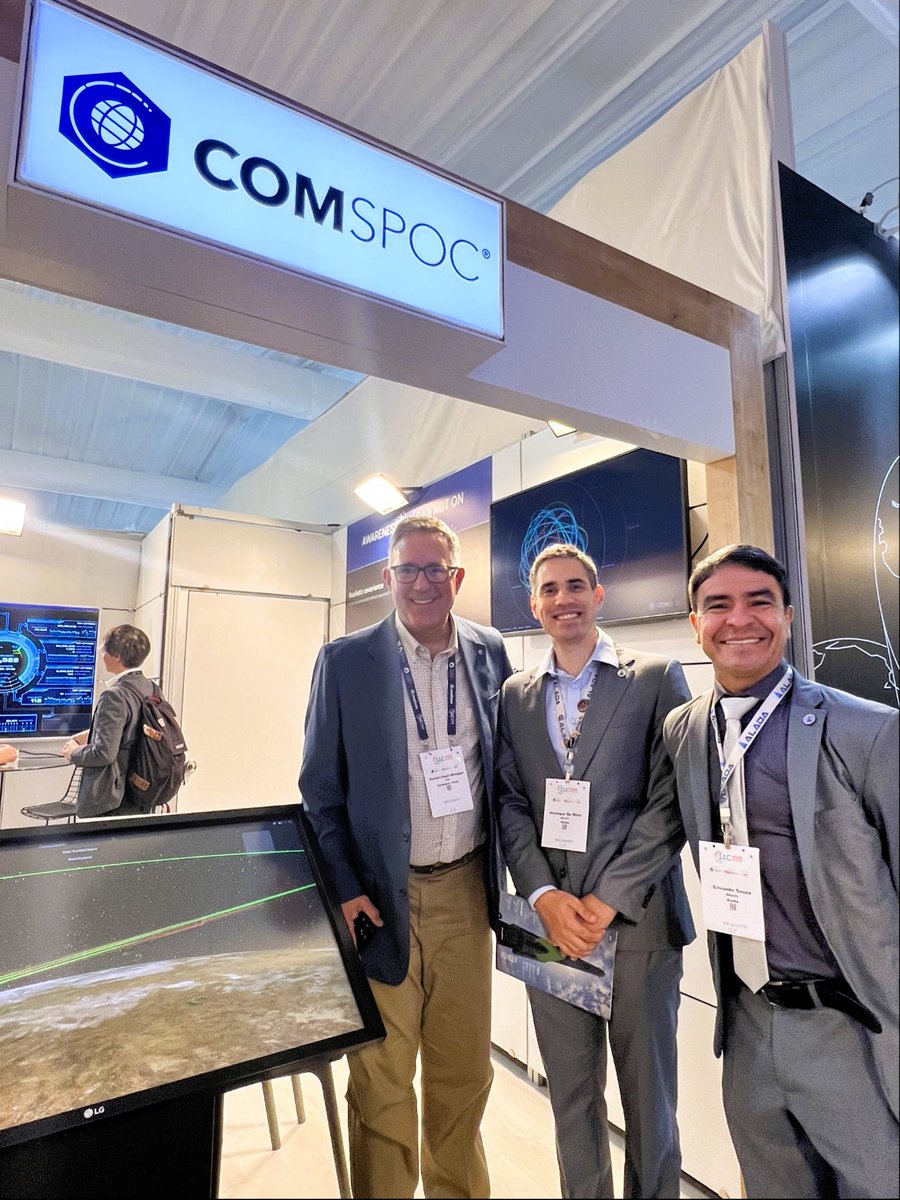
Last week at IAC 2026 in Turkey, COMSPOC’s Dan Oltrogge, Jim Cooper, and Navapan Khunnasarn spoke with Jordan Wright of @Astro_Angry about gaps in collision avoidance and how more accurate SSA, data sharing, and commercial capabilities can help. They also discussed research on the potential atmospheric impacts of satellite reentry.
Thank you to Jordan for the conversation and for helping bring attention to these challenges.
▶️ Watch the interview:
https://t.co/dl3Jw648C6
Congratulations to @SpaceDavenport on winning the 2026 Gerald @LoebAwards in the explanatory category for his series in @washingtonpost, “The Militarization of Space”!
COMSPOC was pleased to contribute to one of the articles in the series. Using SSASuite, our operations team provided data and analysis that helped The Washington Post reconstruct specific encounters between U.S. and Chinese military satellites for its readers.
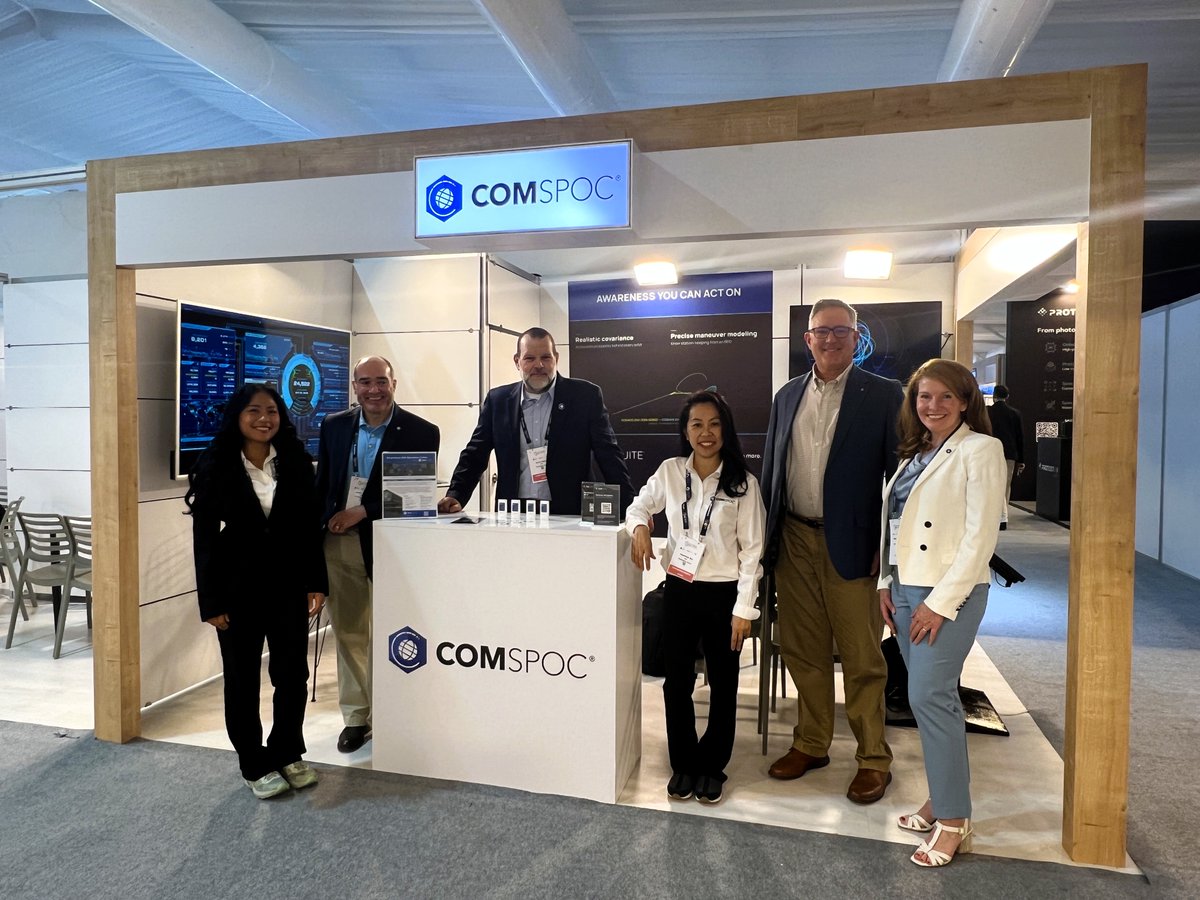
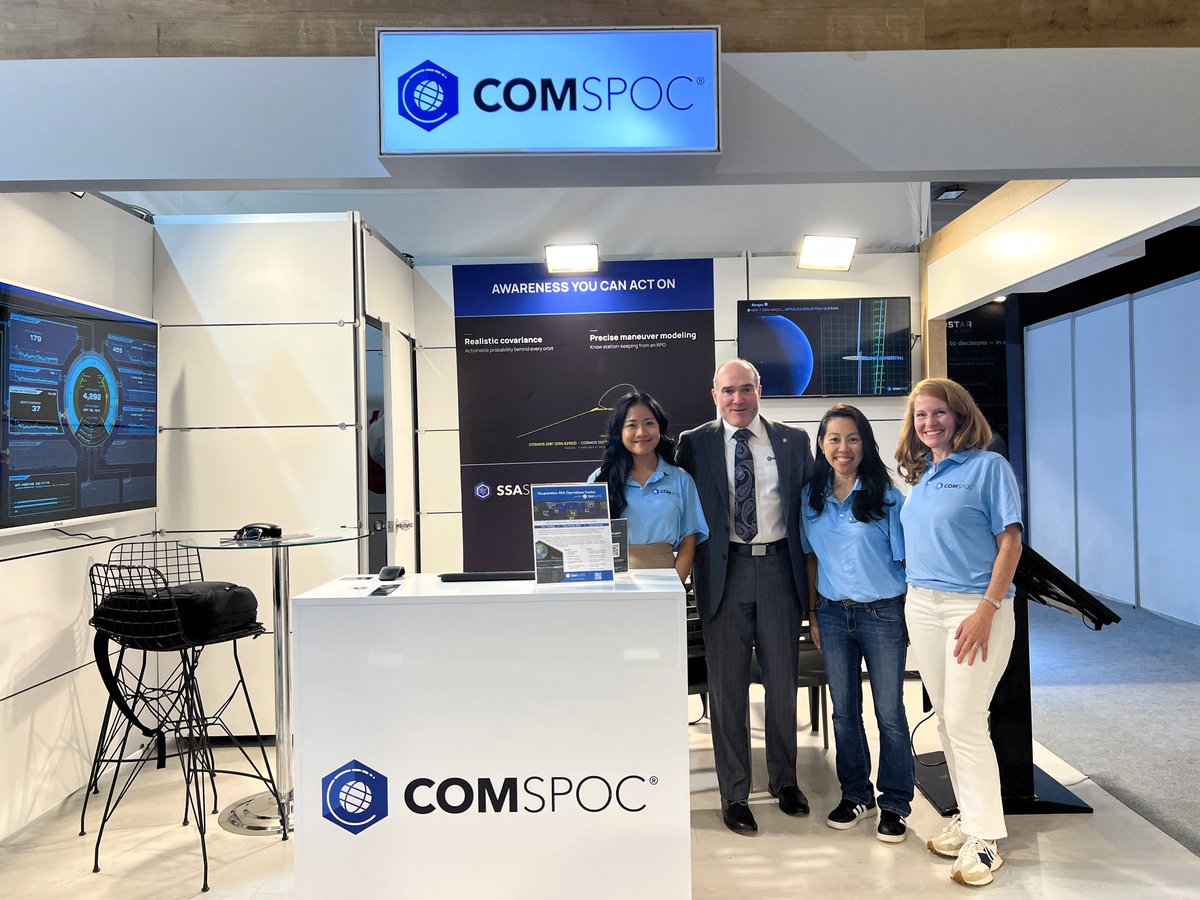
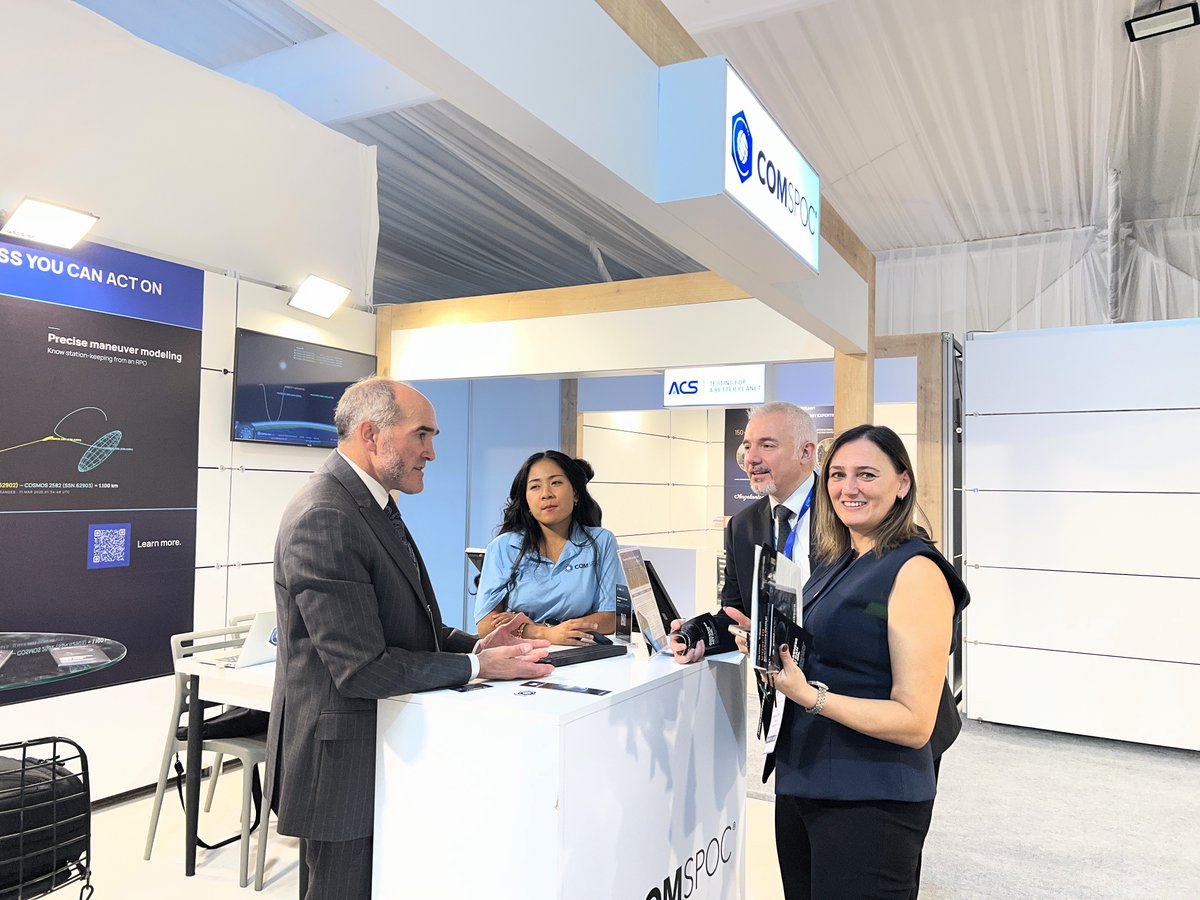
Last week, the COMSPOC team joined the global space community at #IAC2026 in Antalya, Turkey! 🚀
We welcomed visitors to our booth to discuss our space situational awareness software products, as well as our latest research — including papers presented at the conference by Navapan Khunnasarn and Dan Oltrogge.🛰️
Thank you to everyone who stopped by our booth or attended our presentations. #IAC2026Antalya
COMSPOC is featured in “Space Wars,” a new @novapbs documentary examining the escalating military struggle to control space, the threats facing satellites we rely on, and what can be done to protect them. Learn about the technology and strategy of a rapidly developing arms race and hear how experts are wrestling with the implications of this looming conflict. 🌌
“Space Wars” premieres tonight at 9 p.m. ET on @PBS and online ➡️ https://t.co/vjt8LFtCbY
The COMSPOC team is in Antalya, Turkey, this week for @IAC2026Antalya! We’re meeting with members of the global space community and sharing how our commercial-off-the-shelf SDA platform delivers decision-quality information for space operations.
If you’re attending, stop by Booth 2G-03 in Hall 2 to meet the team. #IAC2026 #IAC2026Antalya
It’s @WorldSpaceWeek, the largest annual event celebrating achievements in space science and technology.
This year’s theme, “Rocket Revolution,” highlights the advances that are changing how we reach space and the people behind them. We recognize the scientists, engineers, operators, educators, and students whose work continues to expand our access to space. 🚀🌌 #WorldSpaceWeek
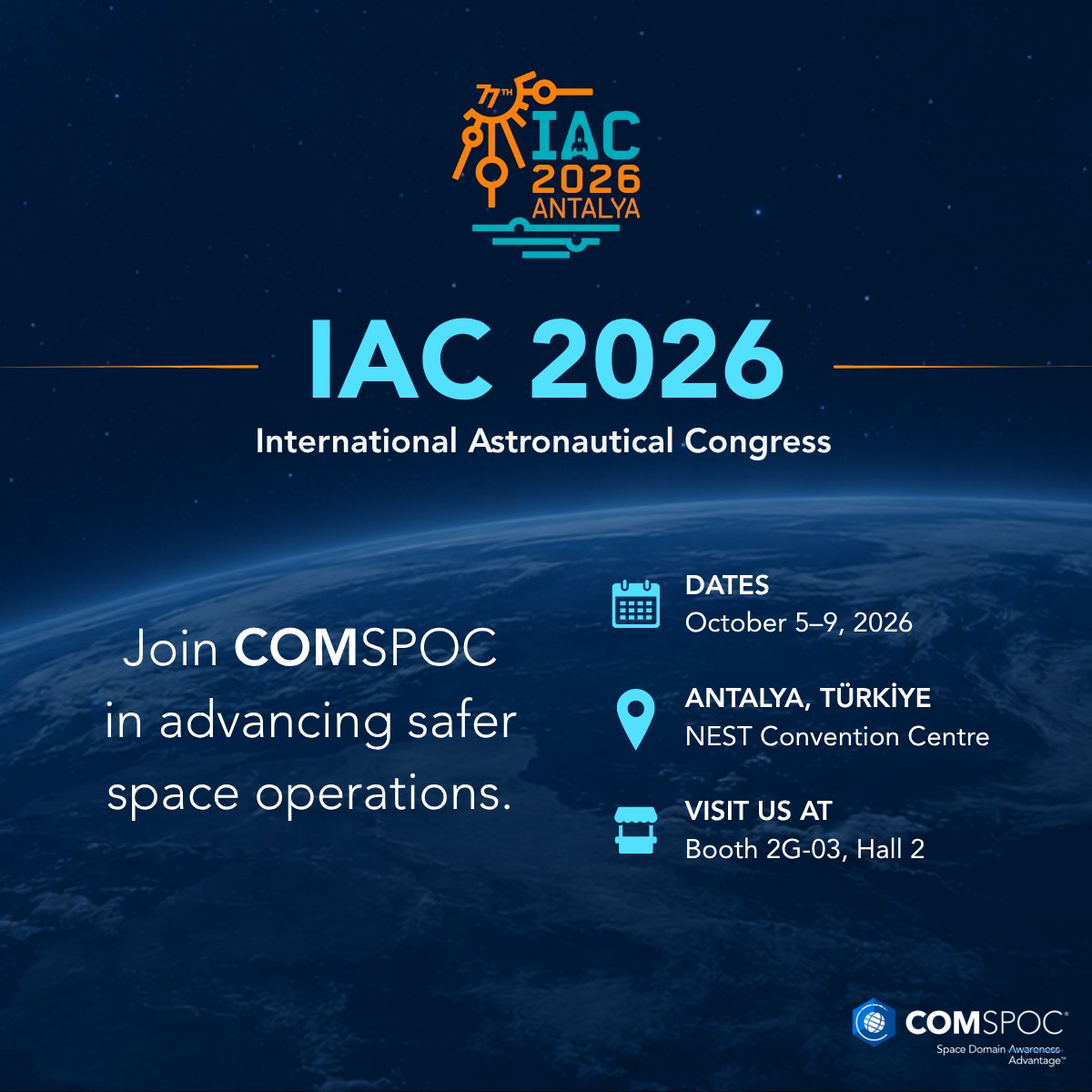
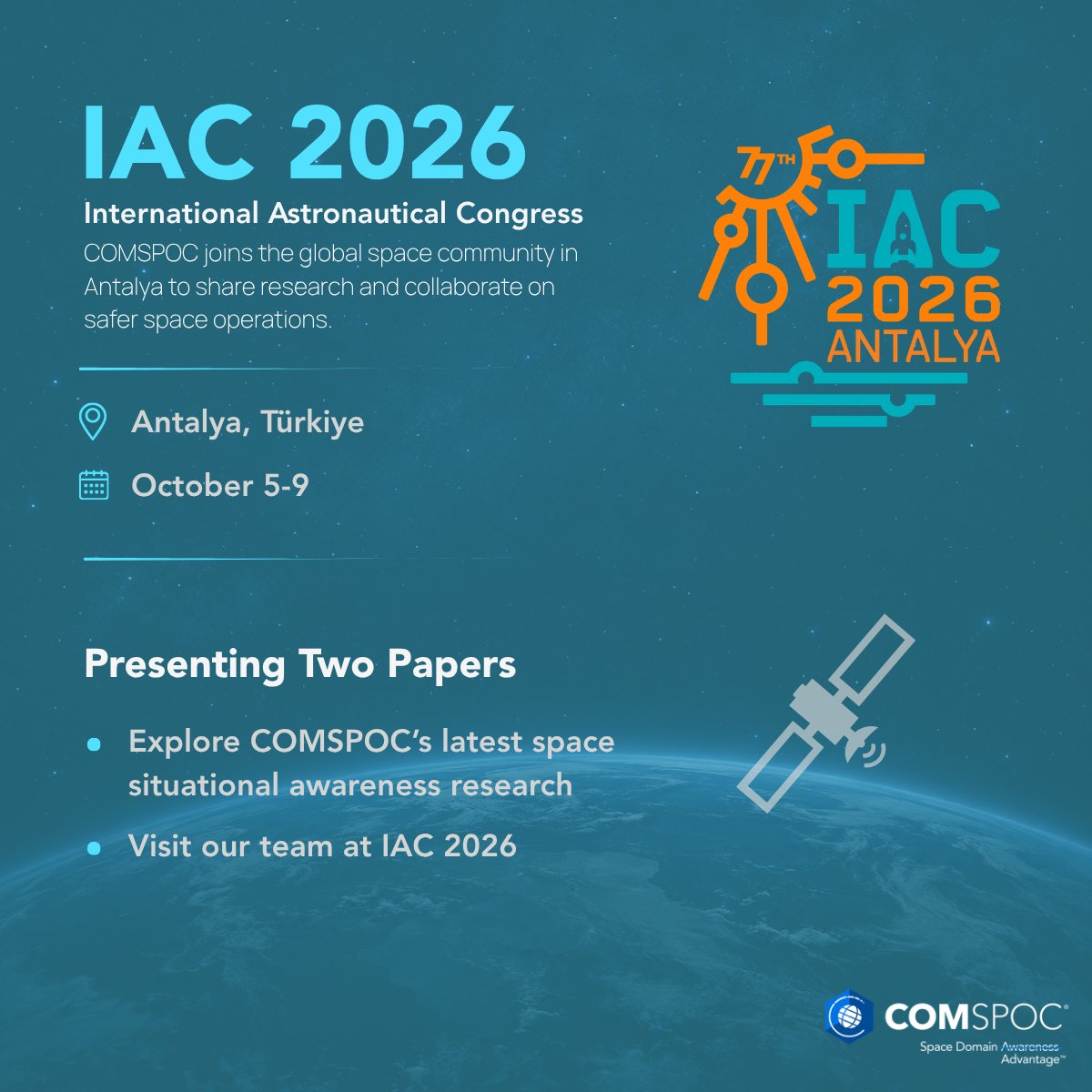
COMSPOC will be at @IAC2026Antalya in Antalya, Turkey, Oct. 5-9. Visit us at booth 2G-03 in Hall 2 to meet the team and learn how our commercial-off-the-shelf SDA platform delivers decision-quality information for space operations.
Operational systems engineer Navapan Khunnasarn will present “ Large Constellation Re-entry and Stratospheric Impact: A Decision Criterion for the Detection-Commitment Gap,” on Oct. 8 at 4:20 p.m. Chief scientist Dan Oltrogge will present “Assessing Effectiveness of Mainstream Probability-Based Collision Avoidance” on Oct. 9 at 2:45 p.m.
We love hosting guests at our Exton HQ, and unlike Benjamin Franklin we don't think that more than three days is too long. That's why we're excited to welcome @FACh_Chile (Chilean Air Force) aviadors Matias Araya and Diego Becerra for two months of SDA training and lots of expertise and cultural exchange.
Also pictured, @ItalianAirForce Maj. Gen. (Ret.) and @esa astronaut Roberto Vittori and COMSPOC VP Mike Wasson.
COMSPOC is heading to Antalya, Turkey, for the 77th International Astronautical Congress (IAC), Oct. 5-9.
Two members of our team will present:
• Navapan Khunnasarn, operational systems engineer — “Mega Constellation Re-entry and Stratospheric Impact: A Review of Divergent Estimates and a Decision Framework for the Detection-Commitment Gap,” Oct. 8 at 4:20 p.m.
• Dan Oltrogge, chief scientist — “Assessing Effectiveness of Mainstream Probability-Based Collision Avoidance,” Oct. 9 at 2:45 p.m.
Thank you to @iafastro for organizing IAC 2026 and to @tuajans and @sahaistanbul Aerospace Cluster for hosting.
If you’re attending @IAC2026Antalya, join their sessions and meet the COMSPOC team at booth 2G-03, Hall 2. 🤝
Quick Update on SJ-31
SJ-31 (SSC.69570) launched 16 Jun from Xichang with a stated mission of space environment detection. Its orbit is Molniya-like, but the high point sits near the equator ~4,100 km above the GEO belt and slowly walks past every GEO longitude. It looks down on the belt without entering it. Where it crosses the equator it stays more than 3,100 km outside equatorial GEO belt with a 2.82 km/s speed difference, so there is no close-approach case.
At 28 Sep 12:00 UTC, its apogee was 39,918 km, with 63.5° inclination, 0.69 eccentricity, and 172.0° argument of perigee. The orbit has not changed in the past two weeks. Visualization video includes SJ-31 in inertial frame and example GEO US assets in fixed frame.
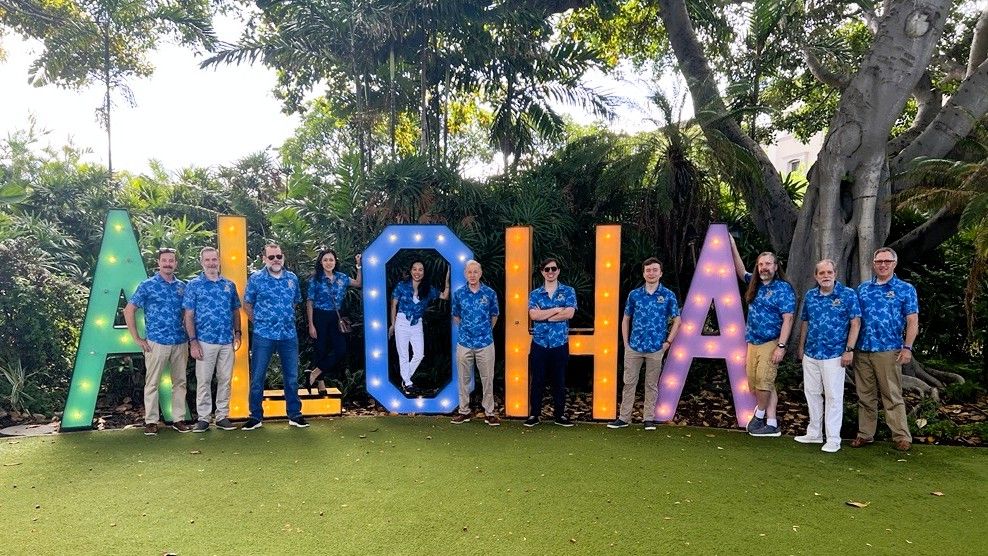
Thank you to everyone who joined us in Maui last week at @amoscon. 🌺
See the highlights, request the materials from the short course we presented with our friends at @KratosDefense, and review the members of our team who attended: https://t.co/XVoyUt3mDf #AMOS2026