📊Week 3 survey results have been published! Access topline national and regional findings for 10 states and 8 MSAs as well as microdata. Dive in here: https://t.co/l3zrcngKsk #opendata@openscience#evidencebased#COVID19
NEW in @Nature w/ our @COVIDImpact Survey data collected in 2020: "the differential mental health needs of different age groups & point to the marked necessity for differentiated & targeted responses to the mental health effects of #COVID19 by age group." https://t.co/TkId3RzJrc
NEW research using @COVIDImpact data: "Individuals with CVD and greater burden regarding social determinants of health were less likely to practice COVID-19 risk mitigation measures such as personal protection and social distancing" cc @Data_Foundation https://t.co/MiIt4aIUlk
#OIGI Director @AbigailWozniak fielded the @COVIDImpact study to analyze effects of the pandemic on physical, mental, & economic well-being. Declines were largest for Hispanic, younger & lower-earning individuals as well as people w/school-age kids. 5/
https://t.co/atHqVj0AwG
REALLY proud to see @COVIDImpact data as the foundation for @CDCgov's MMWR yesterday.
These are key for disease surveillance. Impressed that @MinneapolisFed could contribute across field lines w support for innovative data. + Congrats @data_foundation!
https://t.co/qkspCfbdT8
Work by the @COVIDImpact survey shows the effect the pandemic has had on MN families that rely on pre-K and child care. See this data and more in new issue of For All magazine from the Opportunity & Inclusive Growth Institute at the Minneapolis Fed. #OIGI https://t.co/s4eiRbXX2f
Director of the Opportunity & Inclusive Growth Institute @AbigailWozniak discusses her work with the @COVIDImpact Survey in the new issue of #ForAll magazine. Read this article and more from the current issue: https://t.co/t3oS1424QP #OIGI
Nice to see the @Data_Foundation@COVIDImpact Survey continuing to provide valuable insights for researchers and the public. E.g., @HowardU analysis of economic impacts stratified by race/ethnicity: https://t.co/31cN71YOt2
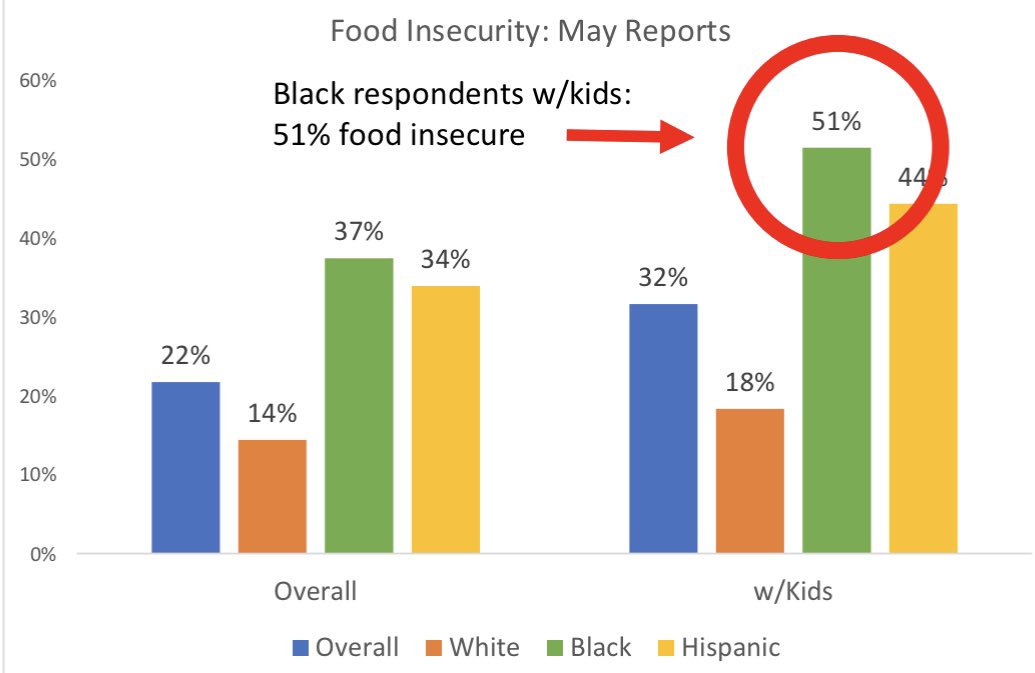
ICYMI: A MAJORITY of black respondents w/kids reported #food insecurity in May in @COVIDImpact.
For the nerds: to be sure, there is a confidence interval on that estimate. 0.40-0.63. All way too high.
Director of the Opportunity & Inclusive Growth Institute @AbigailWozniak discusses her work with the @COVIDImpact Survey in the upcoming issue of For All magazine. Don’t miss it. Subscribe today. https://t.co/Y15IYz9EVS
Director of the Opportunity & Inclusive Growth Institute @AbigailWozniak discusses her work with the @COVIDImpact Survey in the upcoming issue of For All magazine. Don’t miss it. Subscribe today. https://t.co/NRG8iCmWNl
📊Week 3 survey results have been published! Access topline national and regional findings for 10 states and 8 MSAs as well as microdata. Dive in here: https://t.co/l3zrcngKsk #opendata@openscience#evidencebased#COVID19
Happy I could share some of what we've learned from @COVIDImpact w @SahanJournal. They provide one way to get what we learn to the most affected communities.
https://t.co/u8TesocDty
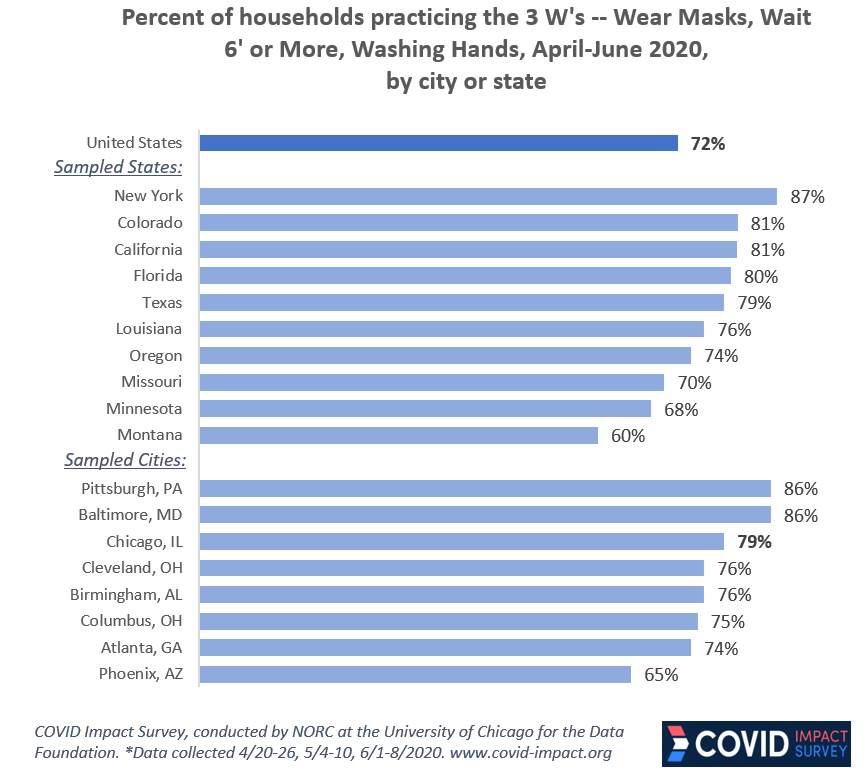
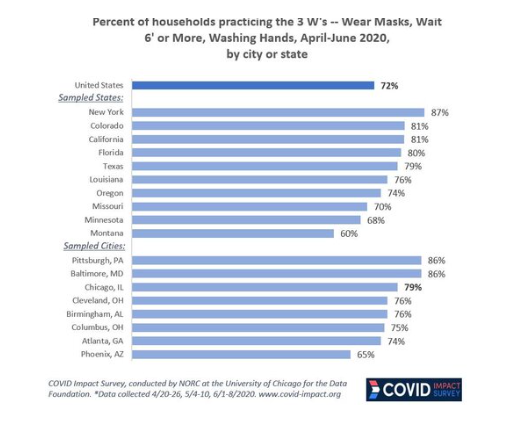
According to the @COVIDImpact survey, about 72% of U.S. households were practicing the 3 W’s (wear face masks, wash their hands, & wait/practice social distancing).
@NickRHart of @Data_Foundation discusses differences in compliance across states/cities: https://t.co/s8l8nLYwhM
Current KFF hotposts include 11 of the 18 sub-national geographies from the @COVIDImpact Survey. Results posted here: https://t.co/rUickcnPEt https://t.co/32e3plag00
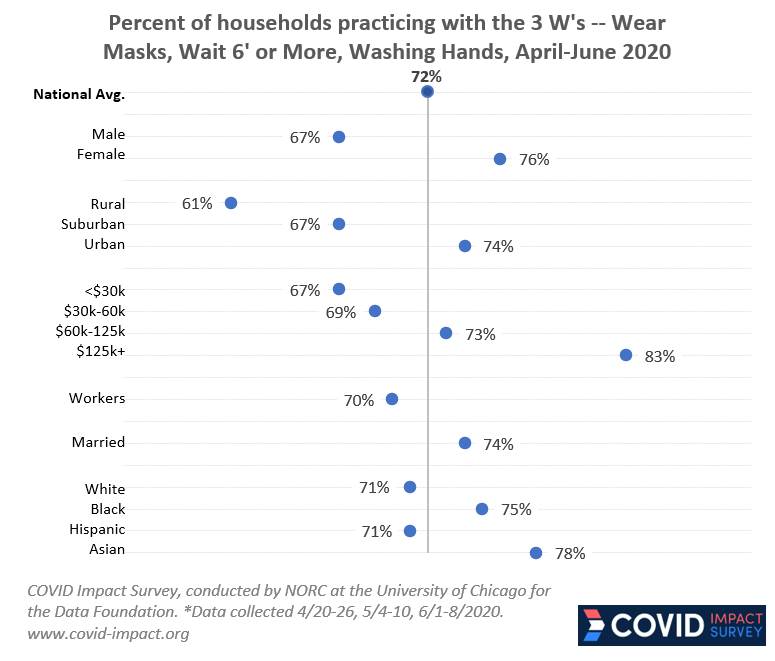
Compliance with the 3 w’s (wear, wash, & wait) in the United States is high but varied, according to self-reports. Between April and June an average of 72% of households were practicing the 3 W’s. More findings in our recent post: https://t.co/0Vonl6UnDK #opendata#openscience
American households continue to experience hardships and implement behavioral changes due to the #COVID19 pandemic, though some indicators suggest modest economic improvement over the past month. Read our latest summary of week 3 findings. https://t.co/EUtjPDDGmp #opendata
"Food insecurity remains elevated, with 20 percent of households indicating in June they often or sometimes ran out of food before having enough money to buy more." More insights on week 3 findings in our recent post ⤵️
https://t.co/EUtjPDDGmp #opendata#Covid_19#openscience
Blacks Americans are more likely to say a relative or close friend has died of COVID-19, according to an analysis of three surveys. Eleven percent of African Americans say they were close with someone who has died compared with 5% of Americans overall. https://t.co/yL6Rney15a
Blacks Americans are more likely to say a relative or close friend has died of COVID-19, according to an analysis of three surveys. Eleven percent of African Americans say they were close with someone who has died compared with 5% of Americans overall. https://t.co/yL6Rney15a