@realEstateTrent Ha - built one a few years ago. Simple test was to swim in each. The fiberglass one felt like a bath tub. Gunnite felt the best on the feet 😀
KKR is buying at 4% yr 1 yield and here I am saying no to mezz on a core newly built and leased Brooklyn multi with 11% current pay at 1.05x DSCR and 5 yr yield maintenance as I think it’s 90% LTV and I am not getting paid enough! I guess I am the schmuck!
Some color into $KKR first earnings call following their $2 billion multi acquisition from the Quarterra portfolio:
👇👇
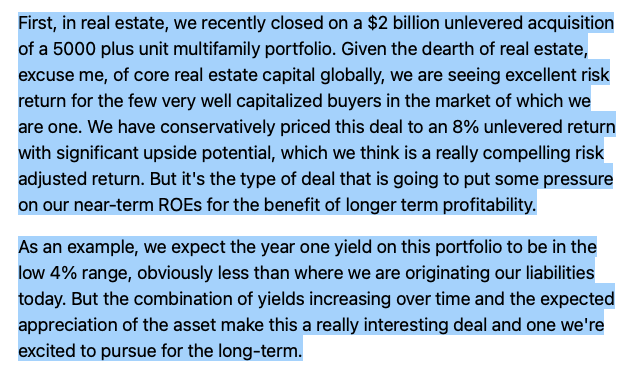
"We have conservatively priced this deal to an 8% unlevered return with significant upside potential, which we think is a really compelling risk adjusted return. But it's the type of deal that is going to put some pressure on our near-term ROEs for the benefit of longer term profitability."
"As an example, we expect the year 1 yield on this portfolio to be in the low 4% range, obviously less than where we are originating our liabilities today. But the combination of yields increasing over time and the expected appreciation of the asset make this a really interesting deal and one we're excited to pursue for the long-term."
@LeylaKuni The 90% CLTV deal is in a lower risk bucket for the one providing the 90%. But ya, agree neither deal is appealing enough but only one person is walking away and that person WON’T get paid.
@multifamilyman_ Already happening. There are deals in the CMBS market at 7% DYs for stabilized assets. Also lost a deal where a lender agreed to a standstill for 120 days in case of default! Money got to get deployed!
A very different dynamic in the real estate debt world playing out since about a year. Every Multifamily development deal I look at pencils for the debt but on my proforma equity loses money or barely breaks even. Every construction loan take out we quote on a lease up deal, the equity is down 10-25%. Can we really have good debt deals when the equity is losing money? Time will tell.
@hitsamty About $160MM of The hold back is for potential litigation expenses. Bond holders will get money back in case the worst case scenario does not play out.
The only ones eaten alive were the lenders! French/Korean etc. Natixis led consortium owns the leasehold now and South Korean firm owns the fee. Drama will replay in 2 years and ultimately one group will have to buy out the other! If there is a recession and hotel does not do well then ground owner will buy leasehold. And if hotel continues to do well then lease owner will make a deal for ground. Stay tuned!
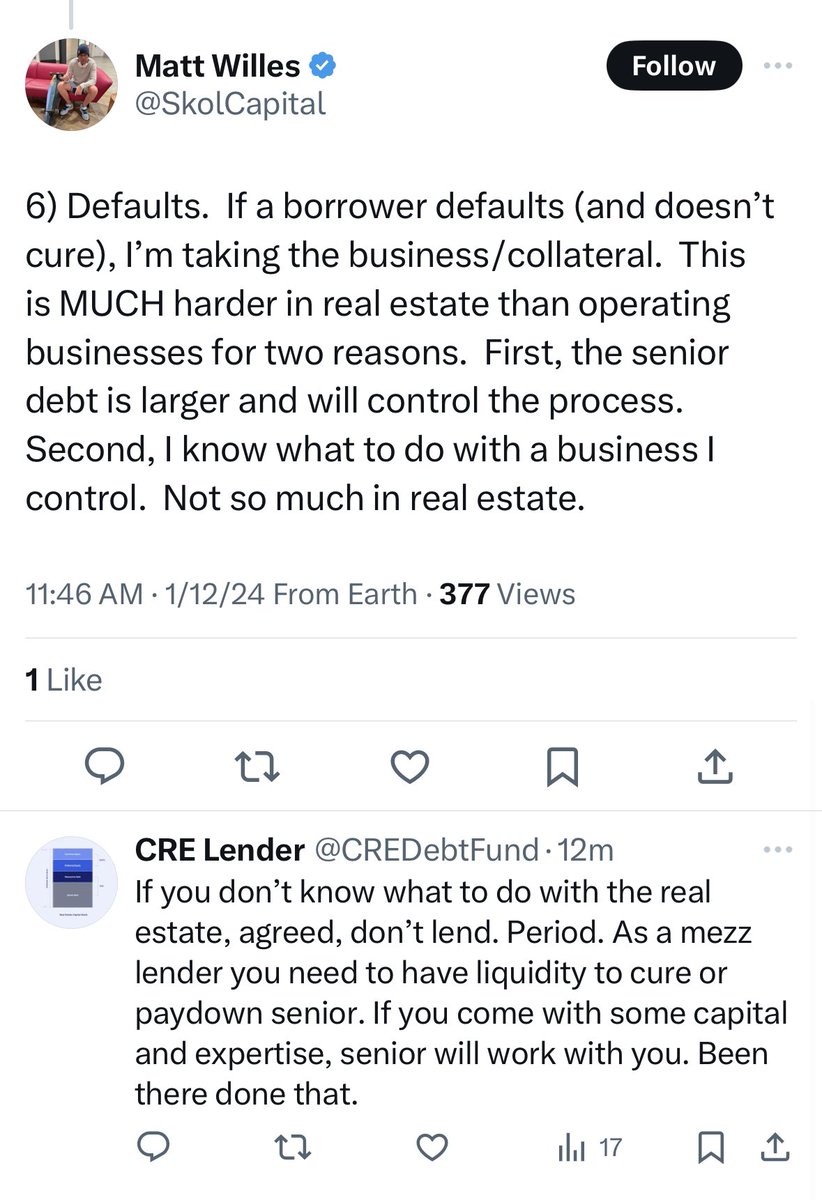
@SkolCapital raised some good questions on the “why” of real estate lending - especially subordinated lending. Here is an attempt to respond. Always good to think about the basics. Thanks for your questions! On #1 below, I will learn to type “humble” soon! 5 and 6 follow.
@SkolCapital If you don’t know what to do with the real estate, agreed, don’t lend. Period. As a mezz lender you need to have liquidity to cure or paydown senior. If you come with some capital and expertise, senior will work with you. Been there done that.
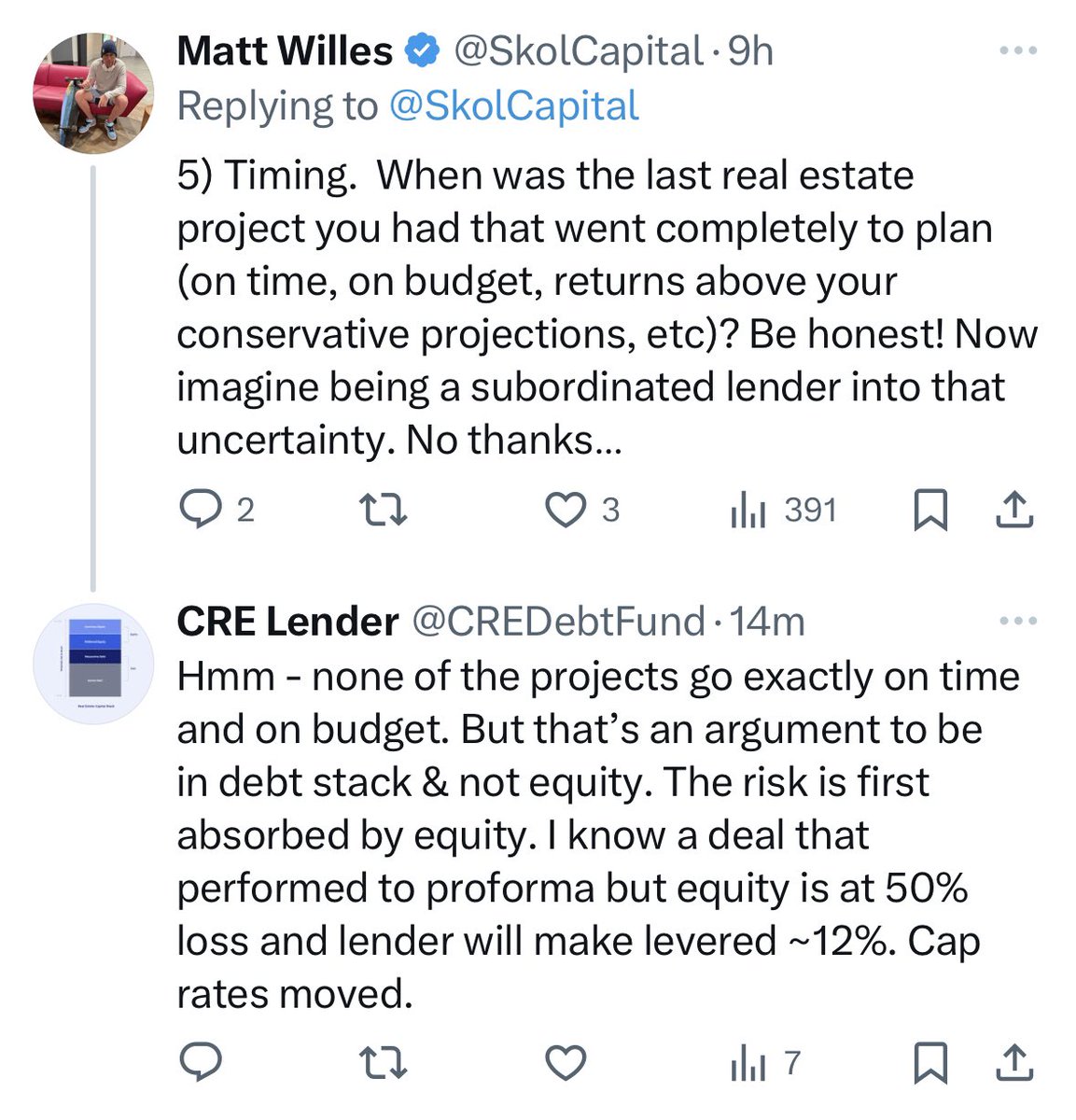
@SkolCapital Hmm - none of the projects go exactly on time and on budget. But that’s an argument to be in debt stack & not equity. The risk is first absorbed by equity. I know a deal that performed to proforma but equity is at 50% loss and lender will make levered ~12%. Cap rates moved.
@SkolCapital Don’t know non real estate debt market. So can’t comment on this. I assume “private debt” providers are driving up competition in business lending too. Bottom line - once you are an “established player” and are know to “show up” at the closing table then half the battle is won.
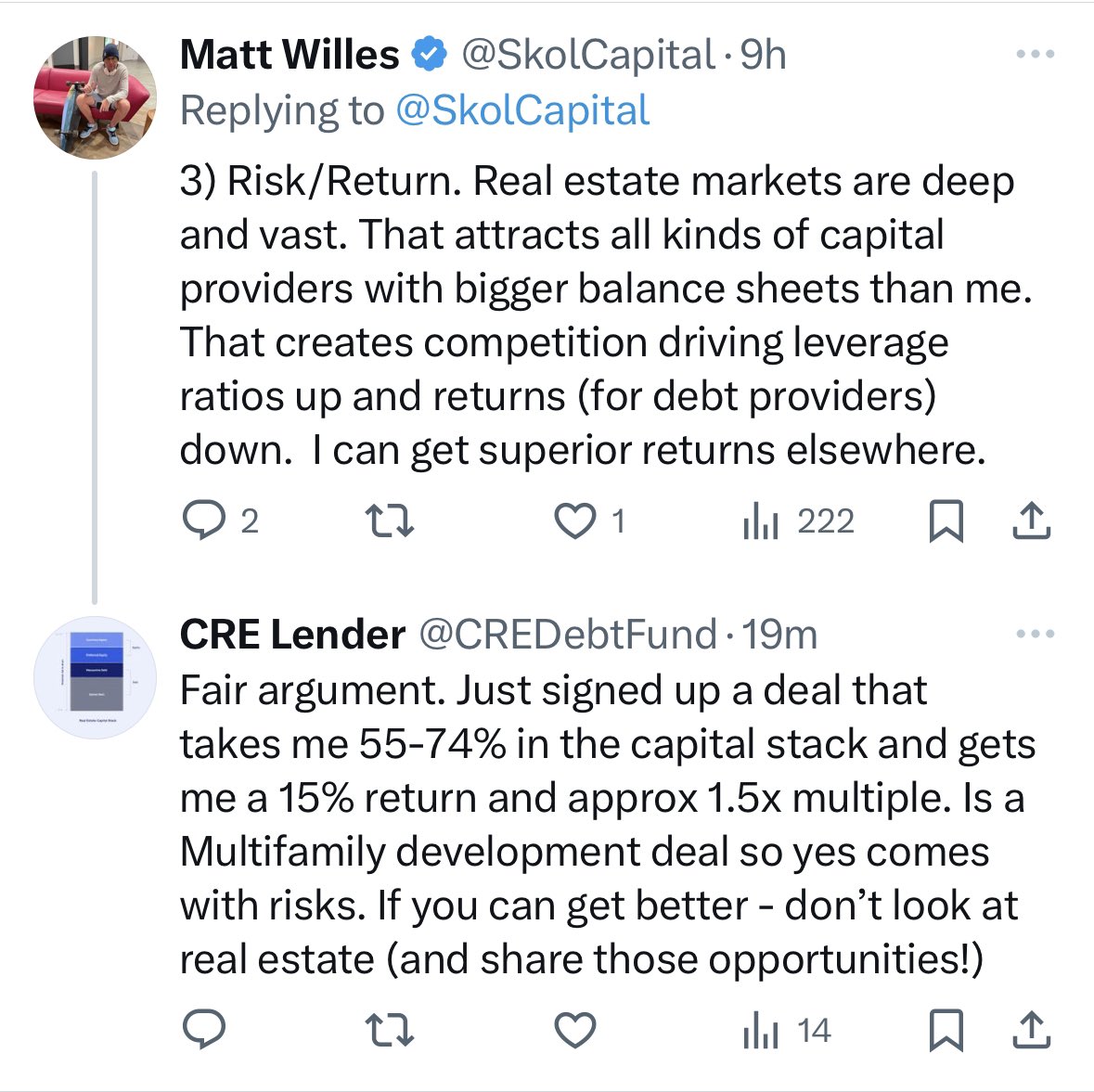
@SkolCapital Fair argument. Just signed up a deal that takes me 55-74% in the capital stack and gets me a 15% return and approx 1.5x multiple. Is a Multifamily development deal so yes comes with risks. If you can get better - don’t look at real estate (and share those opportunities!)
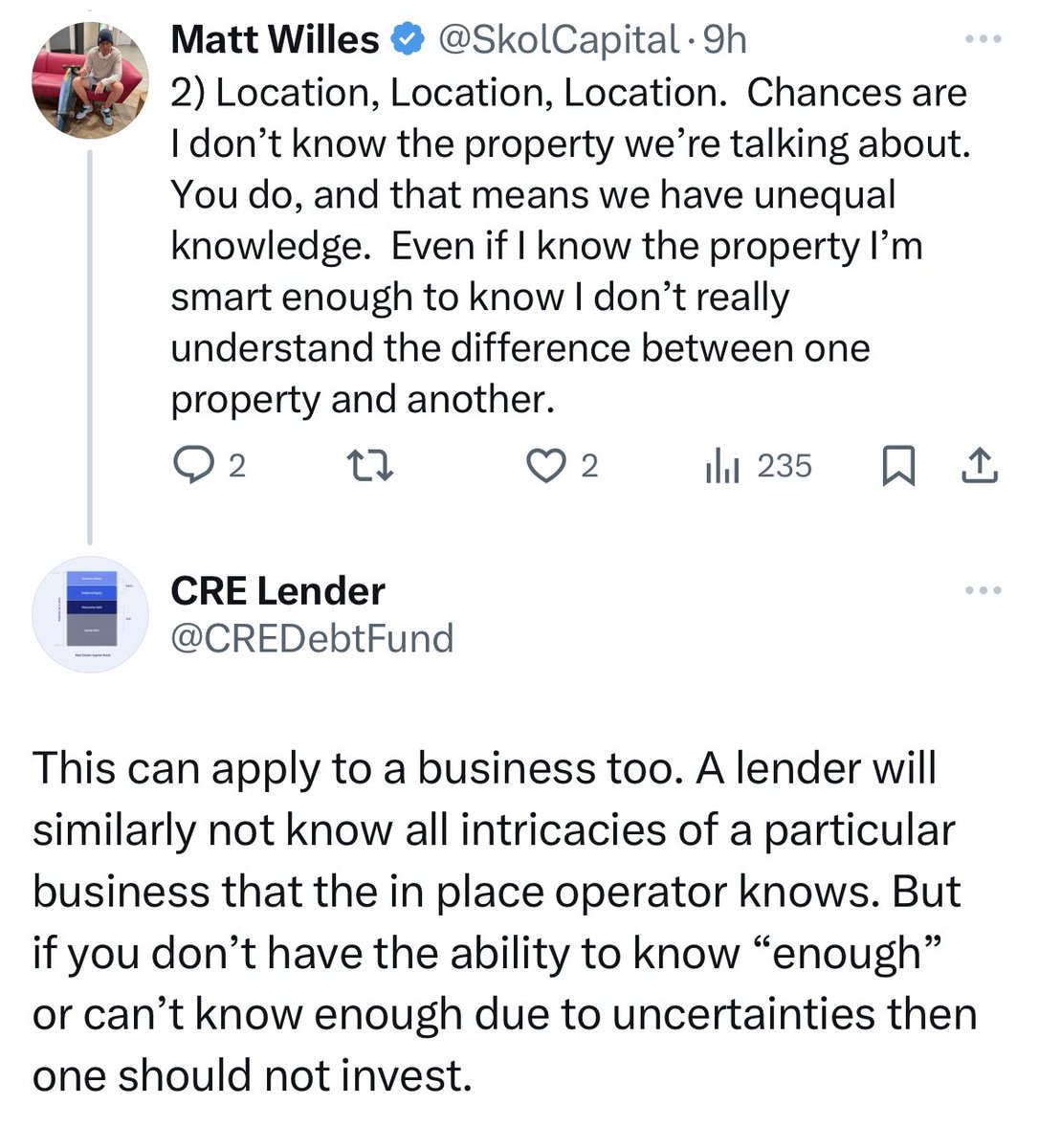
@SkolCapital This can apply to a business too. A lender will similarly not know all intricacies of a particular business that the in place operator knows. But if you don’t have the ability to know “enough” or can’t know enough due to uncertainties then one should not invest.
@SkolCapital Hume attempt at a response. What should matter is the after tax return and how it compares with the risk you are taking. There is a place for both debt & equity exposure in a portfolio, not an either or situation. Pref Equity, appropriately structured can get you tax benefits.
@thepupil11@EllliotttB Not sure if disposition yield is same as buyer acquisition cap rates. Especially on older west coast assets, there might be a significant tax increase for next buyer, making the cap rate much lower that the disposition yield.