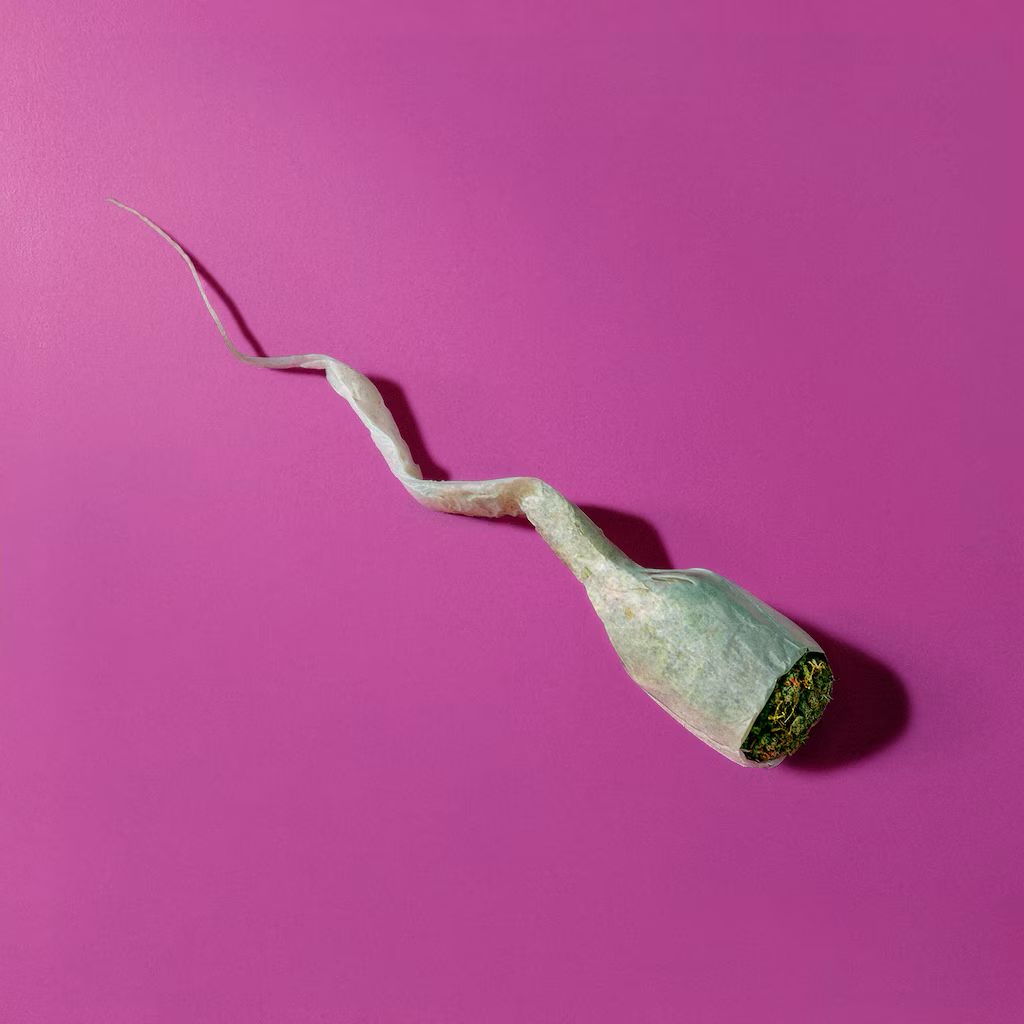
Marijuana entrepreneurs in America have high hopes for growth in the EU, which has friendlier regulations and lower taxes. Here’s why it could bloom into a $50 billion market that eclipses the U.S. https://t.co/i8J68NiSh4 (Illustration: Cecilia Runxi Zhang; Photo: Getty Images)
For the fourth-annual Cannabis 42.0 list, Forbes is celebrating the entrepreneurs, innovators and disruptors who are finding success the state-regulated cannabis market
https://t.co/3lcEbd6Guf
🇧🇷 Brazilians may possess up to 40 grams of cannabis and home-cultivate up to six marijuana plants without the threat of arrest or incarceration, according to a determination by members of the Supreme Federal Court.
https://t.co/d5rs9wtYw5
This plant was started in Ocean Forest and has been fed 3+ ec from the start.
Let’s talk about EC for a minute.
For years, the standard advice was to run a low EC—starting plants at 1.5 or under, maybe pushing to 2.0. Anything above 3.0 was treated like it would fry your plants, even in flower. But the truth is, that whole approach came out of growers operating in sub-optimal environments to begin with.
Back in the HPS era, we had high heat, high humidity, poor environmental control, and lower pH ranges. None of it was really ideal. So to compensate, people had to run lower EC just to keep the wheels from falling off. That setup led to results that were “good enough,” and the mentality stuck.
Then came LEDs. People dropped new lighting tech into the same old environment and wondered why everything fell apart. Spoiler: it wasn’t the lights—it was the environment.
I started pushing higher EC levels years ago—3.5, 4.0, even up to 5.0+ in the right situations. I’ve gone as high as 6 or 7, not all the way through the cycle, but long enough to observe the plant’s response. And guess what? No burn. No toxicity—as long as the environment is dialed.
Because here’s the real takeaway:
If your environment is on point—light, temps, humidity, —then the plant will pull what it needs. Even if nutrients are available in excess, the environment is what dictates demand. If it’s off, your plant isn’t going to perform, no matter what your feed chart says.
So no, you don’t need to baby your plants with sub-3.0 EC. In fact, in a modern, optimized setup, you probably shouldn’t. 3.0–4.5 works great for most plants. Higher than that? Maybe. Necessary? Probably not. But also not inherently harmful.
And yeah—I’ve been saying this for 4+ years. Running 4.5 EC back when people acted like it was crazy. Now that it’s becoming more accepted, I keep hearing the same chorus: “Yeah bro, I already knew that.”
No.
You didn’t.
🚨 WEED MAY BE WRECKING YOUR SPERM — HERE’S THE SCIENCE
THC messes with sperm shape, speed, and power — and yes, there’s real data behind it.
A study of 229 Jamaican men found moderate cannabis users were 3.5x more likely to have misshapen sperm.
Another study of 113 men showed lower sperm motility in cannabis users compared to both smokers and non-smokers. Blame THC — it damages the mitochondria, aka the sperm’s engine.
And if that wasn’t enough, multiple studies link cannabis to lower sperm count and concentration, too.
Doctors say even once-a-week use could cause issues. Want strong swimmers? You might want to chill on the THC.
Source: NYT
Let me try and drive this home one more time. People underestimate how much inefficiency costs over time.
If you run back-to-back grows with no downtime, here’s what the math looks like over 5 years (260 weeks):
•12-week cycles = 21 full runs
•10-week cycles = 26 full runs
•8-week cycles = 32 full runs
That’s 11 more harvests in the same time frame just by trimming the cycle time.
But it goes deeper than just the number of runs…
An 8-week cycle is hands-off. No veg, no topping, no defoliation. Minimal labor. You’re not growing parts of the plant that’ll end up stripped and trashed later.
At 10 weeks, you’re starting to get overcrowded. You’ll have to thin the canopy, maybe even start managing stretch. Still manageable—but you’re now spending real time just to keep things under control.
At 12 weeks, you’re full-on babysitting. Heavy defoliation, lower stripping, constant intervention. You’re dedicating time to grow biomass that shouldn’t have been there in the first place. Labor goes up. Efficiency drops. And you’re stuck in a cycle of correcting mistakes you created by letting things go too far.
The biggest misconception? That longer cycles give better yield.
In reality, a properly dialed canopy, with plant count adjusted to fit your timeline, will give you comparable yields—without all the extra labor, time, or overhead. You’re not losing weight… you’re losing wasted motion.
And let’s not forget:
Rent doesn’t care how slow you grow.
Lights don’t care.
Nutrients don’t care.
Equipment wear doesn’t care.
Fixed costs keep ticking, whether you’re harvesting or just maintaining.
People often talk about yield per run—but the real metric is yield per year, per square foot, per dollar of labor, and per kilowatt-hour. And on those terms? The faster, leaner approach wins.
11 extra harvests in 5 years isn’t a small gain—it’s a different business model.
Im Koalitionsvertrag wird das Cannabis-Gesetz, das unter der Ampel-Regierung eingeführt wurde, nicht sofort zurückgenommen. Stattdessen einigten sich Union und SPD darauf, eine „ergebnisoffene Evaluierung“ des Gesetzes durchzuführen. Diese Evaluierung ist für Herbst 2025 geplan
Münster
Kriminalitätsstatistik 2024,
Allgemeine Verstöße gegen das BtMG mit Cannabis von 1154 Fällen auf 341 Falle gesunken, Fahrraddiebstahl 4.479 Fälle
@BezRegMuenster@muenster4life