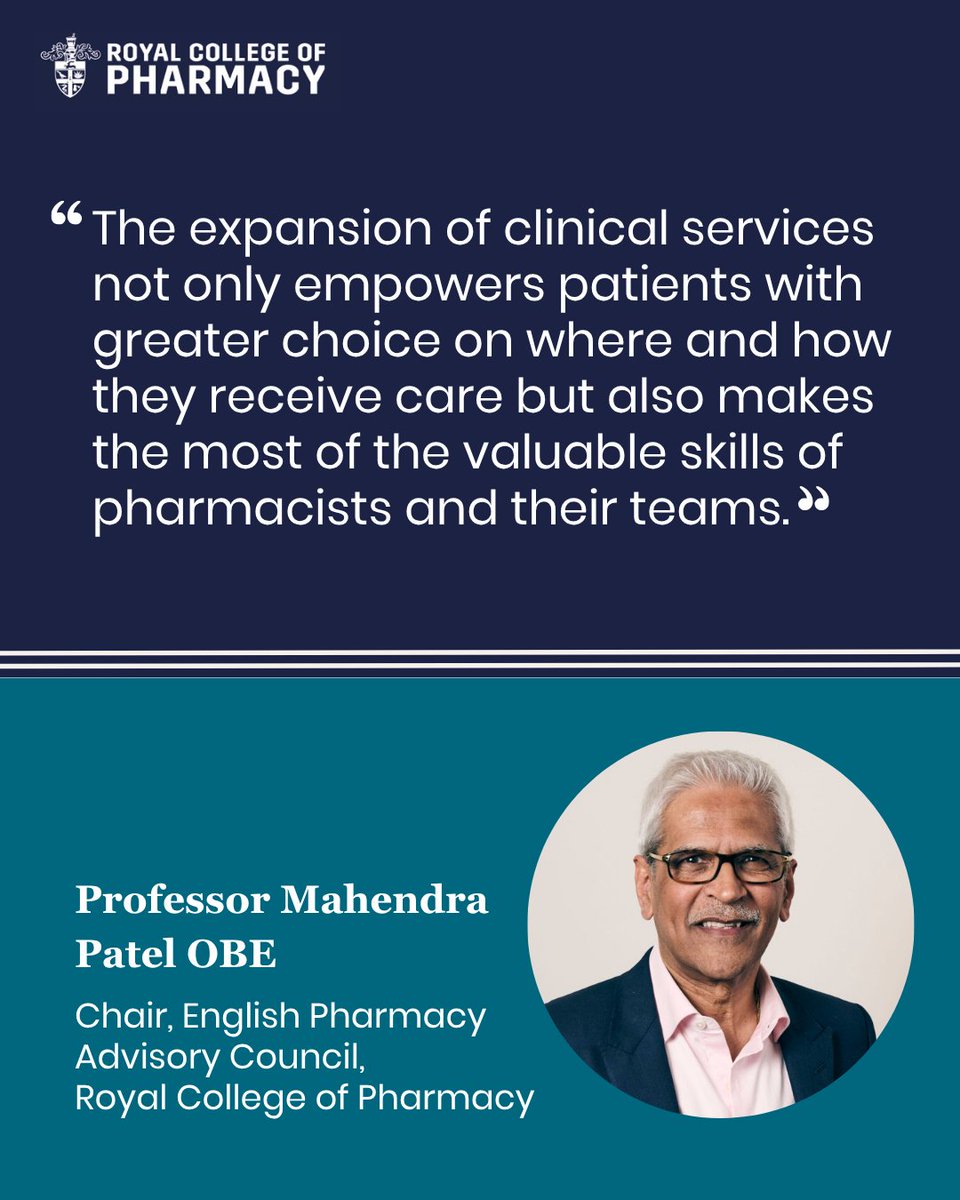
Pharmacy First in England is expanding to include five more common conditions.
We welcome the expansion, but investment in the pharmacy workforce and infrastructure must keep pace with growing demand.
Read our full response: https://t.co/elppNMpPOK
@drmahendrapatel
We've published our latest Medicines Used in Mental Health statistics, covering prescribing trends across England from April to June 2026.
The data analyses prescribing across 5 key drug groups, including antidepressants, ADHD medications and drugs for dementia.
🧵Key findings
Pharmacy First is expanding, with 5 new pathways. A positive step for patient access, recognising pharmacists’ clinical skills—but implementation, capacity, governance and integration with general practice will be crucial.
#PharmacyFirst#CommunityPharmacy#NHS#Pharmacy
@GuyHarvey08ao Absolutely agree. Ultimately, it should be a patient-centred decision. Even when a medicine has a clear purpose, is safe and offers benefit, the patient’s preferences, priorities and right to choose whether to take it must remain central to the conversation.
Polypharmacy is one of the biggest challenges in primary care. Balancing multiple conditions, medicines, interactions and side effects is complex.
The goal isn’t simply to reduce medicines—it’s to ensure every medicine has a purpose, remains safe, and adds value. 💊
🚨 EXC: An over-prescribing epidemic is sending 1,000 elderly patients to A&E every single day - a consequence of a fragmented NHS unprepared for the ageing silver tsunami heading its way as 468k baby boomers turn 80 this year: https://t.co/owHex6QSd7
The NHS Leadership and Management Framework sets consistent standards aligned to the 10 Year Health Plan. It’s for managers at every level, from ward to board, clinical and non-clinical, and includes a supporting self-assessment tool: https://t.co/oUQp6cUv1r
🚨 SOPs for urgent & time-critical medicines
❤️ Palliative & end-of-life care
£20m scheme, with fewer requirements than previous years.
A welcome shift towards quality, clinical competence and patient safety. (https://t.co/OryD9LF8WQ)
📢 Pharmacy Quality Scheme 2026/27 update, a stronger focus on clinical practice and professional development.
Key areas include:
💊 Pharmacy First clinical audit & peer discussion
🫁 Respiratory therapeutics & asthma training
This exclusive scoping review by pharmacy leaders has identified priority actions to support safe, confident and sustainable prescribing practice — particularly in community and primary care settings
#independentprescribing#reviewarticle#ukpharmacy
https://t.co/z9y47cam3n
@PJOnline_News These decisions are rarely binary. They require individual risk–benefit discussions, considering illness severity, medication profile, and patient preference. Shared decision-making and close follow-up are key.
Worth knowing: statins are well-studied, safe for most people, and really effective at lowering cholesterol and reducing heart attack and stroke risk. They help a lot of people live longer, healthier lives https://t.co/ig7eCE7MpV
Current shortages in the UK pharmacy wholesale market:
• Aspirin 75mg EC
• Propranolol 80mg MR
• Quetiapine MR
• Oxybutynin
These ongoing supply issues put pressure on pharmacies and risk patient safety. What are @MHRAgovuk doing to support the pharmacy wholesale chain?
Front page of @guardian covers millions who are going to A&E for minor ailments that could be treated in a community pharmacy. As I say in the article ‘Pharmacists are highly trained professionals and can supply prescription medicines on the NHS for a range of common illnesses’.
James Watson (1928–2025) — co-discoverer of the DNA double helix and a pioneer whose work reshaped biology and medicine. His discoveries opened the door to modern genetics and the genomic era. #RIP#ScienceLegend https://t.co/ZoaCJ0pSX2