@CSEIndia's Research Programme on Climate Change and Green Economy championing study of the most pressing climate policy issues relevant for the Global South
🎙️New Carbon Politics episode out now!
Can Climate Finance Be Too Expensive?
CSE's @SehrRaheja & Neha Khanna from @climatepolicy discuss the high cost of capital for green technologies in the Global South and how this issue can be addressed.
Watch here: https://t.co/KisiNUqFoG
The @WMO predicts a 90% probability of El Nino in the coming months. But what does this mean for India specifically?
@rudrathavinashi of @CSE_Climate gives his comments to @kshitizreal who reports on the issue for @firstpost
Read the full piece here: https://t.co/k88gHXtgaY
🏦The submissions reveal that the debate is no longer only about ambition.
It's increasingly about who pays, how the two transitions are financed, and how countries balance climate goals with development priorities.
Read the full article here: https://t.co/xcGaR2IYhp
🇺🇳The COP30 Presidency launched two roadmap processes outside formal UN negotiations
1⃣Transitioning away from fossil fuels (TAFF)
2⃣Halting and reversing deforestation by 2030
@rudrathavinashi maps the views of various countries on the strategies and barriers to transition
A🧵
📝Indonesia and Mexico submitted some of the most detailed forest plans.
Indonesia highlighted its social forestry programme, while Mexico aims for zero net deforestation by 2030 and identifies pasture expansion as the main driver of forest loss.
🎬 In the latest episode of Carbon Politics, @CSEINDIA's @SehrRaheja speaks with Neha Khanna from @climatepolicy about the high cost of capital for green technologies in the Global South and how countries can address this challenge.
Watch here: https://t.co/rzi9JeccIG
📢 New CSE Climate Weekly is out!
🌎 Global temperatures to stay at or near record levels for 5 years
⚡️Electricity must account for 35% of global energy consumption by 2035
& more!
Read here: https://t.co/CjCw9LpBBb
Subscribe: https://t.co/mzH9flScq2
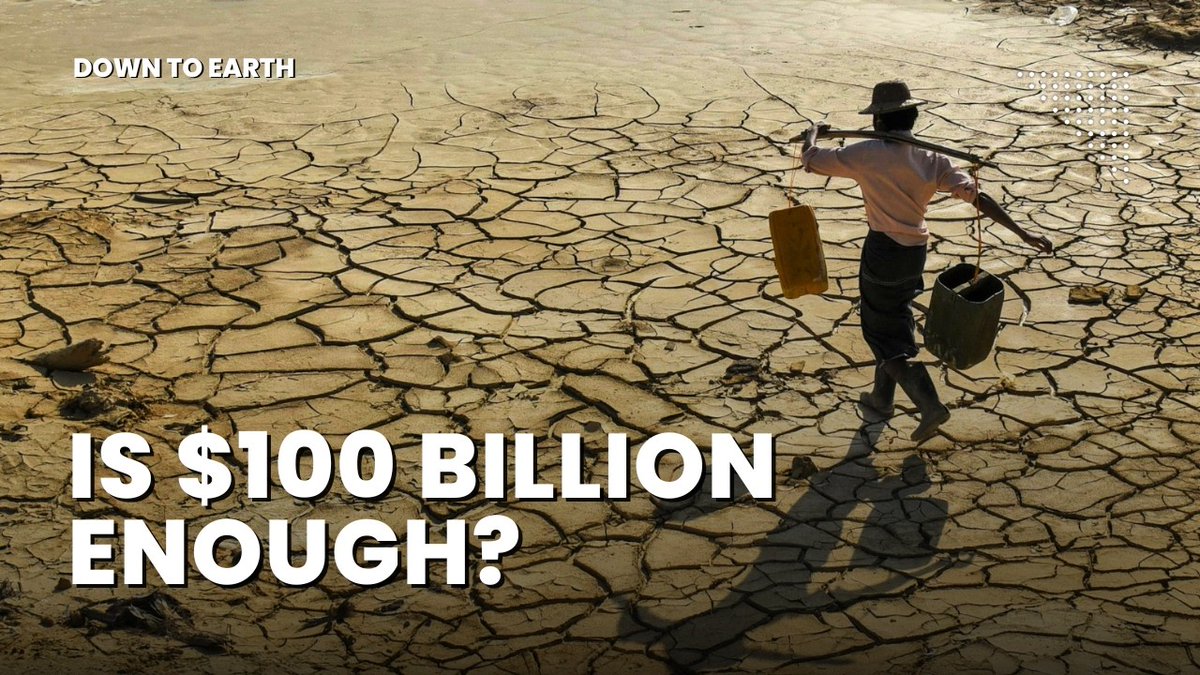
Developed nations have met the $100 billion/year climate finance goal for three consecutive years — but the headline number doesn't tell the full story.
👉Mitigation finance still dominates; adaptation finance is growing, but slowly
👉73% of public climate finance is delivered as loans, not grants, and concessional bilateral lending is declining
👉Private finance rose in 2024, but low-income countries received just 3% of it
With new climate finance goals (NCQG) on the horizon and rising climate finance needs, the goalposts have already shifted.
Watch @SehrRaheja from @CSE_Climate's decode the key messages and issues of concern from the new @OECD report in the explainer below⬇️
https://t.co/4bM82UMxRY
📢Solar now regularly contributes close to one-third of India’s mid-day power generation. Thread 🧵(1/6)
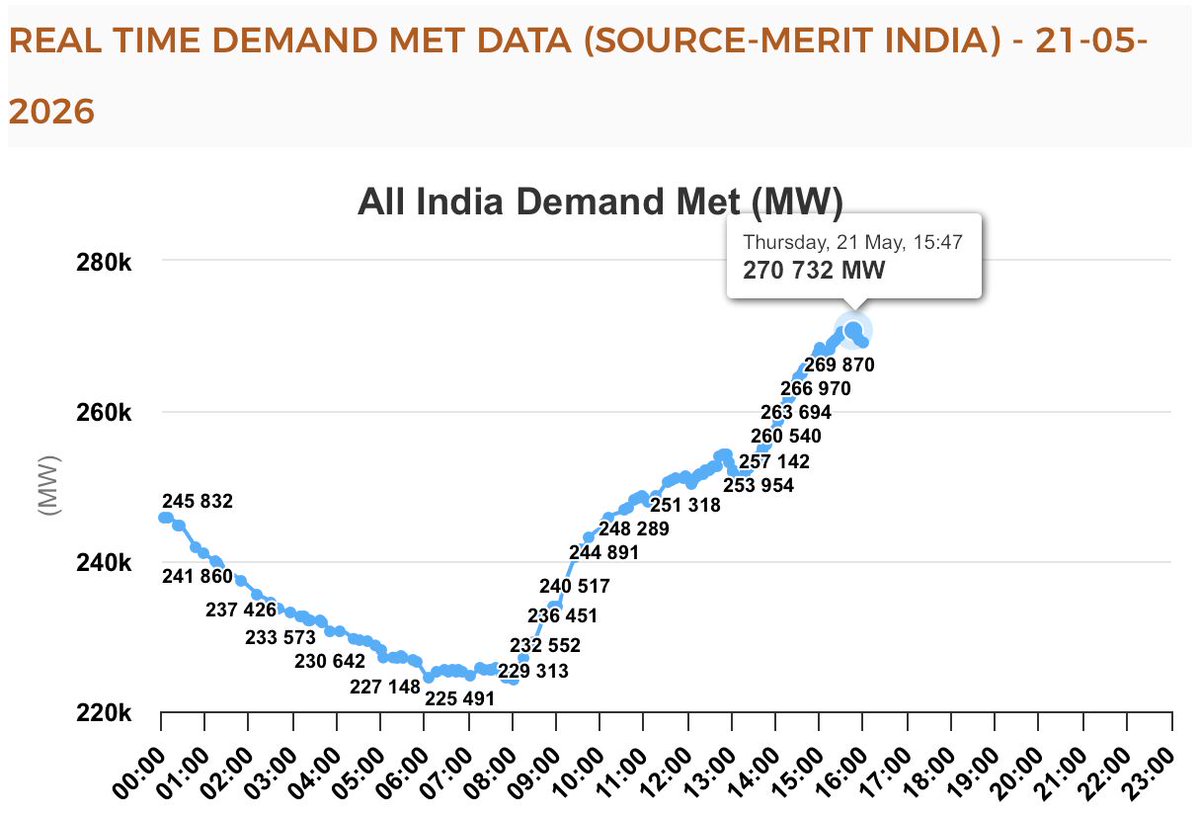
On 21 May, India’s peak power demand met hit yet another all-time high at 270.7 GW, continuing a streak of record-breaking electricity demand this summer.
💡India’s climate ambition so far was hinged on a target of rapidly raising power capacity from non-fossil sources, whilst generation lagged. What we are seeing now is power generation from renewables ramping up gradually to eat into the share dominated by coal. (5/6)
🎙️New Carbon Politics episode drops on May 28
In this episode, CSE's @SehrRaheja speaks with Neha Khanna from @climatepolicy about the high cost of capital for green tech in the Global South and how developing countries can address this issue.
More details in the poster 👇
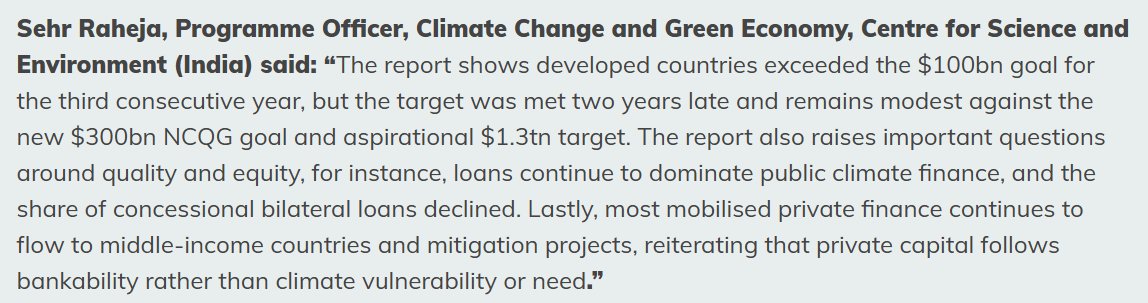
CSE's @SehrRaheja was quoted today in the press release by @CANIntl, responding to @OECD’s latest climate finance report which highlights how climate finance figures remain stubbornly low while developed countries continue to shirk their responsibilities.
Read the full release: https://t.co/QIw6kTEMP4
Access the report here: https://t.co/GVWEo5apn0