Imo this gets it wrong. If progressives don’t prioritize tight labor markets on their own merits, we won’t see them again. Nor anything more.
We’ve seen labor markets like this maybe thrice since the 70s. This was the only one we built on purpose. It is a big structural change.
If Trump does win, one lesson I hope the (well-meaning) neoclassical left will learn is that "tight labor markets" just is not enough to improve people's live substantially. They need major institutional and structural change, not just lower unemployment and slightly higher wages
OK, I'll do a grid modeling explainer for @OpenGridOrg ... Here is why no one agrees on infrastructure decisions.
The lifecycle of grid planning tends to follow the process in the figure below, with variation depending on the region/state and infrastructure type (eg Tx, Gen, Dx)
The U.S. Naval Institute mourns the passing of Dr. Craig L. Symonds, distinguished naval historian, award-winning author, and professor emeritus of history at the U.S. Naval Academy. Through three decades of teaching and a lifetime of scholarship, he helped generations of naval officers and readers understand the people, decisions, and sacrifices that shaped our naval history.
In May 2023, Dr. Symonds addressed the Naval Institute’s 150th Annual Meeting, reflecting on the enduring relationship between the Navy and its independent forum. His remarks became his most recent Proceedings article, “A Two-Way Street: The Navy–Naval Institute’s 150-Year Relationship.” In it, he described the Institute as “a sounding board and not an echo chamber”—a reminder of the value of thoughtful debate in advancing the naval profession.
We honor his lasting contributions to naval history and extend our deepest condolences to his family, friends, colleagues, and former students. His legacy lives on in the people he taught and the history he brought to life.
Read his article and revisit his 2023 remarks.
https://t.co/kEP996v4xA
Just awful news. Another giant lost to history. Perry’s work on finance will outlast him, especially in the scholars who learned from him and saw his lessons come to life in the last two decades.
We are deeply saddened to share the news that Perry Mehrling passed away this morning at the age of 67.
Perry was the father of the Young Scholars Initiative. He believed profoundly in young scholars, in their ideas, and in the importance of creating a community in which they could learn from one another and find their own voices.
Perry, you leave an enormous hole in our midst. Our hearts are aching, and we will miss you dearly.
The YSI community will carry your legacy forward. Your ideas, your generosity, and your commitment to generations of young scholars will remain with us.
Thank you for everything, Perry.
Terrible news. I loved getting to talk to Perry over the years. Someone with incredible range, depth and clarity. A major influence on my own thought, for sure. RIP.
I'm increasingly partial to the argument that increases in the fed funds rate will do little to lower inflation, and may be counterproductive.
- AI investment is unlikely to slow because interest rates are slightly higher
- Energy is highly inelastic and rate changes can't alleviate the current supply shock
- Higher rates hurt supply-side solutions in housing, energy, autos, and other capital intensive industries
- Higher borrowing costs raise business operating expenses, some of which is passed along to consumers
- A large percentage of debt is fixed-rate, dampening the feedback loop but hurting new homeowners, small businesses, and investment
- An economy increasingly dominated by services is less sensitive to rate changes
- This century has repeatedly demonstrated how blunt interest rate policy can be, both in stimulating inflation when it's low and suppressing it when it's high
4/4 Fiscal space has value because it can be used when circumstances warrant. A policy of permanently suppressing demand today in order to preserve fiscal space for some hypothetical future crisis risks preserving an option that is never exercised.
1/4 Today’s French debt ratio does not prove Europe needed more austerity in the 2010s. We do not observe the counterfactual. Tighter fiscal policy could have meant weaker output, higher unemployment, and possibly an even worse debt trajectory.
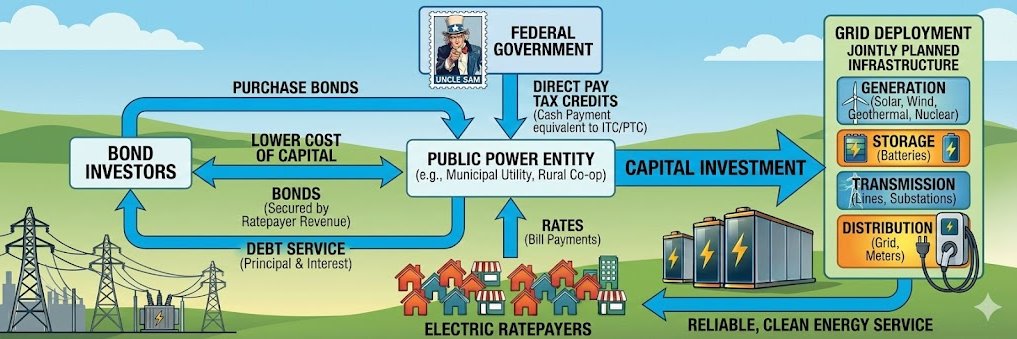
It’s always hilarious that “make the public sector a direct participant in housing development using bonds and construction finance” is apparently beyond the pale.
How do folks think American Vienna will actually come about?
This guy’s entire livelihood depends on Zohran pumping out state subsidized privatized housing and development funding. You don’t have to listen to anything he has to say! He’s just hustling.
Terry Tao: "Problem-solving alone is now actively harmful to mathematics."
I would like to politely disagree, and encourage everyone to continue solving math problems.
https://t.co/Z7pZWcOFmo
Pretty simple ingredients. “This isn’t the end of math. There’s huge opportunities here. Mathematicians hope to be a part of it. In the meantime we will study the results and offer recommendations for sound regulation and good research practices.” Or something to that effect.
Imo it’s quite understandable why, but it’s also deeply unfortunate. They could have modeled a much better public response while they still had the world’s attention.
I don't feel like the median commenter is celebrating the obsolescence of mathematicians. The puzzle is that it's now possible to do math much faster, and you'd think mathematicians should generally be quite happy about this, and it's puzzling that they're not
I imagine certain old-school doctors did use Tao’s argument to reject implementing evidence-based interventions. Certainly skeptics of modern medicine still do.
This is a slide from Terence Tao's 'Math 2.0' public lecture yesterday evening at Caltech. I am highly confident that, if the cure actually worked, almost any Stage 4 cancer patient would tell you that human comprehension of its mechanism is completely irrelevant to them.
To the extent that this is based on the carbon intensity of oil and gas, Matt's argument is right and we've shown that empirically for both gas and oil:
LNG: https://t.co/NX1DgsZmpg
Oil: https://t.co/4PWHD6uD52
This is the reason we need permitting reform. Whatever your view on the net benefits of the bill, we've got to be able to build things faster.
And if you want to reduce emissions (and you should), let's address that directly instead of indirectly making it harder to build.
My point is, don't make clean energy collateral damage to your insistence on blocking fossil projects.
It's ok to be conflicted about *this* permitting reform bill. It's not ok to insist that the status quo is working.
First: using PERMITTING to slow fossil fuels is a bad strategy. You can block a pipeline, but you can’t block demand for what it carries. The way to move off fossil fuels is to cut demand & make clean substitutes cheap, here & globally. If you disagree, you may not like the bill.
You can 100% isolate inter linkages between these various factors but “crowding out” as an explanation (with its attendant policy prescriptions) lacks enough juice imo to describe (and imply fixes) for what we’re facing.
My pushback on crowding out is it’s probably smaller for real resource use than alternative factors like war, tariffs, fiscal. The expectations and competition driving AI boom are also seemingly rate insensitive (for now) relative to the suffering sectors.
I’d love economists to take a crack at this theory that the US is experiencing a mini-Dutch Disease effect from AI.
My big-picture thesis about AI economics right now is that while the discussion about AI safety and existential risk is important, AI’s construction is changing the world faster than its capabilities.
One could make the arg that wealth effects from AI-related or adjacent equities are keeping consumption too high. But I’m not sure given how those are fed from the deficit -> corporate profits as much if not more than the fate of particular stocks.