New research from biomedical informatics associate professor Colleen Julian, PhD, shows that sildenafil may be a promising candidate drug for treating neonatal pulmonary hypertension at high altitude.
https://t.co/4IMkvplu7b
Researching AI? Don't be shy! Submit an abstract for the CU-CSU Summit poster session! This year's topic is Research Innovations in Health AI. https://t.co/jdOKr8np4V
📆 Due date: July 24, 2024
@ResearchCSU, @InnovateCUBldr, @CUHealthAI, @CUBiomedInfo
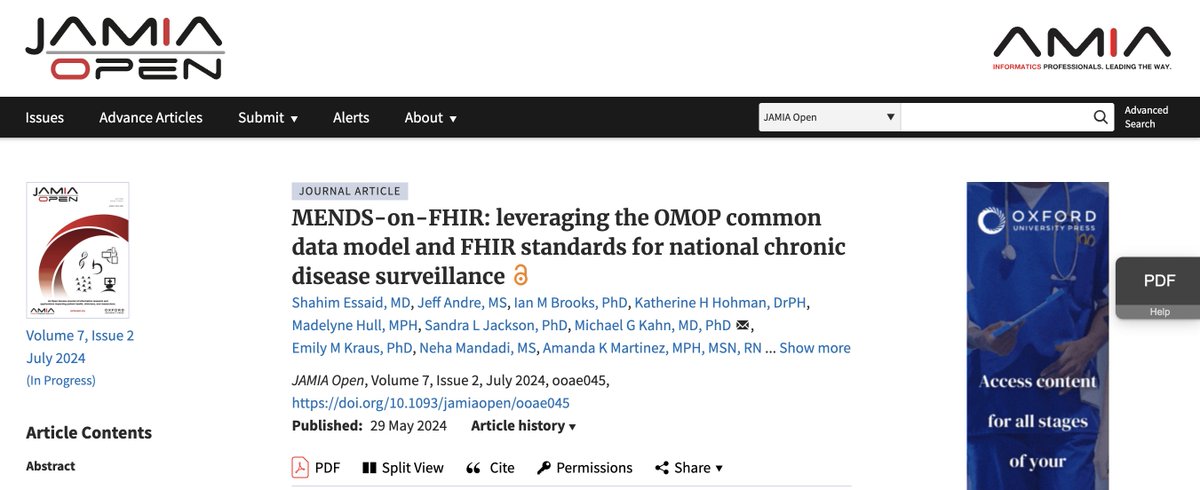
Working to advance chronic disease surveillance? The MENDS-on-FHIR pilot shows how Bulk FHIR can support a large-scale population-level surveillance database. The study features work by our department, @CUAnschutz Health Data Compass, @NACDDinfo, and more: https://t.co/MXTCDdsAZT
Our conference paper on "Deep Learning with Enforced Data Consistency" has now been published. (Patent pending.) This is a significant method that limits the errors of deep-learning and has potential in wide ranging applications.
https://t.co/YIJeKbf6cS
Welcome to @CUBiomedInfo's newest team members! 👋
Julia Curd: Research Services Staff
Jacob Flynn, PhD: Postdoctoral Fellow in @CathyLozupone's Lab
Souha Tifour: Research Services Professional in the @KrishnanLab
William Patterson, PhD: Postdoctoral Fellow in @JBCole150's Lab
We welcome @kalpathy1 from the @CUEyeCenter as our new @CCTSI director of Health Informatics! 👏 For the past two years, she has been translating #AI methods into effective patient care. https://t.co/yU5k1Mauvd
@CUBiomedInfo, @CCOS_CTSA
Sean Davis, MD, PhD, biomedical informatics professor, is part of a team that received a $5.2 million grant renewal from the @NIH to continue cancer genomics research. The @CUCancerCenter and @CUNY collaboration aims to enhance the Bioconductor ecosystem.
https://t.co/srmJIZjIxf
Thank you to @OlgaTroyanskaya, PhD, @PrincetonPPH director and @PrincetonCS professor, for presenting "Computer Science, Computational Biology, & Academia for Trainees" and "Deep Learning Models of Genome - from Sequence to Disease" at our seminar series this week!
In a new Journal of Medical Imaging paper (@SPIEtweets), DBMI assistant professor Nick Dwork, PhD, (@ndwork) builds upon his research to improve MRI quality and speed with a method combining compressed sensing and parallel imaging with structured sparsity.
https://t.co/Gbpykd2lcK
🌿Officially: I’m excited to join the DBMI at CU Anschutz this September as assistant professor! 🏔️
Can’t wait to see the sparkles fly when NLP meets cutting-edge healthcare and medical research at CU Anschutz. Look forward to new collaborations and innovations!
Yanjun Gao, PhD, (@Serena_pancakes) will join our department as an assistant professor this fall! She will focus on developing foundational natural language processing technologies and conducting research on innovative AI tools in clinical settings.
https://t.co/2pzTrh5Lf1
The new Phoenix #sepsis criteria not only helping providers properly define sepsis, but they also improve diagnosis of this life-threatening condition. Learn about the details in this episode of #ChartingPediatrics: https://t.co/P1rw6AZIdW
Very glad to see our manuscript published in @JAMIA_Journal!
We developed with @GreeneScientist the Manubot AI Editor, which proposes a human-centric approach to automatically revise scholarly manuscripts using section-specific prompts.
https://t.co/eDozs3Yy80
Joanne Cole (@JBCole150), PhD, @CUBiomedInfo assistant professor, will present, "Taste of Genetics," as part of the @AuroraHistoryCO Speaker Series in July! She will share how genetics and food preference knowledge can help us eat better. Tickets are free!
https://t.co/E3o9ET0B9K
As Denver looks to celebrate its 50th Pride this summer, the LGBTQ+ Hub at #CUAnschutz is hosting and organizing different ways for the campus community to get involved in the celebrations. https://t.co/o5bgXsewF9
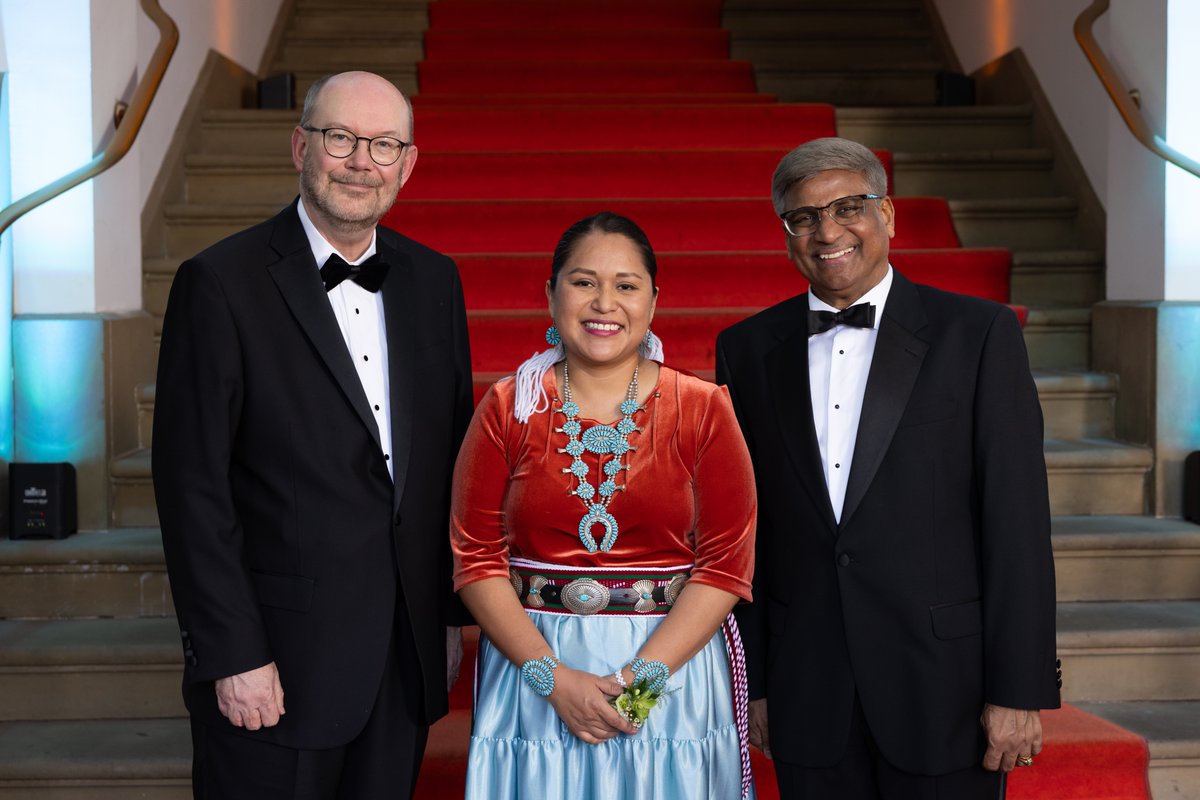
Last month, DBMI's Katrina Claw, PhD, was honored at a ceremony by the @NSF for receiving the Alan T. Waterman Award! @drkatclaw is the first Navajo Nation recipient of the award. Learn about her work and efforts to diversify genetics research. https://t.co/8SRm0imnjQ