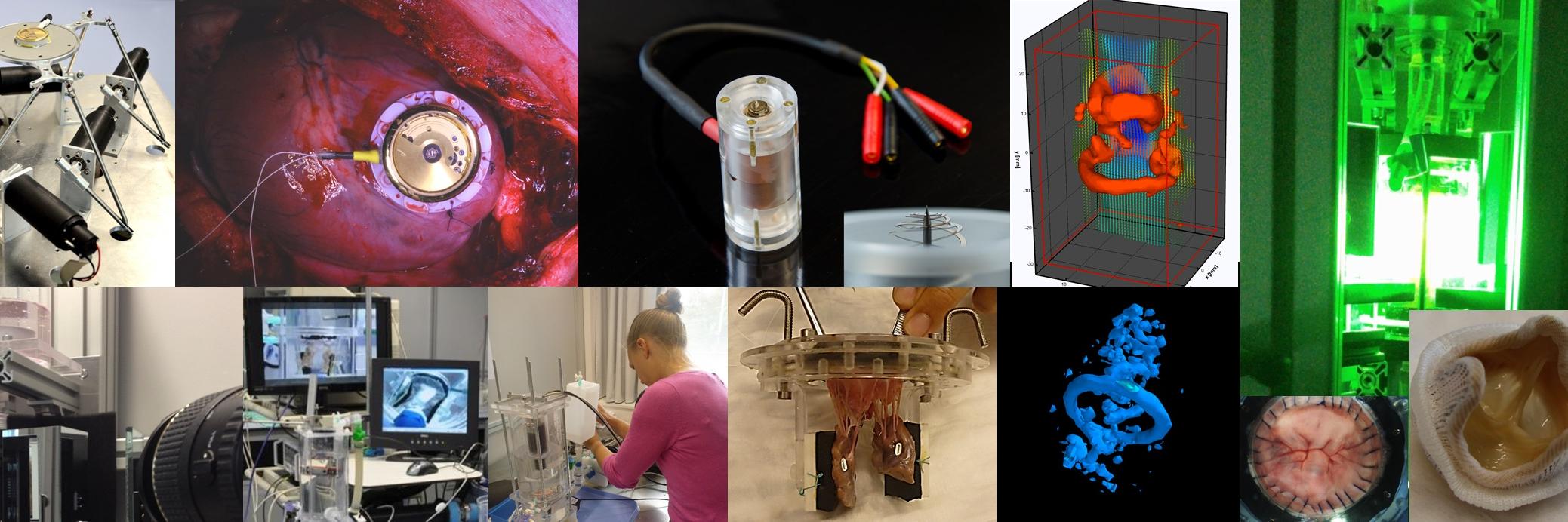
What is the effect of different prosthetic valve sizes on blood flow patterns? A study with tissue-engineered valved conduits @Xeltis in pulmonary position using tomographic PIV - see https://t.co/e88g0WNctD
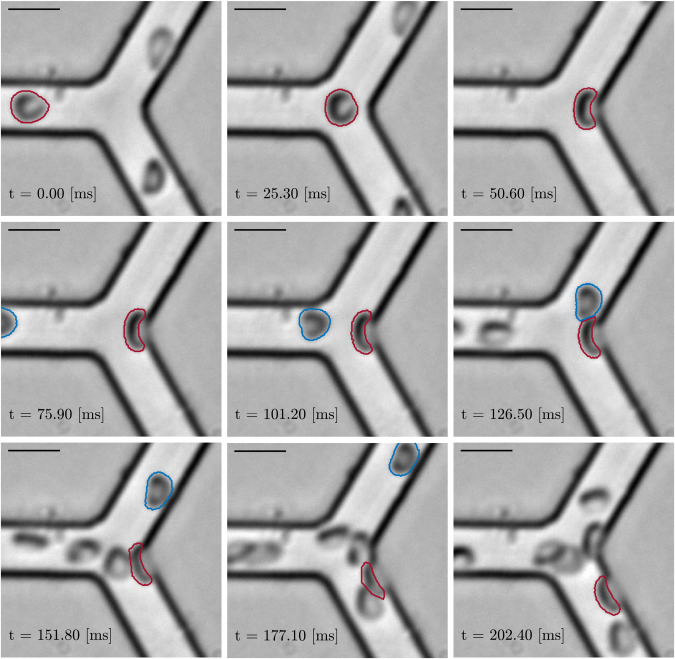
How do pericytes influence the transport and distribution of RBCs in a capillary network?
See the results from a microfluidic in vitro model in https://t.co/usqk0QuFqH
See our detailed comparison by Ali Mokhtari et al. between data obtained from a 7T MRI scanner and high-fidelity CFD in phantoms with 0%, 40% and 80% stenosis
Mokhtari et al. Comparison of 4D flow MRI and computational fluid dynamics in carotid ... https://t.co/xputxS2hY3
See our detailed comparison by Ali Mokhtari et al. between data obtained from a 7T MRI scanner and high-fidelity CFD in phantoms with 0%, 40% and 80% stenosis
Mokhtari et al. Comparison of 4D flow MRI and computational fluid dynamics in carotid ... https://t.co/xputxS2hY3
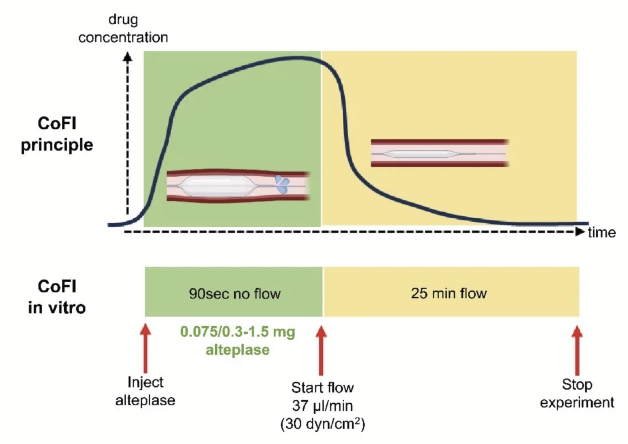
Short exposure to microdoses of alteplase are sufficient to dissolve microthrombi in a microvascular obstruction model!
Details in: https://t.co/6HTScFM4c3
@CorFlowinc@unibern@ethz@UZH_en
What is the connection between bioprosthetic leaflet fluttering and turbulent blood flow? See our latest article by KM Bornemann and @DominikObrist featured in Physics of Fluids https://t.co/f0i30MKf4x
@ @unibern
Transition to turbulence in a bioprosthetic heart valve: beautiful images & great science!
Check out our entry for the 'Gallery of Fluid Motion' competition at this year's @APSphysics-DFD conference: https://t.co/IBKRzV9qUM (full video)
@unibern@cscsch
The NARCO trial: Assessing high-risk anatomical features in anomalous aortic origin of a coronary artery (AAOCA)
https://t.co/RwmNxUSZIH
@chrisgraeni@unibern@inselgruppe
How to select the right cannula for pediatric ECMO? Ferrari et al. used a pediatric pulsatile mock loop to evaluate the performance of ECMO cannulae https://t.co/Rgwfw8VZ4A
@inselgruppe@unibern
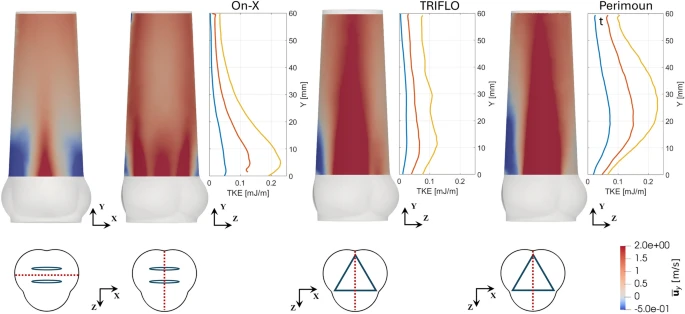
Quantitative comparison of the novel TRIFLO heart valve to state-of-the-art heart valve prostheses using tomographic PIV: differences in TVPG, EOA, turbulence levels and flow patterns.
see: https://t.co/WROEj1Vm1z
Lingering red blood cells in capillary networks may affect the hematocrit partitioning in following microvascular bifurcations - see the experimental study by Bucciarelli, Mantegazza & @DominikObrist in Biophysical Journal https://t.co/Gwzu3OcIjR @unibern@inselgruppe@polimi
Patients with larger ascending aorta show higher blood damage index for platelets stagnating in the neo-sinus after TAVR!
See the coputational study by K.-M. Bornemann, @ekrolljahren , @DominikObrist in Comp Biol & Med:
https://t.co/iQrPX6ekb4
What is the role of bioprosthetic aortic valve design on hemodynamics?
See the new articles by @pascal_corso:
Part I: Flow configuration and vortex dynamics
https://t.co/dPnoDBFV3d
Part II: Spectral analysis and anisotropy
https://t.co/AtJcsyJxEe
Turbulent flow behind bioprosthetic heart valves: How the interplay between starting vortex, FSI and shear layer instabilities initiates transition to turbulence
K.-M. Bornemann & @dominikobrist@unibern | Journal of Fluid Mechanics | https://t.co/fjXLwThah5
Researchers at the #ARTORG Center for #biomedicalengineering Research in Bern have co-developed and tested a new method to combat the blockage of tiny coronary arteries after a #heartattack. A special balloon catheter is the key to this: https://t.co/mIy4w4DPzG.
@MedFacultyUniBE
Congratulations to Karoline Bornemann for winning the poster price at the annual meeting of the Heart Valve Society with a study on valve thrombosis in patients with larger ascending aorta
@HeartValveOrg@unibern@inselgruppe