Tatsächlich, wir Europäer sind am Arsch.
Wir Zeitgenossen haben diese ganze Geschichte mit dem Abendland :: versemmelt . - In Grund und Boden vergeigt.
Wir haben nicht schlecht unser Saiteninstrument gespielt oder den Choral nicht intonisationssicher gesungen oder die Schwarzwälderkirschtorte nicht gebacken gekriegt. Wir haben uns nicht irgendwie blamiert im kleinen Kreise.
In sage und schreibe einem Jahrzehnt wurden 2.000 Jahre Hochkultur atomisiert durch uns stimmberechtigte Bürger.
Das ist noch einmal eine ganz andere Liga als „Kleiner Mann, was nun?“ von Hans Fallada.
Es gibt keine Entschuldigung: Nicht unter oder wegen totalitaristischen Verhältnissen, nein, in einer Demokratie haben wir Zeitgenossen diese Ausmerzung in einem Furor des Gutmenschentums, des letzten Menschen betrieben - in einer Konsequenz, Ruhe und Gründlichkeit, die uns Hanna Arendt an Adolf Eichmann Grausen gelehrt hat. Adolf Eichmann scheint eine Kulturkonstante zu sein, kein Ausreißer.
Und? Gleichgültigkeit, Rechtfertigung - ausgerechnet mit Humanität - weit und breit.
Für alle vergangenen Generationen sind wir nichts weiter als pure Entsetzlichkeit, das Armageddon.
Die künftigen werden nicht einmal wissen, wovon gesprochen wurde und was Europa war.
They're not in Europe to do the jobs Europeans won't do.
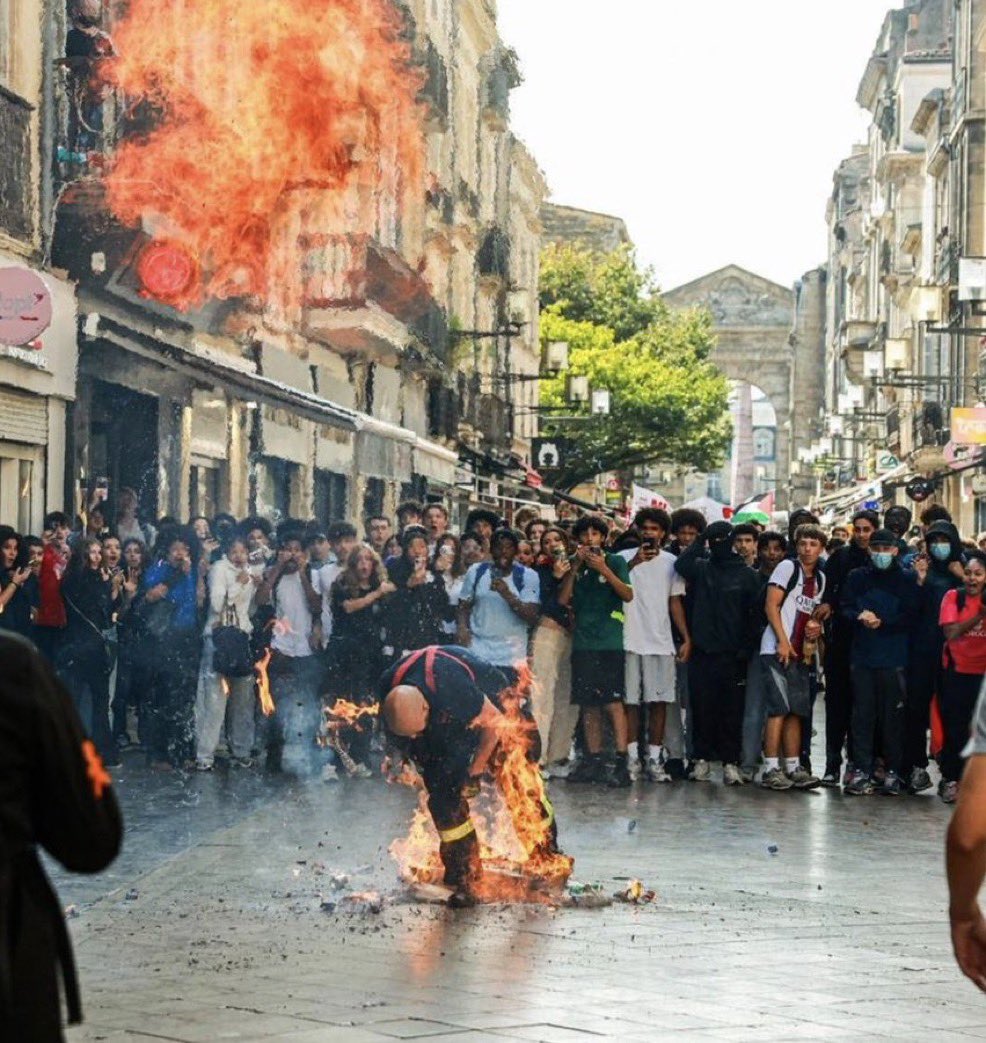
They're in Europe to collect welfare and raise horrible psychotic children who will laugh and film a firefighter literally burning as he tries to stop them from destroying his city.
Civilisational suicide.
🇺🇸🇨🇳 Rubio tried to take down Jensen Huang. Trump and JD Vance put him back.
Philip Pilkington, economist and author of The Collapse of Global Liberalism, says this was never really about Nvidia.
The real fight is open source vs. closed source AI.
The national security establishment backed Anthropic and OpenAI. Closed models keep state-level capabilities locked up.
Huang was funding the other side.
Rubio pushed him out. Vance brought him back. Trump took the credit.
But Pilkington says don't call it a win yet. The national security faction doesn't quit.
If open source wins, it doesn't just beat Anthropic. It nukes the business model of every closed AI company sitting on billion-dollar valuations with no serious revenue stream.
Pilkington's word for Anthropic's model: tulips. Their IPO agreed.
Then there's the dollar. Pilkington flew to Beijing and met with a PBoC-adjacent think tank. Asked them directly why they're letting the renminbi appreciate.
The answer: they want it to become a global borrowing currency.
Renminbi lending rates are almost half the dollar's. Panda bonds are already being issued by Western institutions.
The dollar isn't collapsing tomorrow. But the architecture is shifting.
@philippilk
If Putin attacks, it will take us two or three weeks just to agree on who does what—and by the time we reach a decision, he will have already reached Rotterdam. – NATO Secretary General Rutte.
2–3 weeks or 2–3 months?
RUSSIA MAY BE PLANNING TO PLACE A NUCLEAR WEAPON IN SPACE - POTENTIALLY TURNING THE ENTIRE WORLD INTO A TARGET.
An investigation by WDR, NDR, and the *Süddeutsche Zeitung* (SZ) raises an alarming question: Is Russia preparing to launch a satellite that could be equipped with a nuclear warhead—possibly as early as December?
What might initially sound like just another geopolitical conflict could, in fact, introduce an entirely new dimension to the nuclear threat.
According to Western intelligence, a satellite designated "Sputnik-S" has reportedly been completed and is currently being stored in the Moscow area. Warnings regarding this development allegedly began circulating within Western intelligence circles in early November, with the possibility of a launch within 60 days not being ruled out.
The German federal government is also reportedly alarmed. Both the Bundeswehr (German Armed Forces) and the Federal Intelligence Service (BND) are evidently taking the threat seriously; Defense Minister Boris Pistorius has reportedly been briefed on the potential consequences.
But why is this development so dangerous?
1. A nuclear weapon that threatens more than just a single target
A conventional anti-satellite weapon is typically designed to target one specific satellite.
A nuclear explosion in space, however, would be something entirely different.
It could release massive amounts of high-energy radiation, damage satellite electronics, and create artificial radiation belts. The repercussions could extend far beyond the immediate site of the explosion.
Satellites in low Earth orbit (LEO) would be particularly vulnerable.
General Stephen Whiting, commander of U.S. Space Command, has warned that approximately one-third of the satellites in this region could fail within hours or days—with further damage potentially unfolding over the following months. This would not be an ordinary attack on military infrastructure. It would pose a threat to the technological foundation of modern societies.
2. What would this mean for our daily lives?
We often underestimate just how dependent our civilization has become on space.
Satellites are not merely used for television reception or navigation.
They form an essential component of our global infrastructure:
• GPS and satellite-based navigation
• International telecommunications
• Financial transactions and time synchronization
• Power supply and grid management
• Aviation and maritime shipping
• Military communications
• Reconnaissance and early warning systems for missiles
• Global data transmission
A prolonged failure of large segments of the satellite network could impair many of these systems.
Important: This does not mean that the entire global internet or every power grid would automatically collapse. It does, however, mean that several critical infrastructures could come under significant strain simultaneously.
And that is precisely what makes this scenario so dangerous.
3. A historical warning: Starfish Prime, 1962
This is by no means mere science fiction.
In 1962, the United States conducted the "Starfish Prime" nuclear test at an altitude of approximately 400 kilometers.
The explosion created artificial radiation belts that damaged or disabled several satellites. In Hawaii, among other places, electrical systems experienced failures.
That was more than 60 years ago.
Today, thousands of satellites are in Earth's orbit. Our economy, communications, and military infrastructure are far more dependent on space than they were back then.
Consequently, the potential consequences would be vastly greater.
4. Why might Russia develop such a weapon?
This is where the true geopolitical dimension lies. The United States and its NATO allies possess a highly interconnected military infrastructure. Satellites provide reconnaissance data, facilitate communication, support navigation, and are indispensable to modern military operations.
Anyone capable of severely disrupting this infrastructure would threaten a critical component of the West’s military operational capacity.
Russia might seek to develop a new form of strategic deterrence based on this.
The principle would be brutal:
If the West were to lose its technological superiority in the event of a conflict, the military balance of power could shift significantly.
However, there is a major problem for Moscow: such an explosion would also endanger Russian satellites.
It would, therefore, not be a precision weapon, but rather a kind of nuclear "infrastructure weapon" with global side effects.
🚨Muita gente imagina um tsunami igual aos filmes de Hollywood,
com uma onda gigante curvada no céu mas esse vídeo real gravado na Rússia mostra por que ele é muito mais assustador na vida real.
Após o terremoto de magnitude 8,8 na Península de Kamchatka (o maior do planeta desde 2011),
um morador que passeava com o cachorro no alto de um morro registrou o oceano inteiro simplesmente subindo como uma parede infinita e engolindo tudo pela frente.
Se eles estivessem alguns metros mais abaixo na praia, não teriam a menor chance. 👀 👇
💥 "The only way to end Russophobia is to end Russia itself. There are no other ways"
Today, Russophobia is a perfectly healthy and natural reaction to everything Russia is doing, says Alexander Nevzorov.
"Try not to become a Russophobe after looking into the graves of Bucha, under the ruins of Mariupol, or into the morgues of Kramatorsk. Into places where the bodies of babies are mixed with their grandmothers', where mothers lie smoldering on the remains of old people. And all of them were killed in the name of the 'Russian idea' and a delusional 'greatness.'
Try not to become a Russophobe while watching the deliberate genocide of Ukraine, the triumphant lawlessness, the brazen mugs of Putin and his lackeys.
If you manage it, your place is in the State Duma, on a firing squad, or in a psychiatric ward.
But far from everyone can overcome the natural revulsion that Russia provokes. They are now 'Russophobes.' In fact, the very word 'Russophobe' has become a synonym for ordinary human decency.
Yes, that's right. And it happened because Russians decided to call the truth about themselves and their country 'Russophobia.'
Please, no problem. Whatever you call the truth, it remains the truth."
‼️ PROFESSOR PUTIN ERKLÄRT DIE WELTGESCHICHTE ‼️
➖➖➖➖➖➖➖➖➖➖➖➖
Wladimir Putin, selbsternannter Oberhistoriker des Kremls, hält mal wieder Geschichtsunterricht.
Diesmal geht es um das Christentum. Was soll da schon schiefgehen?
🔸 Putin: "Das Christentum entstand im alten Rom." Jesus aus Nazareth wäre überrascht. Das Christentum entstand in Judäa, im Nahen Osten.
🔸 Putin: "Dann fiel Rom, und das Christentum verlagerte sich nach Byzanz." Leider falsch herum.
🔸 Konstantin regierte von 306 bis 337 und machte Byzanz im Jahr 330 zu Konstantinopel. Westrom fiel erst 476, also rund 150 Jahre später.
🔸 Bei Putin kommt also erst der Umzug und dann der Grund dafür. Logisch, im Kreml läuft die Zeit eben rückwärts, genau wie die Wirtschaft.
➖ Der Mann, der der Welt erklären will, dass die Ukraine "historisch" zu Russland gehört, scheitert an Geschichtsstoff aus der Mittelstufe.
➖ Aber wer Geschichte umschreibt, um Kriege zu rechtfertigen, muss sie vorher natürlich nicht kennen.
Fazit: Russische Phantasien, frisch aus dem Kreml. Geschichtsunterricht auf hohem Niveau.
#Ukrainespace #StandWithUkraine #SlavaUkraini 💙💛
Putins „Blut und Boden“
„Die russische Zivilisation hat sich niemals ein anderes Land einverleibt.“ Das sagt Wladimir Putin im Gespräch mit dem serbischen Regisseur Emir Kusturica, während seine Truppen einen Eroberungskrieg gegen die Ukraine führen.
Die ukrainischen Soldaten fordert er auf, auf die „richtige Seite der Geschichte“ zu wechseln. Auf „unsere gemeinsame Seite“. Ein ukrainischer Soldat verteidigt sein Land, und der Mann, der den Angriff befohlen hat, erklärt ihm, wohin er gehört.
Schon 2021 erklärte Putin Russen und Ukrainer zu „einem Volk“. Im Oktober berief er sich dafür sogar auf genetische Untersuchungen. Im selben Gespräch behauptete er, von Russland besetzte ukrainische Gebiete seien historisch russisches Land. Dabei war Kyjiw schon das Zentrum der mittelalterlichen Rus, lange bevor Moskau zur Macht aufstieg. Den russischen Eigentumstitel, den Putin aus dieser gemeinsamen Geschichte ableitet, hat er selbst erfunden.
Erst erklärt Putin Russen und Ukrainer zu einem Volk. Dann beansprucht er das Land, auf dem die Ukrainer leben. Darin liegt die Parallele zur nationalsozialistischen Vorstellung von „Blut und Boden“. Die Abstammung der Menschen soll darüber entscheiden, wem ihr Land gehört.
Für den Angriff selbst greift Putin auf eine zweite, ebenso alte Rechtfertigung zurück. Er müsse die Menschen schützen, die dort leben. 1938 berief sich Hitler auf den Schutz der Sudetendeutschen, als er die Abtretung des Sudetenlands erzwang. 1939 ließ Stalin die Rote Armee in Ostpolen einmarschieren, angeblich zum Schutz der dort lebenden Ukrainer und Belarussen. Und Putin will die Menschen im Donbas schützen, indem er ihre Heimat angreift.
„Moskau ist das Dritte Rom. Ein viertes wird es nicht geben.“ Rom fiel, Konstantinopel fiel, Moskau trat ihr Erbe an. So erzählt Putin die Geschichte des Christentums. Der zweite Satz verrät, welche Rolle er Moskau zuschreibt. Rom und Konstantinopel hatten einen Nachfolger. Moskau soll für alle Zeit der letzte Hüter dieses Erbes sein.
Wie politisch diese Vorstellung von Russlands religiöser Sendung ist, zeigte 2024 der Weltrussische Volksrat unter Vorsitz von Patriarch Kirill. Er erklärte den Angriff auf die Ukraine zum „Heiligen Krieg“. Im selben Dokument forderte er, die gesamte Ukraine müsse zur ausschließlichen Einflusssphäre Russlands gehören.
Was heißt das für einen möglichen Frieden? Nehmen wir an, die Ukraine träte die vier von Moskau beanspruchten Gebiete an Russland ab. Wenn Putin von „einem Volk“ spricht, meint er auch die Ukrainer in Kyjiw und Lwiw. Warum sollte er ihnen nach einer Gebietsabtretung zugestehen, was er ihnen heute abspricht – das Recht, ihren eigenen Weg zu wählen?
Putin blickt tausend Jahre zurück und weigert sich, die Gegenwart anzuerkennen. Die Ukrainer sind kein verlorener Teil Russlands, der nur heimgeholt werden muss. Sie sind ein eigenständiges Volk, das selbst über seine Zukunft entscheidet.
Und genau deshalb führt Putin Krieg gegen sie.
Die Banalität des Bösen beginnt dort, wo die angebliche Ewigkeit einer Idee mehr zählt als das endliche Leben eines Menschen.
Die Ideologie ist ein praller Ballon, ihre praktische Konsequenz erschreckend schlicht. 🎈
„Zwei #Rom sind gefallen, das dritte steht, und ein viertes wird es nicht geben.“ Mönch Filofei.
Rom oder das 1.000jährige #Reich - bezeichnen den gleichen Archetypen.
Eine kollektivistische Illusion irdischer Ewigkeit - durchgezogen auf Kosten vieler menschlicher Einzelschicksale.
Die putinistische Version bezieht, wie übrigens die islamische, ihre Energie aus dem Überlieferten. Beide haben nicht einmal ein futuristisches Gewand - wie die Techie-Oligarchen aus den #USA es gern anziehen.
Selbst Hitlerdeutschland war nicht so lost in den Geschichtsvolianten wie #Putin oder unsere #AfD-Strategen, die ausgerechnet Putin mit Kaiser Friedrich Barbarossa verwechseln.
Der Legende nach schläft er im Kyffhäuser in Thüringen, sein roter Bart wächst durch den steinernen Tisch, und er erwacht eines Tages, um das Reich zu erneuern.
Synthese: Was für den #Iran gilt, gilt für #Russland allemal:
Beide dürfen viele Bücher besitzen, aber keine #ABC-Waffen.
MOSKAU, DAS DRITTE ROM – WIR BEFINDEN UNS IN PUTINS ENDSPIEL
„Moskau ist das Dritte Rom. Ein viertes wird es nicht geben.“
Mit diesen Worten griff Wladimir Putin am 20. November 2026 in einem Interview mit dem serbischen Filmregisseur Emir Kusturica eine jahrhundertealte religiöse Vorstellung auf.
Wer die ideologischen Grundlagen des modernen russischen Imperialismus verstehen will, sollte die Tragweite dieser Worte nicht unterschätzen.
Die Vorstellung vom Dritten Rom geht auf den russischen Mönch Filofei von Pskow zurück, der zu Beginn des 16. Jahrhunderts folgende Worte formulierte:
„Zwei Rom sind gefallen, das dritte steht, und ein viertes wird es nicht geben.“
Das erste Rom war das antike Rom. Das zweite Rom war Konstantinopel, die Hauptstadt des Byzantinischen Reiches, das 1453 von den Osmanen erobert wurde.
Moskau, das Dritte Rom, sollte nach dieser Vorstellung das letzte Zentrum des wahren christlichen Glaubens sein.
Aus einer ursprünglich religiösen Vorstellung entwickelte sich im Laufe der Jahrhunderte ein imperialer und messianischer Anspruch: Russland als auserwählte Nation mit einer besonderen historischen und spirituellen Mission.
Russland wäre demnach nicht einfach ein Staat unter vielen, sondern der letzte Bewahrer einer göttlichen Ordnung. 1/6