See how AI and simulation are accelerating engineering design at #NVIDIAGTC.
Join Cadence’s Rob Knoth for "How to Accelerate Engineering Design with AI and Simulation."
📅 Dec. 1 | 9:00–10:30 a.m. ET
https://t.co/YI32v0u0Ir
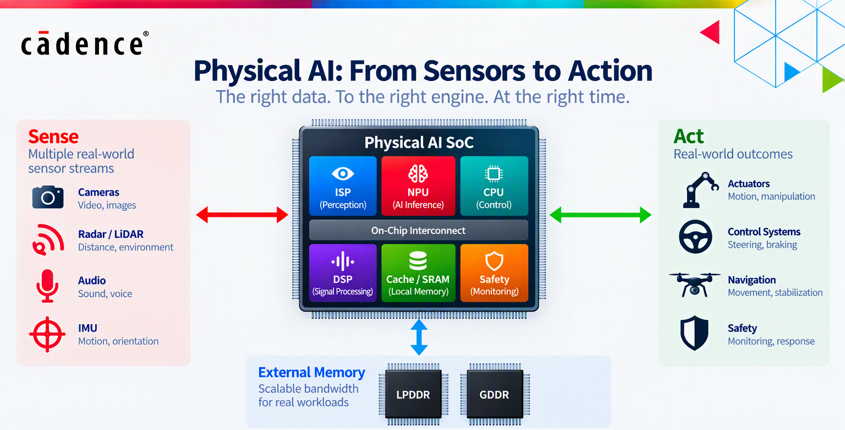
A vehicle can't wait on a data center to decide whether it's looking at a shadow or a pedestrian.
That's the core physical AI problem. Vehicles, robots, and drones must perceive, reason, and act on the device, in real time, within fixed power and area budgets. No two products on the same roadmap need the same AI compute, so starting with peak TOPS is the wrong approach.
Right-sized inference matches compute, local memory, and memory bandwidth to the workload.
Our latest blog "Right-Sized Inference for Physical AI Silicon" is part 2 of our 5-part series on physical AI silicon design. It shows how the Cadence Neo NPU family addresses this:
→ One architecture from always-on sensing to high-throughput perception
→ Neo MX for multicore acceleration with zero host fallback
→ Neo AI Chiplet in a standards-based package
→ NeuroWeave SDK as a single compiler across all three integration paths
Teams can move between IP, subsystem, and chiplet without rebuilding their software stack.
Building for physical AI takes more than AI acceleration. Teams need a complete path from model, to trusted silicon, to scalable system delivery.
📘 Read Part 2: https://t.co/cruj9cMv46
What’s next for AI and simulation in engineering? 💡
Hear from @Cadence, @luminaryphysics, @nTopology, @PhysicsxAI, @Synopsys, and NVIDIA at #NVIDIAGTC D.C. on accelerating engineering design, with insights into how OpenUSD and NVIDIA Omniverse libraries help teams make better-informed decisions.
Add the session to your agenda 👉 https://t.co/5sUhNqCv5U
The conversations at CIC left us energized and inspired!
Hear employees reflect on what innovation means to them and how they're helping shape the future through curiosity, creativity, and collaboration.
https://t.co/QMOLVn7O8X
As vehicles become more software-defined, more features and experiences can be delivered through software running on shared compute platforms.
With Müller-BBM’s m|klang e software supporting the latest Cadence Tensilica HiFi DSPs, automotive OEMs and Tier-1s can bring advanced active noise control and active sound design to their vehicle platforms.
The result? Quieter cabins, more personalized sound, and greater flexibility to create differentiated experiences across vehicle platforms
A practical step toward making software-defined vehicle acoustics a production reality.
Read the full story - https://t.co/FlFeyKKR8M
How do you extend confidential computing beyond the CPU and memory?
Part 3 of our PCIe security series explores how TDISP works with IDE and Arm RME to extend the chain of trust across the PCIe fabric and enable trusted device assignment.
Read the blog: https://t.co/037fHjMihg
Secure imaging starts at the sensor.
Learn how the Service Extensions Packet (SEP) protocol in MIPI CSE v2.0 enhances packet-level security and functional safety for CSI-2 camera systems, and how Cadence MIPI CSI-2 Verification IP helps verify these advanced capabilities.
Read more:
https://t.co/kZ1AVVBK2R
Physical AI changes the interconnect conversation.
For robots, vehicles, drones, and industrial systems, performance depends on the entire sensor-to-action path, not just link speed.
See why mapping the data path should come before choosing the protocol: https://t.co/lO40ptbwg1
AI data centers need connectivity that can keep pace with growing compute demands.
See how fJscaler, @GlobalFoundries, and Cadence are collaborating to advance optical interconnects for AI infrastructure:
https://t.co/uF1GveTjm3
Physical AI takes more than AI.
From chips and advanced packaging to simulation and digital twins, see how Cadence is helping engineers connect the digital and physical worlds.
Join us at #CES2027, Jan. 6–9, Booth 4218.
https://t.co/X2E9O9DGpH
Proud to be recognized as one of the World’s Best Workplaces by @GPTW_US! 🏆
Our One Cadence – One Team culture is powered by our people and the trust, innovation, and commitment they bring every day.
Congratulations, Team Cadence! 🎉
#WorldsBestWorkplaces#GPTWCertified
We're bringing our Conformal AI Studio community together for CadenceCONNECT: Conformal AI Technology Day on Thursday, December 3, 2026, at our San Jose headquarters.
This full-day event dives into real-world results from teams using AI and machine learning-enhanced logical equivalence checking, automated functional ECOs, and power intent signoff. We'll also unveil new agentic AI workflows and demo the InnoStack AI Super Agent integrated directly with Conformal AI Studio products.
Hear from customers who have moved Conformal AI Studio from evaluation into production, with case studies drawn from live projects, not lab demos. Stay for a networking lunch and reception with design, verification, and CAD leaders from across the industry.
If you're ready to move from evaluation to production with Conformal AI Studio, this is the event for you.
Register using the link below!
https://t.co/qKDgMN9Twx
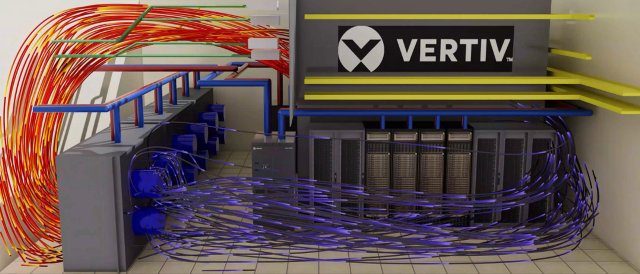
What does CFD look like in the day-to-day work of a thermal engineering team designing data centers?
Iva Papeš of @Vertiv shares how her team uses Cadence Reality DC Design and physics-based CFD simulations, along with lessons from her journey into engineering leadership.
Read the conversation:
https://t.co/kLTVxAdC4D
Nanopower’s ultra-low-power technology can reduce power consumption by up to 90% when IoT devices aren’t actively operating.
See how Cadence technology supports its IC and PCB design workflows for longer-lasting, more sustainable IoT devices: https://t.co/uTjYXWyG2G
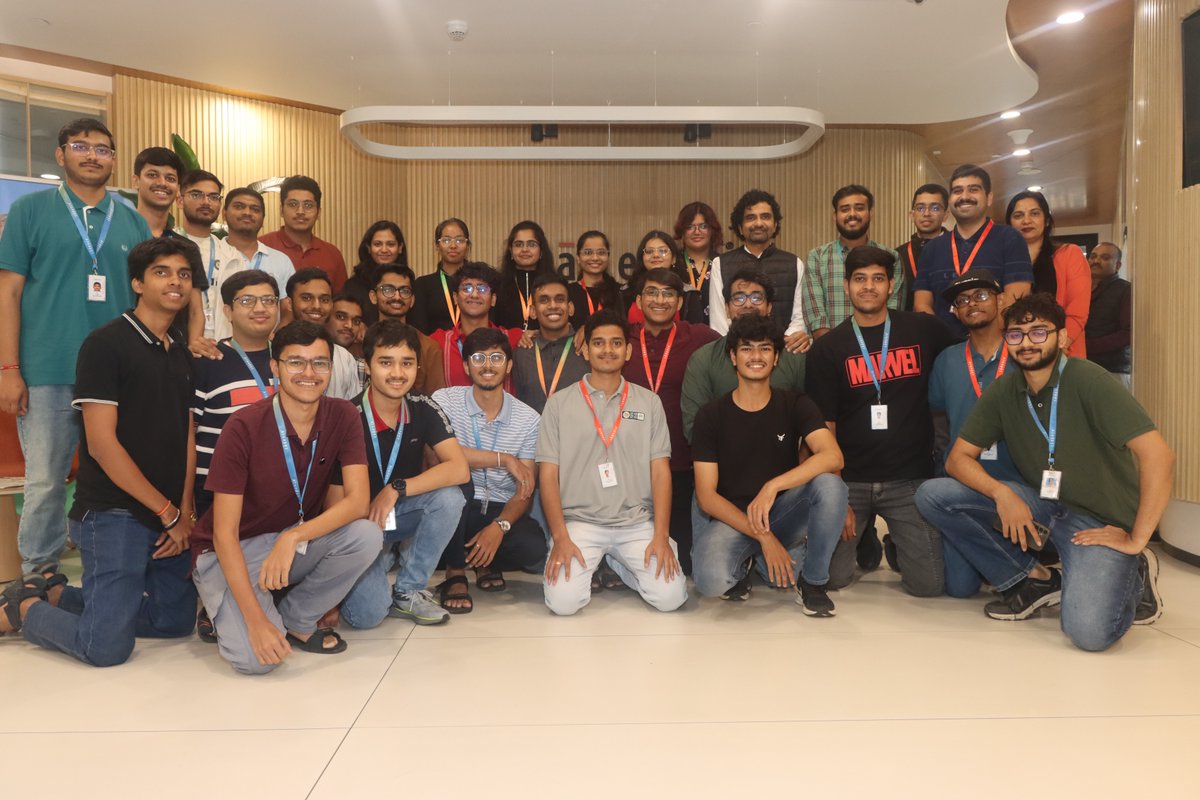
Our Pune office was buzzing with fresh perspectives and new ideas as we welcomed 25 interns for the start of their Cadence journey.
A highlight of the day was an inspiring session by Sarang Shelke, sr. design engineering group director at Cadence, on "The Career Three-Body Problem," encouraging interns to focus less on mapping their entire career and more on embracing the next learning loop. Combined with training sessions on the transition from campus to corporate, personal branding, networking, and success behaviors, the event set the stage for an exciting internship journey ahead. ⚡
Learn more about opportunities at Cadence 👉 https://t.co/jAdattwncr
Heading to #SC26? Join Steve Brown for “Agentic AI for Chip and System Design: Building the Future on @googlecloud.”
Hear how Cadence is applying agentic AI on Google Cloud to automate and scale complex engineering workflows.
📅 Nov. 18 | 4:30 p.m. CST
📍 Google Cloud Booth 3418
https://t.co/ykP9yXZlei
Physical AI depends on data moving seamlessly across the machine, the data center, and the edge.
Explore the connectivity requirements and challenges involved in enabling communication across these environments.
Read the blog: https://t.co/Rxf01euoF7
In a Cadence demonstration on a ten-layer board, the Cadence AuraStack AI Super Agent consolidated discrete components by package type and returned 28% in component cost with power margin preserved, evaluated against a validated power tree rather than a spreadsheet.
Our new eBook on agentic AI in PCB and advanced packaging design covers where that capacity goes, and how to get it back: https://t.co/IYYLNbw0XC
AI data centers are driving new power and connectivity demands.
See how fJscaler is using Cadence Virtuoso Studio and Spectre Simulation Platform to advance next-generation optical interconnects.
Watch the full Designed with Cadence episode: https://t.co/mVx3OdbEo6
Physical AI demands more than compute. Efficient data movement and memory architecture are critical to bandwidth, latency, power, and performance.
Explore the role of data locality, buffering, LPDDR, and GDDR in physical AI systems:
https://t.co/oqGgUN6VsU