Twenty years ago today, An Inconvenient Truth made its debut in movie theaters across the U.S.
I’ll be honest: I was skeptical that my slideshow about the climate crisis could become a successful movie. But thanks to our immensely talented director, Davis Guggenheim, Jeff Skoll, who made the ultimate decision to make the movie, and the incredible team behind the film — Laurie David, Lawrence Bender, Scott Z. Burns, Lesley Chilcott, Ricky Strauss, Diane Weyermann, and so many others, the film was a huge success, and opened the eyes of millions around the world to the threat posed by the climate crisis.
While I wasn’t sure that there’d be widespread public interest in a science-based slideshow, I have never doubted humanity’s ability to solve this crisis.
We know we must act, and Mother Nature is making that clearer and clearer every day. We’re already feeling the rapidly worsening impacts of a warming planet. Those impacts are evidence that our cause is even more urgent than it was 20 years ago. And as a result, the global movement for climate action has grown into the largest morally-based movement in the history of the world.
We also know now that we can act. Indeed, in the past 20 years, we’ve made tremendous progress: The world came together in 2015 to forge the historic Paris Agreement, which despite the recent U.S. withdrawal, continues to drive global action and ambition. Incredibly, last year, renewables made up 86% of all the new electric power installed around the world. In the U.S., renewables were 92% of all new power capacity!
Electric vehicles are now 25% of all new car sales worldwide and the sales of gasoline-powered vehicles have been declining since they peaked in 2017.
Unfortunately, however, the crisis is still getting worse faster than we are deploying the solutions — solutions that are now way cheaper than the dirty and dangerous fossil fuels still spewing heat-trapping pollution into the sky as if it is an open sewer.
So, while this is a natural occasion to reflect on the 20 years since the movie came out, I’m focused much more intensely on what we need to do now in order to shape what our world will look like in the next 20 years.
I’m still presenting my updated slideshow all over the world, training grassroots climate leaders and working with partners in 194 countries and territories who are creating change in their communities, in their workplaces and schools, and in their nation’s policies.
From what I’m seeing and hearing, I have no doubt that we will win this struggle. But it is still not clear that we will win it in time to avoid catastrophic damage and the dangerous negative tipping points that the climate scientists have long been warning us we must prevent.
Will we muster the moral courage and political will to solve this crisis?
Well, if you ever doubt our ability to do so, just remember that political will is itself a renewable resource. It’s up to all of us to renew it.
Photos: Still from An Inconvenient Truth, 2006.
Climate Reality Project training in Nashville, TN, 2026.
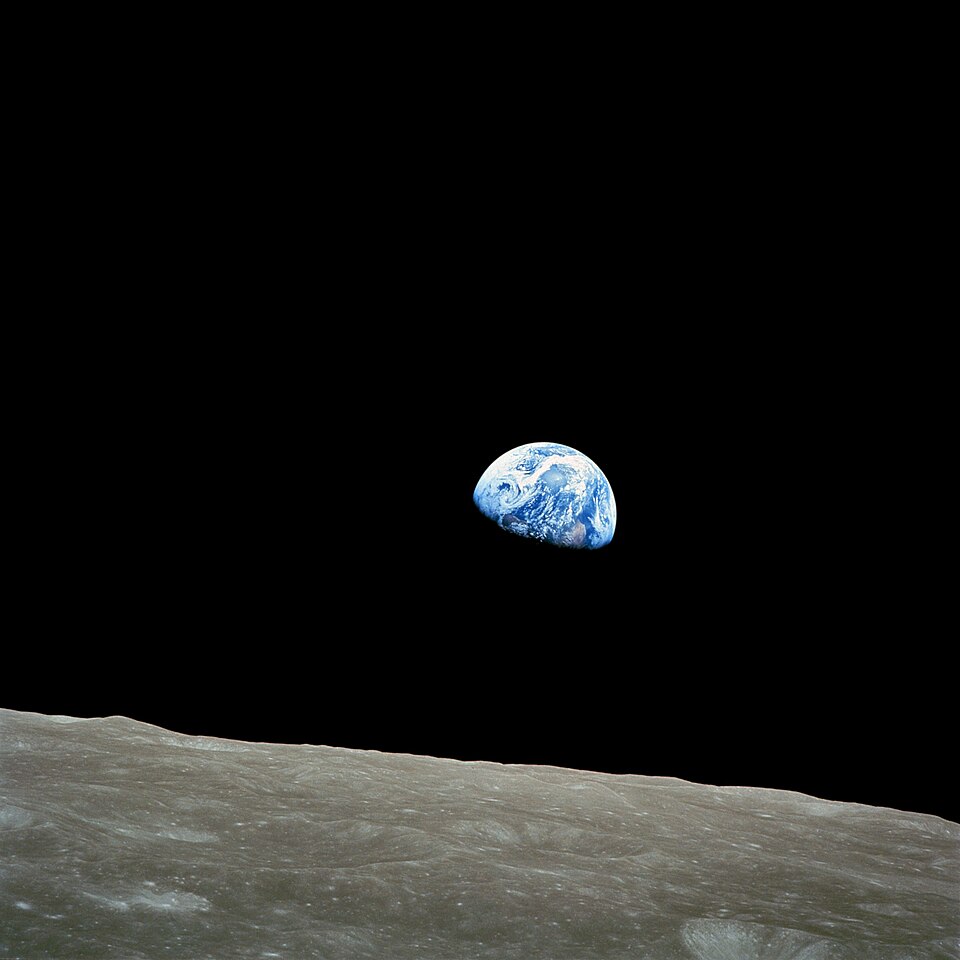
Earth Day gives us an important opportunity to reflect on the state of our planet – our only home. Just a few weeks ago, NASA’s groundbreaking Artemis II crew shared a new image of Earth, reigniting the spirit of awe and wonder that inspired the first Earth Day. Traveling farther into space than any humans ever have, the crew looked back at our planet and captured an image as it set behind the moon. This image, called Earthset, mirrors the famous Earthrise photograph from the Apollo 8 mission that sparked the modern environmental movement more than 50 years ago.
I remember seeing the Earthrise image for the first time and feeling called upon to protect the fragile, pale blue dot we call home. I hope this new image will inspire a new generation of leaders to feel the same way. As Artemis II astronaut Christina Koch said, reflecting on her crew’s mission: "We will inspire. But ultimately, we will always choose Earth. We will always choose each other."
Indeed, we must always choose the health and safety of the place we call home and the people we share this home with. On this Earth Day, and every day, I encourage you to commit to creating a cleaner, safer, and more sustainable future for us all.
"Welcome to my old neighborhood." Our @NASAArtemis II astronauts woke up on the sixth day of their mission to a special message recorded in 2025 by astronaut Jim Lovell, the pilot of Apollo 8.
The Trump Administration is once again trying to deny science and reality – this time, by throwing out the well-established research connecting the climate crisis to public health.
While the Trump Administration can try to ignore the climate crisis, it’s painfully clear that the climate crisis will not ignore us. Last summer, the US experienced a dozen once-in-1,000-year floods in the span of just three days. In Texas, one of those flooding events killed at least 135 people, including 37 children at summer camp.
The Trump Administration’s rollback of the endangerment finding is not only a direct assault on science, knowledge, and public health, it is an insult to the people across the country who are already coping with the disastrous consequences of climate-driven extreme weather events.
The decision to revoke the endangerment finding is one of the more egregious examples of the Trump Administration prioritizing fossil fuel profits over American lives.