APAC senior economist at @IndeedAU. Former RBA economist and economic journalist. Sports lover, avid reader and pretty opinionated. Active: #ausbiz#auspol
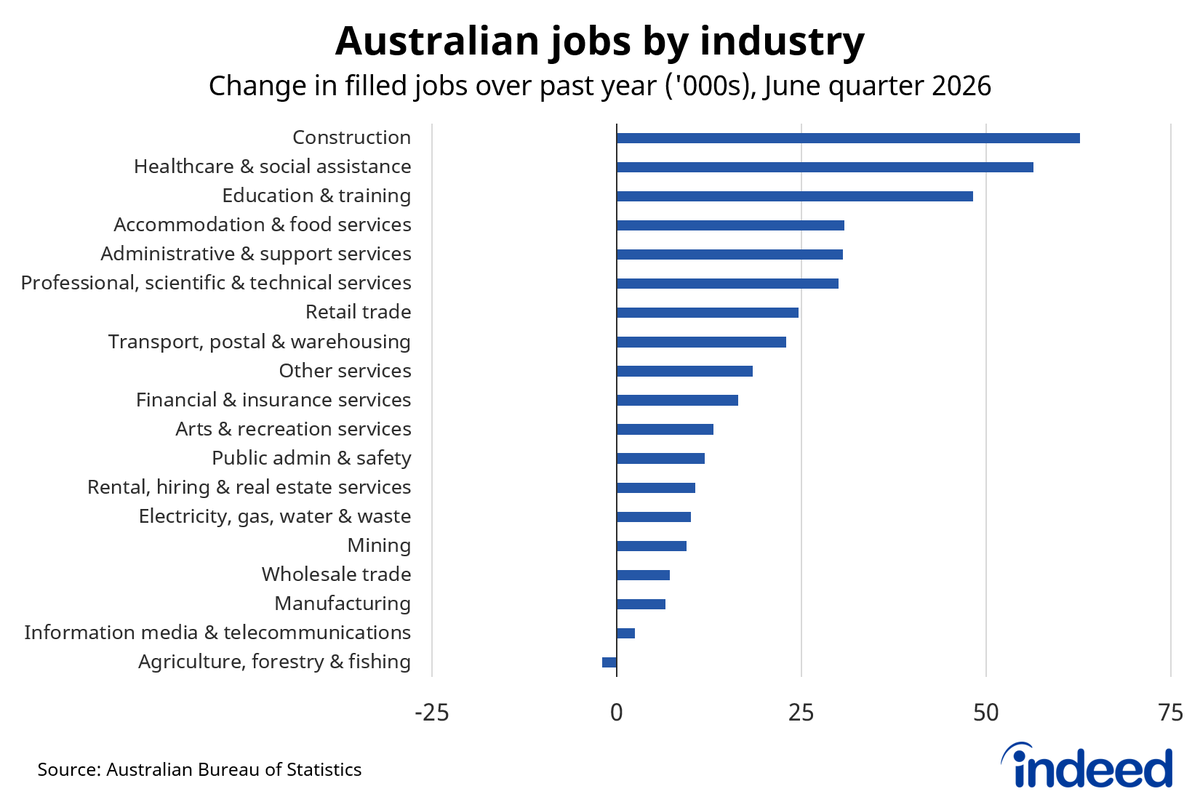
Australian job growth over the past year was concentrated in construction (+63k), healthcare & social assistance (+56k) and education & training (+48k).
Agriculture, forestry & fishing was the only industry where total jobs fell #ausbiz
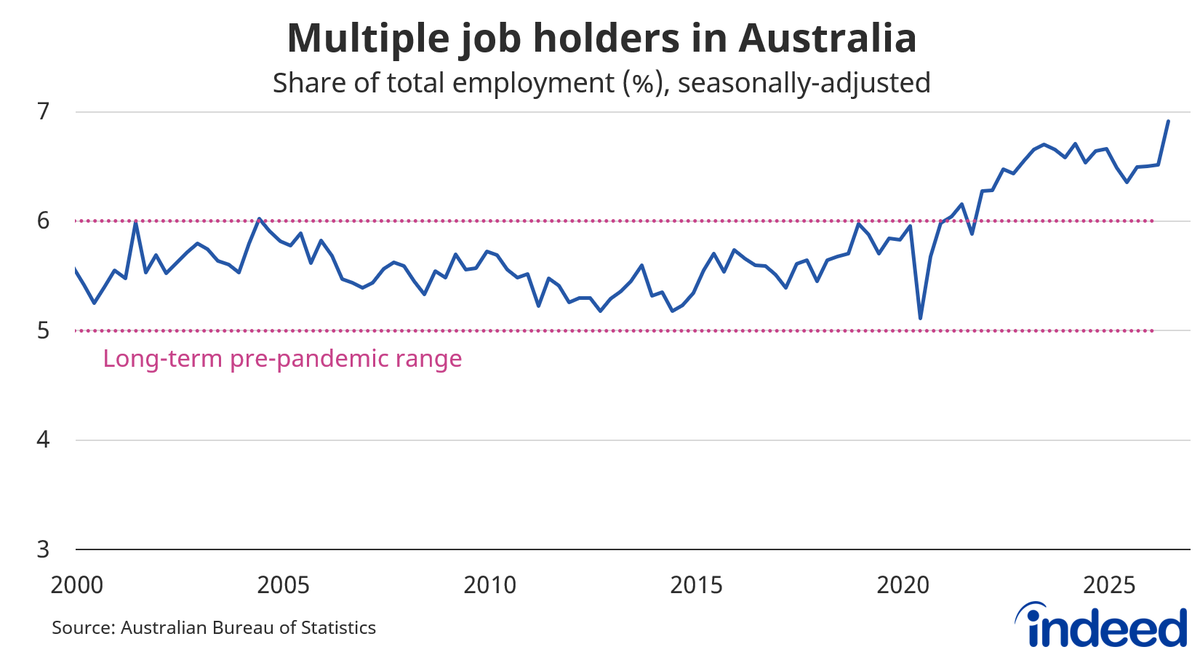
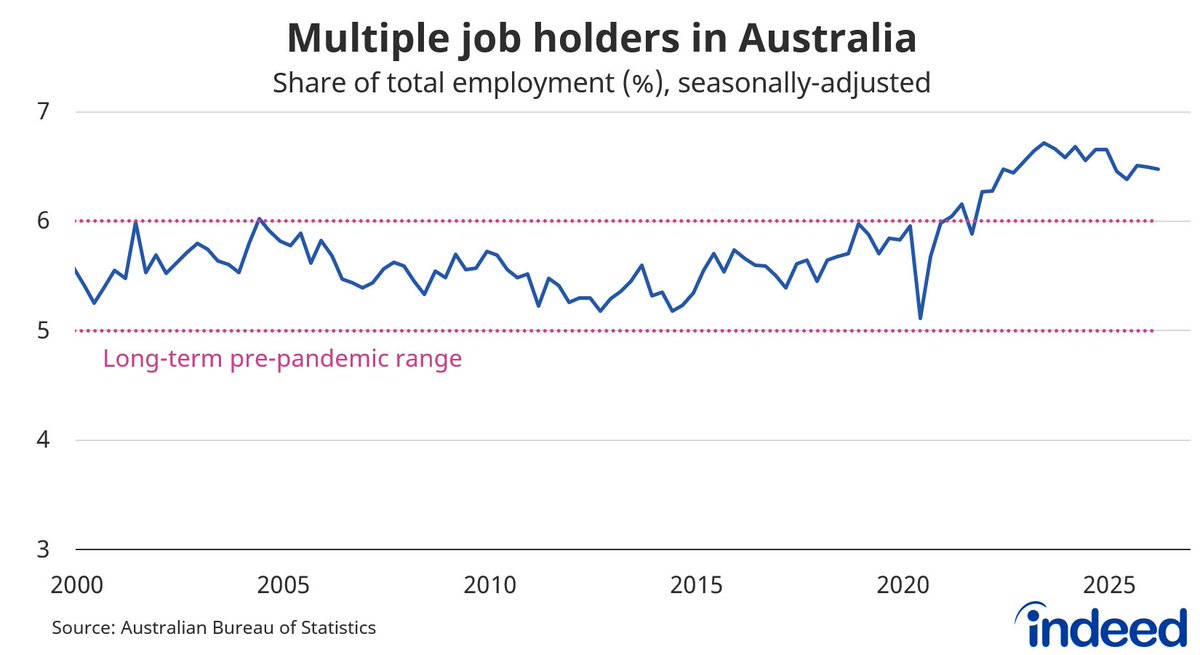
A record 6.9% of Australia's workers had multiple jobs in the June quarter.
Ongoing cost-of-living pressures are likely to blame. Many workers are looking for more hours to keep their heads above water #ausbiz#auspol
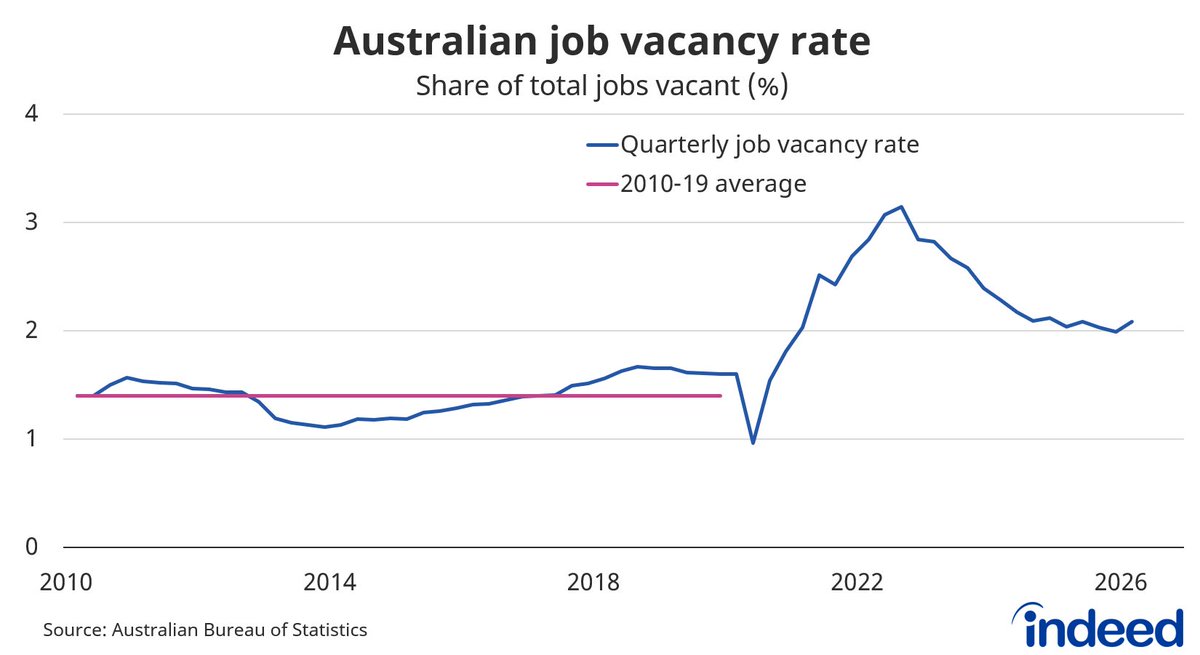
Australia's job vacancy rate eased to 2% in the June quarter - so 2% of all jobs nationwide are unfilled.
The vacancy rate has been pretty stable over the past two years and is still well above the 1.4% average from 2010-19 #ausbiz
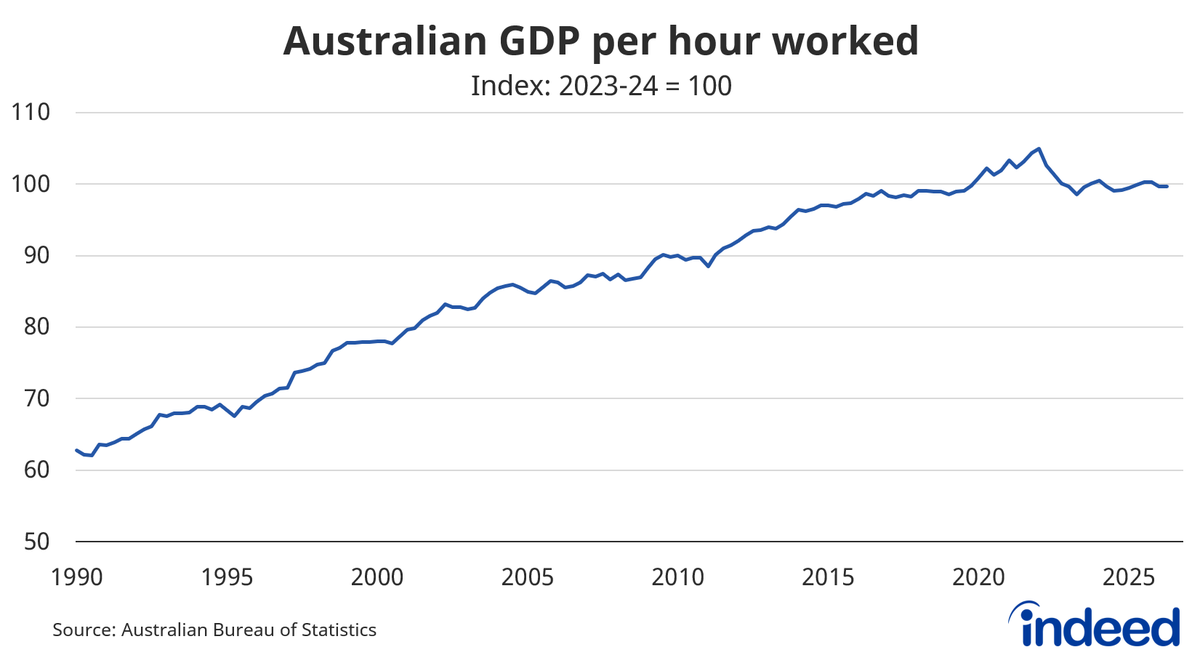
AI still have no impact upon Australian labour productivity, which was unchanged in the June quarter and hasn't meaningfully increased in years #ausbiz#auspol
When you truly understand a topic you can immediately recognise when AI gives you garbage or hallucinates.
When you outsource your university education, I'd wager you will be more easily fooled.
We are quite possibly going to create the dumbest generation of university graduates we've ever seen.
And that's problematic because the people most capable of working effectively with AI are those who are subject-matter experts #ausbiz#auspol
https://t.co/eyqBtoNT5T
Through July, Australian employment has increased 145.8k people this year. That's up from 104.9k over the same period last year, but well short of what was common in 2023 and 2024 #ausbiz#auspol
Businesses would inevitably complain - a lack of pay information gives them flexibility - but it'd be a winner with pretty much everyone who has to apply for jobs.
Pay transparency leads to better hiring matches, allows jobseekers to make more informed decisions and stops jobseekers from wasting time on applications.
6.5% of Australian workers have multiple jobs. That figure has been elevated for the past five years, reflecting the impact of the pandemic and the cost-of-living crisis #ausbiz
2.1% of Australian jobs are vacant nationwide. While that number has declined from a peak of 3.1% back in 2022, it remains well above the average vacancy rate from 2010 to 2019 (1.4%) #ausbiz
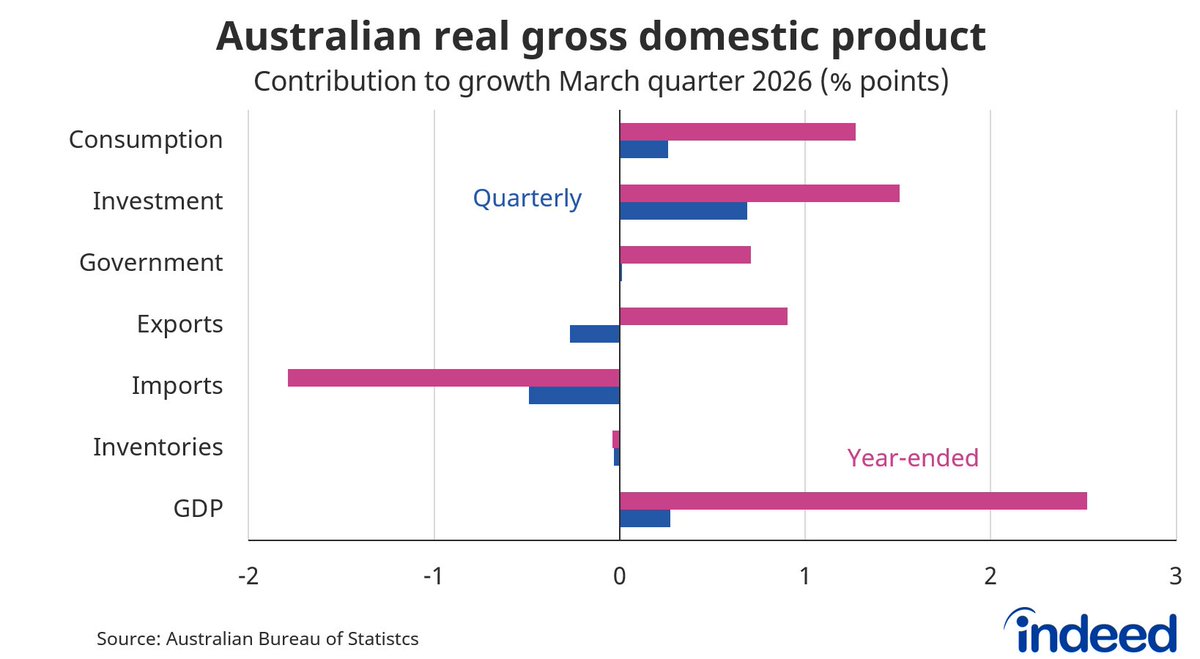
What drove Aussie GDP growth in the March quarter?
Both consumption and investment were pretty good, but that was offset by a decline in exports and strong growth in imports.
That left real GDP growth at 0.3% in the March quarter and 2.5% over the past year #ausbiz#auspol
Australia's wage price index rose 3.3% over the past year, compared to consumer prices climbing 4%.
So unless you've received a promotion or changed jobs recently - and I certainly haven't - then there's a good chance your salary buys a lot less than it used to #auspol
Another sign that the graduate market is generally healthy is low job search volumes. It’s a sign that friction in the grad market remains relatively low. Grads continue to find jobs quickly, requiring fewer job searches than in the years before the post-pandemic job boom.