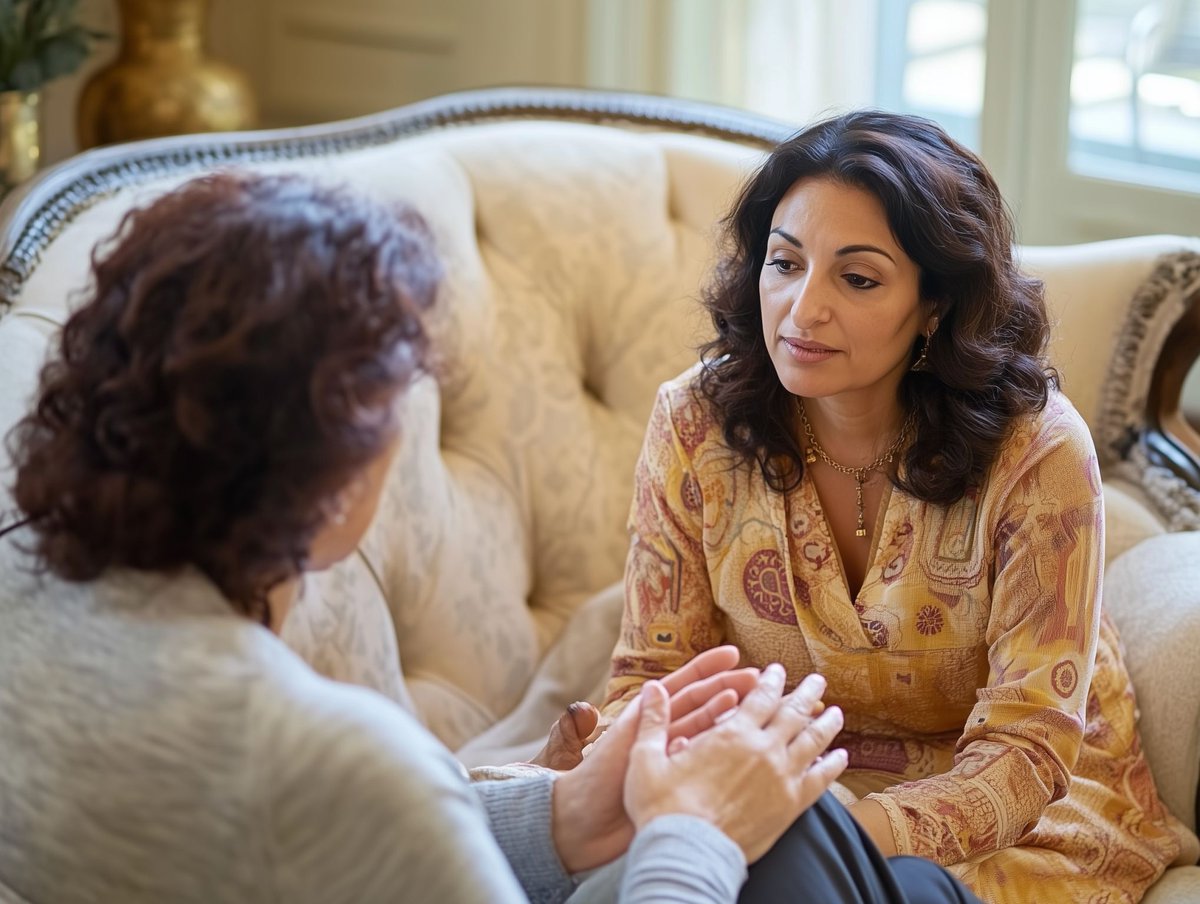
The road ahead is exciting—if we walk it together.
🔍 Informed by research.
🤝 Guided by empathy.
🚀 Dedicated to responsible innovation.
What are your thoughts on AI in mental health care? Let’s discuss! 👇
A new JMIR Mental Health survey reveals:
👉 43% of mental health professionals use AI tools for tasks like report writing and research.
👉 92% of them found AI beneficial, citing time-saving and efficiency gains. 🧵👇
At Calme AI, we’re inspired by this momentum.
We’re building tools that:
✨ Enhance human connection.
✨ Streamline clinician workflows.
✨ Make mental health support more accessible and personalized.
Because the future of mental health care is AI + empathy. ❤️
Have you seen this dynamic in your own industry—or even your own life?
Share your thoughts (and favorite sayings about it!) below. 👇
Let’s talk about how we can all find balance. 🌱
Ever heard the phrase, “The shoemaker’s children go barefoot”?
In Arabic, they say, سكافي حافي (The shoemaker is barefoot).
It got us thinking about therapists—those who guide others through life’s hardest moments while quietly carrying their own. 🧵👇
At Calme, we believe it’s time to change that.
Our AI assistant doesn’t just help therapists manage their practice—it’s designed to support their well-being, too.
Because when therapists thrive, they help others heal. ❤️
5/ Use Case: Therapy Insights - How we do it at @CalmeAi
• Use GraphRAG to process session data and retrieve relevant clinical insights.
• Then expand context by linking patient concerns to historical patterns, treatment guidelines, and therapist notes.
• Result? More accurate and tailored support for patients. 💡
1/ Can emotions be reduced to algorithms?
AI is entering therapy, analyzing language patterns, and translating our feelings into data points.
This bold step attempts to quantify what has always been deeply human.
4/ The future of mental health is at a crossroads.
As AI evolves, we must ask:
• Are we truly enhancing care?
�� Or are we risking the loss of humanity in the process?
6/ Let’s start a conversation:
What are some ways we can better support the mental health professionals in our lives?
Share your thoughts—together, we can make a difference. 💬