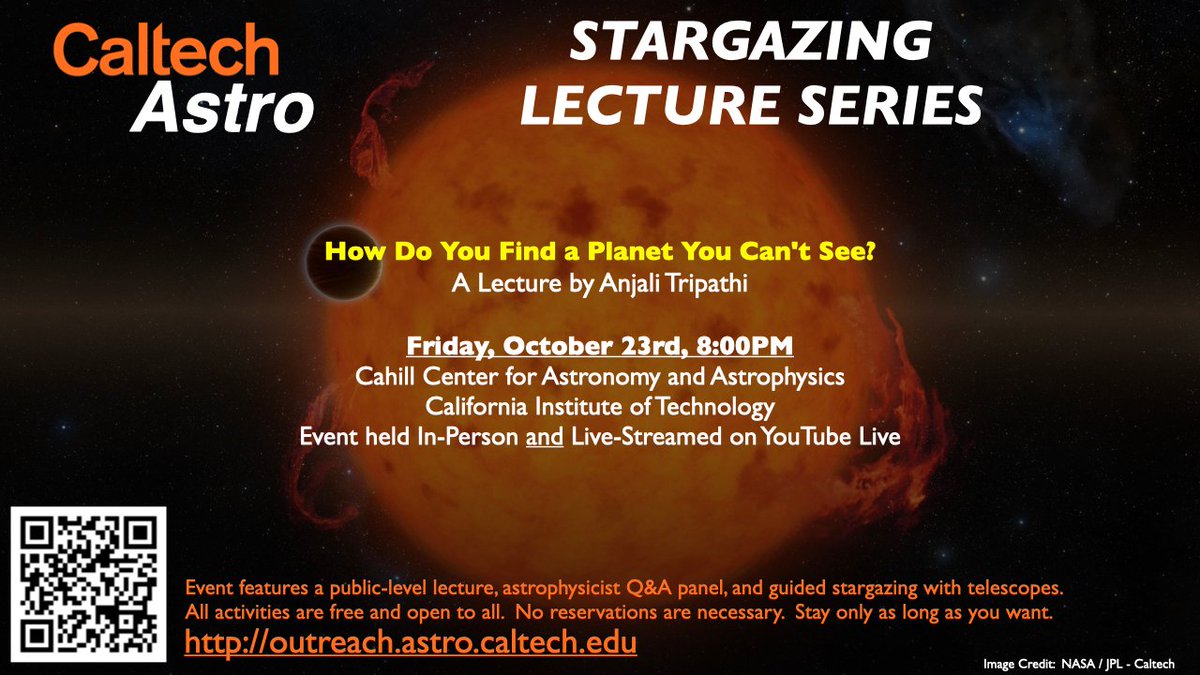
How do astronomers discover planets orbiting distant stars when the planets themselves are too faint to see? Will we find another world like Earth? Join us for our next Stargazing Lecture with NASA JPL scientist Dr. Anjali Tripathi this month!
https://t.co/bwh4JYko8u
Are there other planets out there like Earth? How can we find them? Join us this Friday for a Stargazing Lecture on exoplanets by NASA JPL exoplanet researcher Dr. Anjali Tripathi. Telescopes afterwards and live-streamed on YouTube!
How do astronomers discover planets orbiting distant stars when the planets themselves are too faint to see? Will we find another world like Earth? Join us for our next Stargazing Lecture with NASA JPL scientist Dr. Anjali Tripathi this month!
https://t.co/bwh4JYko8u
How do astronomers discover planets orbiting distant stars when the planets themselves are too faint to see? Will we find another world like Earth? Join us for our next Stargazing Lecture with NASA JPL scientist Dr. Anjali Tripathi this month!
https://t.co/bwh4JYko8u
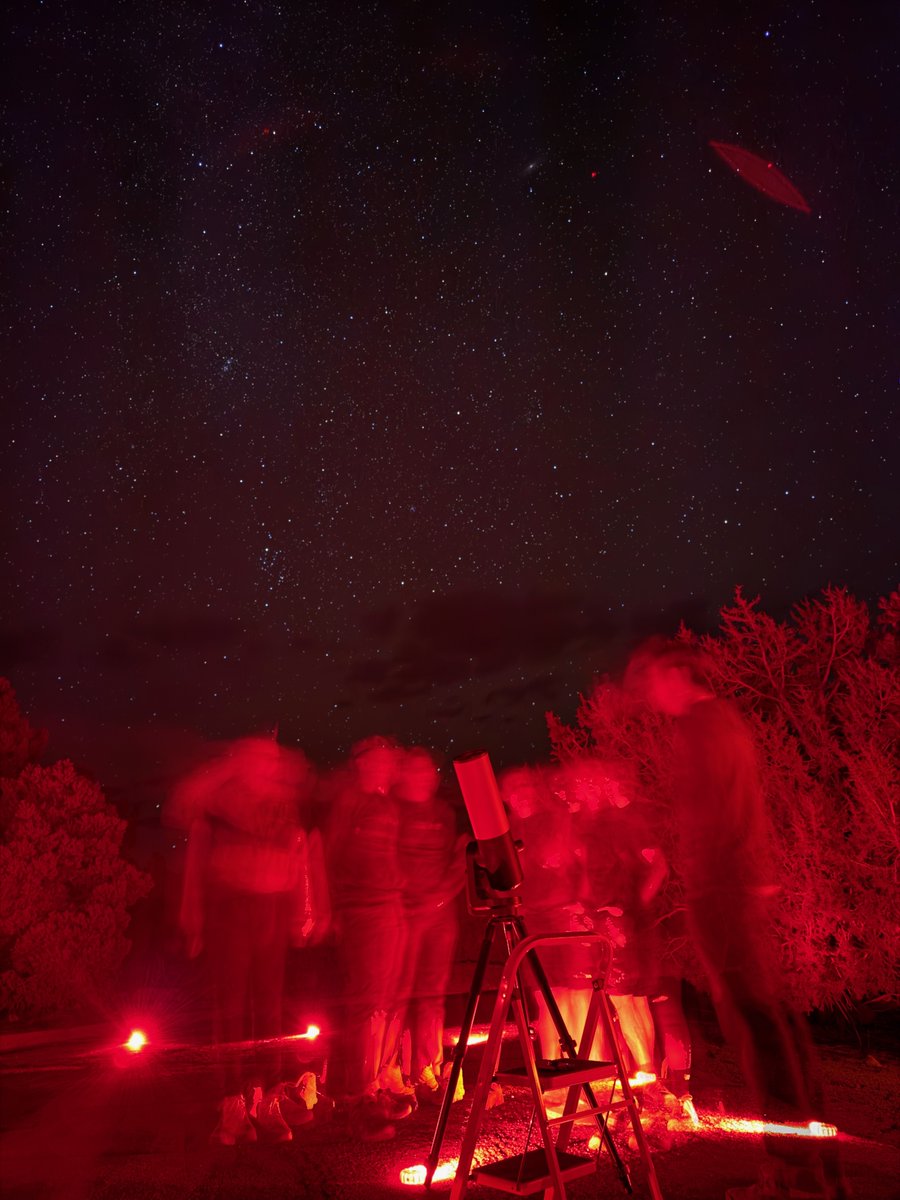
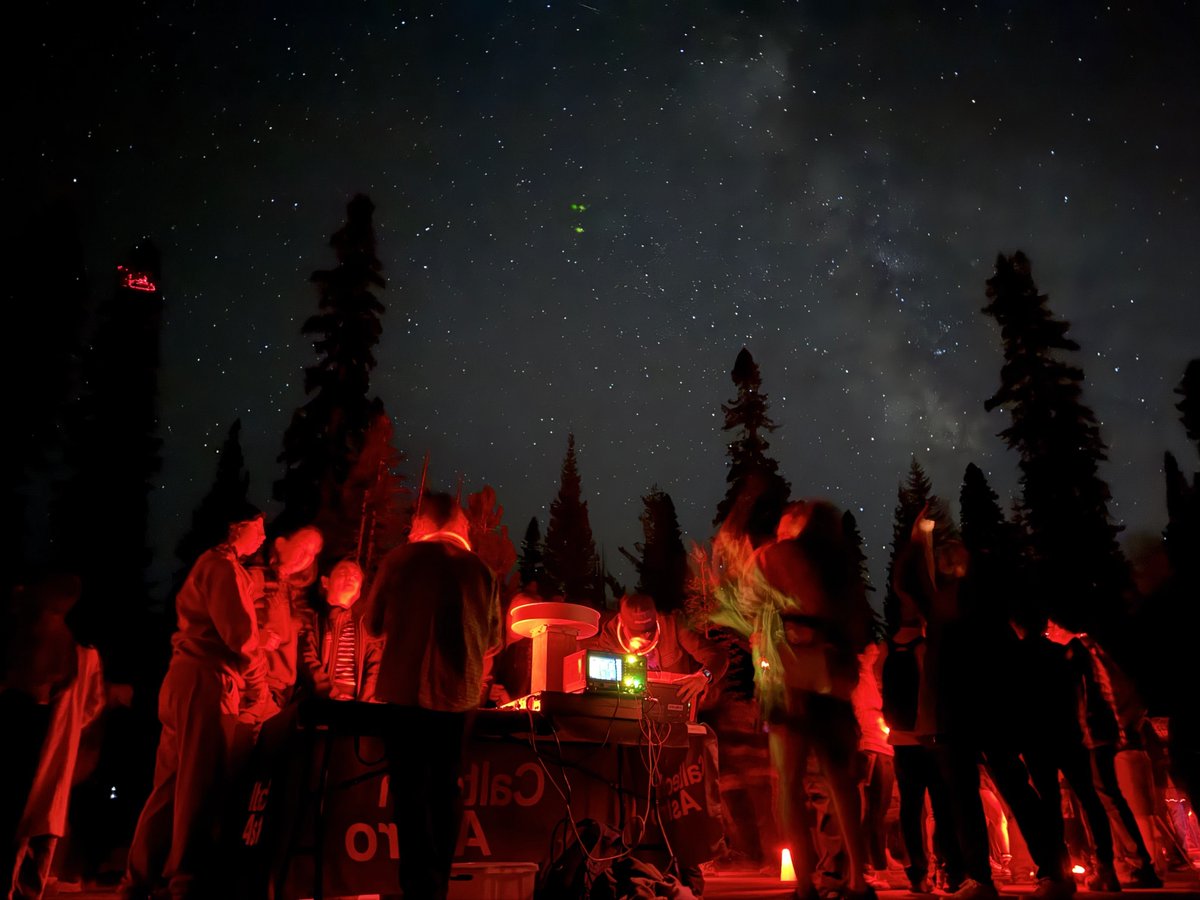
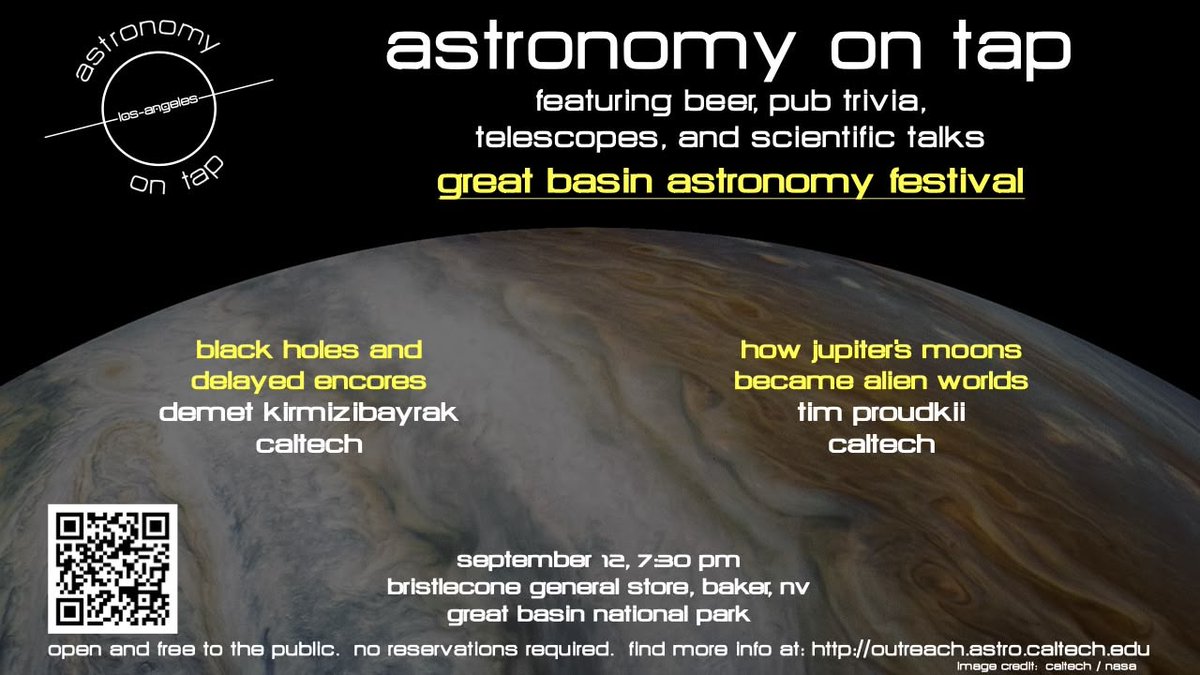
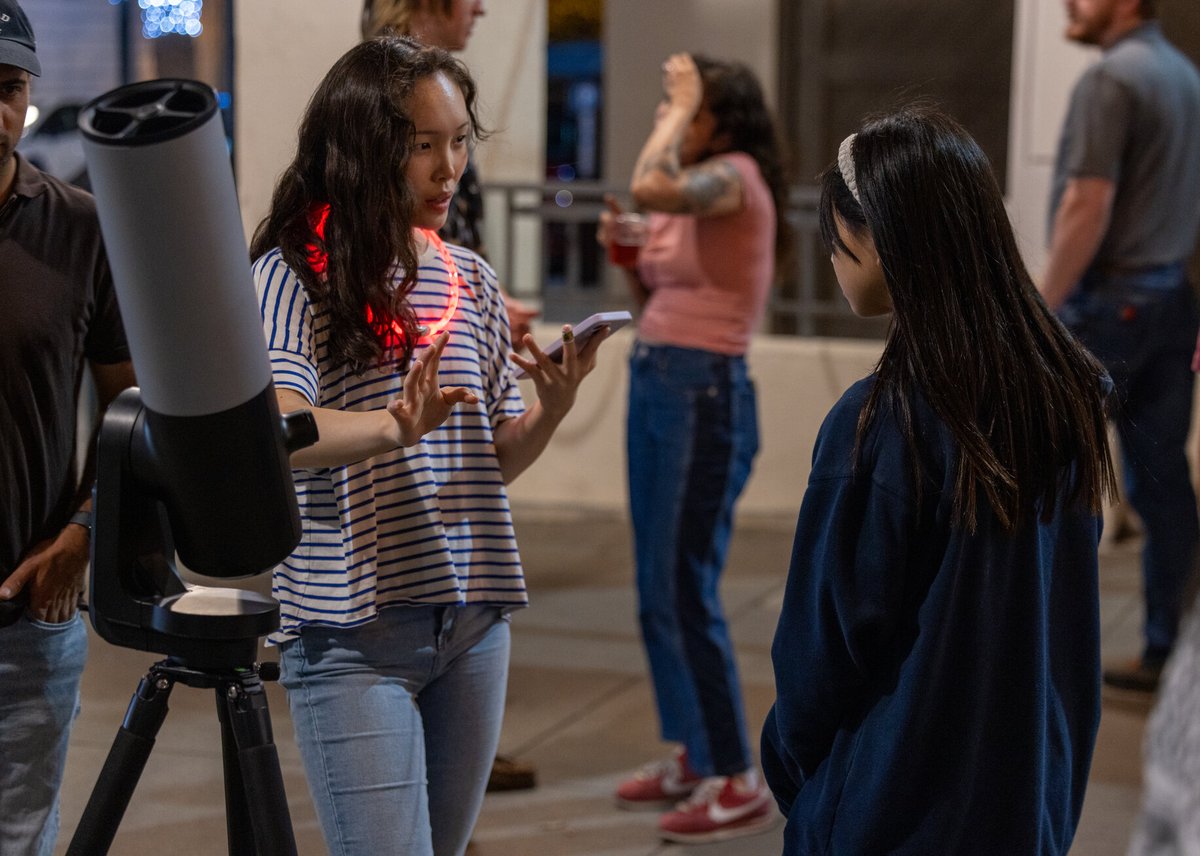
Dark skies, the Milky Way, and thousands of people exploring the Universe. We had a great weekend at the Great Basin Astronomy Festival, sharing telescopes, science talks, and astronomy with visitors from across the country. Thanks to Great Basin National Park for hosting.
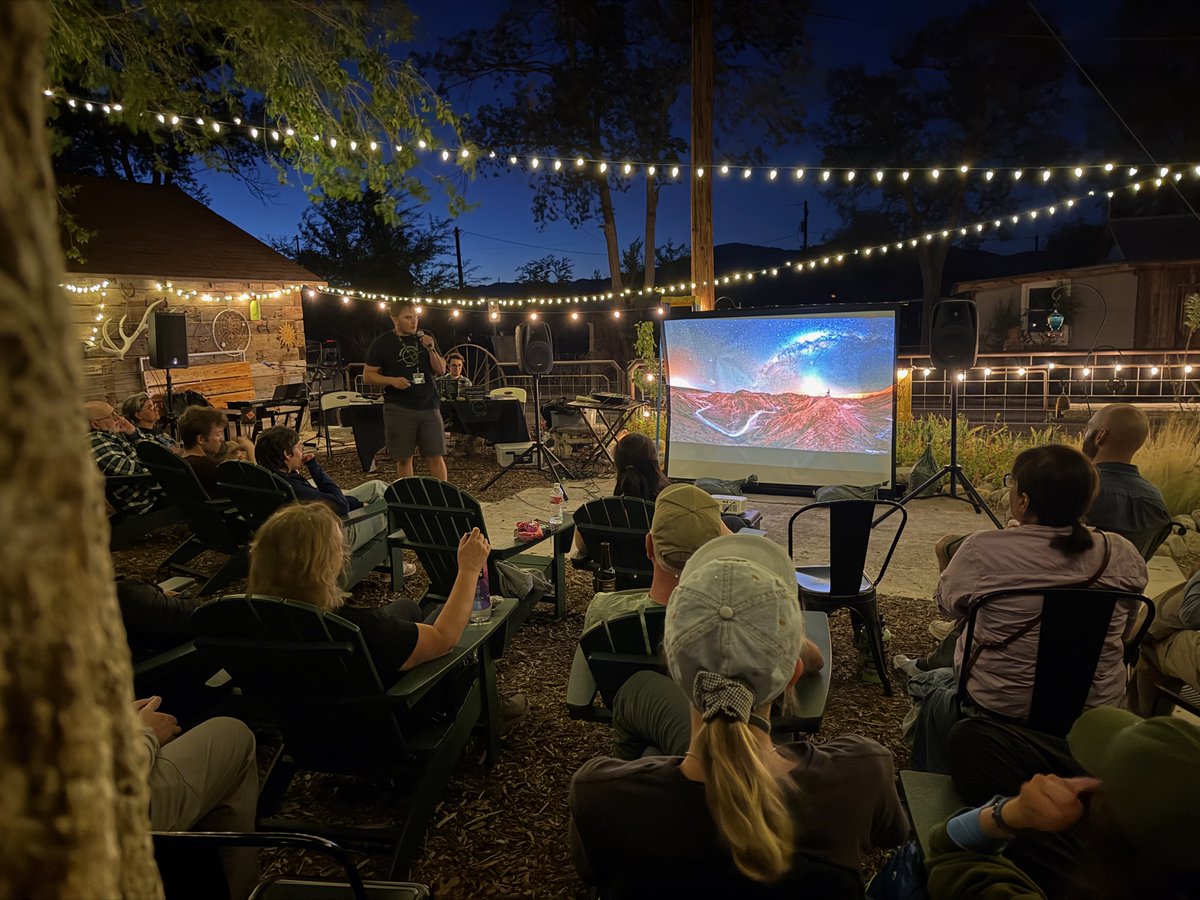
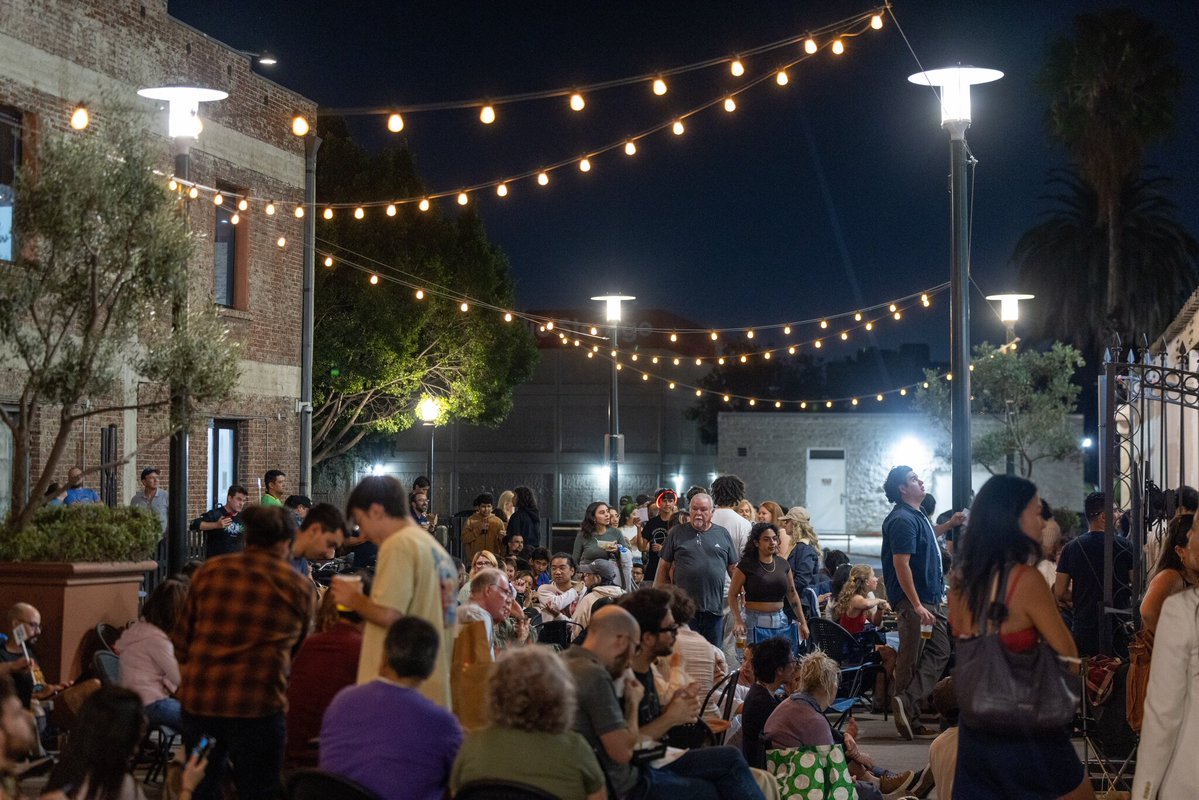
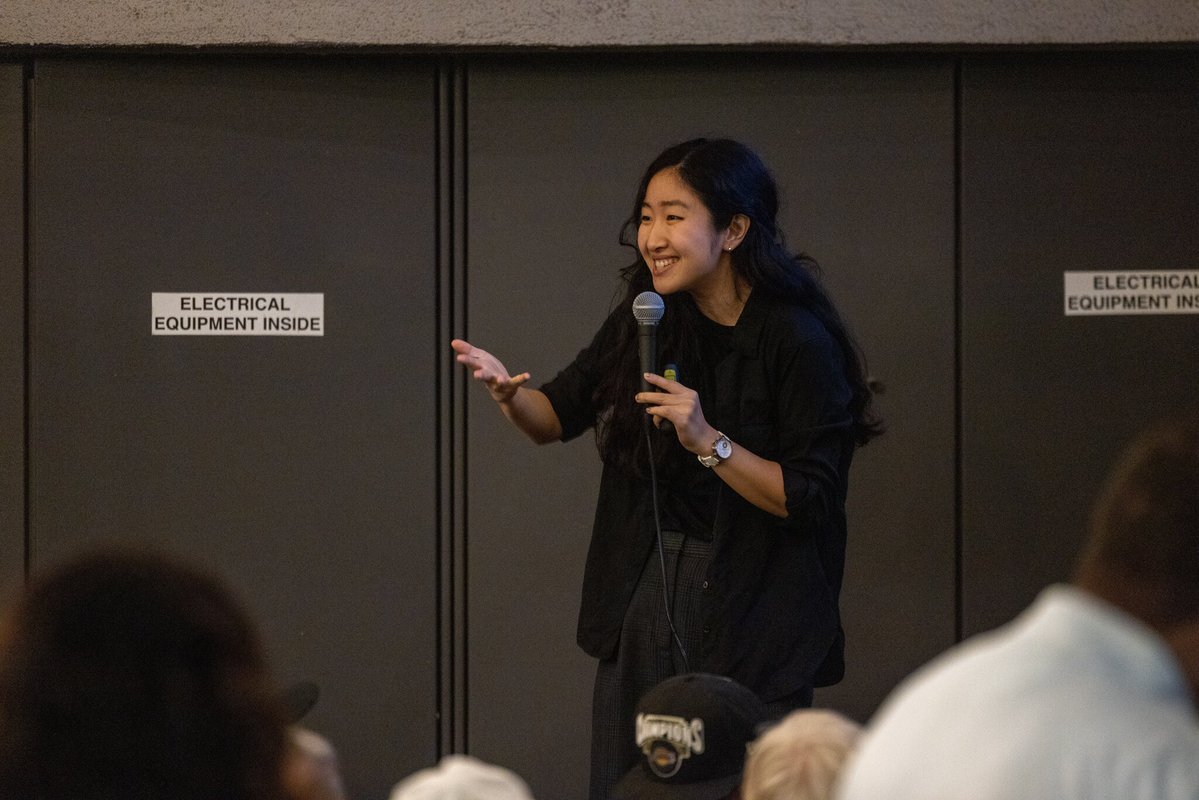
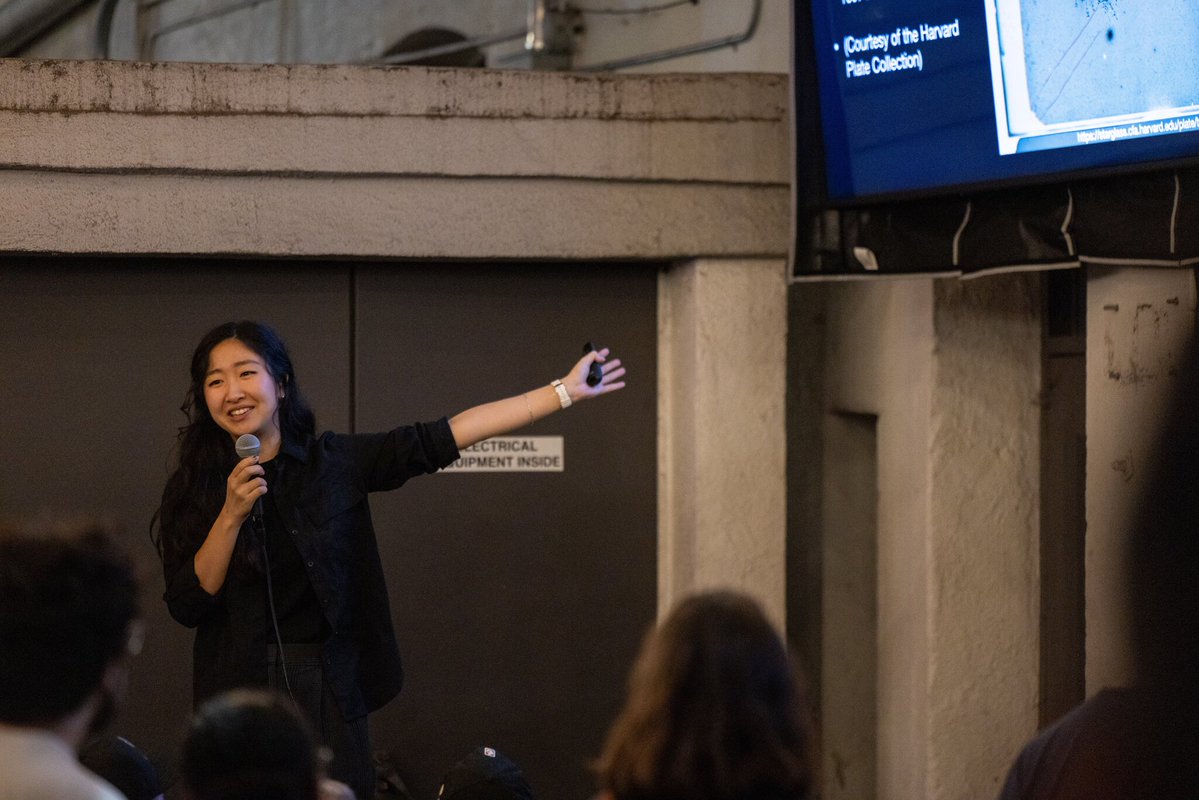
What can light echoes tell us about black holes? How do astronomers connect simulated galaxies with the real Universe? Join us tonight at 7:30PM for Astronomy on Tap: two short science talks, pub trivia, and guided stargazing. Free and open to all!
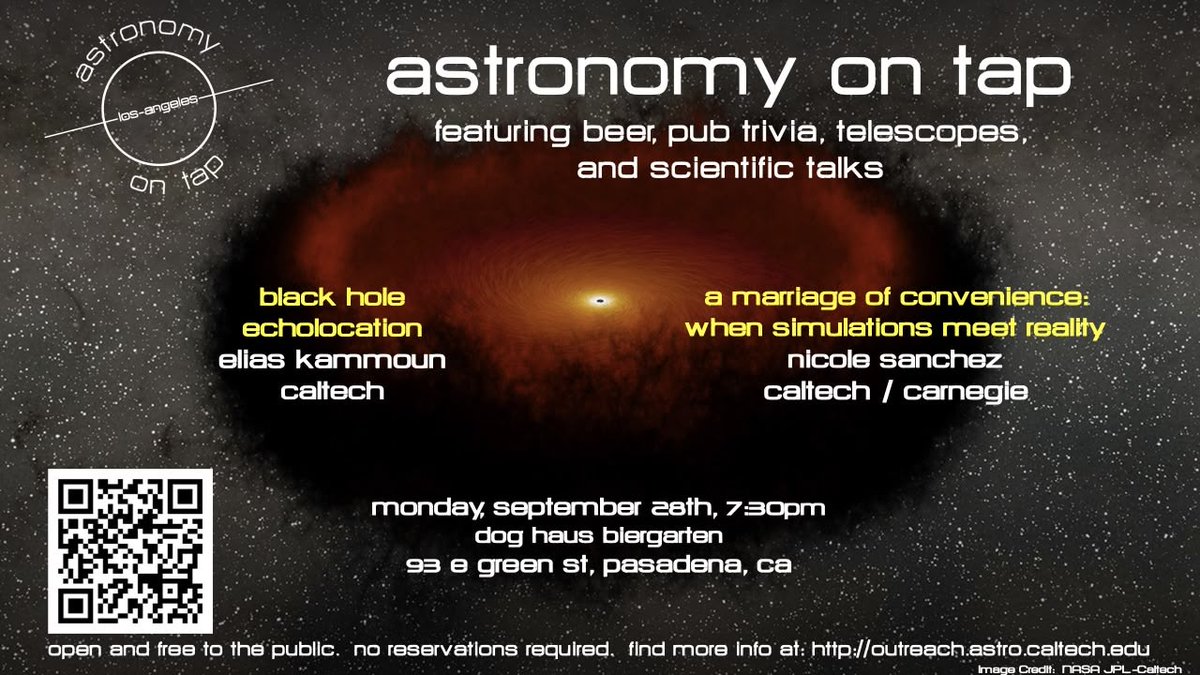
How can we use echoes of light to map the regions around supermassive black holes? How do astronomers connect computer simulations of galaxies with what we actually see in the Universe? Join us Monday, September 28th at 7:30PM for Astronomy on Tap!
https://t.co/2c5BytRvtg
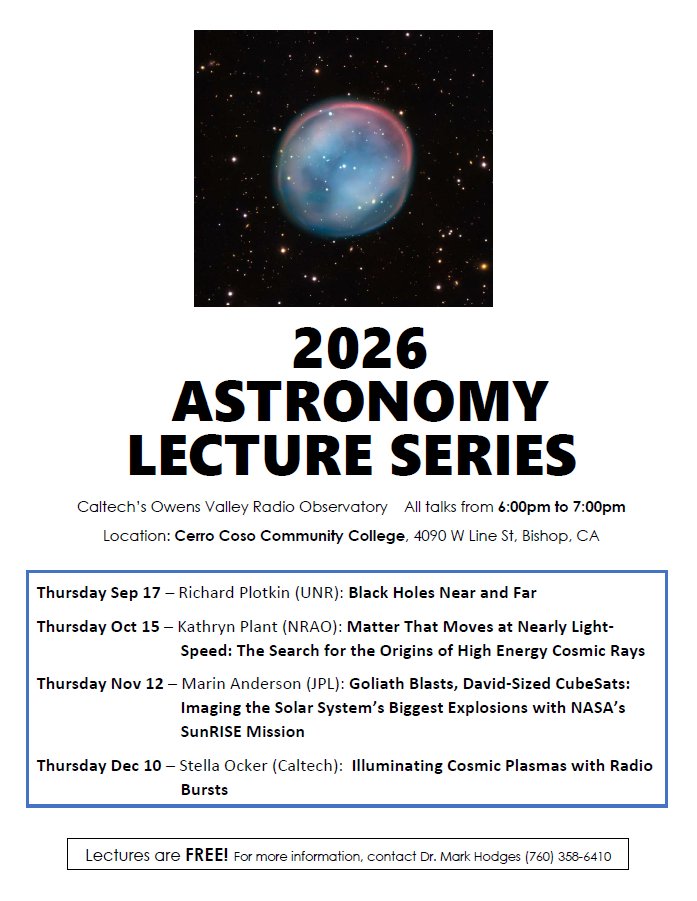
Caltech's Owens Valley Radio Observatory is hosting a series of free public astronomy lectures in Bishop this fall. Hear about black holes, cosmic rays, solar explosions, and radio bursts. Talks will be at Cerro Coso Community College in Bishop and are free and open to all.
How have ground-based telescopes transformed our view of the Universe? We recently hosted Kaitlyn Shin to discuss the history and science of ground-based telescopes at Astronomy on Tap. Kaitlyn's presentation is now up on YouTube:
https://t.co/jJbZnC8GVB
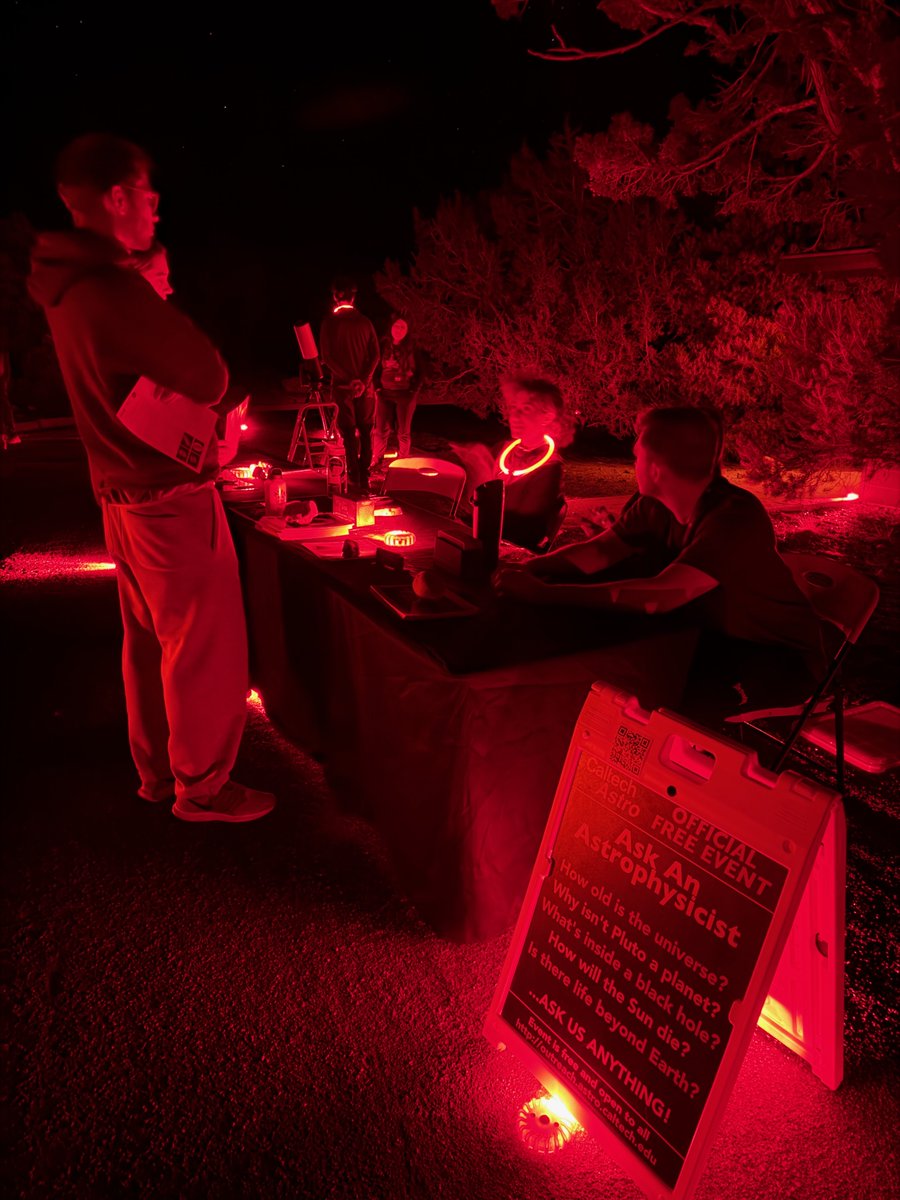
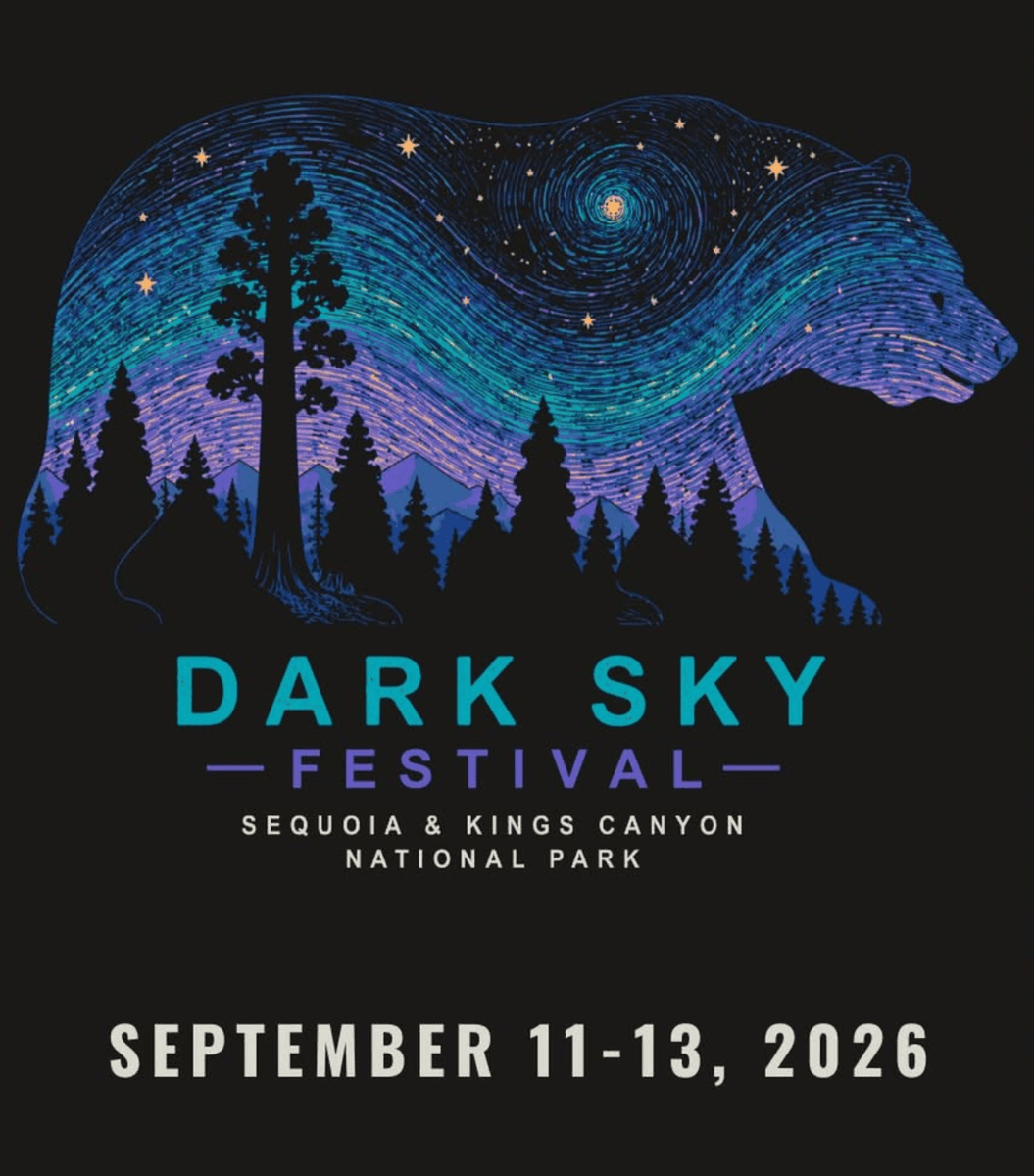
Our scientists helped out with the Sequoia Dark Sky Festival this month. We brought telescopes (including a radio telescope), hosted an Astrophysicist Q&A Panel, and gave science presentations on cosmology and asteroids. Great trees, great skies, and great crowds!
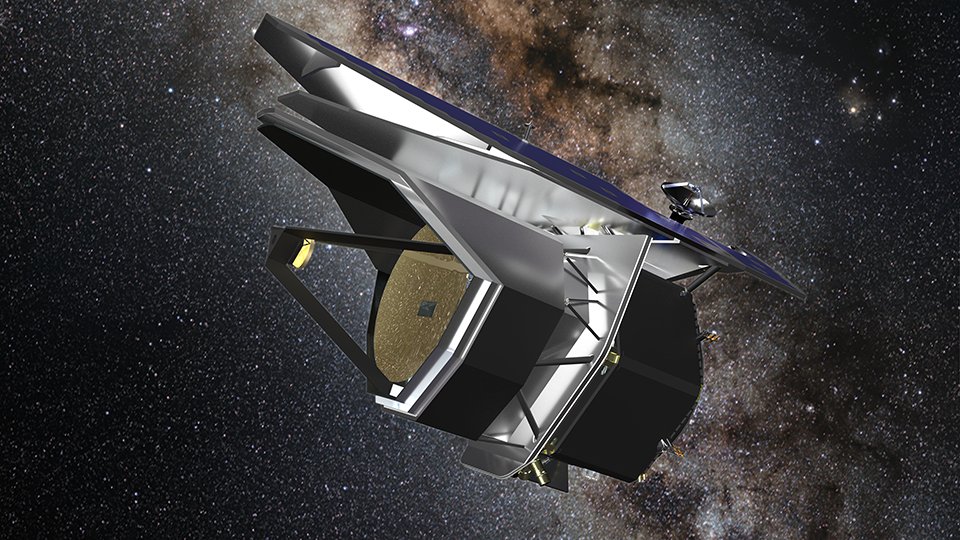
Exciting news for astronomy in Pasadena! NASA has selected PRIMA, the PRobe far-Infrared Mission for Astrophysics, to move forward in development. Congratulations to the entire PRIMA team, including our colleagues at NASA JPL and IPAC here in Pasadena!
https://t.co/QZSkOhWiQ4
What can we learn about black holes from their surroundings? How do galaxies change over billions of years? Join us next week to learn about these topics and more at Astronomy on Tap, featuring telescopes, trivia, science, and drinks!
How can we use echoes of light to map the regions around supermassive black holes? How do astronomers connect computer simulations of galaxies with what we actually see in the Universe? Join us Monday, September 28th at 7:30PM for Astronomy on Tap!
https://t.co/2c5BytRvtg
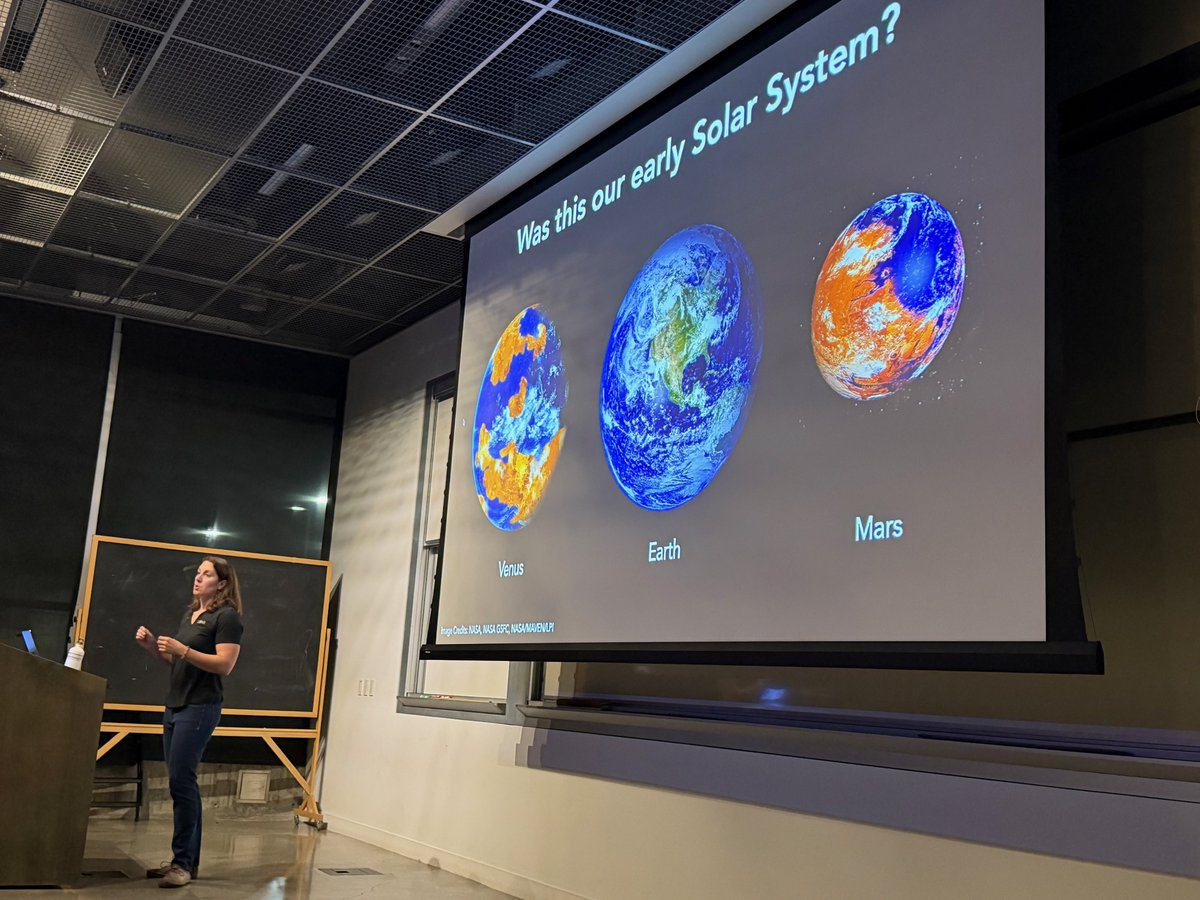
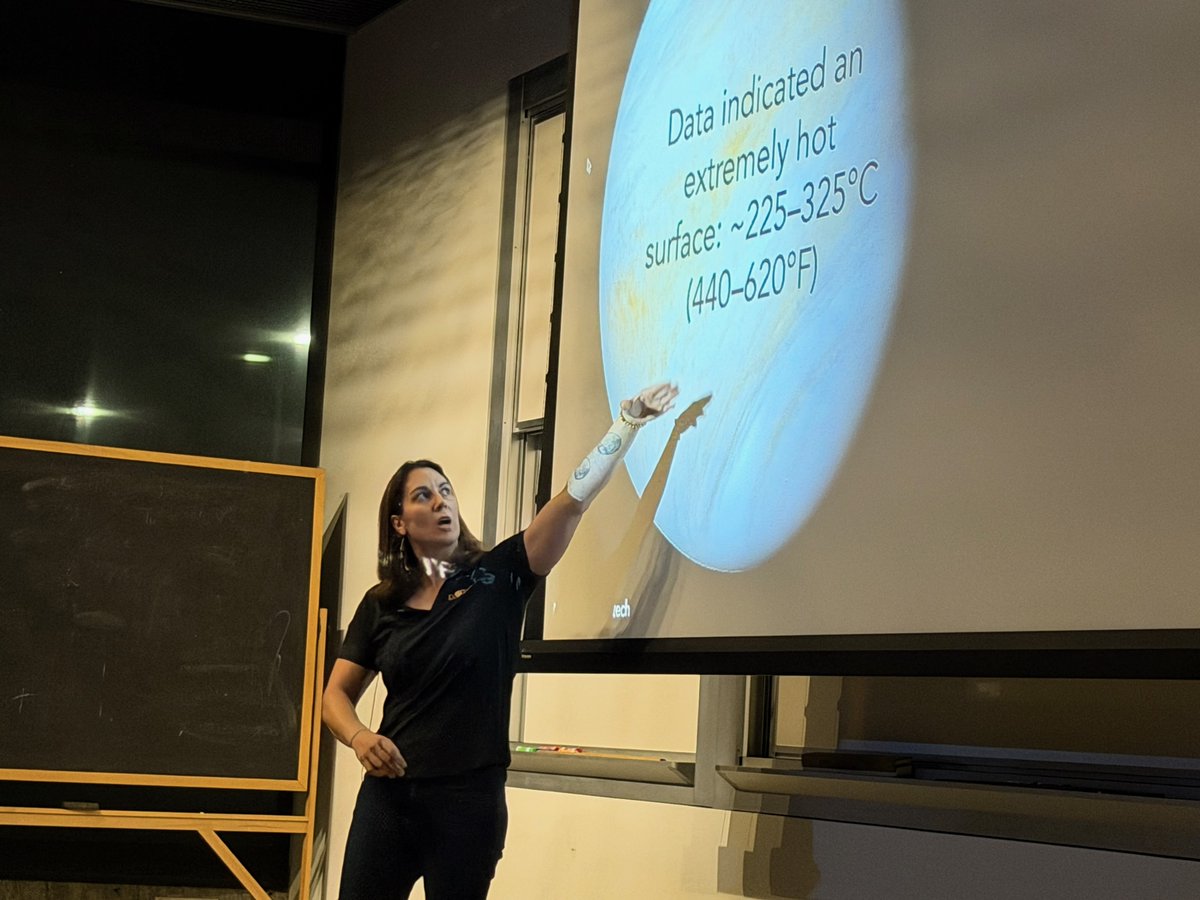
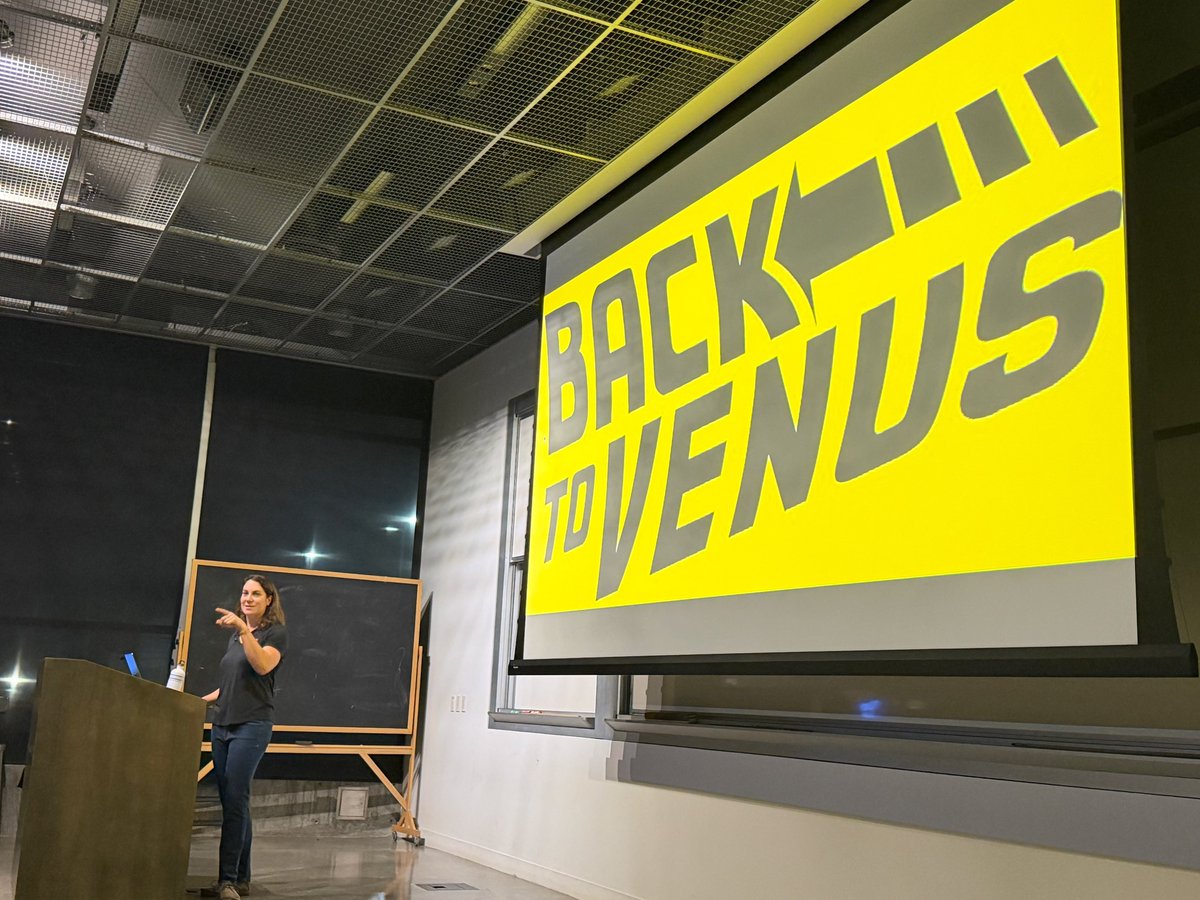
What secrets are hidden beneath the clouds of Venus? What can our Venus teach us about the evolution of Earth-like worlds?
Last week, NASA scientist Amy Hofmann joined us to discuss DAVINCI, an upcoming NASA mission to visit Venus. Now up on YouTube:
https://t.co/rAn8osDJ2A
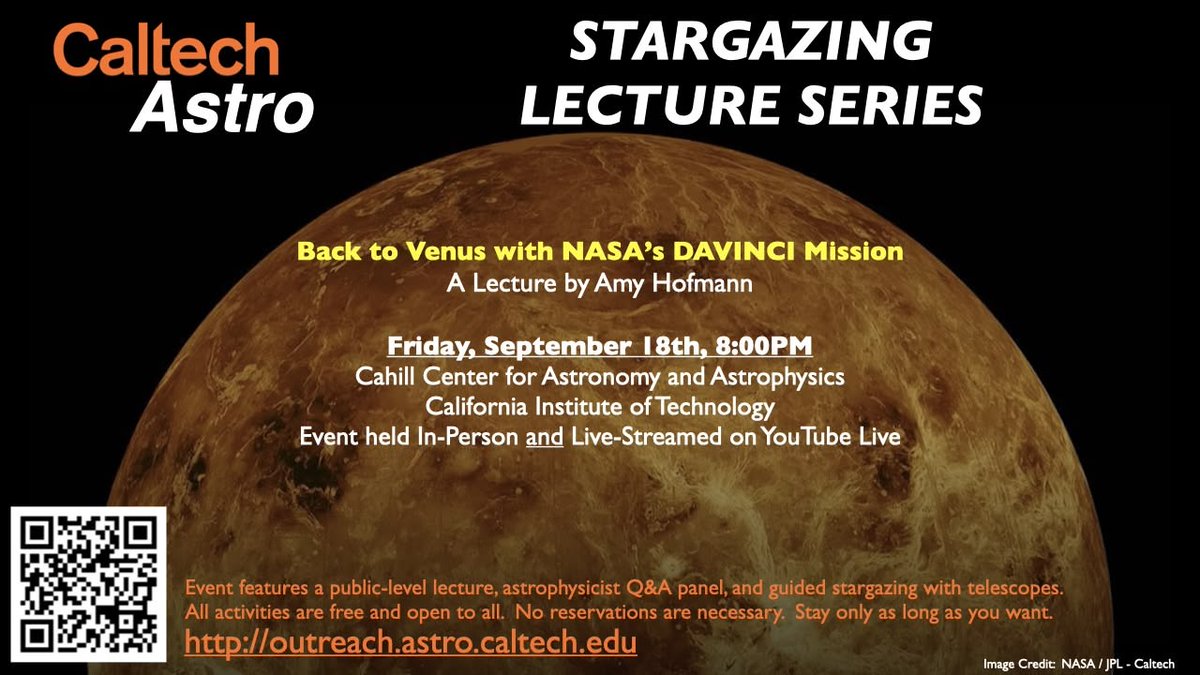
Did Venus once have oceans? Why did Earth's nearest planetary neighbor become such a hellish world? Join us for a lecture by NASA JPL scientist Dr. Amy Hofmann on Sept 18 @ 8PM. Talk followed by stargazing with telescopes. In-person and on YouTube. Free!
https://t.co/bwh4JYko8u
Join us this Friday to learn all about Venus and DAVINCI, NASA’s upcoming mission to explore our mysterious planetary neighbor! Telescopes and stargazing to follow.
Did Venus once have oceans? Why did Earth's nearest planetary neighbor become such a hellish world? Join us for a lecture by NASA JPL scientist Dr. Amy Hofmann on Sept 18 @ 8PM. Talk followed by stargazing with telescopes. In-person and on YouTube. Free!
https://t.co/bwh4JYko8u
How can we use echoes of light to map the regions around supermassive black holes? How do astronomers connect computer simulations of galaxies with what we actually see in the Universe? Join us Monday, September 28th at 7:30PM for Astronomy on Tap!
https://t.co/2c5BytRvtg
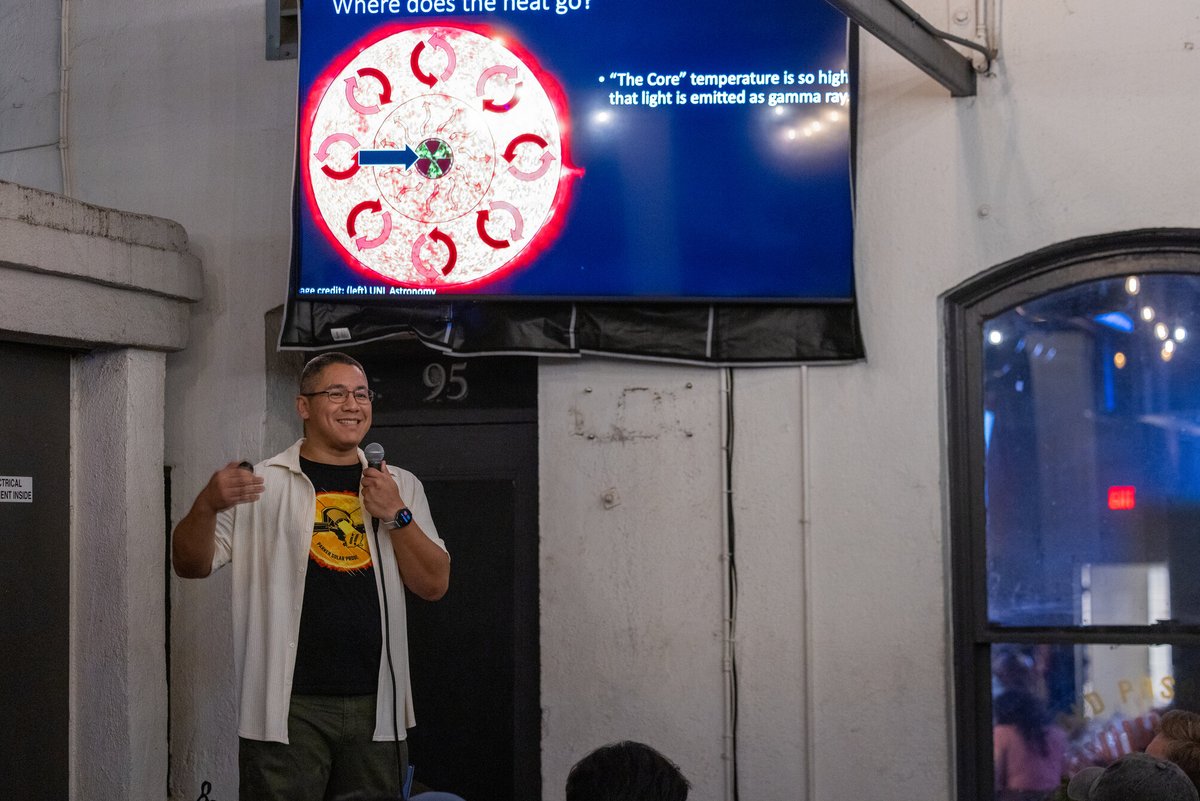
What makes a solar eruption extreme? Why are some eruptions from the Sun far more powerful than others? We recently hosted solar physicist Gabriel Muro to discuss the physics behind solar eruptions at Astronomy on Tap. Now up on YouTube:
https://t.co/mqdAvhi403
Join us this weekend for the Sequoia Dark Sky Festival, featuring science talks, telescope viewing, and more! Our team will give presentations on asteroids, supernovae, and cosmology. We'll also have telescopes, including a radio telescope to detect hydrogen gas in the Milky Way!
Do you like nature and astronomy? Join us in 2 weeks for the Sequoia Dark Sky Festival, September 11–13! We'll be joining the National Park Service for a weekend of stargazing, science presentations, and more.
https://t.co/Jt45wSSaA2
Last month, we teamed up with Lassen Volcanic National Park for Dark Skies at Lassen, a weekend of stargazing and science! We had great weather, beautiful views, and lots of astronomy throughout the weekend. Join us at Sequoia or Great Basin this weekend for similar events!
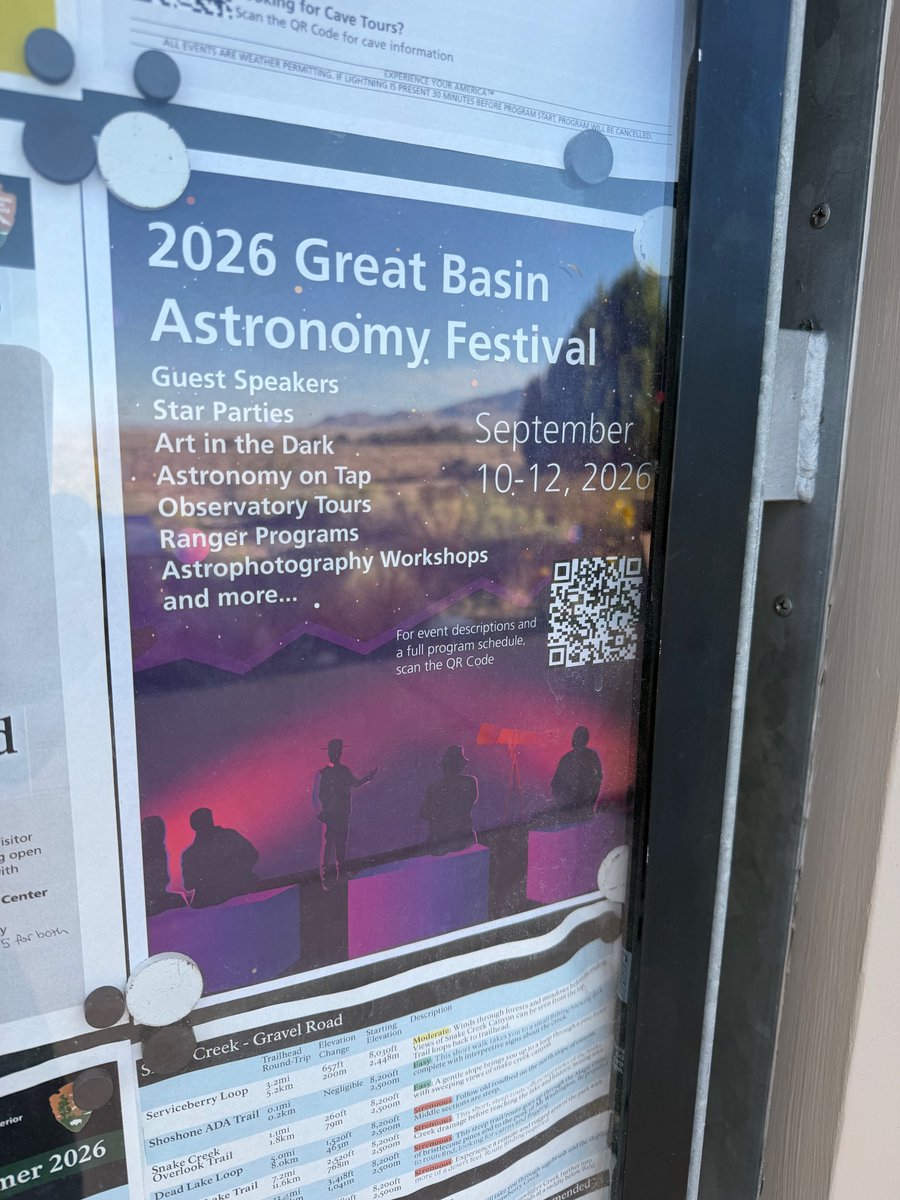
We'll be in Nevada this weekend for the Great Basin Astronomy Festival, featuring science presentations, astrophotography, and telescopes in some of the darkest skies in the USA. Join us for astronomy as well as mountains, trails, and the oldest living trees in the world!
Come look through a telescope under some of the darkest skies in the USA! Join us next week at Great Basin National Park in eastern Nevada for the Great Basin Astronomy Festival, September 10–12. Free and open to all!
https://t.co/9nvEa8ErlL
What happens when a star ventures too close to a supermassive black hole? How can a black hole's gravity literally tear a star apart? We recently hosted researcher Xiaoshan Huang to discuss these phenomena at a recent Astronomy on Tap. Now on Youtube:
https://t.co/3yz8NoSXuJ
Did Venus once have oceans? Why did Earth's nearest planetary neighbor become such a hellish world? Join us for a lecture by NASA JPL scientist Dr. Amy Hofmann on Sept 18 @ 8PM. Talk followed by stargazing with telescopes. In-person and on YouTube. Free!
https://t.co/bwh4JYko8u