Caltech's Seismological Laboratory | a focal point and source for earthquake science, discovery, and research in Southern California for over 100 years!
We're excited to announce that we're expanding our presence across various platforms to bring you the latest Seismo Lab and earthquake info straight from the source!
For the quickest updates and earthquake insights, make sure to follow us on:
🔹 X (Live SCSN EQ Tweets): @CaltechQuake [https://t.co/qScuQVAmHk]
🔹 X (Caltech Seismo Lab): @CaltechSeismo [https://t.co/b4krm0u4Ls]
🔹 Facebook: Caltech Seismological Laboratory [https://t.co/qHPbbus8yV]
🔹 Instagram: @caltechseismo [https://t.co/vNtLor3JXr]
🔹 LinkedIn: Caltech Seismological Laboratory [https://t.co/FJjFv9BDPH]
🔹 BlueSky: @caltechseismo.bsky.social [https://t.co/jqizO8E7nV]
We're working on some new posts and announcements so make sure to follow us on your preferred platform(s) and say hi sometime! #EarthquakeAlerts #Seismology #CaltechSeismologicalLab
It's June, and the Seismo Lab and Southern California Seismic Network (SCSN) are proud to celebrate and support the LGBTQIA+ scientists, engineers, staff, students, and community members who help advance our understanding of earthquakes and the Earth itself.
Science is strengthened by a diversity in perspectives, experiences, and voices. The work we do, from monitoring and reporting quakes across SoCal to developing new tools and discoveries, is made possible by the people who bring those perspectives to our lab every day.
To our LGBTQIA+ colleagues, friends and supporters: you are seen, valued, and celebrated. Happy Pride Month!
#Pride2026 #Caltech #SCSN #SeismoLab #LGBTQIA
Weekly Earthquake Stats: 24 May 2026 - 30 May 2026. There were 281 events this week ranging from M -0.24 to 3.36. Check out our weekly playback map and visit https://t.co/YUwfWEfCAI for detailed information. #earthquakes#seismology#SCSN#weeklystats@CaltechSeismo
#FieldPhotoFriday Station maintenance is rarely just one task. During a recent visit to this site, our crew cleared weeds, replaced a sensor, and identified an additional problem to address on a future trip. Keeping the network healthy and crucially @USGS_ShakeAlert ready takes constant work to ensure it's reliable for future quakes!
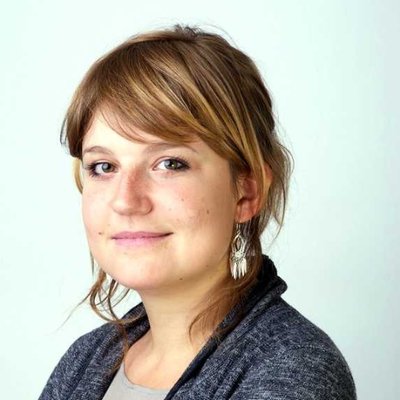
Meet Jiaqi Fang, a Seismo Lab Grad Student who specializes in Computational geophysics! Congratulations are in order for successfully defending their thesis and an upcoming postdoc at Scripps Institute of Oceanography this summer! #SeismoLabSpotlight
#EQ History: 1960 M9.5 Chilean EQ occurred on this day. Signals from this event, recorded on a Benioff strainmeter at SCSN station CI.ISA, were the first conclusive observations of the Earth's free oscillations, including the gravest spheroid mode (aka "football mode") at 54 min.
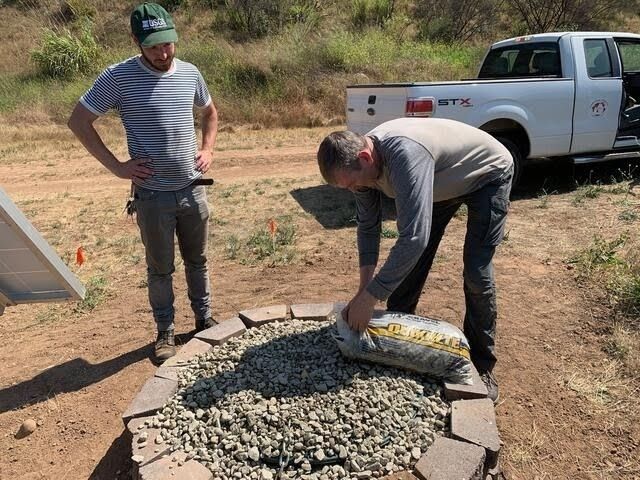
#FieldPhotoFriday from Hungry Valley, CA! After some serious digging at this site, our team swapped out worn batteries and updated the equipment to keep this station running smoothly. As part of the #ShakeAlert EEW System, it helps keep 50+ million people on the West Coast safe!
We’re happy to share that Professor Jennifer Jackson is one of the guest editors for the most recent Elements issue, "Mineral Physics Applied to Earth and Planetary Sciences"!
"This issue of Elements explores how minerals respond to external fields. Those interactions reveal clues about the past history of the minerals and influence of dynamic processes that continue to shape the Earth and other planetary bodies at present. This issue presents key concepts in mineral physics alongside recent technological advances that enhance our ability to study planetary interiors. Through selected research areas, the issue illustrates how this knowledge deepens our understanding of planetary evolution and highlights the major scientific challenges that lie ahead."
Find further details and read more about the issue here: https://t.co/HcGSZZAvLd
Last month during #SSA2026, the Seismo Lab hosted an Alumni Reunion here at the Lab! With so many former students, researchers, staff, and collaborators already in Pasadena for the meeting, it was wonderful to see the halls filled with familiar faces once again.
From longtime alumni reconnecting with old colleagues to current members meeting those who helped shape the Lab over the decades, the evening was a reminder of the community that continues to make the Seismo Lab such a special place. Thank you to everyone who stopped by and helped make the reunion such a memorable event. https://t.co/NUjBerGhm3
Weekly Earthquake Stats: 10 May 2026 - 16 May 2026. There were 822 events this week ranging from M -0.11 to 4.66. Check out our weekly playback map and visit https://t.co/JhvqXt7Ju2 for detailed information. #earthquakes#seismology#SCSN#weeklystats@CaltechSeismo
This week has been busy near the Salton Sea! Of the 822 events cataloged, 494 were from the #SwarmSequence, which is very typical of the region. More info is available at https://t.co/7rcDxldd4I with updated numbers and figures!
#FieldPhotoFriday Gotta love the easier maintenance calls. This station near Lake Casitas has been recording data since 2019 when it was installed, but just recently started having power problems at night. A new set of batteries to replace the original ones, and a little bit of weeding, and hopefully it will be good for another 7 years! Great work as always keeping our seismic network running strong!
Meet Rajani Shrestha, a Seismo Lab Grad Student who specializes in Geometrical distribution of seismicity; earthquake cycle simulations; time-dependent earthquake forecasting! #SeismoLabSpotlight
Also, When asked what inspired Rajani's career in seismology they responded: The Mw 7.8 Gorkha earthquake in 2015. I experienced firsthand how the forces shaping the Earth can also disrupt lives. I got very interested in understanding the internal workings of our home planet and in particular, the question of how earthquakes are generated.
Weekly Earthquake Stats: 03 May 2026 - 09 May 2026. There were 335 events this week ranging from M -0.31 to 3.83. Note: This info and map ends at 5pm PDT May 9, just shortly after the first M3.5+ events began occurring in the Brawley Swarm. Next week's map will be much more active! Check out our weekly playback map and visit https://t.co/JhvqXt7Ju2 for detailed information. #earthquakes #seismology #SCSN #weeklystats @CaltechSeismo
SCSN uses Mw for most events M4 or greater, for example, check out the swarm sequence currently happening in the Brawley Seismic zone https://t.co/IbndZ95qwB
Did you know that when someone is talking about felt earthquake, if they mention the Richter Scale, they are probably actually talking about the Tom Hanks (no not that Tom Hanks!) and Hiroo Kanamori Moment Magnitude!
May 1979, Hanks and Kanamori's paper on a moment magnitude (Mw) scale was published. Ricther's local magnitude method relies on max amplitudes and distances and saturates above M6. Mw is based on the eq's fault slip x slip area to give a better estimate of a large eq's size. #EQHistory
Here is a bit of an explainer: https://t.co/glLQcypNGp
This sequence is ongoing with an additional M4.3 that just happened at 8:39 PDT, you can see the events in the sequence as their waves cross the Southern California Seismic Network on our Live Seismograms Feed https://t.co/rAfRgTwYg0
A swarm sequence has been confirmed near #Brawley, CA, #SouthernCalifornia#Earthquake. This is a typical sequence for the area, with 81 events catalogued so far, including a M4.4 at 7:22 PDT. You can read more about it here: https://t.co/lODWqBgF3L
#FieldPhotoFriday New tech, preventative maintenance, and repairs are common reasons for the Field Crew to visit a station throughout the years since it was installed. This station near Johnson Valley, installed in 2001, is a good example of that. And there is a visit scheduled this week to diagnose a power issue. All of this keeps our network strong and ready for the next bit of shaking!
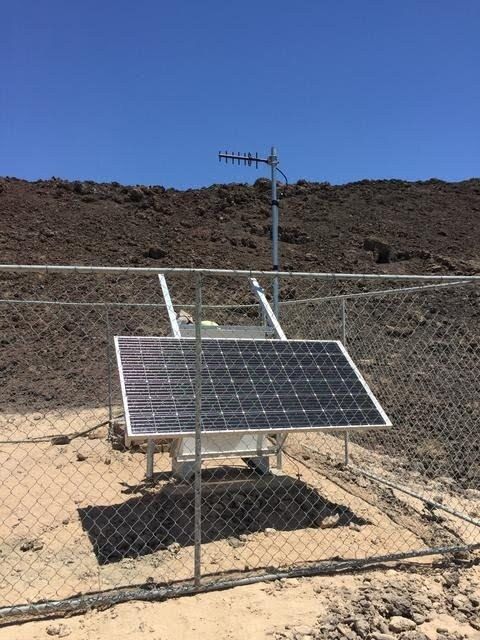
#FieldPhotoFriday It may not be exciting like Kilauea or any other currently erupting volcano, but we do have volcanic regions in SoCal, which is why we monitor specific "Swarm Regions" more here: https://t.co/Yj2SXLmmEy
Anyway... here is a station that had some maintenance recently... that is literally right next to an old volcano in the Mojave!




![CaltechSeismo's tweet photo. We're excited to announce that we're expanding our presence across various platforms to bring you the latest Seismo Lab and earthquake info straight from the source!
For the quickest updates and earthquake insights, make sure to follow us on:
🔹 X (Live SCSN EQ Tweets): @CaltechQuake [https://t.co/qScuQVAmHk]
🔹 X (Caltech Seismo Lab): @CaltechSeismo [https://t.co/b4krm0u4Ls]
🔹 Facebook: Caltech Seismological Laboratory [https://t.co/qHPbbus8yV]
🔹 Instagram: @caltechseismo [https://t.co/vNtLor3JXr]
🔹 LinkedIn: Caltech Seismological Laboratory [https://t.co/FJjFv9BDPH]
🔹 BlueSky: @caltechseismo.bsky.social [https://t.co/jqizO8E7nV]
We're working on some new posts and announcements so make sure to follow us on your preferred platform(s) and say hi sometime! #EarthquakeAlerts #Seismology #CaltechSeismologicalLab](https://pbs.twimg.com/media/GG5CancbkAAHALF.jpg)