Could living algae help replace millions of disposable batteries? 🔋
Researchers @CamBiochem have developed a device that harnesses photosynthesis to generate continuous electricity 24/7 – without harming the algae at all.
Find out more 👉 https://t.co/Eq84vz6rmx
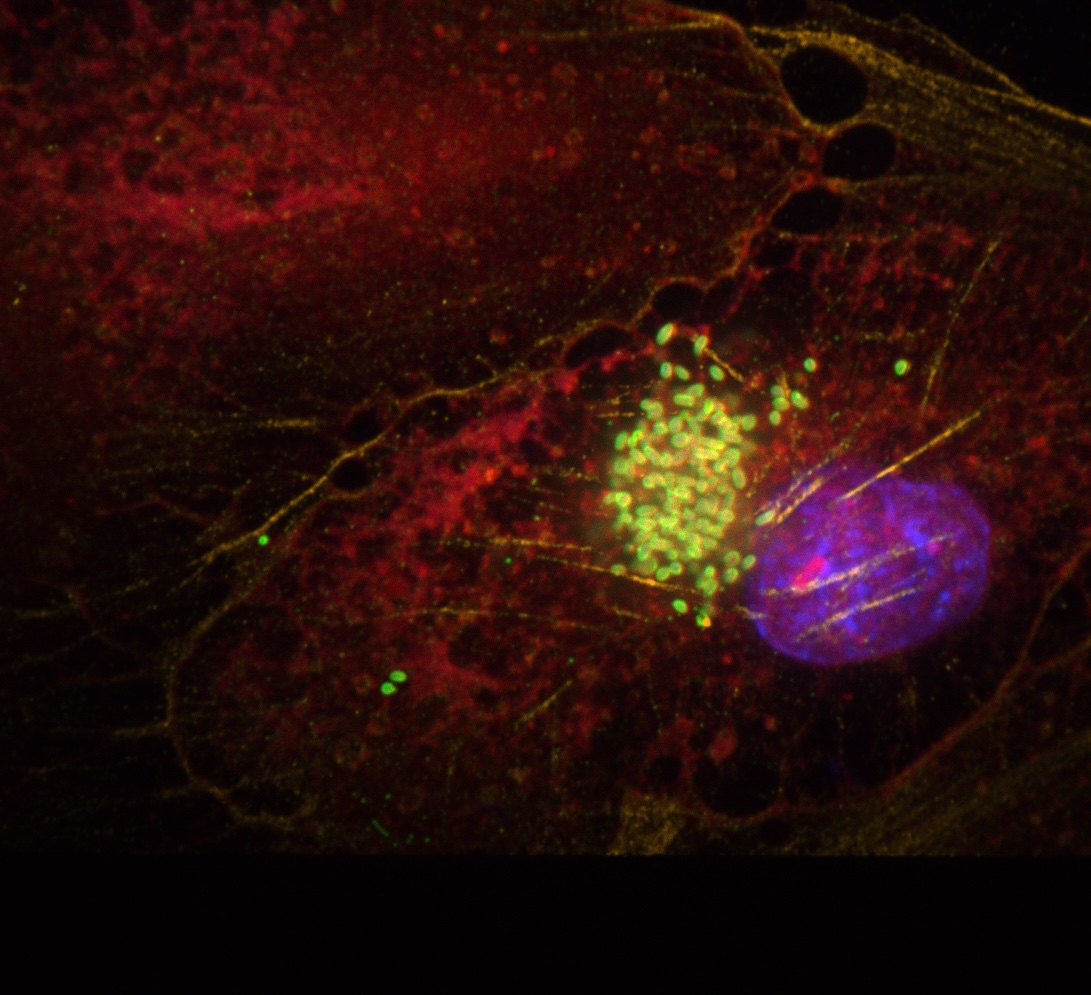
Wonderful news that our colleague @JSalje and her team have been awarded a Precision Mitochondria @ARIA_research grant to explore using Rickettsiales bacteria to deliver DNA to mitochondria. Read more about this cutting-edge project: https://t.co/J8S67Klwdw
Congratulations to @JSalje Group on receiving funding from @UKLyme and @LymeResourceCtr to investigate the cell biology of Borrelia, the bacteria that cause Lyme disease. Read more about this exciting new research to inform better diagnosis and treatment: https://t.co/9DmyQx9F8k
Don't miss the first session of this Cambridge RNA Club course!!
21 Oct, 4:30 PM, Sanger Building @CamBiochem
Talks from Haopeng Yu (@Sainsbury Lab) and Ainan Geng (@ChemCambridge ) on RNA-binding protein recognition and thermodynamic prediction of RNA activity.
Excellent candidates for 2027 Fellowship schemes are now invited to apply to attend our Research Fellowships Open Day. Deadline to apply is 07 December 2026.
Find out more: https://t.co/JZpDwLEi1d
@slcuplants@Cambridge_SBS@CamBiochem#PlantSciences
Last few spots! 🚨Don’t miss our EngBio ECRs Meetup next Mon 12 Oct, 12pm.
Hear from @jiafu_tan & @ZhengaoDi (@camplantsci), connect with fellow EngBio researchers and spark new ideas!
Sign up here 🫱 https://t.co/78wOf0RmeQ
#plantbiology#protein#nitrate
Today, Professor Ewan St. John Smith begins his new role as the Head of Department!
He succeeds Professor Laura Itzhaki, who departs from the position after six years in the post.
Read more: https://t.co/zrwQEU0Q7Q
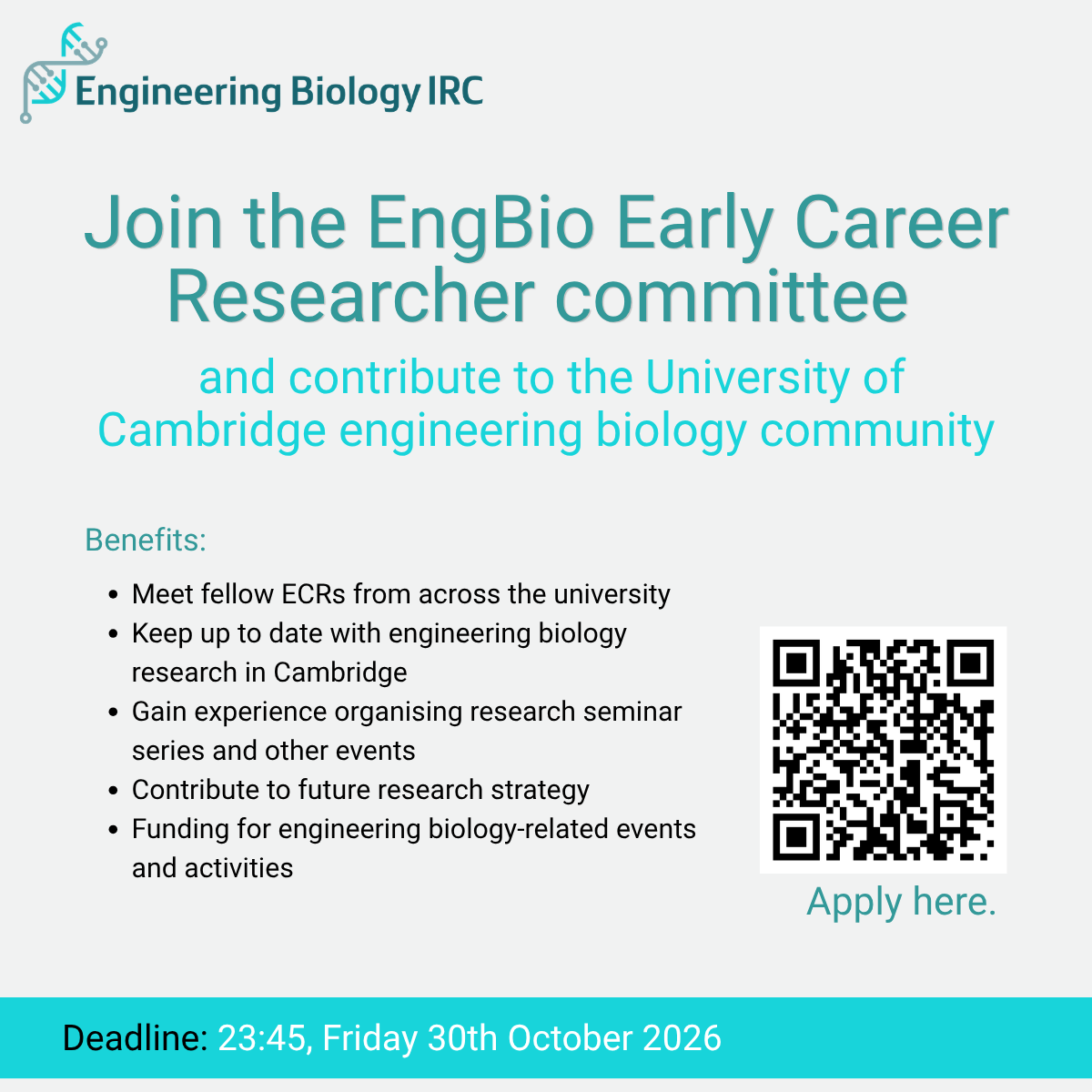
Time is running out to apply to join the #EngBio Early Career Research Committee! ⌛ This is your chance to contribute to the University of Cambridge engineering biology community.
Find out more and apply: https://t.co/j5FHCrbPya
🧬 Looking for a PhD in the biosciences?
Applications are open for the Cambridge Biosciences DTP, offering fully funded PhD opportunities across a range of research areas.
📅 Deadline: 8 December 2026
🔗 https://t.co/MmSQYJKeEX
#PhD#Biosciences
There is still time to apply for an Independent Research Fellowship in our Department. Details of how to apply by 25 September are here: https://t.co/Y4H93pi6B3
Applications are invited to our programme supporting early career researchers to establish their own independent research groups. Please circulate and further details of how to apply by 25 September are here: https://t.co/Y4H93pi6B3 #Biochemistry#EarlyCareer#Postdocs#Science
Congratulations to @GuiomarPedro, @ben_luisi, @mito_oncogene and colleagues from the @ericmiskalab on their award of a Precision Mitochondria @ARIA_research grant on 'Protein-linked nucleic acid design for mitochondrial delivery and expression'. Read more: https://t.co/v6ONpm6ved
Applications are invited to our programme supporting early career researchers to establish their own independent research groups. Please circulate and further details of how to apply by 25 September are here: https://t.co/Y4H93pi6B3 #Biochemistry#EarlyCareer#Postdocs#Science
Delighted and very proud to see our study (and Anna-Maria's first first-author paper) recently out in PNAS: https://t.co/7FtfJrKVSq
@CamBiochem@CRUK_CI
🧵1/5
Join the Early Career Researcher Committee and help shape the future of engineering biology research in Cambridge. Open to Postdoc, PhD student and support staff from the University of Cambridge only. Find out more and apply: https://t.co/j5FHCrbhIC
💉Lister Fellow James Thaventhiran says mRNA vaccines are safe - billions of doses tell us so. His Lister Prize work on reading frames focuses on safety by design for future personalised RNA therapies🧬
Read our conversation 👉 https://t.co/Y02mTmbn7R
@CamBiochem@MRC_TU
A @kiran_r_patil Lab study published in Molecular Systems Biology charts the negative effects of sweeteners on healthy gut bacteria growth. Read more in a @Cambridge_Uni feature: https://t.co/ZMUfmDwVwx
A paper in @naturemethods by @jenny_molloy and @fernan_federici documents @reclone_org's model for democratising access to essential biological tools and reagents, and the evidence behind it.
Read the paper here: https://t.co/L9wmXyZQYC
The @RossWaller3 Lab, with the @lilley_ks lab and @rayner_julian 's lab @TheCIMR have produced the most comprehensive map yet of where proteins are located inside the malaria parasite Plasmodium falciparum, published in @NatureComms. Read more: https://t.co/XQKVuUv65N