Exciting news! My book "Economics for Busy People" released today! It’s now on Amazon.
The ebook hit #1 in several categories last week and even made it into the Top 10 New Releases for all Business & Economics.
Get your copies today! https://t.co/pxrRLlBB7x
Ross Ulbricht has been freed by President Trump with a full pardon! Thank you for keeping your word to me and others who have been advocating for Ross’ freedom, Mr. President! #freeRoss
Couldn’t agree more. Both size and scope need to be part of the conversation. If we cut the size without cutting scope we won’t make meaningful progress.
Questions of efficiency are tied to questions of effectiveness. The most inefficient thing we can do is to be ineffective. Spending money on programs that don’t, and can’t, achieve their stated goals is the definition of ineffectiveness.
Every year the states entire existing body of regulations expires unless reauthorized for an additional year. They never passed a reauthorization bill in 2019 and the governor got to opt which ones to keep and inplemented as emergency regulations. Then those that get resubmitted are given public comment.
@VivekGRamaswamy
The most inefficient thing is being ineffective. There has to be a focus on: are the goals of [insert agency here] being met.
Most bureaucracies are created, operated, and funded in such a way to not succeed. They don’t have the knowledge or incentives to do so.
Often they have a stronger incentive to fail so they can be funded more and more by claiming insufficient budget.
The size of the government is both scale (# of people) and scope (# of things). Both need to be cut because most things shouldn't be attempted by the government because they can’t be accomplished by the government.
@elonmusk I’d love a focus on not only efficiency but also effectiveness. The most inefficient thing is being ineffective.
Most things can’t and shouldn’t be done by the government.
The size of the government is both scale (# of people) and scope (# of things). Both need to be cut.
Meta is absolutely flooding the DC area media market with expensive TV commercials during football games & full-page newspaper ads begging Congress to regulate social media. Of course, they can afford complying with all those new regs they want. Smaller rivals can't. They should really consider spending all that money innovating instead of throwing their competitors under the bus.
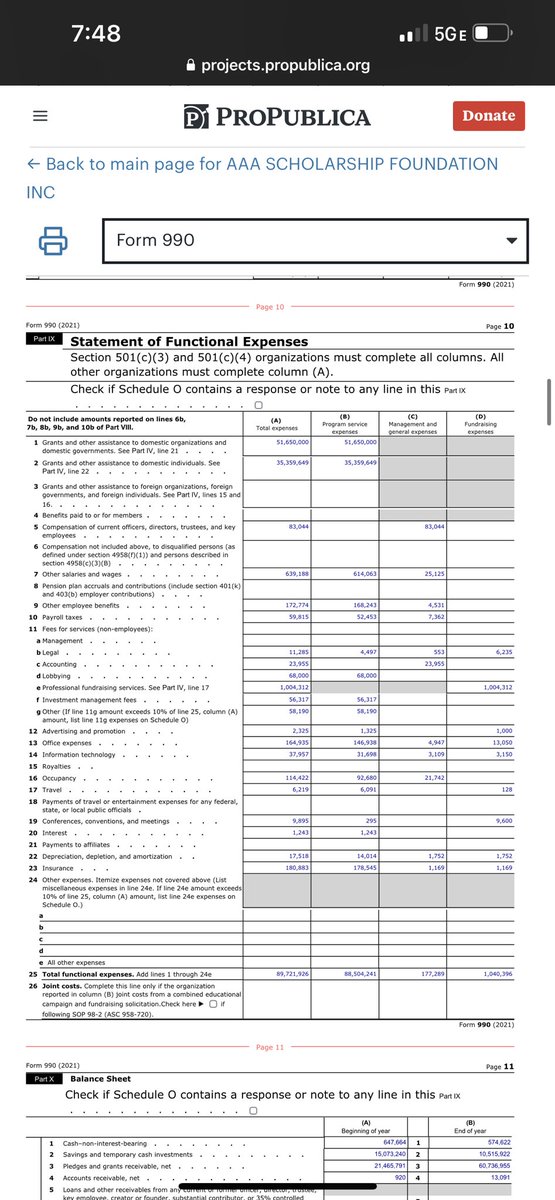
@BattleBornProg Let’s go ahead and show the entire expense schedule. Looks like 97% of their expenses go towards distributing grants (so giving money to others not to themselves). They’re able to give out over $86M off of a $1M cost. Seems like a pretty good return on effort.
@pmarca Also key to remember that the industries with the red lines are the most heavily subsidized as well. There's a direct causal link between subsidizing that leads to an increase in price...then an increase in subsidy...then an increase in price...and so on...