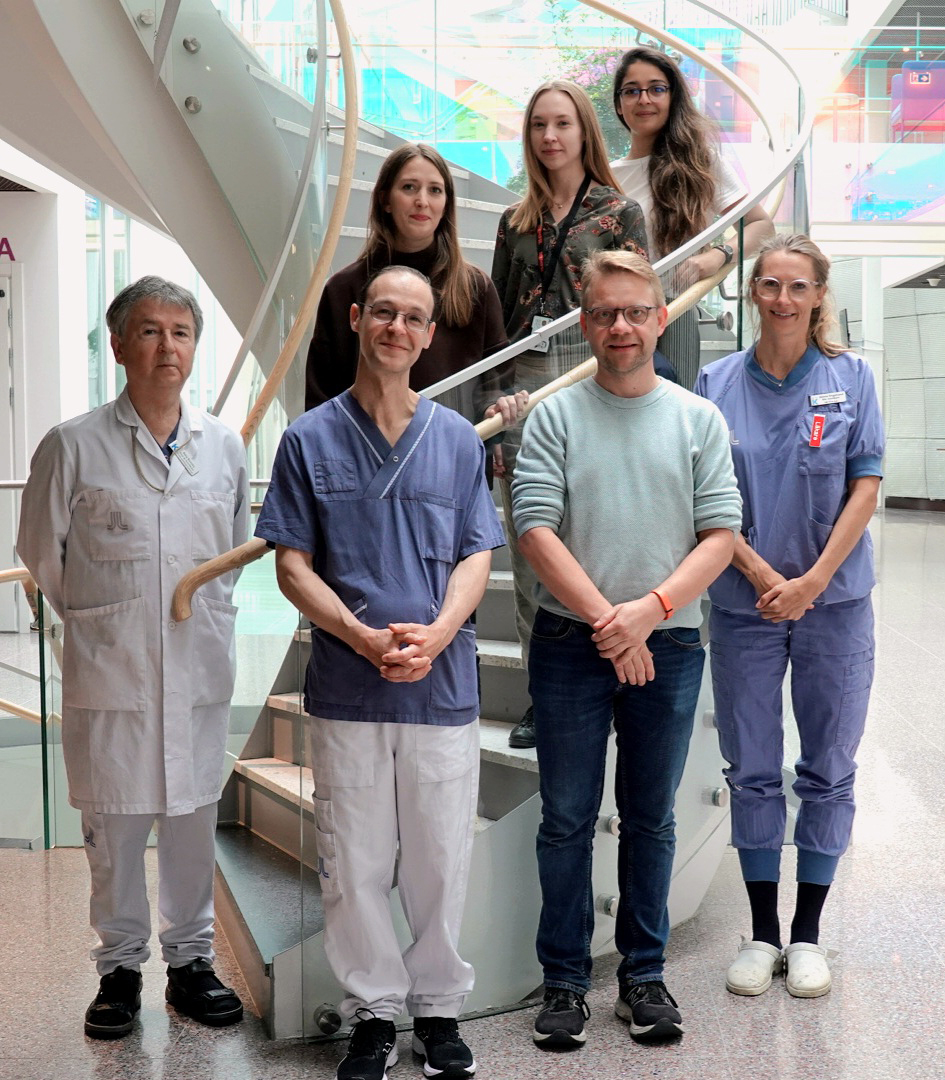
Cancer Cell Invasion lab, Karolinska Institute.
Studying how cancer cells invade into their surroundings. One eye on the patient, the other on the cells.
1/2 Sometimes, cancer cell invasion fails - and when this happens, the surrounding healthy tissue gets a chance to build a barrier around malignant tumors, leading to a much better prognosis for the patients, as we show in our new study published in @NatureComms.
A new study in @NatureComms shows that a capsule of connective tissue around liver metastases from #ColorectalCancer improves patient survival and represents a healing response by the liver, not a phenomenon caused by the tumor itself. Research by
@Cancer_Invasion et al.
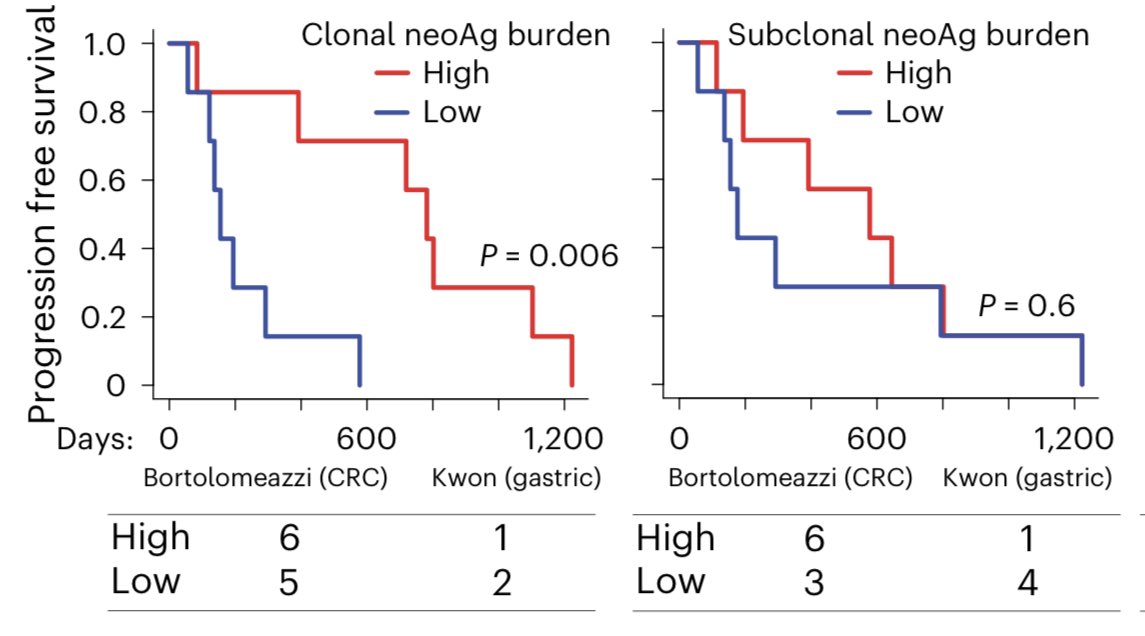
#ScienceSaturday Mutations in cancer cells look “foreign” to the immune system and are excellent targets for T-cells. However, patients with high levels of mutations in their cancers don’t always respond durably to #immunotherapy. @PeterMKWestcott, @LabJacks et al demonstrate that tumor heterogeneity may be the issue, and that mutations that are only in a small population of the #cancer cells (subclonal) are not as correlated with clinical responses compared to mutations that are in all the cancer cells within a tumor (clonal). https://t.co/PUQcY2Qcbi
Great opportunity for a postdoc at @karolinskainst in the Strömblad lab!! This is a very close collaboration with my group #senescence#cancer
https://t.co/h6GNJgjfzb
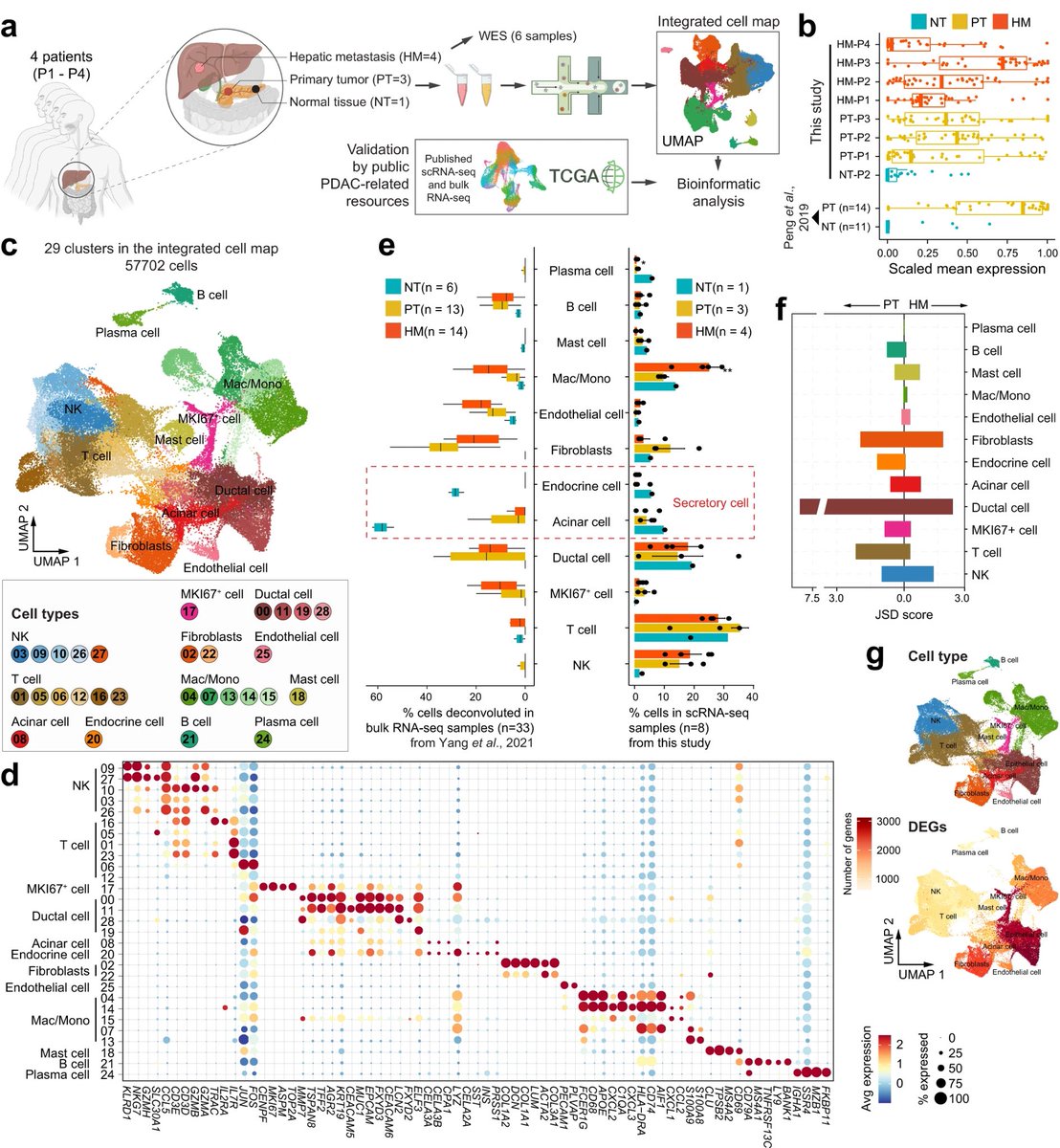
Small dataset from four patients but still useful to #PancreaticCancer researchers - single cell RNA-seq of MATCHED primary tumor & liver metastases. Most published series including our own have been with unmatched primary & metastatic cases. In @NatureComms
https://t.co/ZFUzOTp5Dl
@MStott88 @M_C_Schmid@rob1234jones Do you mean the question is whether the capsule should be counted as "intratumoral" or "hepatic" when determining margin?
What are the clinical consequences at your centre if R1?
1/2 Sometimes, cancer cell invasion fails - and when this happens, the surrounding healthy tissue gets a chance to build a barrier around malignant tumors, leading to a much better prognosis for the patients, as we show in our new study published in @NatureComms.
A new study in @NatureComms shows that a capsule of connective tissue around liver metastases from #ColorectalCancer improves patient survival and represents a healing response by the liver, not a phenomenon caused by the tumor itself. Research by
@Cancer_Invasion et al.
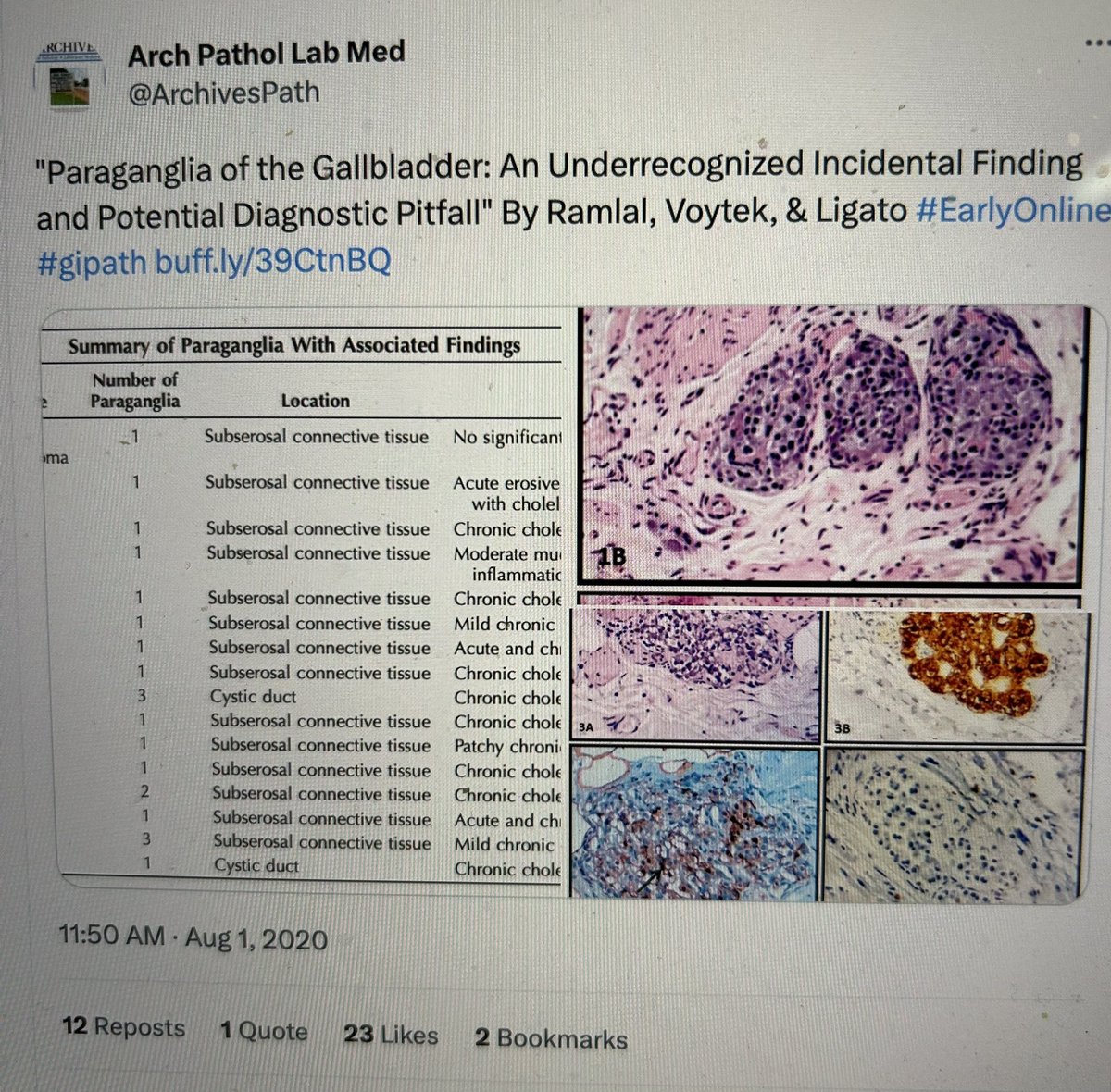
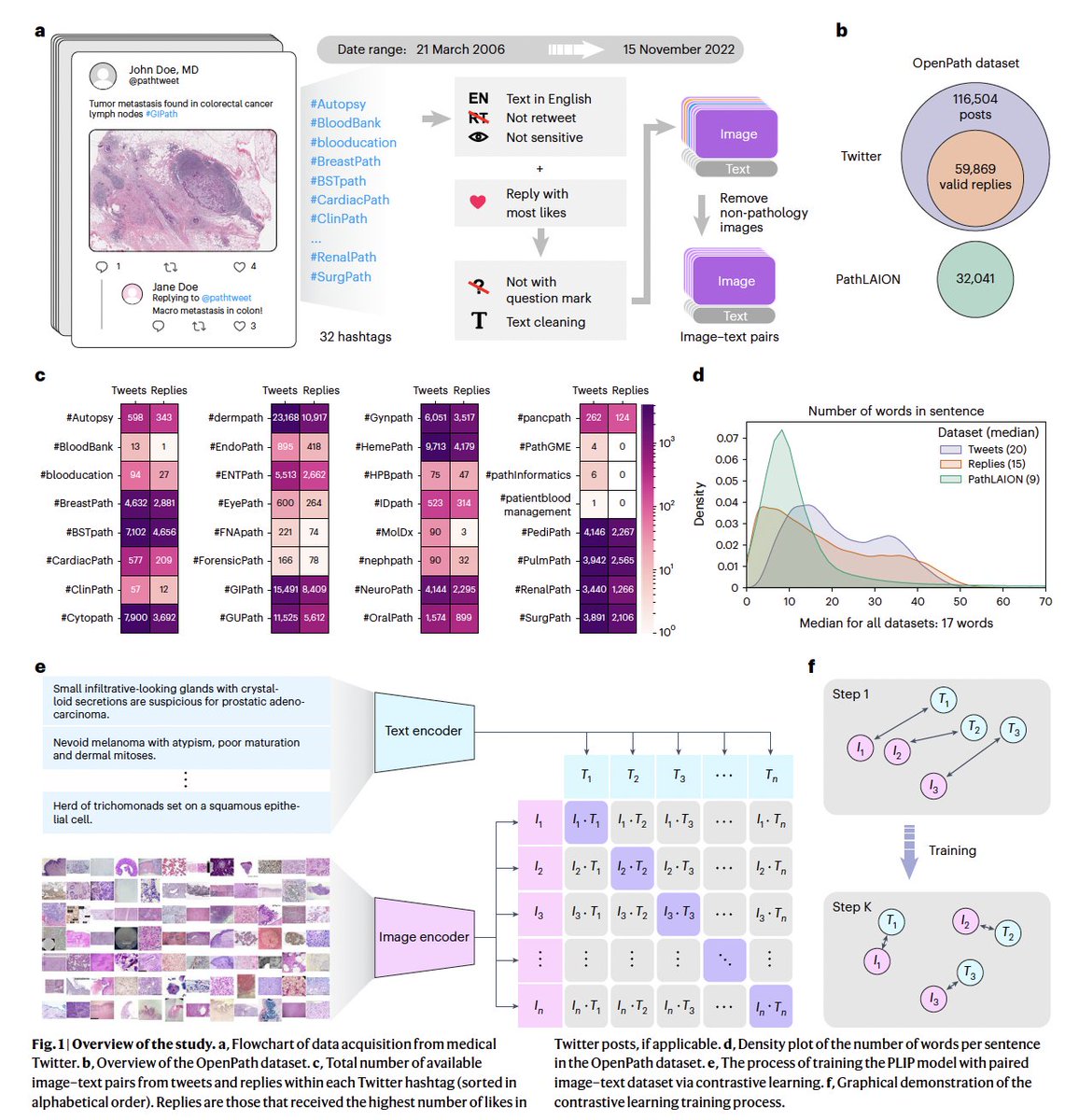
This paper is a great utilization of tens of thousands of freely available annotated #Pathology images that #PathTwitter (or #PathX) has put online over the years on this platform. The training set includes 1000s of images from each subspecialty, including >15,000 images in #GIPath. I found tweets by @ALBoothMD@DraEosina even @ArchivesPath on the training set!
Cc: @KMirza@sanamloghavi@smlungpathguy
Cool stuff! 🔬 🖥️
⚡️Excited to share our new @NatureMedicine paper where we used Twitter to build a vision-language foundation #AI for #pathology https://t.co/1DQJ1zzDwh
We curated >100K public Twitter threads w/ medical images+text to create PLIP for semantic search and 0-shot pred.
All our data (OpenPath): https://t.co/J5x8gxx5QC
Open source PLIP: https://t.co/feIxSan7nv
Getting sufficient data is a key bottleneck for medical AI. This work shows how we can harness the tremendous medical knowledge openly shared on social media to develop models. We used multiple filters to improve Twitter data quality. PLIP performs well for 0-shot classifications, fine-tuning, and image and text-based retrievals.
Great work by @ZhiHuangPhD@federicobianchy@mertyuksekgonul and Tom Montine 👏 And thanks to support from @StanfordHAI@StanfordMed!
Are you interested in cancer biology and exploring intratumor heterogeneity and phenotypic plasticity? join our lab! We are recruiting new postdocs!
https://t.co/W7gtRbwlJb
Excited about #science? Want to develop new models to understand #embryonic#cancer? Like to work with fun people? Then come join our amazing team at @lunduniversity@Lund_Stem as a #postdoc scholar! 👩🏼🔬🧑🏽🔬Help spread the word - forward to colleagues and RT 🫶
Exciting postdoctoral position with immediate start, to explore the immune contexture of the lymph node in aging and cancer 🧐using spatial tissue profiling https://t.co/SiZRxocXSj
Life-threatening side effects of novel cancer immunotherapies could be treatable - @karolinskainst
Thanks again, @kibiblioteket!
https://t.co/WucGqlvlaf
Happy to announce that our review about systematic inflammatory syndromes (i.e. hemophagocytic lymphohistiocytosis & cytokine release syndrome) has been published in @jitcancer. This will hopefully aid in our understanding of these rare yet potentially fatal adverse events. #ICIs
New publication in JITC: https://t.co/7Nlg6AbGuA. Rare side effects are hard to study - thankfully, the librarians @kibiblioteket are there to help! After we had met several patients with hyperinflammation after immunotherapy for cancer we wanted to know more... 1/2
We read thousands of abstracts and extracted data from numerous studies. We found that hyperinflammation is rare but might be more frequent than we thought. Inhibition of IL-6 might be a good treatment option. In for a prospective study?