@JHBWater Good day- day three of no water. And no update after this yesterday. Please can we have an update so I can plan for my staff and my business.
Reports indicate that YouTube is currently down for a large number of users
➡️https://t.co/8B06O9Ooyi
Repost if it's also down for you #YoutubeDown#YoutubeOutage
If Johannesburg wants to change the name of #SandtonDrive, and believes it has the funds, and that it is necessary, here are some iconic South Africans who made a huge and important contribution to our country:
Here’s a list of iconic Black South Africans from Johannesburg who would have been far more deserving of having Sandton Drive named after them:
1.Miriam Makeba (1932–2008): Known as “Mama Africa,” she was a world-renowned singer and activist who used her music and voice to fight against apartheid. Exiled for her activism, she became one of South Africa’s most influential cultural ambassadors.
2.Hugh Masekela (1939–2018): The “father of South African jazz,” Masekela was a legendary trumpeter, composer, and singer whose music became an anthem for the anti-apartheid movement.
3.Keorapetse “Bra Willie” Kgositsile (1938–2018): A celebrated poet and political activist, he was South Africa’s National Poet Laureate and played a key role in connecting African and African-American literary traditions.
4.David Koloane (1938–2019): A pioneering artist and curator, Koloane co-founded Johannesburg’s first Black-owned gallery and helped develop the city’s contemporary art scene.
5.Nthato Motlana (1925–2008): A prominent physician, businessman, and anti-apartheid activist, he played a critical role in Soweto’s political landscape and Black economic empowerment.
Any of these individuals would have been a far more fitting choice for a street name in Johannesburg, honouring their contributions to the city’s cultural, economic, artistic, and political history.
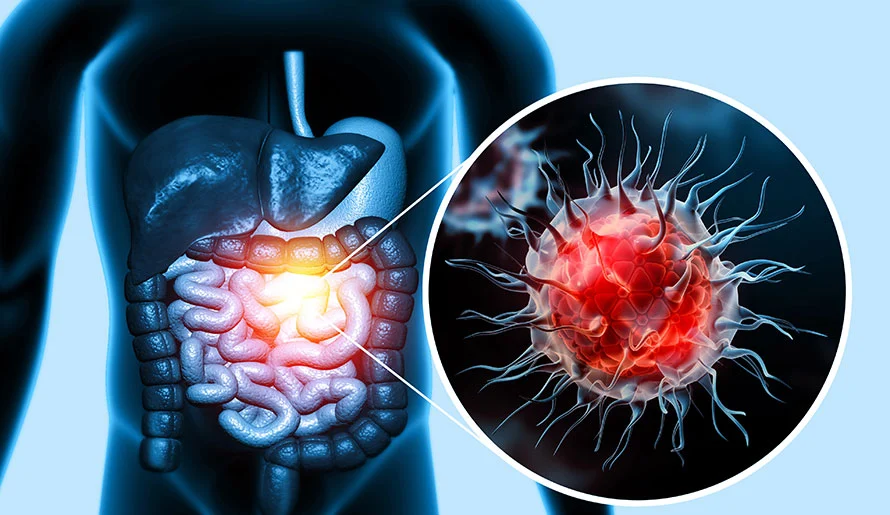
Inflammation is your No.1 enemy.
Why? It increases cancer risk, damages your brain, and leads to obesity.
Here are 9 foods that naturally reduce inflammation in your body (according to science): 🧵
Know what I hate? Counting calories.
Sure, it works, but it’s a pain in the ass.
Here’s the exact system I’d use to drop 30 lbs of stubborn fat (WITHOUT counting calories):
1. STOP eating 3 hours before bed and…
History of the South African Rand:
- Introduced by Verwoerd in 1961, $1=R0.71
- The rand was fairly stable until 1980, at that time under Vorster it was $1=R0.67
-After that, heavy sanctions started, making the Rand drop to $1=R1.20 in 1984 under PW Botha, and $1=R2.33 in 1989 under de Klerk
-By the Time Mandela became President, the Rand had already dropped to $1=R3.42
-This is where the Rand became very unstable, and dropped exponentially and reached a staggering $1=R11.47 in 2003
-Mbeki started economic reforms in 2003 which strengthen the Rand back to $1=R5.85 in 2005
-With the Zuma Presidency the free fall of the value of the Rand started, dropping the value all the way to $1=R13.73 the day Ramaphosa took office in 2018
-The free fall of the Rand accelerated under Ramaphosa, Regularly dropping below $1=R19 in the past year.
What deal does Donald want from SA - and why?
It’s a big ask, but it’s time South African politicians – and voters – took a step back from fulminating, either over the Expropriation Bill or the wild claims that Trump and his minions are making about us.
What truly matters is the reason behind Trump’s outbursts and in some cases exaggerations about South Africa. On the surface, Trump should have little interest in our country. He’s caught up in a trade war with China, tried to annex Canada and Panama, attempting to buy or steal Greenland, subduing Mexico, and working to rid his country of hundreds of thousands of illegal immigrants.
Yet, he finds time to worry about a small group of farmers, from a distinctly different moral and religious persuasion, in a far-off land. Laudable as it is, its all part of a broader agenda.
But this is Donald Trump, love him or hate him, the self-proclaimed master of the deal. Barely a month after his inauguration, he stormed onto the world stage bellowing threats, earning the ridicule of antediluvian diplomats and politicians. We may never know if he actually intended to annex Canada, colonise Panama, or steal Greenland, but lo and behold, his bluster has brought results.
Panama has frozen China out of control of the canal. Mexico is cracking down on the drug cartels accepting back its illegals. Canada is making concessions, and Denmark and Greenland are eager to talk. Even China, faced with a draconian 25% tariff on its goods, has meekly responded with a mild 5% tariff on some luxury American items.
In other words, the much-scorned bluster has cut through months, or even years, of more traditional negotiations and delivered what America wanted.
Despite the scorn, the admittedly crude and blunt new president has shown that he understands what’s needed to Make America Great Again, and that his seemingly aimless bullying has a clear rationale behind it. Donald wanted things, and he used the skills he developed over years in property development to get them.
The important lesson for South Africans who will negotiate with him in the future is that he doesn’t threaten those who have nothing to offer him. Therefore, the key to successful negotiations is to figure out what he really wants and either give it to him or reach a compromise.
I’m fairly certain he doesn’t necessarily want a few thousand Afrikaans farmers. His claims about the state-sanctioned murder of white farmers, whether fact or not, is just a negotiating ploy. He doesn’t actually care about ordinary South Africans, whether black, white, or mixed. He also knows that the problems with the Expropriation Bill, though real, have been misrepresented as only the theft of land.
Furthermore, most Afrikaners would never dream of leaving their family farms and are willing to fight the criminals who prey on them.
So, what is Trump actually after?
Strangely, he probably wants South Africa for the same reason he wants Greenland. Despite their differences, both countries have one thing in common – they dominate vital trade routes. South Africa also presents the additional challenge of being a leading member of BRICS, an organisation that is a major thorn in Trump’s side.
It all boils down to China. Trump has long, and probably correctly, sensed that China is on a path to becoming the dominant global power. He’s determined to prevent this, which means he must protect the trade routes.
On the surface, cutting off American aid seems like a strange way to win hearts and minds, but Trump, the dealmaker, knows that last year’s Christmas present has no value. He has cut off the aid and opened up negotiations for fresh deals. When he sits down with Ramaphosa, he will be offering gifts, not threats. "You can have all our lovely aid, plus the benefits of the AGOA trade agreement, which expires in September of 2025, if you do what you’re told, Cyril."
For South Africa, the decision should be simple. Until we can negotiate the same beneficial balance of trade agreements with Russia and China, that we have with America, we should acquiesce to certain terms. Our politicians gearing up for a confrontation are merely prioritising their egos over the prosperity of the people.
Judging by Ramaphosa’s initial choice of negotiators, it seems the anti-West-at-all-costs lobby is being sidelined.
What will Trump demand? He’s too pragmatic to ask for our withdrawal from BRICS. However, he will likely push for us to oppose a common BRICS currency, a request that shouldn't be too difficult to accommodate – even China isn’t particularly enthusiastic about it.
Unfortunately, our BRICS colleagues have not been the tried and trusted allies we hoped for. China stiffed us with the Transnet locos, costing us billions, and the Mosgas (PetroSA)/Russia partnership hangs in the balance after a rival bidder filed a High Court case requesting that the award be set aside. Plus, BRICS opening its membership to thuggish misogynists doesn’t help either.
A nice gesture, like opening Simon’s Town to the Americans wouldn’t hurt. There’s no need for exclusive use at this point, but America desperately needs a presence on the route around the Cape.
Expropriating Sun City and its golf courses without compensation as a gift for Trump might be a bit too obvious, but that we might follow Botswana in allowing an American military presence is probably Trump’s biggest hope. It is likely high on his agenda, as the new Botswana government, led by President Duma Boko, is said to be planning to cancel their arrangement.
Trump has made much of his admiration for Vladimir Putin, but he is now toughening up. He must surely share the concerns of other countries about Russia’s growing military influence, particularly in West Africa where a Russian naval base could threaten a significant part of America’s Atlantic trade.
A military base on our West Coast would allow America to dominate the region and extend its influence north to oil-rich Angola and Congo, which, like South Africa, has vital minerals needed to make America great.
Although the South African government has emphasised its principled stance on the ICJ case against Israel, it's unlikely that Trump or Israel are particularly worried, given that neither recognises the court in the first place.
Ours is the fate of all small countries, and the other countries of our size in the world accept it. It’s called neutrality, and there’s no shame in it. What is shameful is condemning a population to poverty to prove a political point.
@realDonaldTrump@marcorubio #AGOA #Trump #ramaphosa #Russia #ChinaRed
As Trump and Ramaphosa square off - image courtesy of Maroela Media