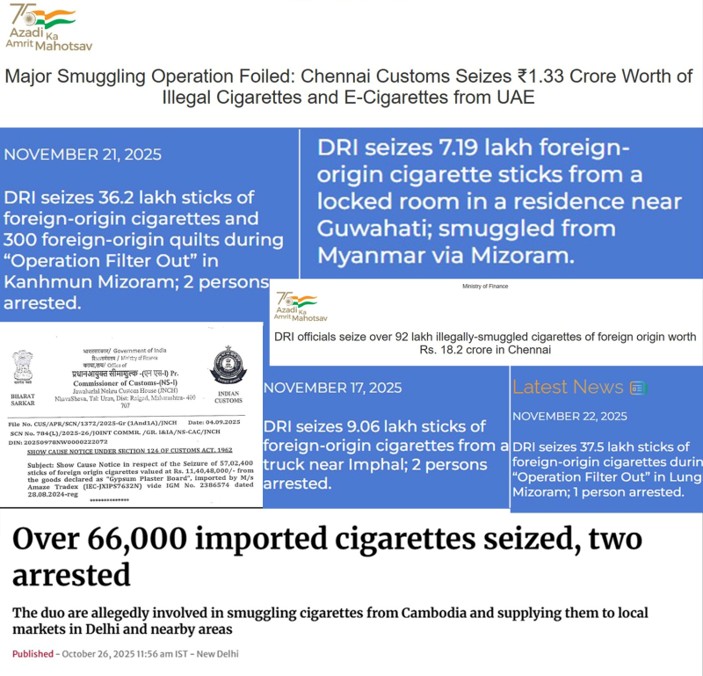
According to @CimGOI, our authorities seized 3.93 crore illicit cigarette sticks in FY25 (till June). That roughly amounts to ₹600 crore recovered in a year. But India loses over ₹21,000 crore annually to the illicit cigarette market. The gap is huge.
With taxes rising, the illicit cigarette market will likely grow, and we might lose more money. It is the right time to scale up what India has just begun work on: work with legal manufacturers to implement Track & Trace and shut down illicit supply chains.
#cigarettes #smoking #AntiSmugglingDay @PiyushGoyal@PiyushGoyalOffc@cbic_india@ICEGATE_CBIC
Sweden is a beautiful country, clean air, clean water, strong work culture.
But here’s what stood out to a friend visiting recently: barely any smokers.
A quick search explains why. Sweden is on track to become “smoke-free” ~5% smoking prevalence. Imagine that. But how? 1/1
The US exit from the @WHO is a reminder that global “one-size-fits-all” frameworks don’t work. For instance, despite Indian govt's constant efforts in tobacco control, from price hikes to quit helplines, nothing has worked. These methods are based on WHO's inflexible ideas, but India’s challenge is unique, with various cheap tobacco products in the market.
India has succeeded before with India-first solutions like ORS, scaling HIV/AIDS treatment, deploying digital platforms like CoWIN. Is it time to apply the same thinking to tobacco control and frame public health policies based on the ground reality of India and its consumer patterns? Maybe do a national research on what could work, and consider less harmful products, maybe? If there are any? Maybe it's time to find out for our own than relying on the WHO.
@MoHFW_INDIA@JPNadda #smoking #HealthcareAI
Even if you cannot do 10,000 steps, at least try 5,000. I know a lot of counter arguments against it such as time, bad footpaths, and more.
But at the end of the day, it will only make your life better. Make better choices.