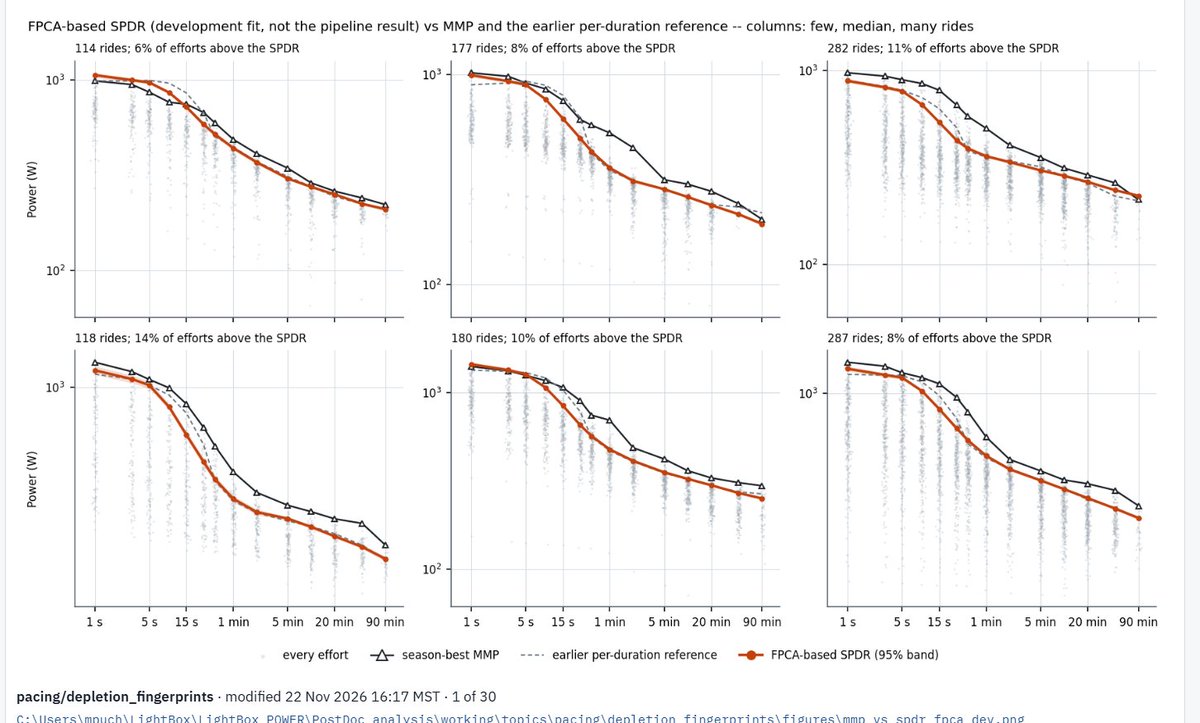
For anyone that wants to take a look under the hood of the FPCA modeling me and @DrPhilipSkiba did the r script and MMP data is available here: https://t.co/I0kpUKcoRk
I've always been interested in what the data below MMP tells us about the PD curve. The redline is the fit to a method that considers all the data and then models the PD curve:
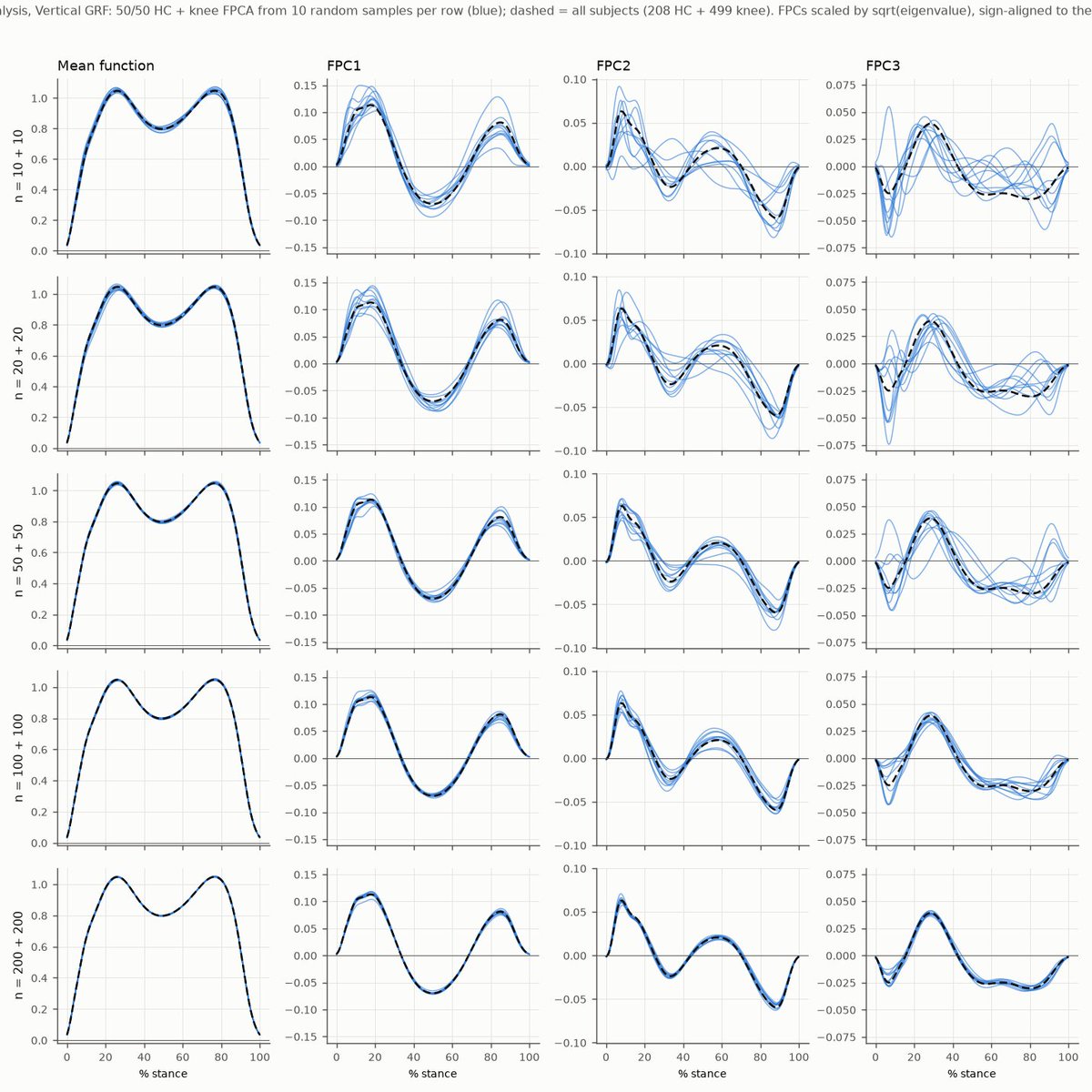
Sensitivity analysis of the effect of sample size on FPCA of ground reaction forces shows a similar finding to the senstivity analysis with power duration data:
Ultra-soft cashmere sweaters designed for constant wear, season after season. Quality you can feel from the first wear
Stock is limited—don’t miss out!
Each word you say is planned by a small patch of brain above your left ear, about a quarter of a second before you say it. It sits in a temporal lobe region textbooks describe as only for listening. Our paper today in @ScienceMagazine: https://t.co/EXOgl3YsNI
@UCSF@NeurosurgUCSF
2025 authors' class action, Bartz v. Anthropic. Anthropic had bought print books and scanned them. The court ruled that training on lawfully bought books was fair use, but let the claims over pirated library copies go forward, and Anthropic settled them for about $1.5 billion.
When it comes to pelvic floor health and cycling, one of the biggest barriers to better understanding is our unwillingness to talk about an uncomfortable subject. Let's do it anyway. https://t.co/i1Ft6W9oel
So what I'm seeing with Claude code is about 100,000 lines of code written to generate 20,000 lines that are actually productive. And the 20,000 is probably still very bloated. That seems to track with the mindset that simply scaling up is the answer to everything.
@AndrewHires The hope is that with enough data the underlying physiology declares itself. So for a given duration the physiology determines the pacing that generates the most work.