From theory to practice: the Real World vs Digital Nation Governance Workshop at @unimalaya brought together students, legal scholars, community builders, and capital market professionals to explore blockchain’s role in shaping future financial systems.
EMURGO continues to lead initiatives that promote education and community participation in onchain governance, empowering the next generation to take part in decentralized decision-making.
Panelists included @JustJobe, Malaysian Cardano Community Leader; Tim from the Cardano Malaysia community, who shared technical insights as an SPO; and @OfficialKavinda, Founder of @Coin_Ceylon. The discussion, moderated by @chrisanneyeexy from @SociousDAO, examined how Cardano’s governance model transforms participation into decision-making power and how traditional and digital governance models intersect in real-world adoption.
Students also learned about liquid democracy and delegation through interactive sessions, sparking engaging discussions that reflected the growing interest in Cardano’s technology and its practical applications.
Thank you to @unimalaya, our speakers, guests, and all participants for helping shape the next generation of governance thinkers and leaders.
From theory to practice: the Real World vs Digital Nation Governance Workshop at @unimalaya brought together students, legal scholars, community builders, and capital market professionals to explore blockchain’s role in shaping future financial systems.
EMURGO continues to lead initiatives that promote education and community participation in onchain governance, empowering the next generation to take part in decentralized decision-making.
Panelists included @JustJobe, Malaysian Cardano Community Leader; Tim from the Cardano Malaysia community, who shared technical insights as an SPO; and @OfficialKavinda, Founder of @Coin_Ceylon. The discussion, moderated by @chrisanneyeexy from @SociousDAO, examined how Cardano’s governance model transforms participation into decision-making power and how traditional and digital governance models intersect in real-world adoption.
Students also learned about liquid democracy and delegation through interactive sessions, sparking engaging discussions that reflected the growing interest in Cardano’s technology and its practical applications.
Thank you to @unimalaya, our speakers, guests, and all participants for helping shape the next generation of governance thinkers and leaders.
Powered by Cardano is the latest initiative of Annet de Graaf and myself, where we do interviews with folks from the wider Cardano ecosystem, like @Cardano, @MidnightNtwrk and @ApexFusion
We will be at the @CardanoSummit in Berlin, come and say “hi” and give us a “Follow” on X
Hey Cardano Malaysia,
We're making important upgrades to this open-source Cardano Price Indexer.
Your vote in #Fund14 will go a long way.
https://t.co/sPUrPeevJe
Please support our vision.
Regards, Tim
𝐔𝐒 𝐃𝐚𝐡 𝐌𝐮𝐥𝐚 𝐒𝐚𝐧𝐠𝐤𝐮𝐭 ,𝐅𝐞𝐝 𝐃𝐚𝐡 𝐓𝐚𝐤 𝐀𝐝𝐚 𝐁𝐚𝐧𝐲𝐚𝐤 𝐌𝐚��𝐚!!!
Pasaran kewangan sekarang mula sedar satu realiti pahit: sistem yang dah lama sokong ekonomi dan pasaran US — dipacu oleh aliran $USD global, permintaan bon US, dan gaya hidup “beli dulu, bayar kemudian” — semakin goyang.
Selama puluhan tahun, US jadi pusat ekonomi dunia. Negara lain jual barang, dapat $USD, lepas tu labur semula dalam bon dan saham US. Tapi sekarang, kitaran tu macam tengah sangkut dan Federal Reserve (Fed) akan makin tertekan untuk cari jalan keluar.
𝑷𝒂𝒔𝒂𝒓𝒂𝒏 𝑩𝒐𝒏: 𝑫𝒖𝒍𝒖 𝑺𝒆𝒍𝒂𝒎𝒂𝒕, 𝑺𝒆𝒌𝒂𝒓𝒂𝒏𝒈 𝑺𝒆𝒏𝒈𝒔𝒂𝒓𝒂?
Sebelum ni, bila pasaran jatuh:
• Saham jatuh, hasil bon (10-year yield) pun jatuh
Pelabur lari dari saham, beli bon US sebab nak selamat. Bila ramai beli bon, harga naik, hasil (yield) turun. Fed pun boleh potong kadar faedah dengan tenang.
Tapi sekarang lain:
• Saham jatuh, hasil bon naik pulak
Maknanya pelabur skrg tak minat beli bon US lagi. Takde tempat nak “lari” bila pasaran goyang. Walaupun keadaan ini pernah berlaku tahun 1994 & 2022, Ini agak bahaya sebab:
• Sekarang ni, US tengah berbelanja besar-besaran, walaupun tak ada perang dan kadar pekerjaan masih tinggi.
• Pembeli luar macam China dan Jepun pun dah mula kurangkan pegangan bon US.
• Fed dah tak buat QE (cetak duit beli bon) — sekarang ni dia masih tengah buat QT, jual balik bon ke pasaran.
• Tempoh matang hutang pun makin pendek, jadi risiko nak refinance hutang tu semakin tinggi.
• Bila saham jatuh tapi hasil bon naik, itu bukan panik biasa— Pasaran sebenarnya dah tak percaya kedua-dua saham (aset risiko) dan bon (aset selamat).
• Keyakinan terhadap sistem kewangan AS mula dipersoalkan.
𝙈𝙖𝙨𝙖𝙡𝙖𝙝 𝘽𝙚𝙨𝙖𝙧: 𝘿𝙪𝙣𝙞𝙖 𝙆𝙪𝙧𝙖𝙣𝙜 $𝙐𝙎𝘿
Apa sebabnya?
• Ekonomi global perlahan.
• Negara macam China, Jepun, Eropah kurang eksport ke US.
• Bila kurang eksport, kuranglah mereka dapat $USD.
Dan kalau tak cukup $USD:
• Mereka takkan beli bon US.
• Mereka takkan labur dalam saham US.
Sistem “kami jual barang, dapat $USD, kami beli bon” makin lemah. Kalau dulu mereka bantu biaya hutang US, sekarang tak lagi.
𝑨𝒑𝒂 𝑲𝒆𝒔𝒂𝒏𝒏𝒚𝒂?
Kerajaan US kena refinance (perbaharui) lebih $7 trilion hutang dalam 6–12 bulan akan datang.
Zaman dulu, hutang tu dikeluarkan dengan kadar faedah 1–2%.
Sekarang, nak renew semula dengan kadar 5% ke atas — bayangkan betapa mahalnya bayaran faedah nanti.
Kalau dulu pasaran panik → Fed boleh turunkan kadar faedah → bon rally → yield turun.
Sekarang, pasaran panik pun, bon tak naik, yield tak turun.
𝑮𝒂𝒎𝒆 𝑶𝒗𝒆𝒓? 𝑩𝒆𝒍𝒖𝒎 𝑳𝒂𝒈𝒊… 𝑻𝒂𝒑𝒊 𝑩𝒂𝒉𝒂𝒚𝒂
Enjin kewangan US bergantung pada 3 benda:
1. Permintaan global untuk $USD
2. Negara luar nak beli bon US
3. Fed boleh masuk campur bila dua-dua tadi gagal
Kalau Fed terpaksa jadi satu-satunya pembeli bon, kita mungkin nampak:
• Fed cetak duit lagi banyak (QE)
• Nilai $USD makin lemah
• Inflasi makin naik
𝑭𝒆𝒅 𝑫𝒂𝒉 𝑻𝒂𝒌 𝑨𝒅𝒂 𝑴𝒂𝒔𝒂
Semua tanda amaran dah menyala.
Saham jatuh. Bon tak selamat. $USD mula dipersoalkan. Hutang kena renew cepat.
Fed bukan setakat kena lawan inflasi. Sekarang dia kena buktikan sistem kewangan AS masih kukuh & kena hadap dengan seorang Presiden yang tak stabil. Dan itu bukan kerja mudah bila enjin ekonomi dah mula tersedak & negara China semakin kuat.
Apa pun ini waktu terbaik untuk melihat pergerakan Bitcoin & kemampuan Bitcoin untuk posisikan diri sebagai aset pilihan. Jangan Lupa Untuk Bersedia Menghadapi Recession.
Cardano getting in the spotlight 🔥
"...a lot of people in the industry are starting to pay attention to Cardano"
@iohk_charles comments on Cardano's momentum.
Hard work pays, and 2025 will be even bigger.
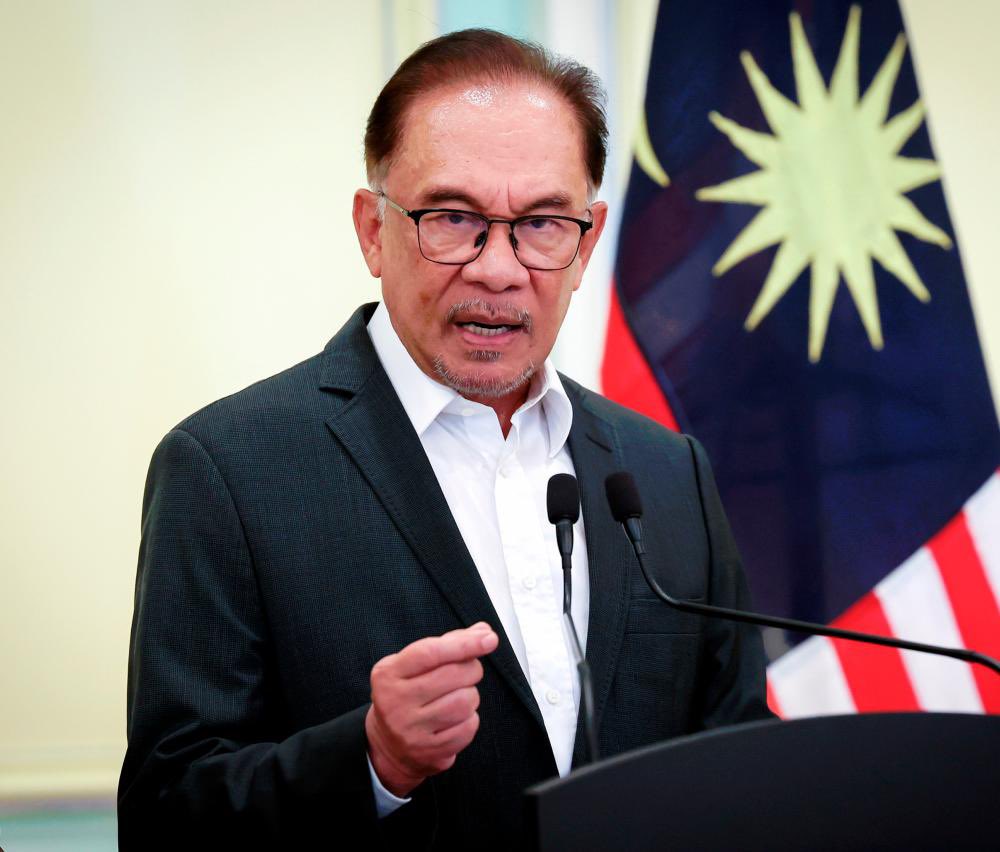
"I had lengthy discussions with @cz_binance, co-founder of the world's largest cryptocurrency platform Binance.
I proposed our agencies, including security, treasury and Bank Negara study this so we aren't left behind"
(he bought the dip)
https://t.co/gTNY0s6KlH
Transparency, clarity, and dialogue are important to us. Over the past few years, we have put considerable effort into improving this, with the latest improvements being the launch of our financial insights report, along with our on-chain audited financial statements to complement our annual activity report.
We’re now bringing forward the launch of a series featuring members of the Cardano Foundation leadership and various subject matter experts. This will be a regular forum for open discussions about our activities, where we will answer questions and share the context needed to move forward together.
The first space is scheduled for tomorrow, Wednesday, 18 December, at 19:00 UTC with @F_Gregaard, @giozzi and @planetmaaz.
Drop your questions below or ask them live in the Space. Let's chat!
https://t.co/oWEZyeuiqn
Officially a Cardano dRep, or "dRen" now.
dRep ID (CIP-105): drep1lvs070xte7kfunnmx260lnc8fr66rpu7xzt90fz9s2ee5rympw9
dRep ID (CIP-129):
drep1ytajpleue086e8jw0vetfl70qay0tgv8nccfv4aygkpt8xsjpgdys
_____________________________________________________
A bit about myself:
I'm no ordinary pizza who favours 1 topping, I believe multiple delicious, high quality toppings create the best type of pizza.
Just like how I choose blockchains. I like Cardano, but I don't call myself a maxi, as I've also used 20+ different blockchains throughout my 5 year crypto journey, and it taught me a lot about what's good and what's bad.
No blockchains are perfect, as Cardano also has its imperfections, which is why I'm gonna try myself as a dRep to present my thoughts from a different perspective.
You don't need to agree with my opinions, as I could be wrong myself but I always keep an open mind to discussions or debates. It also helps me learn from your perspective and grow my own perception on a point of view.
All I ask is this: "Don't be a f*ckin c*nt". Respect one another even though you disagree.
With that said, here are my 4 key things that I would like to engage more often during the Chang-era:
__________________________________________________
1) Accelerate Cardano's scalability roadmap, while maintain an optimal balance for security and decentralization.
IMO, I always felt a sense of security whenever I used Cardano & interact in their DeFi ecosystem, while the community also has a strong mindset for decentralization in every aspect. In addition, the power of eUTxO model does bring a lot of uniqueness and efficiency compared to Accounts-based model.
Still, Cardano's biggest bottleneck is network throughput, and since the first day of the Goguen era (where Cardano's smart contracts went live) until now, Cardano's network throughput improvements are quite minimal, especially with the new Plutus version updates.
We have the hydra & partnerchain toolkits live, but we haven't seen these toolkits being adopted by DApps on a large scale, and we must push for more usage of these types of toolkits + other great alternatives out there like Hydrozoa, ZkFold, Leviathan, Midgard, etc.
Why a blockchain needs high network throughput?
- Users like fast transactions that they don't need to waste time waiting to confirm.
- Generates high & continuous stream of transaction fee revenue for SPOs to sustain the network consensus.
- Useful & quality data (such as price feeds) can be used by DApps more frequently thus improving the overall reliability & performance of their DApps.
- Handles more tx volume to support millions of users.
Thus, I would love to be part of the active discussions on the development for Leios, Peras, Hydra, partnerchains, etc and hope we can see much faster progression to make Cardano as scalable as possible.
__________________________________________________
2) General economic view of Cardano & rewards incentivisation.
I've seen many Cardano peeps that wants to put the max supply of 45 Billion ADA in the constitution that will never be changed. While I think this is a good mindset to have, we also need to think of the long-term issues of a fixed-supply tokenomics when the token emissions start to drop unsustainably low.
Right now, tx fee rewards are mostly incentivised by token emissions instead of transaction fees (as all blockchains are currently suffering from this issue). To be economically sustainable in a fixed supply tokenomics, you're going to need the transaction fee revenue high enough to be able to keep up with the cost of running stakepools as transaction fees will be the main revenue source when the token emissions drop to approx. zero.
There are two common ways to increase tx fee revenue:
- Increase the tx fee params.
- Increase the network throughput to generate more fees.
And you'll want to be the latter if you don't want to be the next Ethereum L1, especially if Cardano's not able to scale in time when token emissions run low, low revenue may cost a lot of SPOs to shut down their operations, thus impacting security & decentralization of the Cardano network.
Therefore, we should open up more discussions to devise plans to mitigate this.
__________________________________________________
3) Optimize the decentralization params
Right now, we're boasting around 3,000 pools, but do you care to ask how many pools or SPOs are currently profitable & running sustainably? With the current params (minPoolCost, k & a0), > 1,000 pools are having a stake of less than 2 million ADA and not generating consistent revenue to sustain their pool costs.
Thus, we need to have more discussions on what parameters to change and how to optimize further to maintain a fairer game to generate a more well-balanced revenue for the SPOs.
__________________________________________________
4. Bridge the knowledge gap between Malaysia & Cardano
This point is more personal to me. In Malaysia, there's evidently larger crypto communities & events especially in the Bitcoin, Ethereum & Solana space. ETHKL is a well-known community in Malaysia that hosts workshops, talks, conferences and even "ZK-study groups" that helps onboard more Malaysian developers into building DApps.
Cardano events are basically next to non-existent in Malaysia. We had one Cardano Summit before back in 2022 and basically that's it. We don't have physical Cardano events take place here (not even in Singapore, where Emurgo's office is situated, for god's sake).
My only way of getting myself educated on Cardano is by watching YouTube videos, dissecting IOHK research papers that are long & difficult to understand, and reading tech documentations. There's a lack of quality courses to learn about developing on Cardano (especially with Aiken), and there's tons of resources out there teaching about Solidity.
Thus, I'm also taking this opportunity to be a dRep as a way to network and see how to bring more Cardano adoption in Malaysia. Would also love to attend events or physical workshops in Malaysia that can let me expose to hands-on programming with Aiken that I can pick up more easily than spending a lot of time reading docs and not familiar on how to code.
__________________________________________________
If you are a person who shares similar thoughts with mine, feel free to delegate to me ;) I'm an open-minded, analytical engineer who strives to be as neutral as I can be.