Dr Patricia Jones will present this year's Cardijn Lecture on "Patrick Keegan, first lay auditor to address Vatican II." Full details and registration here; https://t.co/b6rvK36a8w
Another post analysing the events leading up to the dissolution of the Conference of International Catholic Organisations from a canonical point of view. https://t.co/CxU4iaOPUx
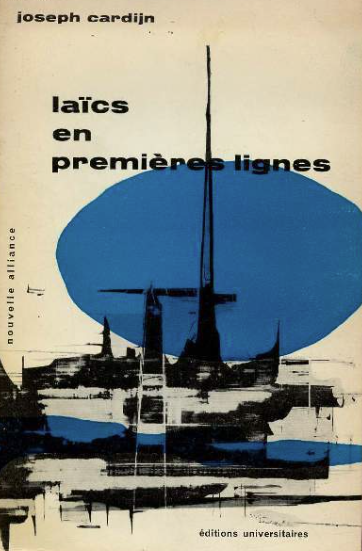
Seems like a good day to tweet my book, The Leaven in the Council, the story of Joseph Cardijn and the jocist bishops and periti at Vatican II: https://t.co/mapELdlUf1
With printing now complete, on 1 June 1963, Cardijn wrote to Delarge thanking him for all his work as well as that of the printer, M. Souchier, in publishing the book. https://t.co/SEXFRFv3Gm
With printing imminent, on 22 May 1963, Delarge sent to Marguerite Fiévez a list of persons and organisations to whom a complimentary copy of the book would be sent as well as a list of publications to which copies would be sent for review purposes. https://t.co/Ems7r0GaGp
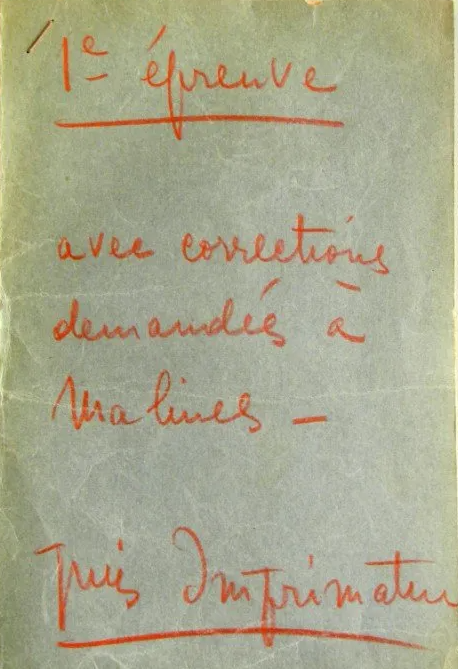
With work now progressing correcting the proofs of Cardijn's book, on 20 May 1963, Fiévez wrote to the printer seeking the return of the original uncorrected proofs. As usual, Cardijn was punctilious to not embarrass the authorities, i.e. Suenens. https://t.co/euUxkVqASc
On 10 June 1963 , Delarge wrote to Cardijn expressing satisfaction and happiness with the project and thanking him for his cooperation.
The book was already attracting great interest and he was ready to publish a second volume by Cardijn.
https://t.co/GzlSCZDrj9
On 9 April, the day after Cardijn's meeting with Suenens, Malines censor, P. Theeuws, granted the imprimatur for his book to be printed. In their biography of Cardijn, Fiévez and Meert state that he had held firm, meaning it was Suenens who had blinked. https://t.co/axRJDLFdc4
On 8 April 1963, Cardijn met with Suenens at the Episcopal Palace at Malines. According to Fiévez, Cardijn again felt betrayed by the contrast between Suenens' welcoming attitude and what had happened over the book. https://t.co/FfM8Egp9SY
Cardijn wrote to Delarge on 3 April, confirming he was available for a recorded interview in Paris. He noted that the book text was not finalised as negotiations with “Malines” over its content continued, i.e. with Cardinal Suenens and the censors. https://t.co/6tRv5Y0717
Taking account of Suenens’ observations, Cardijn prepared a series of revised footnotes and paragraphs to be added to the original text. https://t.co/kd5rcVBs8C
On 2 April 1963, Cardijn, who had just returned from Germany, wrote to Suenens requesting an audience, which eventually took place on 8 Apr. Insisting on his submission to authority, he expressed his frustration at the “misunderstanding” that had arisen. https://t.co/5BOMeZuqh2
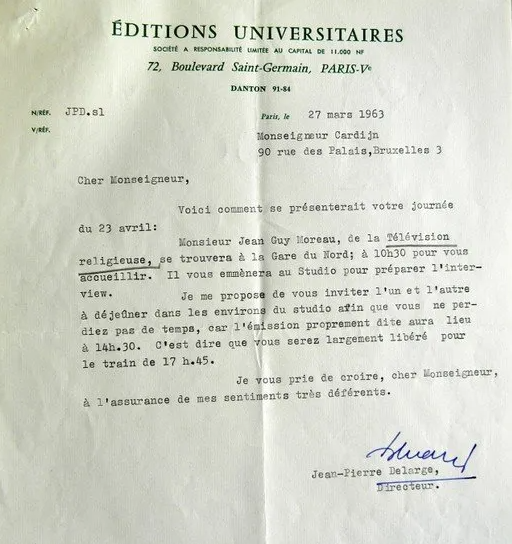
Oblivious to the problems with Suenens, on 27 March 1963, Delarge wrote to Cardijn outlining a proposal for him to visit Paris on 27 April to record a television interview to promote the forthcoming book. https://t.co/2Y4IEVbjLq
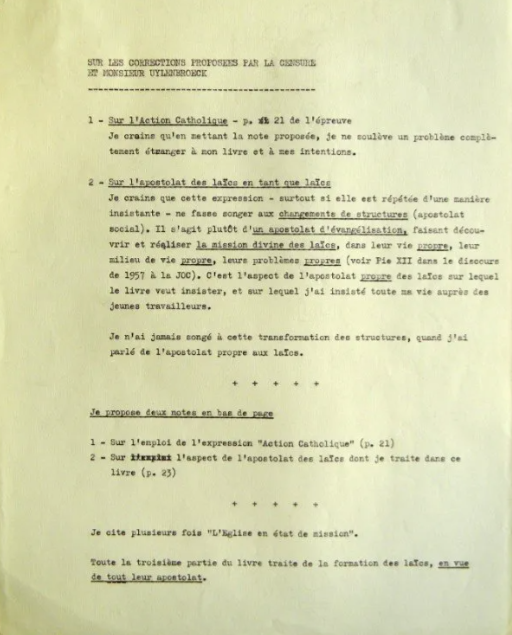
Soon after receiving a series of corrections to the book manuscript proposed by Uylenbroeck, Cardijn responded with a note explaining his own position. https://t.co/RcEdfyD0y4
Meanwhile, pn 10 March 1963, Bishop Larrain’s secretary, Fr Huidobro, replied to Cardijn’s request for commentary on his book manuscript, signalling the “great service” that the book would provide for the drafting work of the Lay Apostolate Commission. https://t.co/3VuvHJyBOu
Shocked by Suenens’ modus operandi (as well as his “notorious” views on Catholic Action and lay apostolate), Fiévez wrote a confidential note recording how Suenens’ opposition to Cardijn’s text was made known, not directly but via intermediaries. https://t.co/Otplulqiox