Is college worth it? On average, college graduates outearned high school graduates by almost $87,000 over an initial 15-year period even after accounting for the cost of college.
https://t.co/wvJzI941oq via @@YahooFinance
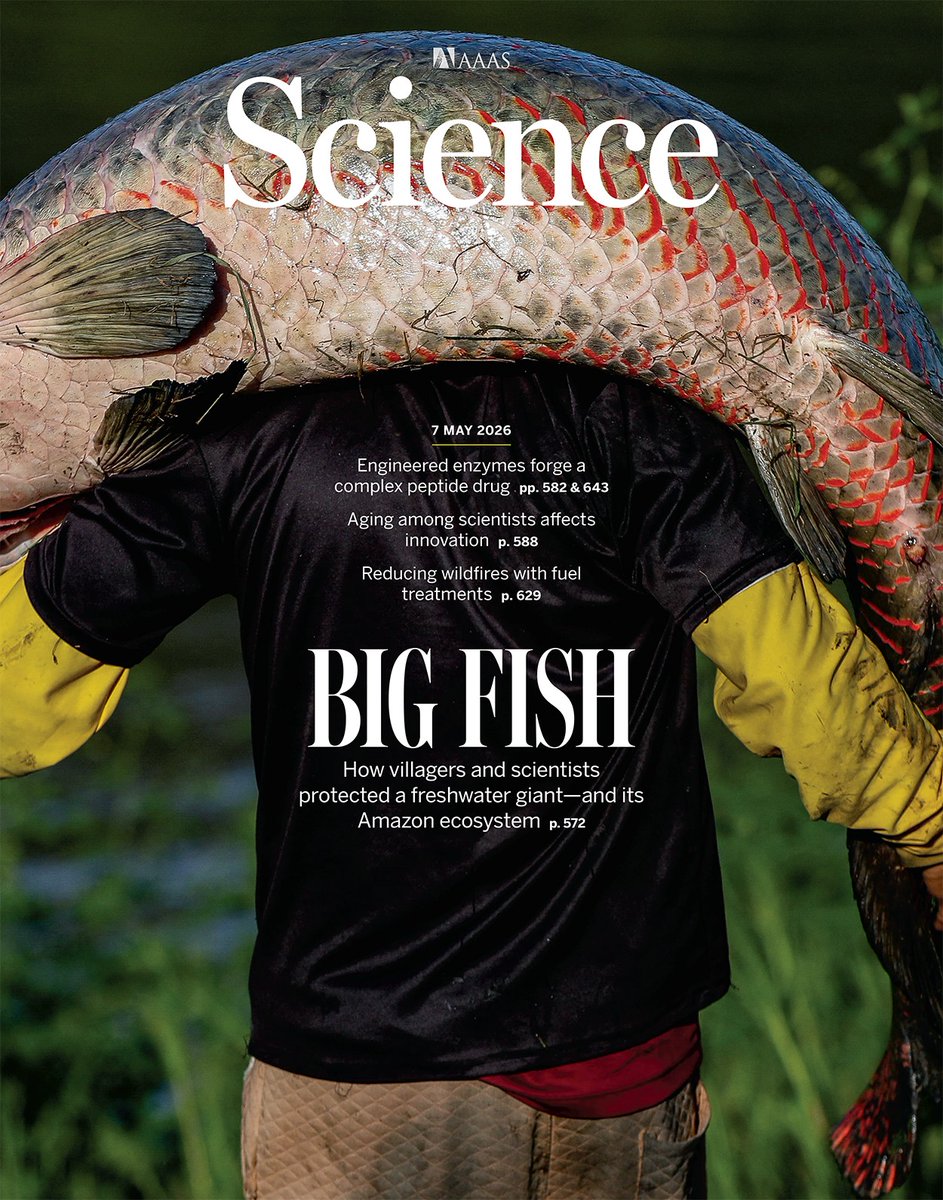
A giant fish called the arapaima is the focus of a conservation success story in the Brazilian Amazon.
Learn more in this week's issue of Science: https://t.co/xDyaa7rTtx
Congratulations to recent Ph.D. graduate, Dr. Sugjit Padda, on a nice 1st paper from his dissertation. Here he reviews the Land Sparing/Sharing debate and provides some helpful suggestions for moving forward.
The Society for Conservation Biology https://t.co/0b4lnc7cft
The collapse of trust in science is going to go down in history as one of the most sad, bizarre, and destructive social contagions of modern times.
We fed billions, cured diseases and powered nations - yet people ran toward conspiracies instead.
More than 7 million research papers were published in 2025.
That number is about to explode.
Think about all of the research agents and AI writing tools that were developed last year: @OpenAI’s Prism, @elicitorg, @FutureHouseSF, @k_dense_ai, etc. What happens as adoption of those tools inevitably increases? What happens to volume when the average researcher becomes fluent in @claudeai Code?
Scientific infrastructure and peer review was designed for a different world than the one we are entering.
Peer review is in crisis.
(Data: DOI-indexed articles on @OpenAlex_org)
💼🌿 Many measures that help insects — less mowing, less intensification, less pressure on landscapes — require doing less, not more.
If you want a candid look at the tension between biodiversity and economics, this episode with Roel van Klink (@UniHalle) delivers.
🎧 https://t.co/R1yK57jZJt
@idiv@UniHalle A critique of InsectChange found major flaws in the dataset and analyses
https://t.co/IeURndAid3
Several journals have published Expressions of Concern about the work, which is on retraction watch
https://t.co/eoUhWajBR6
https://t.co/xdEXgGbcMQ
https://t.co/ktE0jz8agV
🌼 Biodiversity loss can feel overwhelming — but there are concrete steps individuals can take.
In #InsideBiodiversity, Dr Roel van Klink (@UniHalle & #iDiv) shares practical actions that can help insects:
🌱 Plant native species
🪨 Avoid stone gardens
✂️ Reduce mowing
🥩 Rethink and reduce animal‑based food consumption
💛 Support biodiversity‑friendly public land management
🐜 Small actions matter, especially when many people take them.
🎧 Hear the full conversation with iDiv host Dr Volker Hahn: https://t.co/R1yK57jZJt
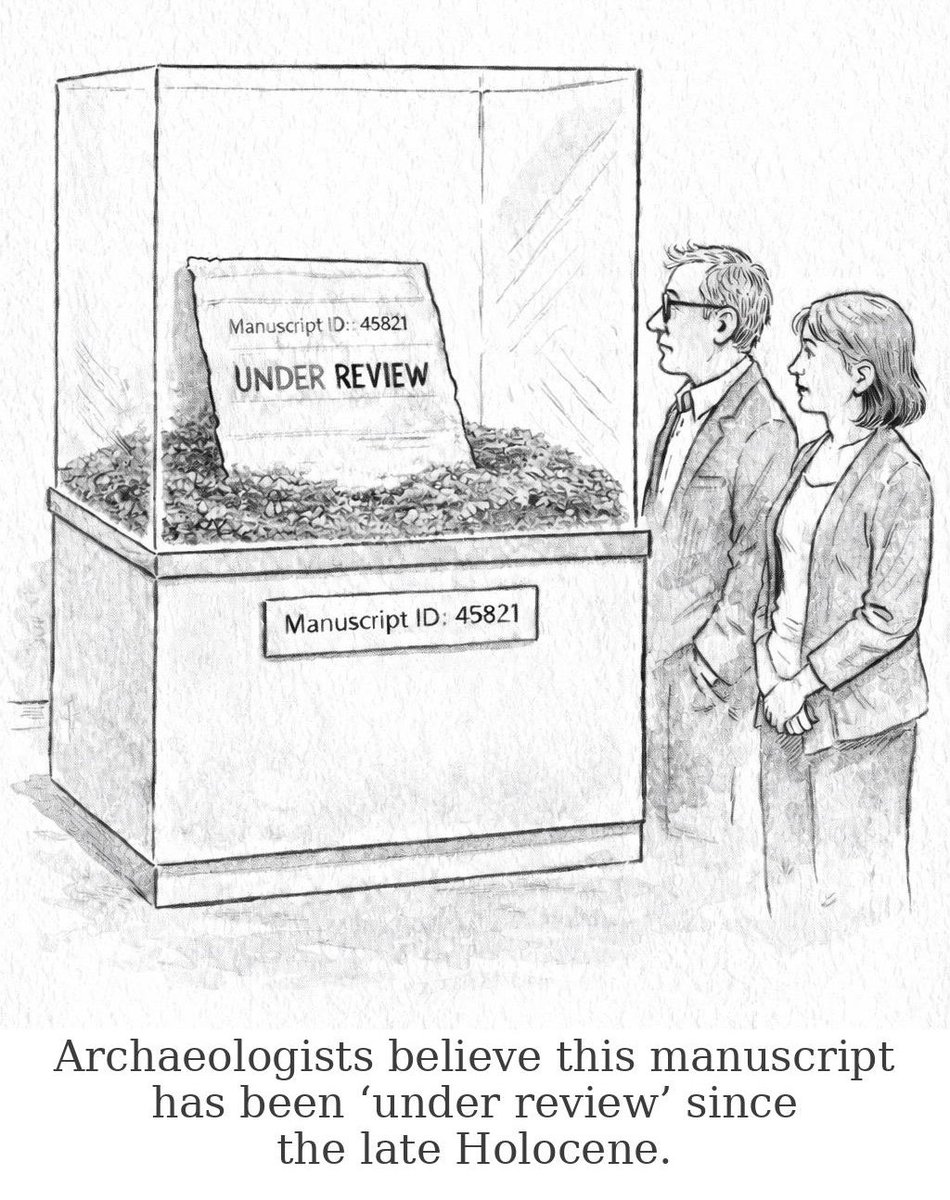
We've all had a paper or two that feels like this. Maybe the scientific community should start a process for reviewing journals and handling editors (0 to 5 stars) to make transparent who is doing their job and who is not.
So true! I like this paper by Aczel et al. in PNAS discussing the future of peer-review. Ideas include getting rid of it altogether.
https://t.co/FkAYpppYi8
Pesticides changed. CO₂ dilutes plant nutrients. Climate shifts species ranges. But researchers still do not know how these drivers combine to shape insect trends.
A clear, grounded explanation from Roel van Klink (@UniHalle & #iDiv) on #InsideBiodiversity.
��Give it a listen: https://t.co/NNnhy8WuWL
People interested in this topic may want to read Laurence Gaume and Marian Desquilbet's critique of the InsectChange database that has been put together and used by van Klink & colleagues to draw conclusions about insects. https://t.co/MbCnByPeoF
🪲 Researchers have been monitoring insects for decades — but throughout that entire period, ecosystems were already heavily shaped by human activity.
That means researchers still don’t know what “natural” insect abundance looked like before major human impacts.
In this new episode of #InsideBiodiversity, entomologist Roel van Klink (@UniHalle and #iDiv) explains why this matters, why insects are so astonishingly diverse, and what long‑term data can tell us.
If you want a clear, nuanced introduction to insect trends, this conversation is a great place to start.
🎧 Listen to the episode hosted by iDiv's Dr Volker Hahn: https://t.co/R1yK57kxz1
@idiv People interested in this topic may want to read Laurence Gaume and Marian Desquilbet's critique of the InsectChange database that has been put together and used by van Klink & colleagues to draw conclusions about insects.
https://t.co/MbCnByPeoF
New paper ‘Nature's role in national security’ extends concept of ecosystem services to a nation’s ability to provide security for citizens. Thanks to co-authors R Schoonover (former Dir US Nat Intel Coun) and JE Duffy (Dir Smithsonian Mar Obs).
https://t.co/PYbzgjEDnj
6/6 When the dataset you are using to assess diversity change does not consider the dominant driver of diversity loss, and relies on studies where biodiversity can only go up (e.g., recovery, succession), then it not representative of how humans are altering biodiverity on Earth.
1/6 A. Gonzalez tries to clarify stance on use of time-series data (e.g. BioTIME) to draw conclusions about biodiversity loss. When asked if it was a 'surprise' time-series found equal numbers of +/- diversity trends, Andy overly complicates issue ... https://t.co/NaEicdyjJW
5/6 BioTime does not account for the single largest contributor to biodiversity decline -- habitat loss. Not one study in that dataset shows how 43% of Earth's land surface that used to be forested, but has been converted to agriculture, has influenced biodiversity.